Layla Zulfa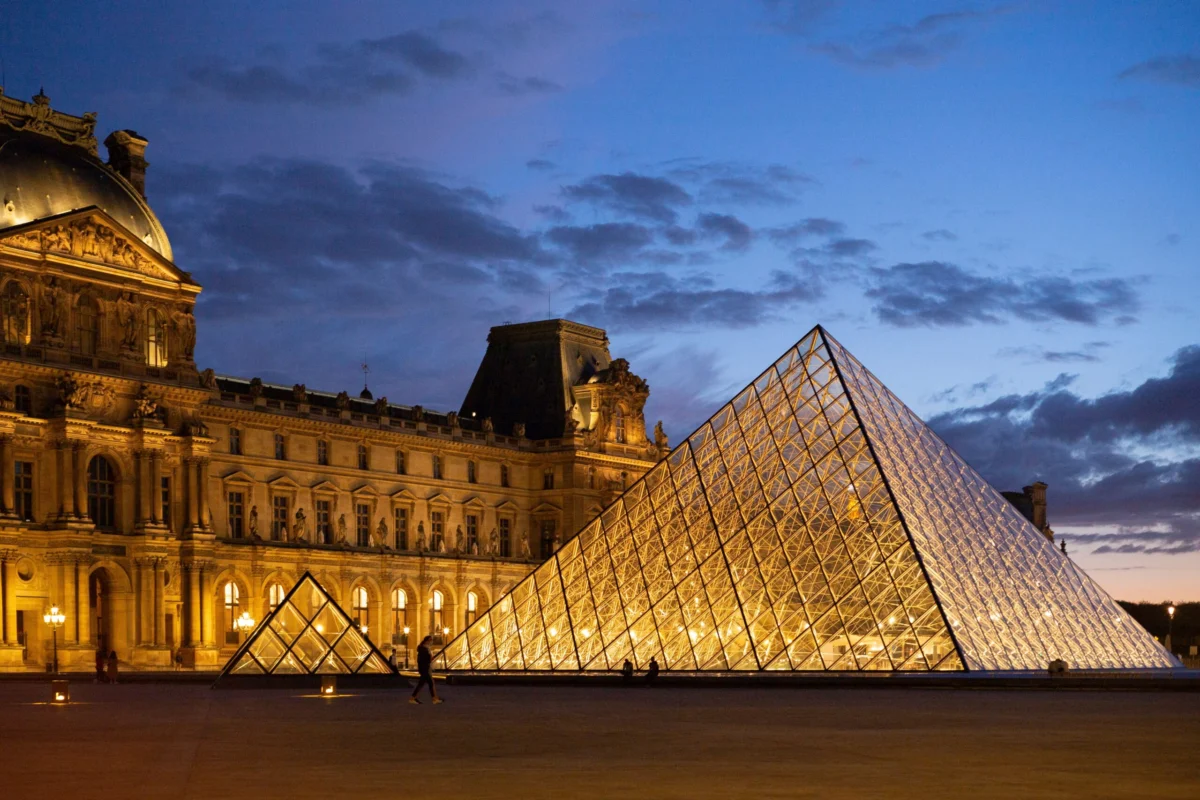
The Magnani-Rocca Foundation, a private museum nestled in the serene countryside of Mamiano near Parma, Italy, became the site of a sophisticated and rapid-response art theft on the night of March 22, 2026. In a robbery that lasted approximately three minutes, a group of unidentified individuals breached the museum’s entrance and removed three seminal works of late 19th and early 20th-century art: Pierre-Auguste Renoir’s Les Poissons, Paul Cézanne’s Still Life With Cherries, and Henri Matisse’s Odalisque on the Terrace. A fourth painting was discovered abandoned near the exit, likely discarded when the facility’s internal alarms finally triggered a response from local law enforcement. Initial appraisals reported by major international news outlets, including The New York Times, estimate the total value of the stolen works at $10 million, with the Renoir alone valued at approximately $7 million.
The theft has raised significant questions regarding the transparency and security protocols of smaller private institutions. For over a week following the incident, the Magnani-Rocca Foundation maintained a facade of normalcy, continuing its daily operations without public acknowledgment of the loss. The news only surfaced after an investigative report by a regional branch of Rai, Italy’s state broadcaster. This delay in reporting has been criticized by art security experts, who argue that the first 48 hours are critical for tracking stolen assets before they enter the clandestine "grey market" of international trafficking.

A Pattern of Vulnerability in Global Institutions
The Parma heist is not an isolated breach but part of a disturbing trend of high-profile thefts targeting European cultural heritage. Just six months prior, on October 19, 2025, the Louvre in Paris suffered a brazen daylight robbery. Four individuals disguised as construction workers utilized a truck-mounted mechanical lift to access the second-story windows of the Galerie d’Apollon. Within eight minutes, the group smashed display cases and seized eight pieces of the French Crown Jewels, including Empress Marie-Louise’s emerald necklace and Queen Marie-Amélie’s sapphire set.
Though the thieves dropped the Crown of Empress Eugénie during their escape—leading to its recovery and current restoration—the remaining jewels remain missing. Investigations into the Louvre breach revealed systemic failures: only 39 percent of the museum’s galleries were monitored by active cameras, and the surveillance system’s password was reportedly the word "Louvre." These incidents underscore a growing crisis in museum security, where institutions often lack the funding to upgrade legacy systems against a new generation of thieves who utilize cryptocurrency for laundering and encrypted communications for logistics.
The 1911 Theft of the Mona Lisa: The Crime That Created an Icon
Historically, art theft has often resulted in unintended consequences for the cultural status of the stolen works. The most famous example occurred on August 21, 1911, when Vincenzo Peruggia, an Italian handyman who had been employed by the Louvre, stole Leonardo da Vinci’s Mona Lisa. Peruggia had spent the night in an art-supply closet and simply walked out with the 18-pound wood-panel painting under his coat during the museum’s Monday closure.

At the time, the Mona Lisa was a respected work among scholars but did not possess its current global celebrity. The theft changed this trajectory. For 28 hours, the museum was unaware of the loss. Once discovered, the story dominated international headlines for two years. The investigation was so wide-reaching that it briefly ensnared the avant-garde painter Pablo Picasso and the poet Guillaume Apollinaire, both of whom were interrogated and eventually cleared. Peruggia was captured in 1913 after attempting to sell the painting to an art dealer in Florence under the guise of "returning it to its Italian homeland." He served only eight months in prison, but the painting returned to Paris as the most famous object in the world.
The Mystery of the Isabella Stewart Gardner Museum
While some works are recovered, others remain lost in a legal and investigative limbo. On March 18, 1990, the Isabella Stewart Gardner Museum in Boston became the victim of the largest private property theft in history. Two men dressed as police officers gained entry by claiming to respond to a disturbance. They incapacitated the two night guards, binding them with duct tape in the museum’s basement.
Over the course of 81 minutes, the thieves selected 13 works, including Vermeer’s The Concert—the most valuable missing painting in existence—and Rembrandt’s only seascape, The Storm on the Sea of Galilee. Despite a $10 million reward offered by the FBI and the museum, the works have never been found. Per the strict instructions of Isabella Stewart Gardner’s will, which forbids the rearrangement of the collection, the museum continues to display the empty gilded frames where the masterpieces once hung, serving as a stark reminder of the loss.

The Evolution of Recovery: The Van Gogh Museum Heist
The 2002 theft at the Van Gogh Museum in Amsterdam illustrates the intersection of art theft and organized crime. On December 7, 2002, thieves used a simple ladder to scale the museum’s rear wall and enter through a skylight. They made off with View of the Sea at Scheveningen and Congregation Leaving the Reformed Church in Nuenen, valued at a combined $30 million.
The primary suspect, Octave Durham, was convicted in 2004, but the paintings remained missing for over a decade. It was not until 2016 that Italian police, during a raid on a home belonging to a member of the Camorra crime syndicate in Castellammare di Stabia, discovered the works wrapped in cloth inside a cardboard box. The recovery highlighted the reality that stolen art often serves as "collateral" in the underworld, traded between criminal organizations to secure drug shipments or other illicit transactions.
The Tragedies of Modern Loss: Paris and Rotterdam
Not all heists end in recovery; some end in suspected destruction. In May 2010, Vjeran Tomic, dubbed "Spider-Man" for his climbing abilities, entered the Musée d’Art Moderne de la Ville de Paris. He stole five paintings by Picasso, Matisse, Braque, Léger, and Modigliani, worth $123 million. While Tomic and his accomplices were eventually arrested, the paintings vanished. One associate claimed he panicked and threw the canvases into a trash compactor, suggesting that five masterpieces may now reside in a Parisian landfill.

Similarly, the 2012 robbery at the Kunsthal Museum in Rotterdam involved the theft of seven works by artists including Monet, Gauguin, and Picasso. The suspects, a group of Romanian nationals, were apprehended, but the mother of one of the thieves claimed she burned the paintings in her wood stove to protect her son from prosecution. Forensic analysis of the ash in her home revealed traces of 19th-century pigments and canvas tacks, leading many experts to believe the works are permanently lost to history.
Analytical Implications and the Future of Art Security
The recurring nature of these thefts suggests a fundamental shift in the risk-reward calculation for criminal syndicates. While it is notoriously difficult to sell a "famous" stolen painting on the open market, these works hold immense value as leverage. Interpol’s Stolen Works of Art Database currently lists over 52,000 items, and the illicit trade in cultural property is estimated by some agencies to be a multi-billion-dollar industry, trailing only drugs and arms in terms of global criminal turnover.
The 2025 Louvre and 2026 Parma heists indicate that the traditional "gentleman thief" has been replaced by tactical teams who exploit the digital and physical vulnerabilities of aging institutions. The broader impact of these crimes is a "chilling effect" on the art world: private collectors are becoming increasingly hesitant to loan works for public exhibition, and insurance premiums for museums are reaching unsustainable levels.

In response, some institutions are turning to blockchain technology to create immutable digital "fingerprints" of their collections and installing advanced biometric security. However, for many smaller museums like the Magnani-Rocca Foundation, the cost of such upgrades remains prohibitive. Until a global standard for museum security and reporting is established, the world’s shared cultural heritage remains at the mercy of those who view history not as a legacy to be protected, but as an asset to be seized.