Ronny Sianturi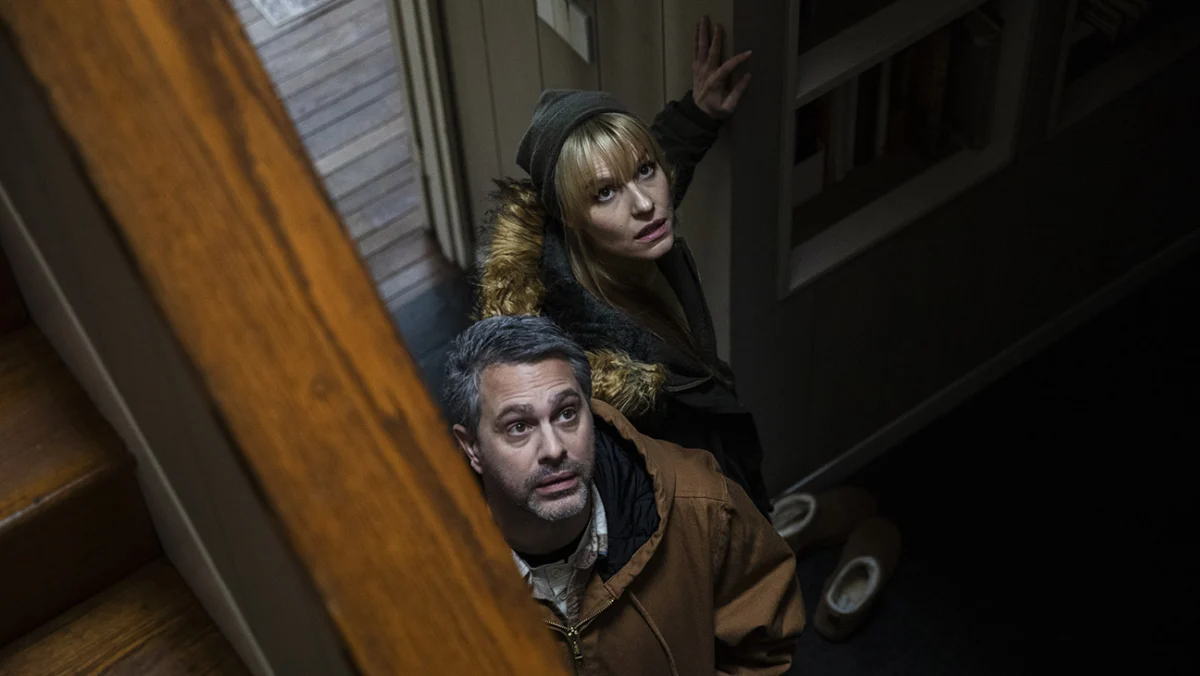
The cinematic exploration of intellectual property theft and literary plagiarism has long served as fertile ground for suspense narratives, echoing through best-selling novels such as Jean Hanff Korelitz’s The Plot and classic stage thrillers like Ira Levin’s Deathtrap. These works consistently demonstrate that appropriating another creator’s intellectual labor carries severe, often fatal consequences. Prolific writer-director Neil LaBute, known for his incisive and frequently confrontational explorations of human psychology in films like In the Company of Men and Nurse Betty, returns to this familiar thematic territory with his latest cinematic endeavor, Murderous. The psychological thriller received its highly anticipated world premiere at the prestigious Oldenburg International Film Festival, drawing attention for its minimalist approach, confined setting, and exploration of the precarious nature of creative success.
Setting, Production Details, and Structural Design
Clocking in at 1 hour and 47 minutes, Murderous is structured as a tightly wound, single-location chamber piece that relies heavily on dialogue and shifting power dynamics between a minimal cast of three principal performers. Directed and scripted entirely by LaBute, the film stars frequent collaborator Gia Crovatin as Marian, alongside acclaimed stage and screen actor Thomas Sadoski and veteran performer Jordan Baker. The production’s primary venue for its global debut, the Oldenburg International Film Festival, provided an intimate European backdrop for a film that explicitly wears its theatrical and cinematic influences on its sleeve.
LaBute has openly cited classic masterworks of psychological suspense—most notably Joseph L. Mankiewicz’s critically lauded 1972 adaptation of Sleuth and Alfred Hitchcock’s continuous-take experiment Rope—as direct inspirations for the aesthetic and spatial constraints of Murderous. However, early critical reception from the festival circuit indicates that the film struggles to scale the lofty heights of its celebrated predecessors. Critics have noted that the project frequently feels like an undernourished stage play adapted to the screen with narrative machinations that rely too heavily on predictable twists and transparent plotting.
Chronology and Narrative Arc
The narrative structure of Murderous is divided into distinct thematic chapters, opening with the first segment titled “Him.” The story centers on Marian, a successful filmmaker who achieved critical and financial acclaim with her debut feature, a female-centric horror film also titled Murderous. The visible markers of her newfound prosperity are immediately established: she resides in a gorgeously converted, rustic former mill and keeps a vintage red Porsche parked in her driveway.
Marian’s solitary tranquility is abruptly shattered by the unexpected arrival of Norman, portrayed by Thomas Sadoski. Norman has driven all the way from Iowa for the explicit purpose of confronting her. Visibly unsettled and made uncomfortable by the uninvited intrusion, Marian eventually permits Norman to enter her home.
As the conversation unfolds, it is revealed that the two share a past, having been students at the same institution where Norman served as a teaching assistant, during which time they shared a brief romantic involvement. Norman takes stock of Marian’s affluent surroundings, noting the absence of personal photographs or intimate mementos. Instead, her shelves are lined with valuable literary artifacts and knick-knacks previously owned by towering literary figures such as Truman Capote and Willa Cather, alongside a notable prop: a letter opener once belonging to Shirley Jackson.
The confrontation intensifies when Norman addresses the elephant in the room: Marian’s award-winning film. Dropping the pleasantries of small talk, during which Norman admits to a bleak personal reality characterized by unemployment and a lack of romantic partnership, he poses a direct challenge. He reveals that the foundational premise of her successful movie originated with him. According to Norman, the two collaborated extensively on the concept, even creating flipbooks of individual sequences—evidence he claims to retain in his possession. Consequently, he demands financial compensation and a formal reckoning for his intellectual contributions.
The Escalation of Tension and Chapter Two
True to LaBute’s signature exploration of transactional human behavior, the charged confrontation quickly shifts from professional grievance to volatile intimacy. When Norman reminds Marian of past infidelities during their former relationship, she utilizes the disclosure as a catalyst to alter the power dynamic of the room. A provocative exchange ensues, culminating in Marian offering a transactional sexual compromise to mitigate the crisis, to which Norman responds with calculated ambivalence.
Following this volatile encounter, which concludes abruptly, the narrative shifts into its second chapter, titled “Her.” The spatial claustrophobia of the mill is once again disrupted by an unexpected visitor, this time an older woman named Lila, played by Jordan Baker. Identifying herself as an ardent admirer of Marian’s work, Lila requests autographs on several DVD copies of the film, including one intended for her son.
Though initially reluctant, Marian invites Lila inside, sparking an extended dialogue regarding the thematic elements of the film and the broader economics of the contemporary entertainment industry. This sequence features a prolonged diatribe by Marian regarding the systemic frustrations filmmakers face when dealing with unimaginative distributors and corporate marketers. Industry observers note that this segment reads as the most authentic and autobiographical moment in the feature, functioning as a direct channel for LaBute’s own well-documented frustrations with the commercial apparatus of filmmaking.
Analytical Overview and Industry Implications
Despite the committed performances delivered by Crovatin, Sadoski, and Baker, critical analysis of Murderous highlights persistent structural challenges that hinder its impact as a cinematic thriller. Reviewers have observed that the film’s narrative signposting lacks subtlety, telegraphing character revelations and plot developments with an overtness that diminishes suspense.
While the conceit of a single-location, dialogue-driven cat-and-mouse game functions effectively in a live theatrical environment where audiences willingly suspend disbelief for the sake of theatricality, the transition to film exposes the artificiality of the mechanics. Furthermore, industry analysts have suggested that at 107 minutes, the picture outlasts its foundational premise. Given the thinness of the central conflict regarding plagiarism and authorship, a more rigorous editorial approach and a significantly tightened runtime could have heightened the psychological tension and urgency.
The premiere at Oldenburg adds another distinct entry to Neil LaBute’s diverse filmography, showcasing his enduring interest in theatrical minimalism, toxic interpersonal dynamics, and the ethical compromises demanded by ambition. As Murderous continues its festival run and seeks broader distribution, its reception will likely provoke broader discussions regarding artistic ownership, the ethics of collaboration, and the ongoing viability of translating stage-bound thriller mechanics into contemporary cinema.