Ana Megawati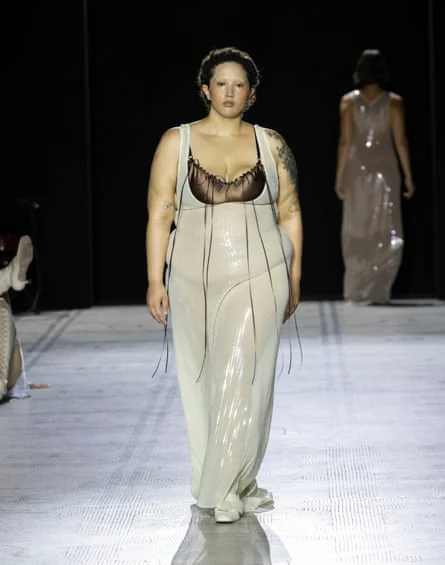
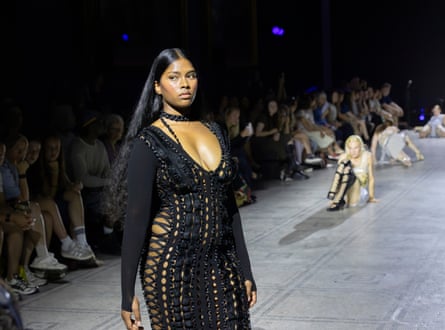
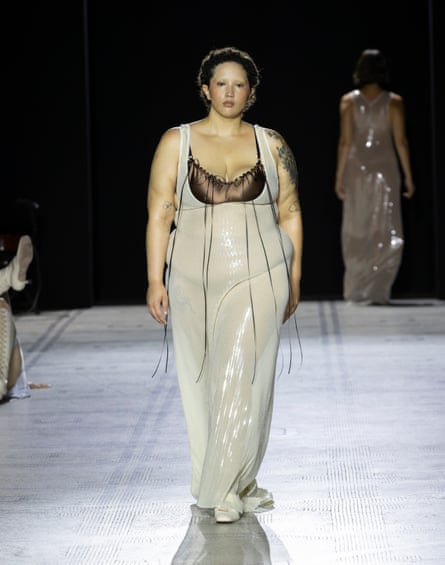
Visitors to London’s esteemed Victoria and Albert Museum on a recent Friday afternoon were treated to a spectacle that transcended the typical fashion presentation, as designer Sinéad O’Dwyer showcased her "Fashion in Motion" collection, deliberately challenging the industry’s entrenched norms of body representation. The event, held within the hallowed halls of one of the world’s leading museums of art and design, featured a diverse cast of performers and models, presenting a range of garments from intimate underwear to sophisticated skirt suits and glittering sequins. More significantly, these pieces were modeled by individuals spanning all shapes and sizes, a stark contrast to the prevailing homogeneity often seen on global catwalks. The show was further enlivened by interpretive dance on the catwalk, set to a live performance by the band Jeanie and The White Boys, creating an immersive and thought-provoking experience for attendees.
Sinéad O’Dwyer: A Champion of Authentic Representation
Since her impactful debut at London Fashion Week in 2021, Sinéad O’Dwyer has consistently positioned her work as a direct counter-narrative to fashion’s historical insistence on a singular, thin body type. While most major brands continue to produce sample garments for catwalk presentations in sizes ranging from a UK 4 to 8 (US 0-4), O’Dwyer’s methodology stands apart: she crafts her samples based on a UK size 18 (US 14). This fundamental difference in approach underpins her brand’s philosophy, ensuring that her designs are conceptualized and developed with a wider range of bodies in mind from the outset, rather than being an afterthought or a secondary adaptation.
O’Dwyer’s unwavering commitment to inclusivity has not only garnered critical acclaim but also significant recognition, earning her prestigious awards within the fashion community. Her designs have resonated deeply with a diverse audience, attracting a roster of high-profile celebrity admirers, including global music icons like Cardi B and Björk. These endorsements underscore the cultural impact and growing demand for fashion that genuinely embraces and celebrates body diversity. The designer’s work challenges the notion that luxury and high fashion must be exclusive to a narrow demographic, instead proposing an expansive vision where style and self-expression are accessible to all.
"Fashion in Motion": Bridging High Fashion and Public Engagement

The V&A’s "Fashion in Motion" series, a long-running initiative designed to bring contemporary fashion directly to the public, provided an ideal platform for O’Dwyer’s inclusive vision. Unlike the typically exclusive, invitation-only nature of most major fashion shows, Friday’s event was open to the general public, who could purchase tickets for a modest sum of £5. This accessible approach aligns seamlessly with O’Dwyer’s brand ethos. "In terms of the ethos [of the brand], it’s a lot more appropriate for everyone than the luxury fashion system, which actually doesn’t really want everyone," O’Dwyer articulated, highlighting a core tension between her brand’s democratic spirit and the often elitist tendencies of the broader luxury fashion landscape.
The V&A, as a venerable institution dedicated to preserving and showcasing artistic and design heritage, offers a unique context for such a statement-making event. By hosting O’Dwyer’s show, the museum not only champions contemporary design but also reinforces its role in facilitating important cultural conversations about representation, identity, and the evolving standards of beauty within society. The "Fashion in Motion" series itself has a history of featuring innovative designers and celebrating diverse expressions of creativity, making O’Dwyer’s show a significant, yet fitting, addition to its legacy.
A Stalled Revolution: The Broader Landscape of Body Diversity in Fashion
For a period spanning several years, the fashion industry appeared to be undergoing a discernible shift towards greater body diversity. Milestones such as Paloma Elsesser being named the first plus-size model of the year at the Fashion Awards in 2023 seemed to signal a progressive trajectory. However, recent data suggests that this momentum has largely stalled, and in some aspects, even reversed.
The "Size Inclusivity Report," meticulously produced by Vogue Business each season since 2023, serves as a crucial barometer for measuring the industry’s commitment to diverse body representation on the catwalks. Its findings for the autumn/winter 2026 season paint a stark picture: a staggering 97.6% of models featured were categorized as "straight-size," typically defined as a UK 4-8 (US 0-4). This figure represents a troubling return to homogeneity, indicating that the brief period of increased visibility for diverse body types may have been an anomaly rather than a sustained paradigm shift. The report’s consistent data across seasons has illuminated the industry’s struggle to move beyond tokenistic gestures towards systemic change.
Historically, fashion’s focus on thinness has been a contentious issue, dating back to the early 20th century. Women’s bodies have long been subjected to the capricious whims of trends, dictated by societal ideals of the moment. The "flapper" era of the 1920s idealized a slight, small-busted silhouette; the youth-obsessed 1960s championed slender, leggy figures; and the aerobicized 1980s celebrated athletic and curvy physiques. The current discernible rollback to extreme thinness on the runways can be interpreted not merely as a fashion trend, but as part of a broader, more concerning trend away from diversity across various sectors. This regression raises questions about the industry’s genuine commitment to inclusivity beyond fleeting performative gestures.
Underlying Factors: Culture, Politics, and Pharmaceuticals
The re-entrenchment of thinness as the dominant ideal in fashion is a complex phenomenon, influenced by a confluence of cultural, political, and even pharmaceutical factors. Jeanie Annan-Lewin, a prominent stylist and one of the forces behind the band Jeanie and The White Boys, observes a disturbing parallel between this fashion trend and wider societal shifts. "It coincided with Trump coming into power," she noted, suggesting a connection between a period of political conservatism and a broader retreat from inclusivity. "There are fewer people of any minority across the board and that’s the same thing that’s happening in fashion." This perspective posits that the fashion industry, often a mirror of society, reflects a general contraction in the acceptance and celebration of difference.
Emma Matell, the casting director responsible for O’Dwyer’s show—and who has also lent her expertise to brands like Lueder and Tolu Coker—echoes this sentiment. "It’s becoming more and more apparent that we’re back to wanting women to both metaphorically and physically take up less space," she states, offering a powerful metaphor for the societal pressures that manifest in fashion trends. This desire for women to be physically smaller can be linked to broader anxieties about female empowerment and visibility.
Adding another layer to this complex narrative is the burgeoning impact of GLP-1 weight-loss drugs, such as Ozempic and Wegovy. Lucy Maguire, features director at Vogue Business, highlights their significant influence: "[They] mean cultural figures are shrinking, the general population, in many respects, is shrinking." This widespread shift in body composition among public figures and a segment of the general populace has, according to Maguire, "brought back a reverence for thinness that was always underlying in fashion." The pharmaceutical-driven acceleration of weight loss in influential circles inadvertently reinforces an aesthetic ideal that the fashion industry, despite previous efforts, seems unable or unwilling to resist. The drugs, while offering health benefits for some, inadvertently contribute to a renewed cultural emphasis on slender bodies, making the push for diversity even more challenging.
London: A Beacon of Progress?
Despite the global trend towards reduced body diversity, London Fashion Week consistently stands out as the one major fashion capital that still demonstrates a relatively higher commitment to inclusivity. While "straight-size" models still constituted 92.7% of appearances, according to the Size Inclusivity Report, this figure is marginally better than other global fashion weeks. This resilience in promoting diverse representation is attributed by many to London’s inherent rebellious and experimental spirit.
Beyond Sinéad O’Dwyer, other notable designers based in London, such as Mark Fast and Chopova Lowena, are expected to continue featuring a more diverse range of models in their upcoming shows in September. This collective effort by a segment of London-based designers suggests a localized counter-movement against the prevailing global trends. Emma Matell eloquently captures this sentiment: "Sinéad and a few other young designers are carrying a huge amount of effort that the rest of the industry seems unwilling to make. But I think that also comes down to the rebellious spirit of London. To me, being inclusive is the most punk thing you can do." This perspective reframes inclusivity not just as a moral imperative but as an act of defiance against a stagnant and exclusionary system, positioning London as a vanguard for change.
The Economic Imperative for Inclusivity
Beyond the ethical considerations, the fashion industry’s continued focus on a very thin ideal represents a significant missed commercial opportunity. In the UK, size 16 (US 12) is the average, representing a vast demographic that is largely underserved by high fashion. Jeanie Annan-Lewin critically observes this disconnect: "I find it really strange that we just go ‘no, if you’re plus-size, you don’t have any disposable income, you don’t want to buy anything luxury. You just need to go and get fast fashion.’" This assumption, she argues, is not only flawed but actively detrimental to brands’ potential market reach.
Supporting this commercial argument, Lucy Maguire refers to a survey conducted by Vogue Business, which revealed compelling insights into consumer sentiment. The survey found that "34% of mid-size and 68% of plus-size respondents felt alienated by the fashion industry due to their size, compared to 17% of straight-size respondents." This data unequivocally highlights the widespread dissatisfaction and sense of exclusion among a substantial segment of the population. Maguire’s conclusion is stark and actionable: "Brands need to represent different bodies in order to not alienate this consumer who has really huge spending power." The economic logic is clear: embracing size diversity is not just about social responsibility, but also about tapping into a significant, underserved market with substantial purchasing power. The industry’s current practices are, in essence, leaving money on the table.
Challenges and the Path Forward
The persistent problem of body diversity in fashion is deeply rooted in practical and systemic challenges, primarily the difficulty and cost associated with adapting long-established manufacturing methods to produce clothes in a wider range of sizes. Designing for diverse body types requires more than simply scaling up existing patterns; it demands re-thinking fit, fabric drape, and construction, often necessitating specialized expertise and investment in new production processes. These perceived obstacles often serve as a convenient excuse for brands to maintain the status quo.
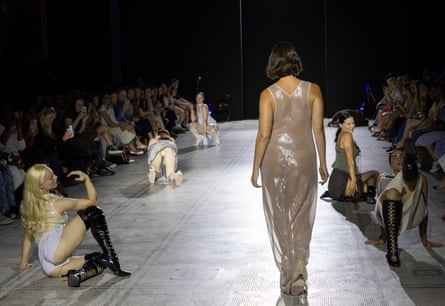
However, Sinéad O’Dwyer steadfastly believes that even the mere visual representation of models of all sizes on the luxury stage holds immense power. "Luxury is very deeply embedded in everything, even if you don’t know anything about luxury," she explains. "That’s what I definitely experienced as a young person. I didn’t know why I wanted to be size 6, but I really wanted to be size 6." This profound insight underscores the psychological impact of aspirational imagery in fashion. When young people, like the 14-year-old friends Elenor Rowland and Orla McEvoy who attended O’Dwyer’s show, see diverse bodies represented, it can profoundly influence their self-perception and challenge ingrained ideals. Rowland expressed her appreciation for the diverse casting, stating, "because a lot of the time there’s not much representation for different body types… It probably makes lots of people think: ‘Oh, I’m not that size. Maybe I should be.’" This candid observation highlights the direct link between representation and self-esteem among impressionable youth.
To truly instigate change, a concerted effort is required from all stakeholders, particularly financial support for brands and designers committed to increasing size diversity. The costs associated with developing and producing garments in a broader size range—from pattern making to fabric consumption and marketing—can be substantial for smaller, independent labels. Without external funding or industry-wide initiatives, the burden often falls disproportionately on these pioneering brands. Jeanie Annan-Lewin’s impassioned plea for action resonates with urgency: "I feel like I talk about things all the time, and it’s great, but water is wet. What are we going to do about this? If we can’t get that fatphobia out of here, then nothing is going to move forward in any way, shape or form." Her words serve as a powerful call to move beyond mere discussion and into tangible, systemic changes that confront and dismantle the deeply ingrained prejudices within the fashion industry.
Sinéad O’Dwyer’s "Fashion in Motion" show at the V&A is more than just a presentation of clothes; it is a potent statement in an ongoing cultural battle. While the industry faces pressures to revert to narrower ideals, designers like O’Dwyer, supported by institutions like the V&A and a growing public demand, continue to champion a vision of fashion that is truly reflective of the diverse world it seeks to adorn. The debate over body diversity is far from over, but events like this offer a glimmer of hope for a more inclusive future.