Johny Marice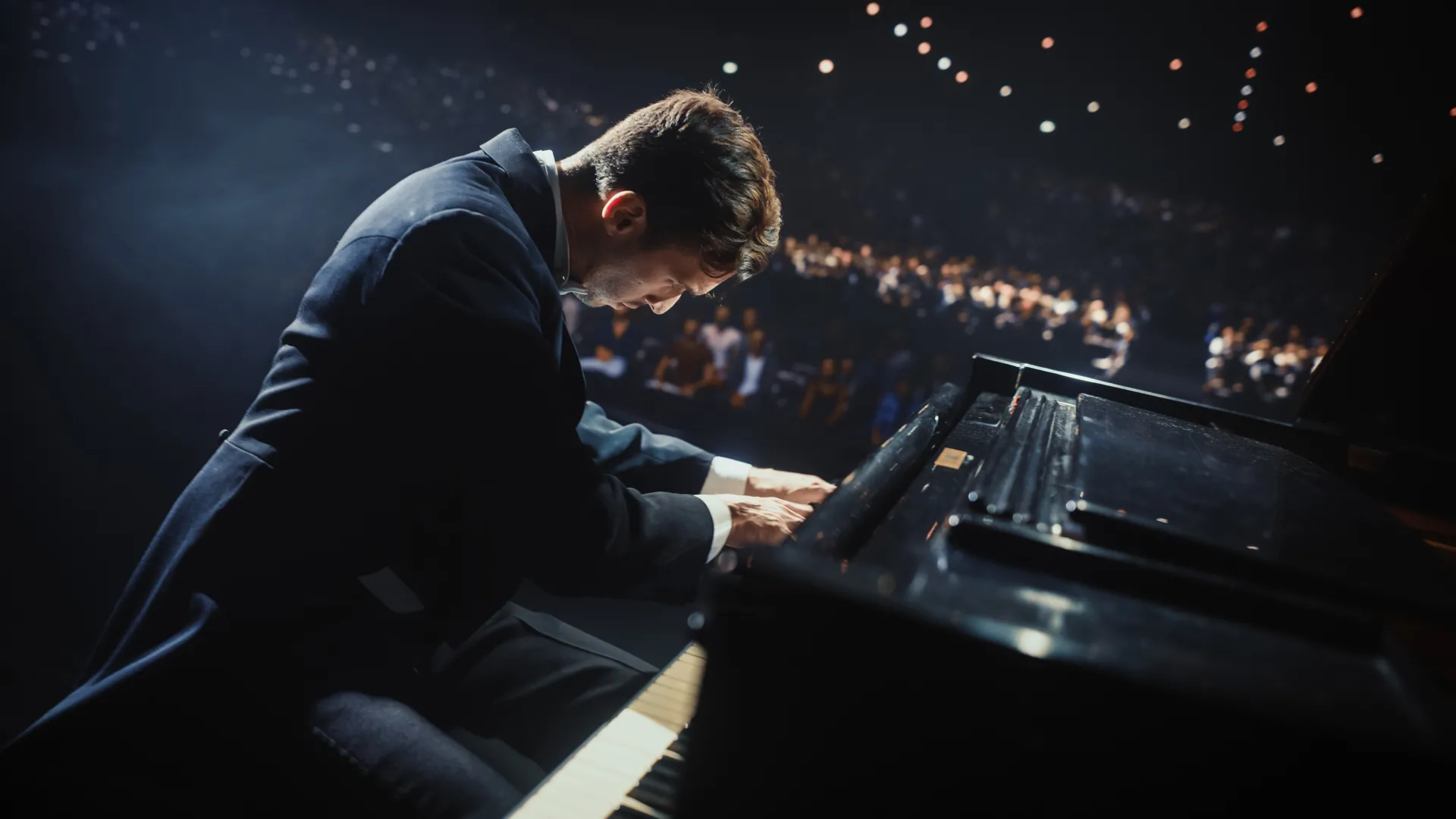
For centuries, the debate has echoed through practice rooms and concert halls: does a pianist’s touch truly alter the inherent sound of a piano, or is the resulting timbre solely a product of the instrument’s mechanics? Skeptics, often rooted in a purely mechanical understanding of sound production, argued that once a hammer strikes a string, the sonic outcome is predetermined. However, a landmark scientific study, spearheaded by researchers at the NeuroPiano Institute and Sony Computer Science Laboratories, Inc., has now provided compelling, high-resolution evidence that the subtle, nuanced movements of a pianist’s fingers and hands demonstrably shape a piano’s timbre, influencing qualities listeners perceive as brightness, heaviness, and clarity.
Unraveling the Hidden Dynamics of Expressive Piano Playing
The groundbreaking research, published in the esteemed journal Proceedings of the National Academy of Sciences (PNAS), employed cutting-edge ultra-high-speed sensing technology to meticulously capture the dynamic interplay between pianist and piano. Led by Dr. Shinichi Furuya, the team’s objective was to move beyond subjective musical descriptions and quantify the physical actions that contribute to expressive piano playing. Their findings challenge decades of skepticism and offer a scientific validation of an artistic intuition long held by musicians and educators alike.
A Century-Long Musical and Scientific Conundrum
The question of whether a pianist’s touch can truly influence timbre has been a persistent point of contention since the early 20th century. Musicians have long used evocative adjectives such as "warm," "dark," "bright," and "heavy" to describe piano tones. While these descriptions are fundamental to musical pedagogy and performance practice, many scientific perspectives viewed them as subjective interpretations, attributing perceived differences primarily to variations in volume (dynamics) or timing (articulation), rather than the direct manipulation of sound quality itself. This scientific viewpoint suggested that the physical properties of the piano – its construction, materials, and tuning – were the dominant factors in determining timbre, leaving little room for the player to influence the sonic character beyond basic loudness.
The current research directly confronts this entrenched notion. By developing and utilizing a sophisticated noncontact sensing system dubbed "HackKey," the researchers achieved an unprecedented level of precision and speed in data acquisition. This custom-built apparatus was capable of recording the movements of all 88 piano keys simultaneously at an astonishing rate of 1,000 frames per second, coupled with microscopic spatial resolution. This technological feat allowed for the capture of minute, rapid motions that were previously undetectable and unquantifiable.
To test their hypothesis, twenty internationally acclaimed pianists were enlisted for the study. These virtuosos were instructed to play individual notes with the deliberate intention of producing contrasting tonal qualities. Specifically, they were asked to execute notes that they perceived as "bright versus dark" and "light versus heavy." This experimental design ensured that the pianists were actively attempting to leverage their touch to create distinct timbral effects, providing rich data for analysis.
The subsequent listening tests yielded remarkable results. Not only were listeners consistently able to identify the intended timbres produced by the pianists, but this ability was present even among individuals with no formal musical training. This broad recognizability suggests that the physical actions influencing timbre are not esoteric techniques understood only by seasoned musicians, but rather fundamental aspects of sound production that resonate with a wider audience. Furthermore, professional pianists participating in the listening tests demonstrated an even greater sensitivity to these subtle timbral variations, underscoring the refined control that advanced musicians possess.
The Undetected Artistry: Micro-Movements as the Key to Timbre
The meticulous analysis of the captured data revealed that a surprisingly small number of highly precise movement features were strongly correlated with perceived timbral changes. These critical elements included subtle variations in acceleration, minute adjustments in timing, and the synchronization between the pianist’s hands. These were not gross motor movements, but rather delicate, almost imperceptible gestures that, when executed with intention, appeared to have a significant impact on the listener’s perception of sound.
A particularly illuminating finding was the demonstration that altering even a single, specific movement feature could reliably shift how listeners described the sound. This provided direct, causal evidence that touch itself plays a fundamental role in shaping timbre, acting independently of, or in conjunction with, other musical parameters like loudness or tempo. This discovery moved the debate from correlation to causation, proving that the physical act of playing, through its fine-tuned movements, directly influences the sonic outcome.
The researchers posited that these subtle gestures are not innate but rather are honed through years of dedicated practice and represent a sophisticated, shared motor skill developed by advanced pianists. This suggests that the artistry associated with piano tone is not merely an abstract or subjective concept but is grounded in tangible, measurable physical actions. Dr. Furuya articulated this point, stating that the research aims to bridge the gap between long-held artistic intuition and empirical scientific understanding. The study validates the lived experience of countless pianists while simultaneously offering a scientifically rigorous explanation for how skilled movement translates into profound emotional and aesthetic experiences in music.
Far-Reaching Implications: Beyond the Concert Hall
The implications of this research extend significantly beyond the realm of classical music performance. The detailed understanding of how precise motor control influences perception holds potential for transformative applications across various scientific and educational disciplines.
One immediate area of impact is music education. The findings could revolutionize pedagogical approaches by making the teaching and visualization of expressive techniques more concrete. Instead of relying on abstract or ambiguous instructions like "play warmer" or "use a lighter touch," future training systems could potentially incorporate visual aids or haptic feedback that demonstrate the precise physical movements associated with achieving specific tonal qualities. This could accelerate learning and empower students to develop a more nuanced and controlled approach to their playing from an earlier stage.
Beyond music, the research offers valuable insights for rehabilitation science, neuroscience, and human-computer interaction. The study highlights the profound capacity of advanced motor control to shape sensory perception itself, providing critical clues about how the brain integrates movement with sensory experience. This could lead to the development of more effective therapeutic interventions for individuals with motor impairments or sensory processing disorders. For example, understanding how subtle movements influence auditory perception could inform the design of assistive technologies or rehabilitation exercises that leverage this connection.
In the field of robotics and human-computer interaction, the research can inform the development of more sophisticated and responsive interfaces. Systems designed to mimic human dexterity and expressiveness could benefit from this understanding of how subtle physical actions translate into perceived qualities. This could lead to more lifelike robotic performers, more intuitive digital musical instruments, and more immersive virtual reality experiences.
Researchers in related fields are already actively exploring technologies inspired by expressive musical performance. Recent advancements in artificial intelligence and music technology have focused on computationally modeling timbre, generating realistic piano motion in digital environments, and developing systems capable of reproducing the subtle expressive nuances of human performance. The current study provides a crucial scientific foundation for these endeavors, offering a deeper understanding of the underlying physical mechanisms.
The long-term vision suggests that this research could contribute to the creation of more expressive digital instruments, smarter and more personalized training tools for musicians, and even novel rehabilitation systems that utilize the principles of musical movement to enhance dexterity and coordination in patients recovering from injury or neurological conditions.
Illuminating the Science of Creativity
This study also contributes to a burgeoning scientific effort to demystify and understand the nature of creativity. For many years, research into musical perception primarily focused on quantifiable elements such as pitch, loudness, and rhythm. Timbre, being a more complex attribute involving higher-level sensory interpretation and emotional response, has remained a more elusive subject for scientific inquiry.
By meticulously identifying specific physical actions directly linked to timbre perception, the researchers have effectively opened a new avenue for studying how artistic expression emerges from the intricate interplay between the physical body, the brain, and the resulting sound. This research moves beyond simply analyzing the finished product of art to understanding the fundamental processes by which it is created.
The work is part of a broader interdisciplinary movement, sometimes referred to as "dynaformics," which seeks to scientifically explore the mechanics and artistry of music performance. Proponents of this field believe that a deeper scientific understanding of performance can lead to more efficient musician training, a reduction in performance-related injuries, and strategies for overcoming physical limitations that can arise from years of intense practice.
The excitement surrounding these findings stems not only from resolving a long-standing debate within the music world but also from revealing that a significant portion of music’s emotional power may originate from movements so subtle they are nearly imperceptible, yet executed with a precision that allows human listeners to viscerally feel the difference. This scientific validation of the "invisible artistry" of a pianist’s touch offers a profound new perspective on the physical underpinnings of aesthetic experience.