Jono Maryono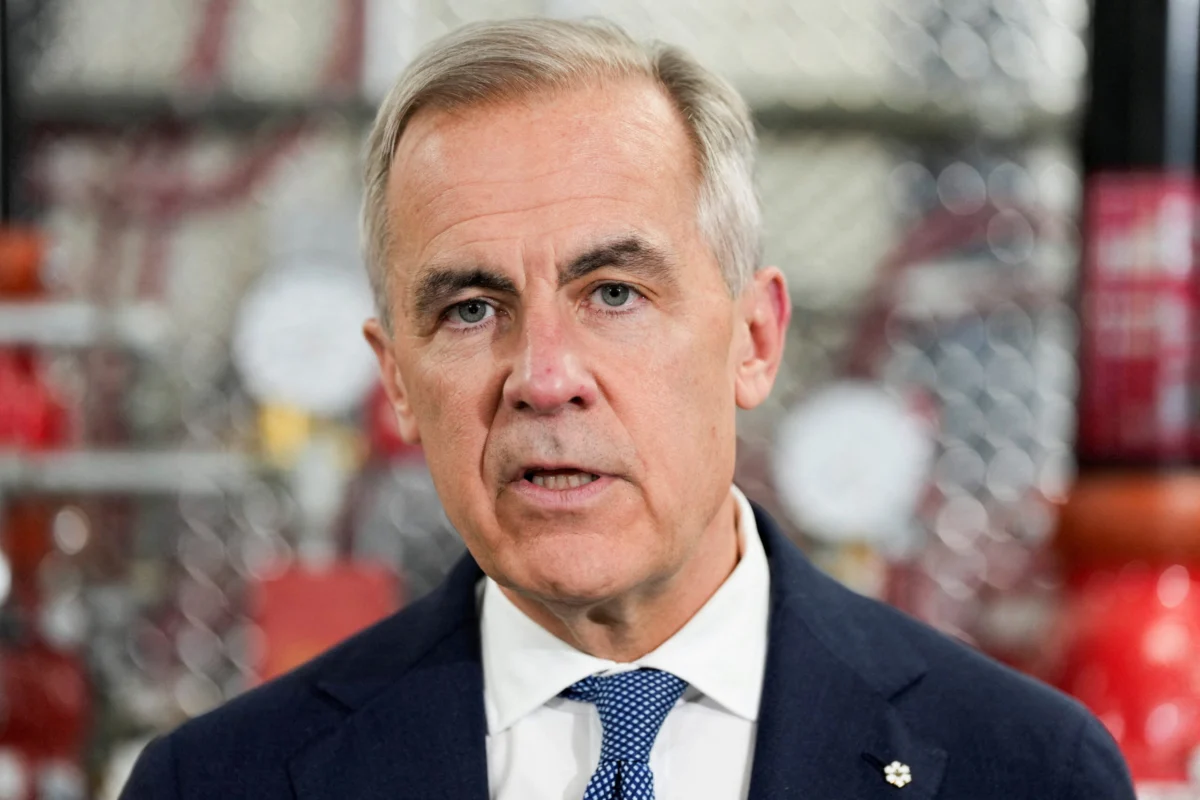
Canadian Prime Minister Mark Carney has voiced strong disapproval regarding the "appalling" treatment of individuals, including Canadian citizens, aboard a humanitarian aid flotilla destined for Gaza. The Prime Minister’s remarks, communicated via a government news release on Monday, followed a phone call with Israeli President Isaac Herzog. While Carney has demanded an independent inquiry into the alleged mistreatment, his government has thus far refrained from announcing any new punitive measures against Israel.
The incident that triggered this diplomatic exchange involved a video shared by Israel’s Minister of National Security, Itamar Ben-Gvir, depicting activists bound, taunted, and forced to kneel. These activists were participating in the "Global Sumud Flotilla," an initiative aimed at challenging the ongoing Israeli blockade and the dire humanitarian situation in Gaza. The flotilla, comprising approximately 70 boats and 3,000 participants, launched from the Mediterranean Sea on April 12, seeking to deliver vital aid to the besieged Palestinian territory.
Background and Chronology of the Flotilla Incident
The Global Sumud Flotilla represents the latest in a series of attempts by international activists to breach the Israeli-Egyptian blockade of Gaza, a blockade that has been in place since 2007. These missions, often referred to as "freedom flotillas," aim to highlight the humanitarian crisis in Gaza and protest what organizers describe as Israeli abuses.
The current flotilla encountered Israeli forces in international waters. According to Amnesty International Australia, nearly 430 individuals were detained when Israeli forces boarded their vessels. The operation, described by organizers as an act of defiance against perceived violations of international law, has now become a focal point of international concern.
Activists aboard the flotilla have come forward with harrowing accounts of their detention. These testimonies echo those of participants in previous flotillas, who have also alleged mistreatment and abuse while in Israeli custody. Reports from detained activists include allegations of physical abuse and, alarmingly, instances of sexual assault, with at least 15 individuals reportedly experiencing such violations, including rape.
Israel, in its response to the incident, has asserted without providing evidence that the flotilla activists were motivated by or associated with Hamas, labeling them as "supporters of terrorism." This narrative has been consistently employed by Israeli officials to justify their actions against aid convoys and maritime initiatives targeting Gaza.
International Condemnation and Divergent Responses
The video released by Minister Ben-Gvir has ignited a wave of global condemnation. Several nations have issued formal statements expressing their outrage. However, the nature and severity of the responses have varied significantly.
France has taken a notably strong stance, announcing a ban on Minister Ben-Gvir’s entry into its territory. The French government cited his "unspeakable actions towards French and European citizens who were passengers on the Global Sumud Flotilla" as the reason for this punitive measure. Poland has similarly implemented a five-year ban against Ben-Gvir. Leaders in France and Italy have also urged the European Union to consider sanctions against the Israeli minister.
Italian Prime Minister Giorgia Meloni has warned that Israel’s actions "violate human dignity." In response to the flotilla incident, both Meloni and other European leaders have summoned their respective Israeli ambassadors to convey their deep concerns.
Despite this international outcry, Israel has historically faced limited tangible consequences for alleged human rights violations. Reports from organizations like Amnesty International and B’Tselem have long documented systemic issues, including accusations of torture and inhumane conditions within Israeli detention facilities, as well as the implementation of an "apartheid" system to discriminate against Palestinians and dispossess them of their land.
Canada’s Position: A Call for Investigation Amidst Restraint
Prime Minister Mark Carney’s statement on Monday emphasized Canada’s stance against the "appalling treatment" of the flotilla participants. The news release detailing his call with President Herzog stated: "The Prime Minister reiterated that the appalling treatment of civilians, including Canadian citizens, aboard the Gaza-bound flotilla was unacceptable."
Carney specifically demanded an "independent investigation" into the alleged mistreatment. This call for an inquiry aligns with international human rights norms, which advocate for thorough and impartial investigations into allegations of abuse.
However, the Canadian government’s response has been characterized by its reluctance to impose new pressures or penalties on Israel. This approach appears to balance diplomatic condemnation with a cautious foreign policy, a stance that has drawn criticism from human rights advocates who argue for more robust action.
In addition to the flotilla issue, Prime Minister Carney used the call with President Herzog to reaffirm Canada’s opposition to the expansion of Israeli settlements in the occupied West Bank. He also condemned the "rampant violence" perpetrated by Israeli settlers against Palestinians, a recurring theme in human rights reports and a significant driver of conflict in the region.
The Humanitarian Catastrophe in Gaza
The context of the Global Sumud Flotilla cannot be separated from the ongoing humanitarian catastrophe in Gaza. Since October 2023, Israel has been engaged in a large-scale military operation, which it describes as a response to Hamas attacks. This operation has resulted in a devastating loss of life, with over 75,000 Palestinians reportedly killed, and a widespread displacement of the civilian population. Survivors face dire conditions, including severe malnutrition and lack of essential resources.
Prime Minister Carney acknowledged the gravity of the situation in Gaza, describing the humanitarian conditions as "catastrophic" in his Monday statement. The blockade, which has been a long-standing policy, severely restricts the flow of aid, goods, and people, exacerbating the humanitarian crisis.
Diplomatic Engagements and Consular Concerns
Canada’s Minister of Foreign Affairs, Anita Anand, has also engaged in diplomatic efforts concerning the flotilla incident. She reported speaking with her Israeli counterpart, Gideon Saar, and communicated that the Canadian government would provide Israel with evidence of the mistreatment of Canadian citizens who were part of the flotilla.
Minister Anand specifically raised the issue of consular access, stating, "I raised that denying Canadian citizens access to consular services while they were detained violates the Vienna Convention and must never happen again." The Vienna Convention on Consular Relations outlines the rights and obligations of consular officers and the treatment of foreign nationals in detention. Ensuring access to consular services is a fundamental right for citizens detained abroad, and its denial is a serious breach of international diplomatic norms.
Broader Implications and Analysis
The incident surrounding the Global Sumud Flotilla and the international response highlight several critical points:
- The Persistence of Humanitarian Blockades: The ongoing blockade of Gaza, coupled with the interception of humanitarian aid missions, underscores the international community’s struggle to effectively address the humanitarian crisis in the Palestinian territories.
- Divergent Diplomatic Approaches: The varied responses from different nations, ranging from strong sanctions to verbal condemnations, reveal the complex geopolitical landscape and the differing priorities of global powers in addressing the Israeli-Palestinian conflict.
- The Role of International Law: The allegations of abuse and the denial of consular services raise significant questions about Israel’s adherence to international law, including the Geneva Conventions and the Vienna Convention.
- The Power of Information and Activism: The release of videos and the testimonies of activists play a crucial role in bringing alleged abuses to light and mobilizing international pressure. However, their effectiveness is often limited by the political will of governments to act decisively.
- Canada’s Balancing Act: Canada’s position, characterized by condemnation of mistreatment and a call for investigation without immediate punitive action, reflects a common diplomatic strategy aimed at maintaining dialogue while expressing disapproval. This approach is often seen as a middle ground, seeking to influence policy without severing diplomatic ties or imposing measures that could have significant economic or political repercussions. The effectiveness of this approach, however, remains a subject of ongoing debate among foreign policy analysts and human rights advocates.
The demand for an independent investigation into the treatment of flotilla participants by Prime Minister Carney represents a significant diplomatic step. However, the absence of immediate punitive measures signals Canada’s cautious approach, a stance that will likely continue to be scrutinized by those advocating for stronger international accountability for alleged human rights violations. The long-term implications of this incident and Canada’s response will depend on the outcome of the requested investigation and the broader geopolitical dynamics surrounding the Israeli-Palestinian conflict.