Layla Zulfa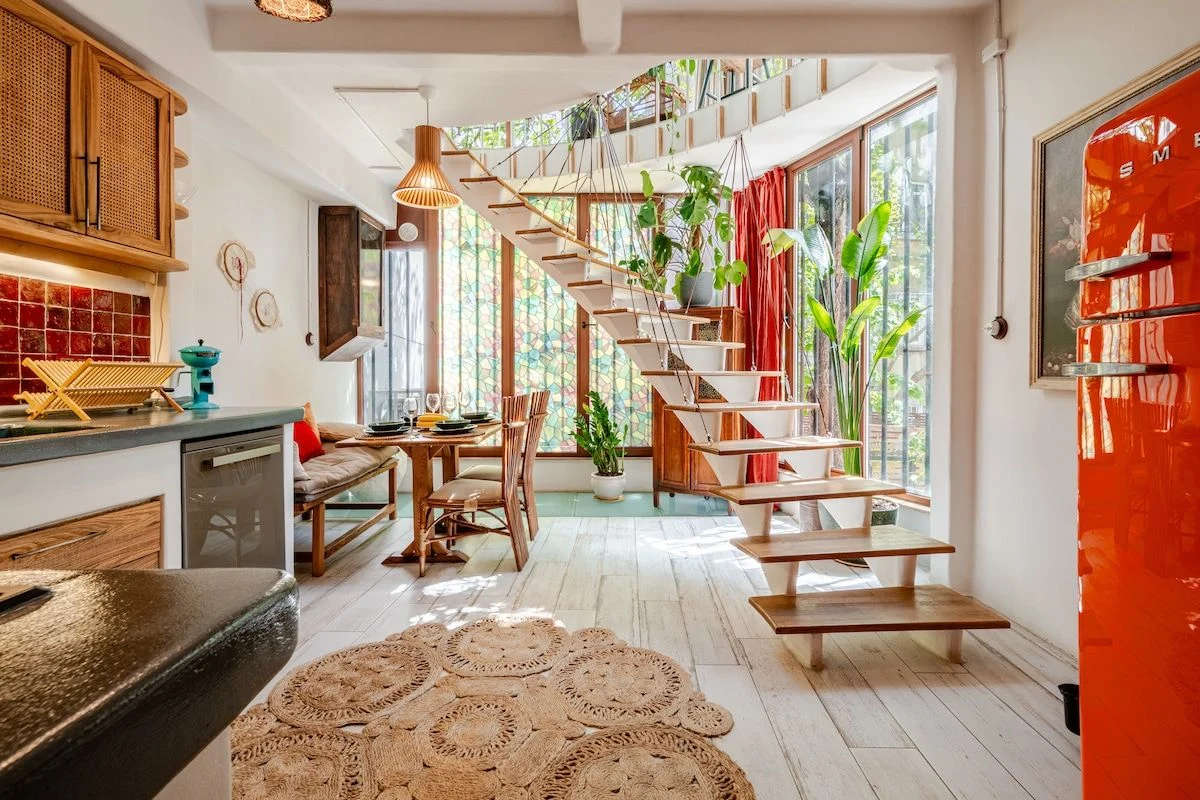
The Historical Context of Istanbul’s Residential Architecture
To understand the significance of Istanbul’s premier short-term stays, one must consider the city’s late 19th-century building boom. During the reign of Sultan Abdulhamid II (1876–1909), the districts of Galata and Pera (modern-day Beyoğlu) underwent a radical transformation. Influenced by European Neoclassical and Art Nouveau movements, Levantine and local architects constructed masonry apartment blocks that replaced traditional wooden structures. These buildings, many of which are now being restored as luxury rentals, feature high ceilings, thick stone walls, and intricate plasterwork designed to accommodate the city’s burgeoning cosmopolitan merchant class.
According to data from the Turkish Statistical Institute (TÜİK), Istanbul welcomed over 17.3 million foreign tourists in 2023, a significant increase that has spurred a competitive market for unique accommodations. This surge in demand has led to a revitalization of historic neighborhoods, where property owners invest heavily in "adaptive reuse," preserving original structural elements while integrating modern amenities such as climate control and high-speed fiber optics.
Premier Architectural Stays in Galata and Beyoğlu
The Galata neighborhood, anchored by its namesake Genovese tower, contains some of the most sought-after historical lofts in the city.
The Bohemian Loft: A Sultan-Era Legacy
Situated in an apartment block commissioned in the 1890s, the Bohemian Loft exemplifies the fusion of late-Ottoman masonry and contemporary interior design. The property retains its original exposed brick and soaring ceilings, which are now contrasted with bold, forest-green joinery and a lime-green SMEG-style refrigerator. Art serves as a central pillar of this space, with contemporary local works adorning walls that once stood during the height of the Ottoman Empire’s modernization. At a starting price of approximately $205 per night, it represents the mid-to-high tier of the Galata heritage market.
The Urgliavich Building: A 158-Year-Old Gem
Perhaps no property captures the historical narrative of Beyoğlu better than the "Historical Gem" located in the Urgliavich Building. Constructed 158 years ago, the building was designed by Antoine Urgliavich, a prominent 19th-century manufacturer of optical lenses. The apartment features a unique wrought-iron balcony specifically designed by Urgliavich for astronomical observation. Today, the interior reflects a "jewel-box" aesthetic, utilizing emerald drapes, Murano chandeliers, and ruby-red tiling. Its proximity to the Galata Tower—mere feet from the balcony—positions it as a prime example of real estate where the location is as significant as the architecture.
The Galata Tower Heritage Loft
This two-bedroom property leans into the industrial romance of the district. It features a spiral staircase dating back to 1876, a period when Galata was transitioning into a financial hub. The design philosophy here is "restrained luxury," where custom cabinetry and polished wood floors allow the 19th-century structural bones to remain the focal point.
Biophilic Design and Green Spaces in an Urban Jungle
While Istanbul is a dense metropolis, a new trend in short-term rentals emphasizes "biophilic design"—the integration of natural elements into the living environment.
The Boheme and the Stunning Duplex with Private Garden
Finding private green space in central Beyoğlu is statistically rare. However, properties like the "Stunning Duplex" have leveraged courtyard architecture to create multi-level oases. This specific duplex pairs Ottoman-inspired geometric screens (mashrabiya) with a lush garden containing magnolia trees and ivy-covered walls. Similarly, "The Boheme" utilizes Mediterranean flora, rattan textures, and a free-standing wood tub to provide a "creative retreat" atmosphere. These properties typically command a premium, with rates ranging from $326 to $386 per night, reflecting the scarcity of private gardens in the historic core.
Market Trends: The Rise of the "Cool Friend" Aesthetic
A distinct shift in the short-term rental market is the move toward "curated lived-in" spaces. The "Modern Duplex With Amazing Views" exemplifies this trend. Rather than the sterile environment of a boutique hotel, the space is designed to mimic the home of a well-traveled intellectual. Shelves are stocked with design books and novels, greenery is placed in every corner, and vintage furnishings are mixed with playful elements like disco balls. This approach targets the "digital nomad" and "creative class" demographics, which prioritize high-speed Wi-Fi and dedicated workspaces alongside aesthetic inspiration.
Strategic Logistics and Group Travel
For larger delegations or multi-generational families, the "Urban Loft" provides a rare high-capacity option in Galata. With five bedrooms and an in-house bar, the property bridges the gap between a private residence and a social venue. Its $714-per-night starting price reflects the logistical difficulty of finding large-scale, high-design accommodations in a district characterized by narrow streets and smaller historical footprints.
Conversely, for those focusing on the "Old Town" (Sultanahmet and Fatih), the "Old Town Style" stone house offers a departure from the ornate Ottoman style. It utilizes a Nordic-modern palette—clean lines and restrained colors—providing a visual palate cleanser for guests who spend their days exploring the dense ornamentation of the Blue Mosque and the Hagia Sophia.
Regulatory Environment and Industry Implications
The growth of these high-end Airbnbs has not occurred in a vacuum. On January 1, 2024, the Turkish government implemented new regulations governing short-term rentals. Under the new law, hosts must obtain a tourism license from the Ministry of Culture and Tourism and display a government-issued plaque outside the property. Furthermore, in multi-unit buildings, hosts must obtain unanimous consent from all neighbors before operating.
Industry analysts suggest these regulations are designed to professionalize the sector and ensure that historic buildings meet safety and fire standards. While some smaller operators have exited the market, the curated "Superhost" listings—such as those featured in this guide—have largely adapted, viewing the regulations as a way to distinguish high-quality heritage stays from unregulated "ghost hotels."
Chronology of Neighborhood Development
- 1348: Completion of the Galata Tower by the Genoese, establishing the area as a European enclave.
- 1860s-1890s: The "Grand Rue de Pera" (Istiklal Avenue) becomes the heart of Ottoman high society; masonry apartments like the Urgliavich Building are constructed.
- 1923: The founding of the Republic leads to a shift in political focus to Ankara, but Istanbul remains the cultural capital.
- 2010: Istanbul is named the European Capital of Culture, sparking a massive wave of restoration in Beyoğlu and Galata.
- 2020-2024: Post-pandemic recovery sees a surge in "experiential travel," with a 25% increase in demand for "unique" and "historical" home categories on rental platforms.
Conclusion: The Broader Impact on Istanbul’s Identity
The proliferation of architecturally significant short-term rentals has a dual impact on Istanbul. On one hand, it provides the capital necessary to restore crumbling 19th-century facades that might otherwise face demolition. On the other, it accelerates gentrification in neighborhoods like Karaköy and Galata, shifting the local economy toward high-value tourism.
For the traveler, these spaces offer more than just a place to sleep; they function as private galleries of Istanbul’s evolution. Whether it is sipping Turkish tea on a balcony overlooking the Bosphorus ferries or reading under the high ceilings of an 1890s loft, these stays allow visitors to participate in the ongoing story of a city that has spent millennia reinventing itself. As Istanbul continues to modernize, the preservation of its residential "soul" through thoughtful design remains a critical component of its global appeal.