
 Ronny Sianturi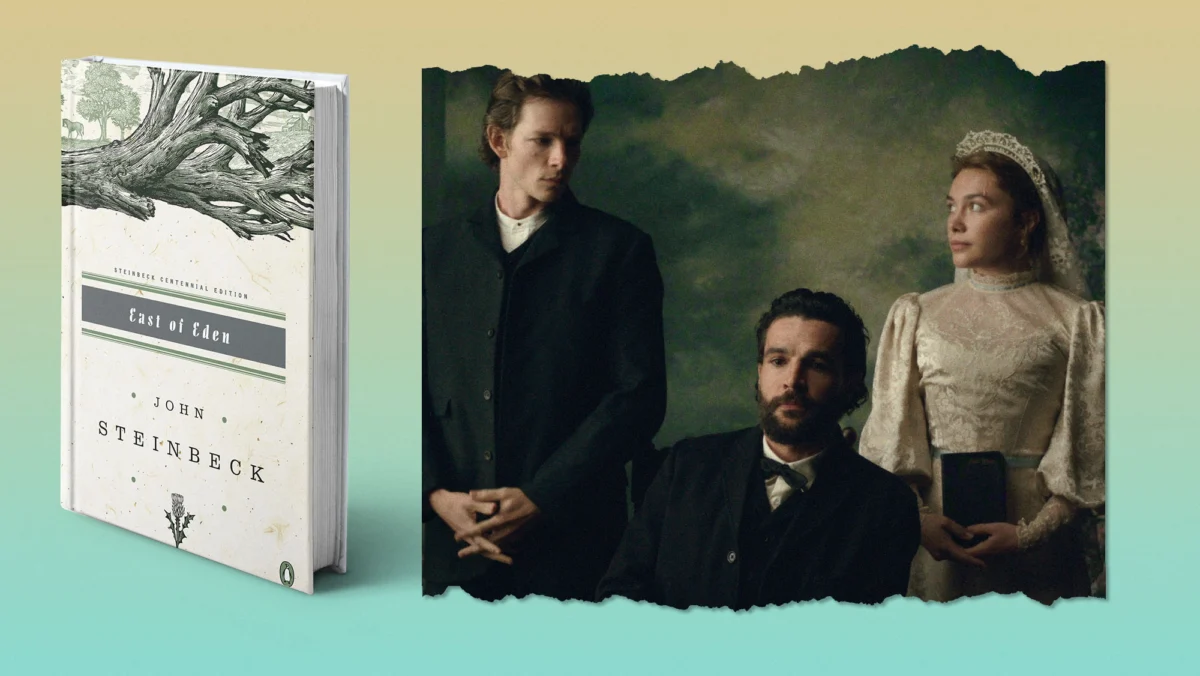
The enduring power of literary classics on modern screens continues to capture global audiences, most recently exemplified by Netflix’s ambitious seven-episode adaptation of John Steinbeck’s monumental 1952 novel, East of Eden. Spearheaded by creator, writer, and executive producer Zoe Kazan, the series premiered on October 1, bringing a deeply psychological, novelistic approach to a generational saga that has fascinated readers for decades. Featuring an ensemble cast led by Florence Pugh, Christopher Abbott, and Mike Faist, this latest translation of Steinbeck’s work seeks to correct the perceived oversights of historical adaptations while interrogating the material through a contemporary, psychologically attuned lens.
Main Facts and Production Overview
Netflix’s East of Eden spans a sprawling narrative framework, though Kazan and co-showrunner Jeb Stuart deliberately narrowed their scope to focus intensely on character dynamics rather than sweeping spectacle. The series features Florence Pugh as the complex and menacing Cathy Ames, Christopher Abbott as the idealistic and passive Adam Trask, and Mike Faist as Charles Trask. Additional cast members include Hoon Lee as Lee, Joseph Zada as Cal Trask, Joe Anders as Aaron Trask, and Zoe Phillips as Abra Bacon.

Despite a generous seven-hour runtime, the adaptation consciously omits roughly half of Steinbeck’s voluminous text. Kazan prioritized an intimate exploration of human nature, explicitly instructing every department head—from costume design to hair and makeup—that success would be measured solely by whether viewers remembered the characters as if they were real people, rather than focusing on period-accurate aesthetics.
Chronology and Personal History with the Material
John Steinbeck’s East of Eden has maintained a profound presence in popular culture since its publication during the post-World War II literary boom. The novel, which explores the intertwined fates of the Trask and Hamilton families across generations in Salinas Valley and Connecticut, famously received a landmark Hollywood feature film adaptation in 1955 directed by Elia Kazan—the grandfather of the current series creator. That initial cinematic treatment, starring James Dean in his breakout feature role alongside Raymond Massey and Jo Van Fleet, focused primarily on the final section of the book.
For Zoe Kazan, the journey to adapting the novel was a lifelong endeavor rooted in a first reading at age 15. However, the path to production required decades of personal and professional maturation:

- Teenage Discovery: Kazan first reads East of Eden at 15, identifying it alongside Jane Eyre and The Great Gatsby as a formative literary experience.
- The 1955 Film Critique: Viewing her grandfather’s classic film, Kazan notes the absence of key elements, including the complex psychological portrait of Cathy Ames, the intergenerational scope, and prominent characters like Lee and Samuel Hamilton.
- Career Turning Point: Following the birth of her child, Kazan recalibrates her writing career, specifically instructing her agents to secure the rights to East of Eden if they ever became available.
- Pitch and Development: Roughly a year and a half later, Kazan receives a call to pitch the series to Netflix, eventually partnering with co-showrunner Jeb Stuart.
- Premiere: The seven-part series officially debuts on Netflix on October 1, joining a wave of classic literature adaptations released throughout the year, including new takes on Sense and Sensibility, The Odyssey, Wuthering Heights, and A Tale of Two Cities.
Character Analysis and Modern Interpretations
A central triumph of Kazan’s adaptation lies in its reframing of the novel’s central figures through modern psychological understanding. Rather than relying on traditional melodramatic tropes, the creative team focused on agency, trauma, and societal pressures.
Florence Pugh’s portrayal of Cathy Ames represents a distinct departure from traditional villain archetypes. Drawing upon her own life experiences with early sexualization and targeted scrutiny, Kazan interpreted Steinbeck’s surreal, Alice in Wonderland-esque imagery regarding Cathy’s youth as a portrait of severe dissociation. Kazan posits that despite her deceptions, Cathy is frequently telling the truth—a realization that fundamentally alters how the character’s trajectory is perceived.
"She is absolutely deceptive in so many ways, but she is almost always saying something that is true," Kazan noted. Co-showrunner Jeb Stuart echoed this sentiment, viewing Cathy as a bellwether for enduring questions surrounding women’s rights and bodily autonomy across centuries.

Similarly, Christopher Abbott approached the multifaceted evolution of Adam Trask by leaning into the character’s deliberate passivity. Abbott noted that playing a character across decades—a rare opportunity in television—allowed for a profound exploration of a life fully lived, where Adam’s refusal to confront reality stems from a desperate grip on an idealized dream.
Hoon Lee’s interpretation of Lee introduces heightened depth to a character whose historical depiction in Steinbeck’s text occasionally relied on outdated racial descriptions. Lee observed that attempting to strictly recreate a 1950s worldview would render the narrative irrelevant to contemporary viewers. Instead, the adaptation honors Lee’s parental labor and protective privacy, drawing a direct line to modern discussions around identity, code-switching, and societal discrimination.
Official Statements and Industry Context
The creative team has consistently emphasized that the primary objective of the series is emotional resonance rather than historical museum-piece accuracy.

"We want people to go away from this thinking not how great somebody’s hairdo is and it looks so authentic for the 19th century, but that could be my sister. That could be my brother," Jeb Stuart explained regarding the team’s overarching philosophy.
Hoon Lee elaborated on the necessity of re-lensing classic texts for contemporary audiences during the series premiere: "Zoe is clearly very interested in re-lensing this story through a modern context and all of the things that we have come to know more deeply about human psychology… I do feel like it would be a very dangerous trap to try to recreate a 1950 world in this story."
Broader Impact and Implications
The release of Netflix’s East of Eden arrives amid a broader industry trend of revisiting foundational literary canons through serialized television, offering expansive storytelling formats capable of capturing the novelistic depth that two-hour films historically miss.

From an analytical standpoint, Kazan’s adaptation underscores a growing demand for adaptations that engage critically with the biases and blind spots of mid-20th-century literature without discarding the source material’s core philosophical inquiries. By emphasizing Steinbeck’s central thesis—that humanity possesses the moral agency to choose between repeating generational trauma and forging a new path—the series bridges 19th- and 20th-century historical frameworks with 21st-century psychological discourse.
Ultimately, Kazan expresses hope that the series will serve as an invitation rather than a replacement, encouraging modern audiences to explore the remaining literary treasures within Steinbeck’s original text. East of Eden is currently streaming worldwide on Netflix.








