Ferry Irwandi
The global wellness industry has spent the past decade obsessing over Scandinavian lifestyle philosophies. From Denmark’s concept of hygge, which emphasizes intentional presence and cozy comfort, to Norway’s friluftsliv, or open-air living, and Finland’s sisu, which translates to stoic grit, the Nordic region has consistently exported ideas designed to combat modern burnout. Even Sweden’s concept of lagom—the pursuit of optimal balance, meaning "just the right amount"—captured the international imagination, inspiring a wave of bestselling literature and lifestyle changes. While these philosophies are often marketed abroad as distinct, novel interventions, they are fundamentally regional expressions of a shared cultural ethos: an egalitarian, sustainable, and deeply ingrained commitment to holistic well-being that bridges the gap between daily life and the natural world.
Now, a new export from the region is poised to dominate the global fitness landscape. Nordic walking—a structured physical activity utilizing specially designed poles alongside regular strides—is rapidly expanding beyond its European origins to capture international audiences seeking low-impact, highly effective exercise. Far from being a fleeting trend, the activity is grounded in decades of athletic history, physiological science, and a cultural framework that prioritizes accessible, lifelong movement.
Origins and Evolution: From Cross-Country Skiing to Public Health
The roots of Nordic walking extend back nearly a century, far removed from modern fitness studios and wellness retreats. During the 1930s, competitive cross-country skiers in Scandinavia sought a method to maintain their cardiovascular endurance and upper-body strength during the snowless summer months. Athletes began combining running shoes with ski poles, simulating the motion of skiing on dry land to maintain peak physical condition year-round.
For decades, this training method remained largely confined to professional athletics. However, a significant cultural shift occurred in 1966 when Leena Jääskeläinen, a physical education teacher in Finland, introduced the concept of using ski poles to the general public. This marked the first documented instance of the technique being adapted for recreational fitness outside of competitive sports.
The practice gained formal institutional structure in the late 1990s, driven largely by Aki Karihtala, then head of the sports division at Exel, a Finnish sporting goods manufacturer and the world’s largest producer of cross-country ski poles. In 1997, Exel engineered the first commercial poles specifically tailored for the activity, branding them as Nordic Walker poles. Alongside his team, Karihtala officially coined the term "Nordic walking" to differentiate the structured fitness discipline from casual hiking or trekking.
By 1998, the movement had achieved critical mass in Finland. Within a single year, an estimated 500,000 citizens—out of a total national population of roughly five million—had tried the activity. Recognizing the need for standardized instruction to maximize health benefits and prevent injury, the International Nordic Walking Federation (INWA) was established in 2000. The governing body subsequently developed the progressive INWA 10 Step Method, designed to teach proper biomechanics to participants safely and effectively. Today, the INWA reports that Nordic walking is practiced in more than 40 countries, serving as a tool for general health, physical rehabilitation, social recreation, and competitive sport.
Biomechanics and Physiological Benefits

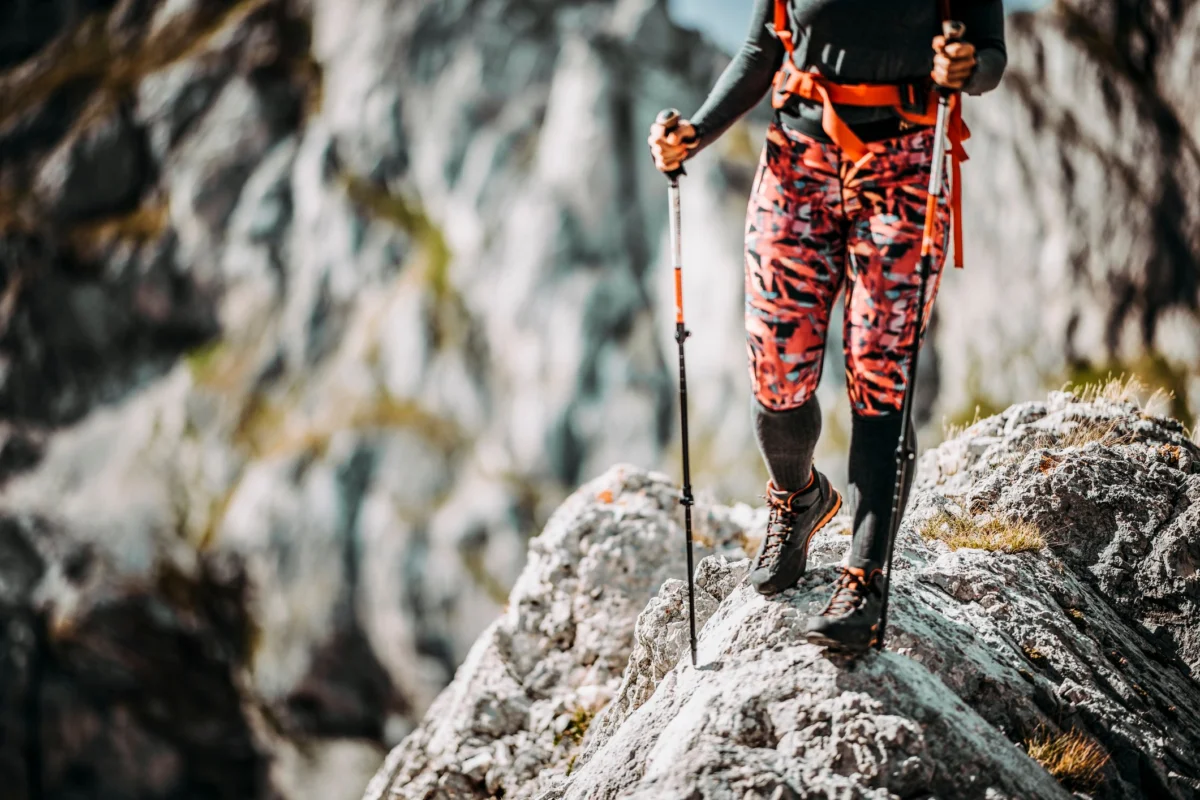
The surge in global popularity is underpinned by robust physiological advantages that distinguish Nordic walking from traditional walking or standard hiking. According to sports science research, the inclusion of ergonomically designed poles fundamentally alters the mechanics of locomotion, transforming a lower-body exercise into a total-body workout.
When performed correctly, Nordic walking engages approximately 90 percent of the body’s skeletal muscles, activating the upper back, shoulders, chest, and arms in addition to the core and lower extremities. This comprehensive engagement significantly increases caloric expenditure compared to regular walking at the same speed, with studies showing an increase in energy consumption of up to 20 to 30 percent.
Crucially, the activity achieves this higher cardiovascular intensity while mitigating physical stress on weight-bearing joints. The poles act as shock absorbers, redistributing a portion of the body’s weight away from the knees, hips, and lower back. This makes Nordic walking particularly suitable for populations often underserved by high-impact fitness trends, including older adults, individuals recovering from injuries, and those managing chronic joint conditions. Furthermore, the upright posture required by the technique promotes improved spinal alignment and core stability, counteracting the postural strains associated with sedentary, desk-bound lifestyles.
Societal Foundations and the Appeal of Inclusivity
The global resonance of Nordic walking—and broader Nordic wellness trends—cannot be separated from the socio-cultural infrastructure of the countries from which they originate. Nordic societies are characterized by egalitarian principles, high levels of social trust, and a cultural emphasis on accessibility.
A cornerstone of this framework is the legal right to roam, known in Sweden as Allemansrätten and found in similar forms across the Nordic region. This government-sanctioned, free access to nature guarantees every individual the right to traverse, forage, and recreate in forests, lakeshores, and mountains, provided they respect the environment. By removing financial and geographical barriers to nature, these nations foster a symbiotic relationship between citizens and the outdoors from an early age.
This accessibility translates directly into fitness philosophies that reject exclusivity. Unlike trend-driven boutique fitness regimes that often demand significant financial investment or elite physical conditioning, Nordic walking requires minimal equipment—essentially a pair of specialized poles and comfortable footwear—and can be practiced nearly anywhere, from urban parks to rural forest trails.
Aki Karihtala, president of the INWA, emphasizes this universal appeal, noting that the activity has been adopted globally "regardless of age, religion, and culture, because there are no boundaries." The communal, social nature of the practice further enhances its psychological benefits, offering participants an opportunity for human connection that counters the isolation prevalent in modern urban environments.
The Macro Trend: A Return to Simplicity

The current international appetite for Nordic lifestyle rituals represents a broader cultural correction against the hyper-monetized, stress-inducing wellness culture of recent decades. For years, the wellness industry promoted intensive workout regimes, restrictive diets, and complex self-care protocols that frequently generated their own forms of anxiety.
In contrast, Nordic wellness offers a framework of radical simplicity. Katja Presnal, a Finnish trend and branding expert who spent two decades studying global lifestyle movements, highlights the irony of her native region’s practices becoming the world’s latest fitness obsession. After years of international travel and observing consumer habits, Presnal chose to step away from professional trend forecasting. She relocated to a century-old former dairy tucked away in the Finnish countryside, seeking a slower, more intentional daily existence.
"It was about making everyday life a wellness regimen and creating my own 365-day retreat," Presnal explains. Reflecting on her upbringing in the Turku archipelago, surrounded by forests and waterways, she notes that the practices now marketed globally as revolutionary wellness tools were simply the unpretentious fabric of her childhood. "You don’t recognize your Nordic way of living as something special that could become a global trend or could be taught and shared with somebody because it’s just a part of who you are."
Implications for the Global Wellness Economy
As chronic stress, sedentary work environments, and lifestyle-related health conditions continue to challenge healthcare systems worldwide, the demand for sustainable, low-barrier physical activities is projected to grow. The expansion of Nordic walking reflects a measurable shift in consumer preferences away from high-intensity, high-risk training models toward longevity-focused fitness.
From an economic perspective, the trend signals opportunities for sporting goods manufacturers, tourism boards, and healthcare providers. Tourism operators in Scandinavia and beyond are increasingly packaging Nordic walking excursions, combining outdoor recreation with cultural immersion and culinary tourism. Meanwhile, medical and rehabilitation sectors are evaluating the clinical applications of pole walking for cardiac rehabilitation, Parkinson’s disease management, and geriatric mobility programs.
Ultimately, the impending ubiquity of Nordic walking underscores a growing global realization: that effective health interventions do not require technological complexity or financial excess. By returning to the foundational principles of human movement, connection with nature, and community, this centuries-old Finnish winter training method offers a blueprint for sustainable well-being in the twenty-first century.