
 Ana Megawati
A new study from the University of Pennsylvania has delved into the elusive question of what transforms an ordinary day into something truly remarkable, uncovering specific activity thresholds linked to individuals reporting a "good day." Dunigan Folk, a researcher at the university, spearheaded the investigation, leveraging the expansive data from the American Time Use Survey (ATUS) to pinpoint the daily routines most consistently associated with enhanced subjective well-being.
Decoding Daily Happiness: The ATUS and Machine Learning
The American Time Use Survey (ATUS), a comprehensive ongoing study conducted by the U.S. Census Bureau for the Bureau of Labor Statistics, serves as an invaluable repository of daily life in America. Since its inception in 2003, tens of thousands of Americans annually provide detailed accounts of how they spend their time across a 24-hour period. Participants detail their activities in 15-minute increments, covering everything from commuting and working to eating, sleeping, and leisure. Crucially, respondents are also asked to evaluate their day, classifying it as "typical" or "better than average." This rich, granular dataset provided the perfect foundation for Folk and his colleagues to apply advanced machine learning techniques, seeking intricate patterns between specific activities, their durations, and the respondents’ overall assessment of their day.
The research, published last month in the prestigious journal PNAS Nexus, represents a significant step beyond anecdotal evidence, offering data-driven insights into the architecture of a fulfilling day. By analyzing the intricate web of daily activities reported by a diverse cross-section of the population, the study aimed to move closer to understanding the quantifiable elements that contribute to perceived daily happiness. The researchers were particularly interested in identifying not just what activities contributed, but also the optimal volume of engagement for each, revealing a nuanced picture of daily time allocation and its impact on mood and satisfaction. This deep dive into the ATUS data allowed for a more objective, large-scale analysis of time use and well-being than previous smaller-scale qualitative studies.

Key Correlates of a Better-Than-Average Day
The findings of the study illuminate several key activity categories and their respective "sweet spots" for fostering a good day, demonstrating that balance and active engagement are paramount:
-
Social Engagement: Between 30 minutes and two hours of purposeful socialising emerged as a strong positive correlate. This refers to activities where the primary intent was social interaction, such as meeting friends for coffee, attending a community event, engaging in meaningful conversations, or even active online group discussions. The research indicates that while some social interaction is undeniably beneficial, excessive amounts beyond two hours did not yield additional positive returns, suggesting a point of diminishing marginal utility. This finding aligns with broader psychological research on the importance of social connection for mental health.
-
Productive Work: Up to six hours of work was found to be positively associated with reporting a good day. This challenges the common perception that less work invariably leads to greater happiness, suggesting that a degree of productive engagement can contribute to a sense of accomplishment, purpose, and financial security, which are vital components of well-being. This optimal threshold implies that meaningful work, when not excessive, can be a source of satisfaction. However, exceeding this six-hour threshold saw the positive correlation plateau or decline, indicating the critical importance of work-life balance and preventing burnout.
-
Physical Activity: Engaging in up to four hours of exercise was another significant factor. This broad category encompasses various forms of physical exertion, from structured workouts at a gym to recreational sports, walking, cycling, or active hobbies. The benefits of exercise for mental health, including stress reduction, mood elevation, and improved cognitive function, are well-documented, and this study reinforces its role in daily mood enhancement. Similar to other activities, exceeding four hours did not lead to further improvements in reported daily quality, suggesting that while beneficial, there is a saturation point.
-
Family and Friend Time: Spending approximately five to six hours with family and friends also showed a strong positive correlation. This category often overlaps with "socialising" but may include more passive shared experiences within the domestic sphere, like communal meals, running errands together, helping with homework, or simply coexisting in a shared space. The slightly longer optimal duration compared to explicit "socialising" suggests that sustained, close relationships and the comfort of familiar bonds are deeply intertwined with daily contentment and a sense of belonging.
Conversely, the study identified activities that showed no positive correlation with a better-than-average day, offering a counterpoint to common assumptions about relaxation:
-
Housework: Surprisingly, no amount of time spent on housework was linked to people reporting a good day. While essential for maintaining a living environment and often a source of stress if neglected, these tasks appear to be perceived predominantly as chores rather than sources of intrinsic satisfaction or joy. This doesn’t mean they shouldn’t be done, but rather that they don’t contribute to the positive assessment of a day.
-
Passive Leisure (Television): Similarly, "relaxing," predominantly identified by survey respondents as watching television, showed no positive link to a better-than-average day. This finding underscores the distinction between passive consumption and active engagement, suggesting that true restoration or enjoyment might require more interactive, stimulating, or mindful pursuits. While TV can be entertaining, it doesn’t appear to actively improve the overall quality of a day in the way active pursuits do.

Nuance and Caveats: Correlation, Not Causation
While these findings offer compelling insights into daily activity patterns, Dunigan Folk is careful to emphasize the crucial distinction between correlation and causation. "We can’t conclude that any of these activities causally lead to people having better days," he clarified in an interview following the publication. This vital scientific caveat acknowledges that individuals who choose to spend four hours on sports or exercise, for instance, might already be experiencing a positive mood, possess a predisposition towards active lifestyles, or have the resources (time, money, energy) to pursue such activities. The study identifies statistical associations, not direct cause-and-effect relationships, meaning that while these activities are present in "good days," they might not be the sole or direct cause of that goodness.
Furthermore, Folk highlights the "power of choice" and the inherent inequalities in people’s ability to allocate their time. Socioeconomic status, educational attainment, family responsibilities, health conditions, and demanding work schedules significantly influence how much time an individual can realistically dedicate to socialising, exercise, or active leisure. A single parent working multiple minimum-wage jobs, for example, may find it exceedingly difficult to meet these "optimal" thresholds, regardless of their desire for a better day. This perspective adds a vital layer of social context to the research, moving beyond a simplistic "formula for happiness" to acknowledge the structural barriers many face in pursuing these enriching activities. This is not a universal prescription, but rather a data-informed guide for those with the flexibility to adapt.
Despite these important caveats, Folk maintains that the research provides valuable guidance for those seeking to enhance their daily lives. "One broader takeaway is that people would benefit from spending less time on passive leisure and more time on active leisure," he suggested. He hopes the article will encourage individuals to "think more about the trade-offs in their daily life, and the marginal benefits of spending time on different activities," fostering a more intentional approach to daily scheduling and time management.
Real-World Application: The Guardian’s "Good Day" Experiment
Inspired by these rigorous findings, The Guardian newspaper commissioned three of its writers to put the "good day formula" to the test, attempting to consciously reallocate their daily hours to align with the study’s recommendations. Their individual experiences offer a qualitative, real-world perspective on the practicalities, challenges, and serendipitous discoveries of applying scientific findings to the complexities of everyday life.

Emma Joyce: The Juggling Act of Parenthood and Productivity
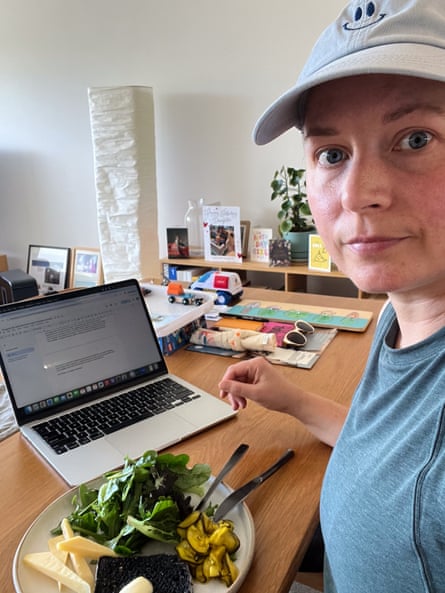
Emma Joyce, a freelance writer and mother of a three-year-old, embarked on her experimental day with a healthy dose of skepticism, particularly concerning the feasibility of fitting in exercise and socialising amidst the relentless demands of early parenthood. Her day began at 4 am with a child seeking comfort, a stark reminder of the unpredictable nature of family life. Despite her child being in daycare for a portion of the day, Joyce committed to spending at least six hours with her family, easily meeting that criterion before and after daycare.
The morning was punctuated by typical toddler meltdowns, yet Joyce noted a surprising sense of optimism. Her freelancer status, while often isolating, afforded her the flexibility to dress in sportswear from the start, a subtle psychological nudge that prepared her for physical activity. Her decision to lace up her running shoes at 11:30 am, embarking on a walk-jog to the harbour, yielded an "instant dopamine hit." This intentional break from a "nonstop work or parenting" week, she observed, was a rare treat, prompting her to realize she likely wouldn’t have exercised without the explicit goal of the experiment. The physical exertion, though leaving her "sore but satisfied," clearly contributed to her feeling good and invigorated.
A significant challenge arose with the study’s "zero hours of housework" recommendation. As a naturally tidy person, Joyce found herself actively resisting the urge to clean a pile of dirty plates, a decision she admitted felt "a bit selfish" but was necessary to adhere to the parameters. Later, a daycare call about a minor incident served as a sharp reminder of how quickly a day can pivot, highlighting the fragility of even the best-laid plans.
Her initial attempt to schedule socialising proved difficult, with a hurried group chat yielding no immediate plans. However, a serendipitous encounter with a friend at a local pub after daycare pickup provided an unexpected and fulfilling ninety minutes of connection. This unplanned social interaction, where laughter and shared woes flowed freely, left her "lighter" and "buoyed by her exciting future plans." Joyce concluded that her intentional pursuit of the "good day" had indeed made it "better-than-average," suggesting that the very act of setting the intention might be a "gamechanger." Her experience underscores that while planning helps, sometimes the best moments arise organically, and an open mindset can facilitate them, even amidst the chaos of family life.

Sunil Badmani: Reimagining the Middle-Aged Schedule
Sunil Badmani, grappling with the typical demands of middle-aged life – work, chores, and care responsibilities – initially found the prospect of engineering a "good day" daunting. His usual routine left little room for "things I love," such as extensive exercise or socialising. The parameters of "up to two hours socialising, no more than six hours’ working, up to four hours’ exercise – and no relaxing (watching TV)" felt restrictive against his packed schedule.
Badmani began his day at 7 am, overcoming his non-morning person tendencies by engaging in daily puzzles and scanning headlines. His early successes in Wordle and Connections provided a small, but significant, boost to his morning mood, setting a positive tone. Working from home offered flexibility, but his role managing events for a Sydney bookshop often stretched into 12-hour days, making the "six hours of work" guideline a particular challenge.
He creatively integrated exercise and socialising into his work schedule, taking a 30-minute walk with his mini foxie, Alfie, while simultaneously making work calls. This multi-tasking approach allowed him to tick off both exercise and a portion of his work, demonstrating adaptive strategies for busy individuals. Following two more hours of focused work, an hour at the gym left him feeling "relaxed, invigorated and accomplished," highlighting the immediate mental benefits of physical activity.
The evening brought a farewell gathering for two colleagues from an arts festival, which, while technically work, felt like socialising due to his extensive network in the arts community. This highlighted the blurred lines between professional obligations and personal connection, especially in roles that involve significant social interaction. The subsequent birthday dinner with his wife’s best friend, Nina, and their teenagers became the focal point of his family and friend time. Despite exceeding the study’s recommended socialising guidelines with a prolonged, enjoyable evening, Badmani felt a deep sense of contentment, stating, "I felt like I spent the right amount of time with everyone, and I’m very happy I did." The shared meal and conversation, alongside his family and friends, made him realize "how lucky I am," fostering a profound sense of gratitude. His day concluded with reading a new novel for 30 minutes, consciously avoiding passive screen time. Badmani’s experience demonstrates that strict adherence to the "formula" can be flexible, and the overall spirit of active engagement, even if exceeding specific thresholds, can lead to profound satisfaction and gratitude.

Doosie Morris: Embracing Intentionality by the Sea
Doosie Morris, another freelance writer, approached the experiment during a school holiday period spent housesitting by the sea, offering a somewhat idyllic backdrop for her "good day" trial. Her plan was to integrate focused work, a "wholesome coastal walk" with her partner and two kids, and minimal housework, limiting it to feeding the animals under her care – a task she described as "positively Arcadian," far removed from mundane chores.
Her day began with coffee in bed, focusing on work emails and pending assignments while intentionally limiting exposure to personal emails, podcasts, and excessive online news – a deliberate digital detox she found "seriously refreshing." This conscious avoidance of digital distractions aligned with the study’s implicit rejection of passive screen time as a contributor to good days, underscoring the importance of mindful engagement.
The late morning brought a family excursion to Cape Shank, involving "low-impact wandering around looking at seaweed and crabs" that, while not strenuous exercise, certainly counted as physical activity and quality family time. Morris noted that such walks were a regular part of her life, and her family typically spent significant time together, making this aspect less of a departure from her norm, save for the "idyllic scenery." This insight suggests that for some, the "good day" elements might already be integrated, needing only slight refinement or greater intentionality to be fully appreciated.
The evening saw her engaging in crucial "field reporting" – socialising with an old high school friend over happy hour prosecco. Despite the study’s two-hour plateau for socialising benefits, Morris and her friend extended their catch-up to three and a half hours, humorously acknowledging the "point of diminishing returns when it comes to sparkling wine consumption" but choosing to "let the good times roll." This highlights the human tendency to prioritize enjoyment and connection over strict adherence to guidelines, especially when the experience is genuinely positive. The evening concluded with a family dinner prepared by her partner, and Morris opted for an early night instead of joining in passive movie-watching, prioritizing rest over screen time.

Morris’s takeaway was clear: "most days can be good days if we move our bodies, talk to mates, spend time with loved ones and don’t work too much." She emphasized the fortune of being able to regularly tick these boxes and concluded that intentionality, limiting screens, connecting with nature, and allowing oneself "license to chill" can elevate even an already good day, proving the subtle power of conscious choices.
Broader Implications and the Pursuit of Daily Well-being
The University of Pennsylvania study, coupled with The Guardian’s practical experiments, offers significant insights into the actionable components of daily well-being. The research moves beyond abstract notions of happiness, providing tangible, time-based recommendations that individuals can consider when structuring their days.
For Individuals: The primary implication is a call for greater intentionality in daily scheduling. While life’s demands are often non-negotiable, recognizing the "marginal benefits" of different activities can empower individuals to make conscious choices. Prioritizing active socialising over passive screen time, incorporating even moderate exercise, and ensuring quality time with loved ones, even within busy schedules, can collectively shift the needle towards more "better-than-average" days. The experiences of the three writers demonstrate that even small adjustments, or a conscious reframing of existing activities, can yield significant psychological benefits, particularly when faced with external constraints.
For Public Health and Policy: The findings could inform public health campaigns promoting active lifestyles








