Jono Maryono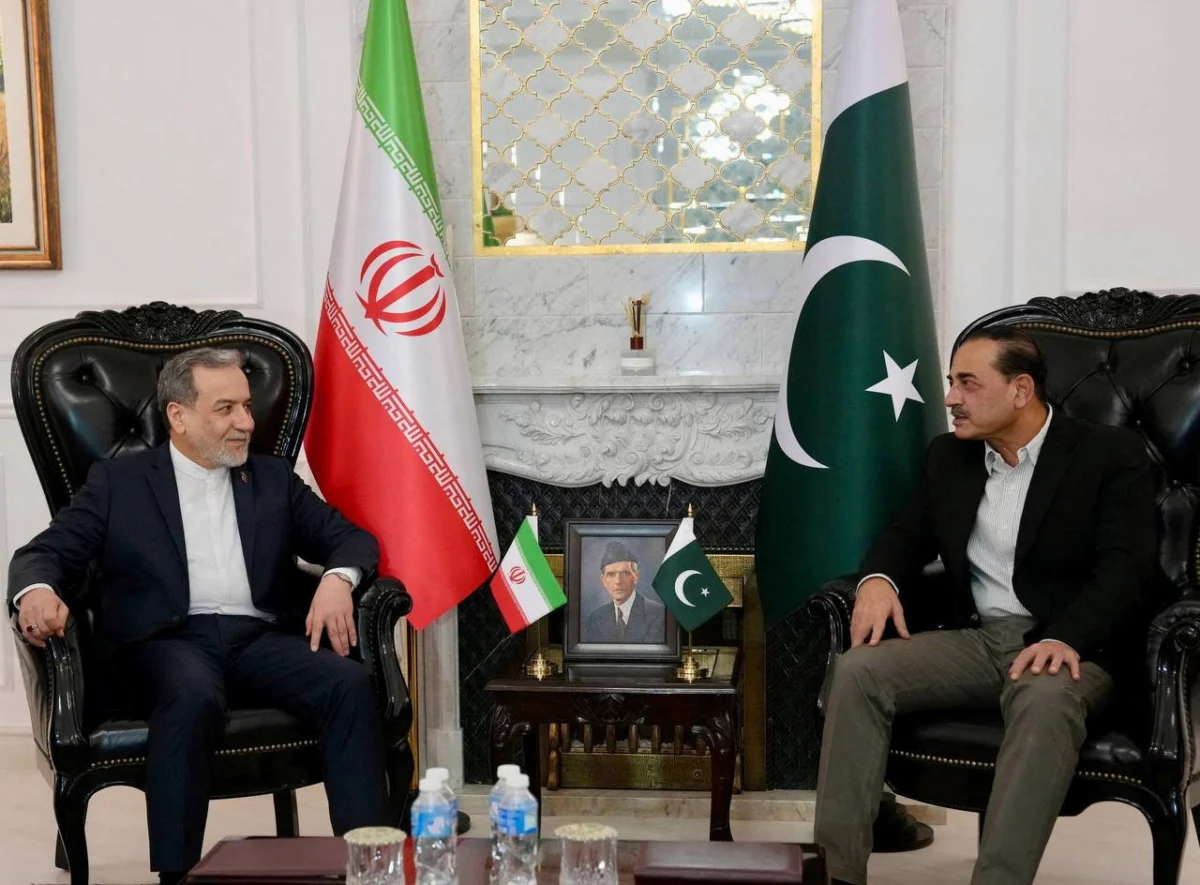
United States President Donald Trump has abruptly cancelled a planned visit by his special envoys to Pakistan for talks with Iranian officials, citing the departure of Iranian Foreign Minister Abbas Araghchi from the country and asserting that the United States holds the dominant position in any potential negotiations. The decision, announced to Fox News, signals a significant recalibration in the diplomatic approach to resolving a protracted conflict involving Iran, which has been ongoing for two months. President Trump explicitly stated his order to envoys Steve Witkoff and Jared Kushner to forgo their journey to Islamabad, a move that contradicts his earlier pronouncements suggesting Iran was actively seeking a resolution.
Shifting Diplomatic Landscape: The Abrupt Cancellation
The planned diplomatic mission, which had raised hopes for a breakthrough in the ongoing conflict, was grounded in the expectation of high-level discussions between American envoys and Iran’s Foreign Minister Araghchi, who was on a multi-leg tour intended to foster peace. However, President Trump’s directive effectively terminated this avenue, with the President articulating his rationale directly: "I said, ‘Nope, you’re not making an 18-hour flight to go there. We have all the cards. They can call us anytime they want, but you’re not going to be making any more 18-hour flights to sit around talking about nothing.’" This declaration underscores a perception of American leverage and a potential impatience with protracted, in-person negotiations perceived as unproductive.
The timing of this cancellation is particularly noteworthy as Foreign Minister Araghchi had already concluded his engagements in Islamabad. His departure on Saturday marked the end of the first leg of his tour, which also included stops in Oman and Russia. During his visit to Pakistan, Araghchi engaged with key figures including Prime Minister Shehbaz Sharif, Army Chief Field Marshal Asim Munir, and Foreign Minister Ishaq Dar. According to Iran’s state-run Press TV, Araghchi conveyed Iran’s "position concerning workable framework to permanently end the war on Iran" to his Pakistani counterparts. His subsequent statement on X (formerly Twitter) expressed a degree of skepticism about the seriousness of American diplomatic intentions: "Have yet to see if the U.S. is truly serious about diplomacy."
Trump’s Social Media Post and the Shift to Digital Diplomacy
Following the cancellation of the physical envoy trip, President Trump further clarified his preferred mode of communication, suggesting that future interactions with Iranian officials would likely occur via telephone. His social media post declared, "If they want to talk, all they have to do is call!!!" This assertion, while seemingly open, was coupled with a pointed remark about the perceived internal disarray within Iran’s leadership: "nobody knew who was in charge in Iran and that there was ‘tremendous infighting and confusion within their ‘leadership’." This statement implies that the administration views the Iranian political structure as opaque and potentially unstable, contributing to the reluctance for direct, face-to-face negotiations.
Analysis of American Leverage and Diplomatic Stance
Rosiland Jordan, reporting from Washington for Al Jazeera, interpreted President Trump’s comments as indicative of the United States’ assessment that "any yielding on the Iranians part" was not forthcoming. Her analysis suggests that Trump’s emphasis on holding "all the cards" likely refers to significant military and economic pressures the U.S. can exert. These pressures are widely understood to include a naval blockade, which has been a significant factor in regional tensions, and the continued presence of over 50,000 U.S. troops in the region, poised to resume combat operations should circumstances necessitate. This stance suggests a strategic calculation by the U.S. administration to maintain a position of strength and exert maximum leverage in any eventual diplomatic engagement.
The Escalating Stakes: Strait of Hormuz and Energy Markets
The urgency to de-escalate the conflict and secure a lasting peace agreement is amplified by the ongoing standoff in the Strait of Hormuz. This strategically vital waterway is responsible for the transit of approximately one-fifth of the world’s oil and liquefied natural gas shipments. Any disruption to this critical chokepoint has immediate and far-reaching consequences for global energy markets, which have already experienced considerable turmoil.
Iran’s Islamic Revolutionary Guard Corps (IRGC) reiterated its stance on Saturday, indicating no intention to cease its effective blocking of the Strait, as reported by AFP. This assertion by a key Iranian military entity underscores the persistent nature of the conflict and the significant geopolitical implications it carries. The IRGC’s actions directly challenge international maritime freedom and contribute to the instability of global energy supplies, placing further pressure on all parties to find a diplomatic resolution.
No Immediate Resumption of Hostilities, but Uncertainty Lingers
When questioned by US media outlet Axios whether the cancelled envoy trip signaled an imminent resumption of hostilities, President Trump responded with measured ambiguity: "No. It doesn’t mean that. We haven’t thought about it yet." This statement leaves open the possibility of future military action while simultaneously indicating that it is not an immediate consideration. This measured response suggests a strategic pause rather than a definitive shift in posture, allowing for diplomatic channels, however unconventional, to remain open.
Iran’s Diplomatic Itinerary: Oman and Russia
Meanwhile, Iran’s Ministry of Foreign Affairs confirmed that Foreign Minister Araghchi had arrived in Muscat on Saturday for discussions with Omani officials. Oman has historically played a mediating role in regional disputes, and its engagement with Iran could offer an alternative avenue for diplomatic progress. Araghchi is also slated to visit Russia, another key player in the region, to further discuss efforts aimed at concluding the war. The conflict, as stated by Iran, was initiated by the United States and Israel against Iran on February 28, a timeline that provides crucial context for the current diplomatic maneuvers.
Background and Chronology of the Conflict
The origins of the current conflict trace back to February 28, when the United States and Israel launched military operations against Iran. This initiation of hostilities marked a significant escalation in regional tensions, which had been simmering for a considerable period. The subsequent two months have seen a continuous engagement, characterized by intermittent clashes and a growing international concern over the wider implications for global security and economic stability.
The decision by the Trump administration to send envoys to Pakistan for talks with Iran’s Foreign Minister represented a potential turning point, suggesting a willingness to engage directly to de-escalate the situation. The prior statements by President Trump, indicating that Iran was "making an offer" aimed at resolving the conflict, further bolstered these hopes. However, the rapid shift in strategy, from physical envoy missions to a preference for phone calls, reflects a complex interplay of geopolitical considerations, perceived leverage, and internal political dynamics within both nations.
Broader Implications and Analysis
The cancellation of the envoy trip and President Trump’s assertion of American dominance in negotiations have several significant implications. Firstly, it suggests a potential hardening of the U.S. stance, prioritizing direct communication on American terms. Secondly, it highlights the intricate and often unpredictable nature of President Trump’s foreign policy, which can shift rapidly based on perceived developments and personal assessments.
The emphasis on Iran needing to "call us" implies a desire for Iran to initiate concessions or demonstrate a greater willingness to engage on terms dictated by the U.S. This approach, while aimed at projecting strength, could also be interpreted as a missed opportunity for sustained, in-depth dialogue that might be necessary to address the complex underlying issues driving the conflict.
Furthermore, the uncertainty surrounding the conflict’s resolution continues to cast a shadow over the global energy markets. The ongoing standoff in the Strait of Hormuz remains a critical flashpoint, and any miscalculation or escalation could have severe economic repercussions worldwide. The international community will be closely monitoring further developments, seeking clarity on the path forward and hoping for a de-escalation that prioritizes peace and stability in a volatile region. The reliance on phone calls as the primary mode of negotiation, while potentially efficient for quick exchanges, may prove insufficient for the nuanced and sustained diplomacy required to resolve a conflict of this magnitude. The coming days and weeks will be crucial in determining whether this shift in diplomatic strategy leads to a breakthrough or further entrenches the current impasse.