Johny Marice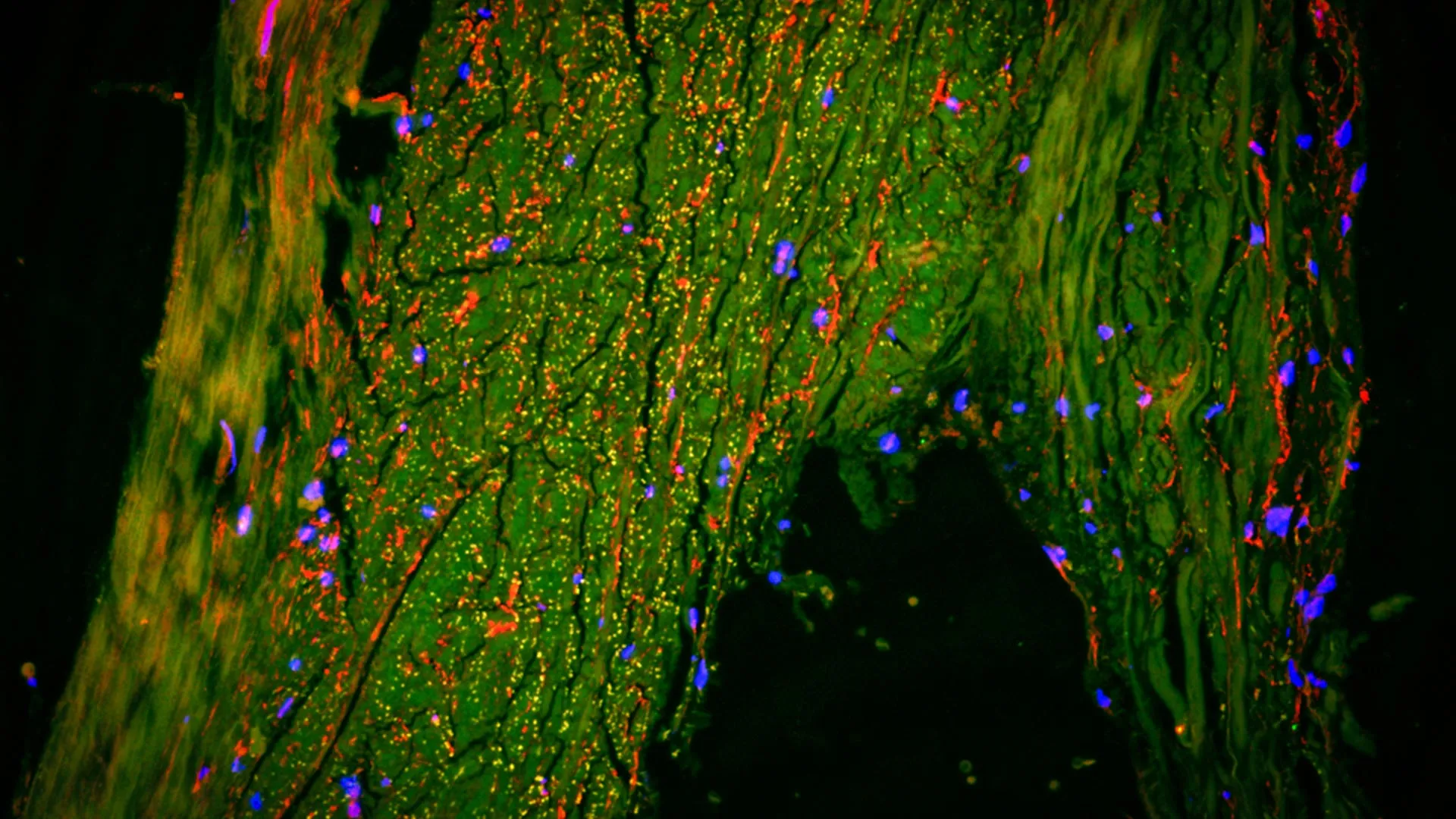
The human brain, a marvel of biological engineering, operates with an intricate system for self-maintenance, much like a bustling city requires robust waste management. Central to this vital process is the brain’s specialized drainage network, often referred to as the glymphatic system. For decades, scientists have been meticulously unraveling the complexities of this system, pushing the boundaries of neuroimaging technology in their quest for understanding. A groundbreaking new study, published in the esteemed journal iScience, has illuminated a previously unrecognized control point within this cerebral plumbing: the middle meningeal artery (MMA). This discovery offers the first direct human evidence of the MMA’s crucial role in clearing fluids and metabolic byproducts from the brain, fundamentally altering our perception of the brain’s intricate connection to the body’s broader physiological systems.
Unveiling a New Pathway: Real-Time MRI Captures Brain Fluid Dynamics
The research, spearheaded by Dr. Onder Albayram, an associate professor in the Department of Pathology and Laboratory Medicine at the Medical University of South Carolina (MUSC), utilized cutting-edge, real-time magnetic resonance imaging (MRI) technology. These advanced imaging capabilities were made accessible through a unique collaboration with NASA, originally developed to investigate the physiological effects of spaceflight on fluid movement within the brain.
The MUSC team applied this sophisticated technology to monitor the subtle, yet persistent, flow of cerebrospinal fluid (CSF) and interstitial fluid along the MMA in five healthy human volunteers over a six-hour period. What emerged from these meticulously captured scans was profoundly unexpected. The observed fluid movement was characterized by a slow, steady, and deliberate progression, starkly contrasting with the rapid and dynamic pulsatile flow characteristic of arterial blood. This distinct pattern strongly suggested that the fluid being observed was not part of the brain’s circulatory system but rather an integral component of its lymphatic drainage network.
"We witnessed a flow pattern that deviated significantly from typical arterial blood movement," stated Dr. Albayram in a press release. "It was slower, more akin to a drainage process, which provided compelling evidence that this vessel is actively participating in the brain’s essential cleanup operations." This observation challenges long-held assumptions about the distinct separation of the brain’s internal environment from the rest of the body’s fluid management systems.
Revisiting the Meninges: A Shift in Understanding the Brain-Body Interface
The brain and spinal cord are ensconced within a protective, multi-layered membrane system known as the meninges. For a considerable period, the prevailing scientific consensus held that these membranes acted as a near-impenetrable barrier, effectively segregating the brain from the body’s systemic immune and lymphatic networks. However, this view has undergone a significant paradigm shift over the past decade, with a growing body of research indicating a far more nuanced and interconnected relationship.
Dr. Albayram’s extensive research has been instrumental in this evolving understanding. His previous work has focused on identifying and characterizing lymphatic vessels embedded within the meninges. These meningeal lymphatic vessels, he posits, serve as crucial conduits, facilitating the removal of waste products and metabolic debris from the brain, directing them into the broader lymphatic network of the body for eventual clearance. This new study provides the most direct in vivo evidence to date supporting this hypothesis, pinpointing a specific arterial structure as a key regulator of this fluid exchange.
The ability to precisely track fluid movement between the central nervous system and the periphery is not merely an academic pursuit; it holds immense potential for advancing medical interventions. A deeper comprehension of these fluid dynamics could pave the way for the development of more effective strategies to prevent, diagnose, and treat a wide spectrum of neurological and psychiatric conditions, many of which are thought to be influenced by impaired waste clearance mechanisms.
Imaging Precision: Confirming a True Lymphatic Pathway Through Multiple Modalities
This latest research builds directly upon Dr. Albayram’s prior pioneering work. In a landmark 2022 study published in Nature Communications, his team successfully visualized meningeal lymphatic vessels in humans for the first time. This new study represents a significant leap forward, as it moves beyond static visualization to capture dynamic, real-time fluid movement within these deep brain lymphatic structures.
To provide an unassailable confirmation of their findings, the researchers complemented their in vivo imaging with detailed ex vivo analysis of human brain tissue. In collaboration with leading scientists at Cornell University, they employed an advanced ultra-high-resolution imaging technique capable of simultaneously visualizing multiple cell types. This intricate examination revealed the presence of cells typically associated with lymphatic vessels in the tissue surrounding the MMA. These are precisely the types of cellular structures that are responsible for waste clearance throughout the body, reinforcing the functional connection observed in the MRI scans.
The convergence of the real-time MRI data, which demonstrated the slow, drainage-like flow, and the histological evidence, which identified lymphatic vessel-associated cells in the same anatomical region, provides robust and compelling proof that the observed fluid was indeed traversing lymphatic pathways, not blood vessels. This integrated approach, combining dynamic imaging with detailed biological examination, solidifies the discovery of the MMA’s role as a critical interface in the brain’s lymphatic drainage system.
The Significance of Studying Healthy Brains: Establishing a Baseline for Disease Research
A defining characteristic of this research is its deliberate focus on studying healthy individuals. This approach, prioritizing the establishment of a normal physiological baseline before investigating disease states, is crucial for accurate interpretation of future findings. By understanding how the glymphatic system functions under optimal conditions, researchers are better equipped to identify deviations and anomalies that may signal the onset or progression of various neurological disorders.
Disruptions in the brain’s waste removal system are increasingly implicated in a range of pathological conditions. For instance, impaired glymphatic function is a suspected contributor to the accumulation of toxic proteins seen in neurodegenerative diseases like Alzheimer’s and Parkinson’s. Similarly, traumatic brain injury (TBI) can compromise these delicate drainage pathways, potentially exacerbating secondary damage. Establishing a clear understanding of the healthy system is therefore a foundational step towards unraveling the complex interplay between glymphatic dysfunction and disease.
Broader Implications: A New Frontier for Alzheimer’s and Brain Disorder Research
The implications of this discovery extend far beyond the immediate understanding of brain fluid dynamics. It opens new avenues for research into aging, neuroinflammation, brain injury, and a spectrum of neurodegenerative and psychiatric conditions. The identification of the MMA as a potential regulatory point in waste clearance could lead to novel therapeutic targets.
Dr. Albayram is already leveraging these findings, expanding his research to investigate how this drainage system operates in individuals diagnosed with neurodegenerative diseases. The overarching, long-term objective is to translate this fundamental scientific understanding into tangible improvements in clinical practice, including enhanced early diagnosis, the development of robust preventive strategies, and the creation of more effective therapeutic interventions for a range of debilitating brain disorders.
"One of the most significant hurdles in brain research is our incomplete grasp of how a healthy brain functions and ages," Dr. Albayram articulated. "Once we have a comprehensive understanding of what constitutes ‘normal,’ we can then effectively recognize the earliest indicators of disease and subsequently design more targeted and efficacious treatments." This sentiment underscores the profound importance of basic science research in driving medical progress and ultimately improving human health. The discovery of the MMA’s role in brain waste removal represents a significant stride forward in this vital endeavor.
Supporting Data and Chronology of Discovery
The journey to this pivotal discovery has been a multi-year endeavor, building upon incremental advances in neuroimaging and our understanding of the brain’s lymphatic system.
- Early Observations (Pre-2010s): While the concept of a glymphatic system was theorized, direct visualization and functional understanding in humans remained elusive. Animal models provided initial insights into fluid flow and waste clearance.
- Identification of Meningeal Lymphatic Vessels (Early 2010s onwards): Research, including Dr. Albayram’s earlier work, began to identify lymphatic vessels within the meninges, challenging the notion of a complete brain-body separation.
- 2022 – Visualization of Meningeal Lymphatic Vessels in Humans: Dr. Albayram’s team published a study in Nature Communications that provided the first direct visualization of these meningeal lymphatic vessels in living humans, a critical precursor to understanding their function.
- Present Study (Published in iScience): This current research utilizes advanced real-time MRI, originally developed for spaceflight studies, to observe the dynamic flow of fluids along the middle meningeal artery (MMA). The study provides the first direct human evidence that the MMA acts as a control point for fluid and waste removal, with observed slow, drainage-like flow consistent with lymphatic activity.
- Complementary Histological Analysis: The team collaborated with Cornell University to analyze human brain tissue using ultra-high-resolution imaging, confirming the presence of lymphatic vessel-associated cells in the vicinity of the MMA, corroborating the MRI findings.
Supporting Data Highlights:
- Imaging Modality: Real-time MRI, originally adapted from NASA spaceflight research.
- Subject Group: Five healthy human volunteers.
- Observation Period: Six hours of continuous monitoring.
- Key Finding: Slow, steady fluid flow along the MMA, distinct from arterial blood flow.
- Histological Confirmation: Identification of lymphatic vessel-associated cells in tissue samples from the region of interest.
Expert Reactions and Broader Scientific Context
While direct quotes from external parties were not available at the time of this report, the scientific community’s reaction to such fundamental discoveries typically involves cautious optimism and calls for further validation. The implications of this research align with a broader trend in neuroscience that emphasizes the brain’s interconnectedness with the rest of the body and the critical role of fluid dynamics in neurological health.
Researchers in the fields of neurodegeneration, neuroinflammation, and brain injury are likely to view this study as a significant advancement. The identification of a specific arterial structure as a potential regulator of lymphatic drainage could reshape experimental designs and therapeutic strategies. For instance, studies investigating the impact of vascular health on cognitive decline may now incorporate assessments of MMA function and its influence on glymphatic clearance.
The Future of Brain Health: From Discovery to Intervention
The discovery of the middle meningeal artery’s role in brain waste removal is more than just a scientific curiosity; it represents a potential paradigm shift in how we approach brain health and disease. By understanding the intricate plumbing of the brain, scientists are moving closer to unlocking the secrets of aging, neurodegenerative disorders, and even psychiatric conditions. The long-term vision is clear: to translate these fundamental insights into practical applications that can improve diagnostic accuracy, enhance preventative measures, and ultimately lead to more effective treatments for millions affected by brain-related ailments worldwide. The journey from observing fluid flow to developing life-changing therapies is often long, but this recent breakthrough marks a significant and promising step along that path.