Ronny Sianturi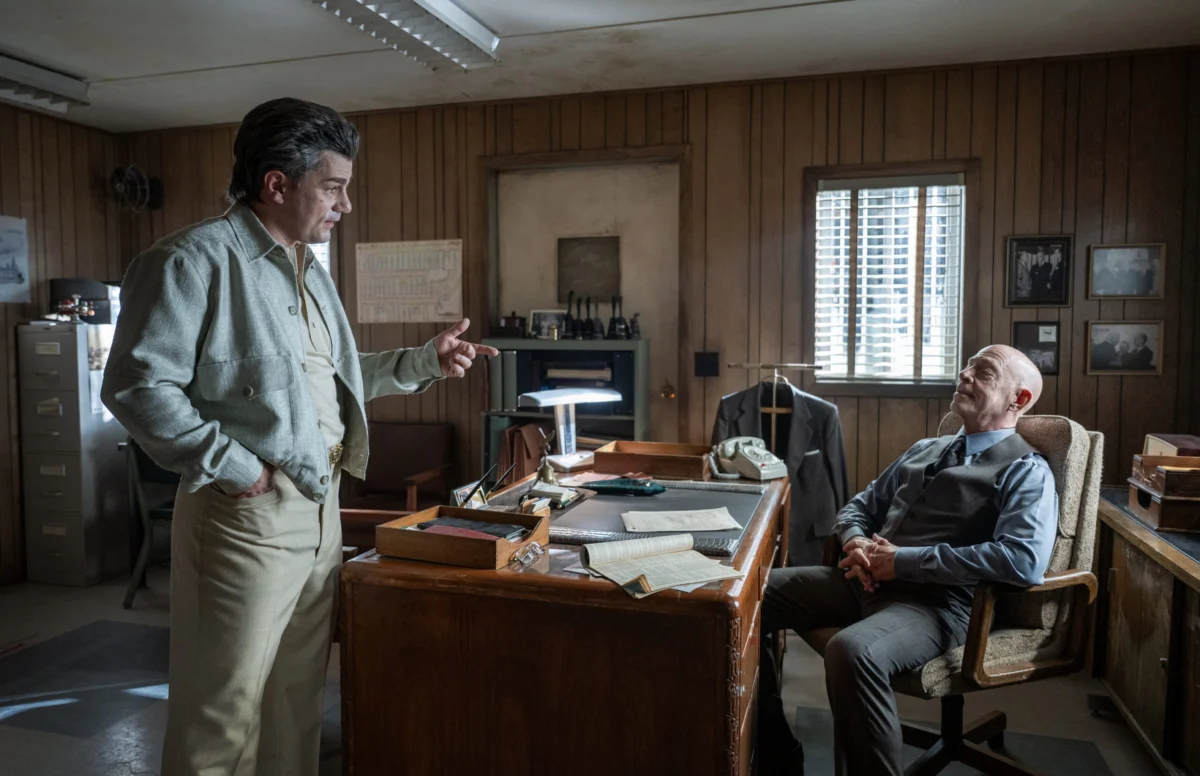
MGM+’s latest crime drama, The Westies, plunges viewers into the volatile underworld of 1980s New York, a landscape teeming with Irish and Italian criminal syndicates. The series ostensibly chronicles individuals who defy authority, from low-level enforcers ignoring direct orders to leave rivals untouched, to mid-level operators engaging in illicit drug trades under the watchful eyes of their superiors. This narrative of rebellion, however, is presented within an eight-hour framework that, despite the efforts of its cast and creators, ultimately adheres to a predictable formula, offering little in the way of genuine innovation or profound depth. While the performances of veteran actors J.K. Simmons and Titus Welliver provide moments of gravitas, the series as a whole struggles to transcend its predictable genre conventions, resulting in a viewing experience that is competent but largely uninspired.
A Truce in Hell’s Kitchen: The Seeds of Discontent
The narrative of The Westies commences in a period of uneasy détente between the Irish American Westies, operating out of midcentury Manhattan, and the formidable Gambino crime family of Italian American origin. The series, directed in its premiere by Alan Taylor, establishes a fragile peace brokered by the respective bosses, Eamon Sweeney, portrayed by J.K. Simmons, and Paul Castellano, played by Ron Lea. This accord, devoid of any genuine camaraderie, stems from a pragmatic understanding: both factions stand to profit immensely from construction projects, most notably the Javits Center in Hell’s Kitchen. The cessation of hostilities is a business imperative, a necessary condition to avoid mutual destruction and maximize financial gain.
However, this top-down agreement fails to resonate with the rank-and-file members of these organizations. The inherent volatility of the criminal milieu, coupled with the brute force often required to maintain order, breeds deep-seated resentment. The very men tasked with enforcing the truce find themselves increasingly disillusioned, particularly the protégés Jimmy Roarke, played by Tom Brittney, and John Gotti, portrayed by Hamish Allan-Headley. As internal dissent simmers, external pressures mount. The Federal Bureau of Investigation, spearheaded by Agent Birdie Polk, played by Jessica Frances Dukes, begins to close in. Polk is aided by the reluctant cooperation of Glenn Keenan, a compromised NYPD officer, brought to life by Titus Welliver, adding a layer of inter-agency tension and moral ambiguity to the unfolding drama.
Crafting a Narrative: Competence Versus Originality
Creators Chris Brancato and Michael Panes, known for their work on Godfather of Harlem, demonstrate a clear command of the crime drama genre. They manage to maintain a smooth narrative flow and a consistent pace throughout the season. The story unfolds with deliberate, yet brisk, progression, ensuring that casual viewers can follow the intricate plotlines without becoming lost, while attentive viewers are consistently presented with new developments and escalating stakes. The series adopts a resolutely serious tone, eschewing overt philosophical musings on the American Dream or the cyclical nature of revenge. Instead, it focuses on the visceral drama of its characters, presenting a world where hardened criminals engage in confrontations with an almost detached, yet undeniably potent, sense of consequence.
The visual landscape of The Westies is a meticulously crafted rendition of 1980s New York. Production designer Rocco Mateo has imbued the urban setting with a palpable sense of lived-in authenticity, from the grime-streaked streets to the cramped, often dilapidated apartments and bars. This atmospheric detail, while not entirely novel within the genre, speaks to the considerable care and effort invested in the production. For viewers seeking a visually appealing, albeit familiar, crime drama to serve as background entertainment, The Westies offers a serviceable option.
The Shadow of Cliché: A Deficiency in Characterization
Despite its polished presentation and competent execution, The Westies falters most significantly in its character development. The series is populated by figures who too often resemble archetypes rather than fully realized individuals. The protagonist, Jimmy, consistently makes morally upright choices, not through any discernible internal motivation or unique perspective, but rather because the narrative dictates he is the "hero." His inherent goodness and intelligence, while presented as inherent traits, lack the grounding of believable reasoning within the morally compromised world he inhabits. Even his seemingly idyllic relationship with his girlfriend, Bridget, portrayed by Sarah Bolger, feels less like a genuine connection and more like a plot device to provide the hero with a deserving personal life.
Bridget’s subplot, which delves into her past involvement with the IRA, offers a flicker of originality, a departure from the typical gangster drama checklist. However, this element feels largely disconnected from the main narrative, raising questions about its thematic relevance and its integration into the overarching story.
Jimmy’s closest friend, Mickey, played by Stanley Morgan, embodies a caricature of the hotheaded low-level gangster. His unpredictable outbursts serve as a convenient narrative tool, disrupting Jimmy’s plans or injecting manufactured tension into crucial moments, a predictable pattern of behavior that offers little surprise. The supporting cast often fades into the background, serving primarily as expendable plot devices or as filler to populate scenes.
The portrayal of John Gotti, a figure historically synonymous with mobster swagger, is a watered-down iteration of familiar Italian mobster tropes. His introduction, featuring a scene where he feigns offense to intimidate a subordinate before erupting in laughter, is a well-worn cinematic convention, predictable and lacking in genuine menace.
Moments of Brilliance Amidst the Familiar
Amidst the pervasive use of clichés, a few actors manage to imbue their characters with a semblance of inner life. J.K. Simmons, as Eamon Sweeney, injects a potent mix of weariness and sharp wit into his line deliveries, breathing a fragile vitality into a role that could have easily succumbed to stock villainy. Titus Welliver, portraying Glenn Keenan, conveys a profound, unspoken burden, hinting at a deep-seated personal pain that adds a layer of complexity to his character. However, the exploration of Keenan’s backstory, when it finally arrives, often feels less compelling due to the series’ broader failure to establish a significant emotional investment in its characters or their predicaments.
The series ultimately struggles to deliver complex emotional resonance, profound thematic exploration, or memorable character quirks. Unlike the seminal works of cinematic crime drama from directors like Coppola and Scorsese, or television achievements like The Sopranos, The Westies opts to meticulously retrace the established tropes of the genre. While it offers a polished aesthetic and a steady narrative, it ultimately falls short of delivering the vivid style, compelling characterizations, and ambitious ideas that define the pinnacle of the gangster drama. The result is a series that is proficient in its craft but lacking in the originality and depth that would elevate it beyond the realm of the merely competent.
Background and Context: The Real Westies and the Gambino Family
The series draws inspiration from the historical Westies, an Irish American criminal gang that exerted considerable influence in Manhattan’s Hell’s Kitchen neighborhood during the mid-20th century. Their operations were notoriously violent and intertwined with the city’s broader organized crime landscape. Simultaneously, the Gambino crime family, one of the most powerful of the New York Five Families, played a significant role in the city’s criminal hierarchy, with figures like Paul Castellano and John Gotti becoming household names. The historical interplay between these factions, marked by periods of intense conflict and uneasy alliances, provides a rich backdrop for fictionalized narratives of power, betrayal, and ambition within the criminal underworld. The 1980s, a period of heightened federal scrutiny and evolving organized crime tactics, further shapes the context in which these historical elements are explored.
Chronology of Events (Inferred)
- Early 1980s: Eamon Sweeney and Paul Castellano, leaders of the Westies and Gambino family respectively, forge a pragmatic truce to facilitate lucrative construction projects, notably the Javits Center.
- Mid-1980s: Despite the leadership’s directive, lower-ranking members of both organizations continue to engage in violent disputes and illicit activities, undermining the established peace.
- Ongoing: FBI Agent Birdie Polk initiates an investigation into organized crime activities in New York, leveraging the cooperation of NYPD Officer Glenn Keenan.
- Throughout the Series: Jimmy Roarke and John Gotti, protégés of Sweeney and Castellano respectively, navigate their roles within their respective organizations, experiencing growing disillusionment and ambition. The series documents their personal struggles, their relationships, and their involvement in escalating criminal enterprises.
- Late 1980s (Implied Conclusion): The series likely culminates with the unraveling of the truce, increased federal intervention, and the further entrenchment of key figures within the evolving landscape of organized crime, mirroring the historical trajectory of these groups.
Supporting Data and Implications
The portrayal of organized crime in The Westies touches upon several critical aspects of the phenomenon. The economic motivations driving criminal enterprises, as exemplified by the Javits Center project, underscore the intersection of legitimate business and illicit activity. The inherent instability of truces between rival gangs highlights the persistent power struggles and the difficulty of maintaining order within fragmented criminal structures. The involvement of federal law enforcement agencies like the FBI and the NYPD reflects the ongoing, multi-faceted efforts to combat organized crime, a persistent challenge for urban centers.
The series also implicitly touches upon the societal impact of such organizations, including the pervasive violence, the corruption of law enforcement, and the disruption of legitimate commerce. The implications of The Westies extend beyond its fictional narrative, serving as a reminder of the historical realities of organized crime in New York City and the enduring struggle for control and influence within these clandestine networks. The series, while fictionalized, draws from a documented history of violence, territorial disputes, and the complex relationships that defined the era of powerful crime families. The FBI’s Organized Crime Drug Enforcement Task Forces, established in the early 1980s, played a significant role in dismantling such organizations, and the series’ depiction of federal investigations reflects this historical context.
Official Responses and Broader Impact
As a fictional dramatization, The Westies does not elicit direct official responses from historical figures or law enforcement agencies. However, the series contributes to a broader cultural discourse surrounding organized crime, its historical impact, and its enduring presence in popular media. The genre itself, which has captivated audiences for decades, speaks to a fascination with power, corruption, and the darker aspects of human nature.
The series’ success or failure in resonating with audiences will ultimately be determined by its ability to transcend the confines of genre convention and offer a compelling, original narrative. Its competent execution and strong performances provide a foundation, but the true impact will lie in its capacity to engage viewers on a deeper level, beyond the familiar tropes of mobster dramas. The continued production of such series suggests a persistent audience appetite for stories of underworld intrigue, power struggles, and the moral complexities inherent in the pursuit of wealth and influence.