Danny Garick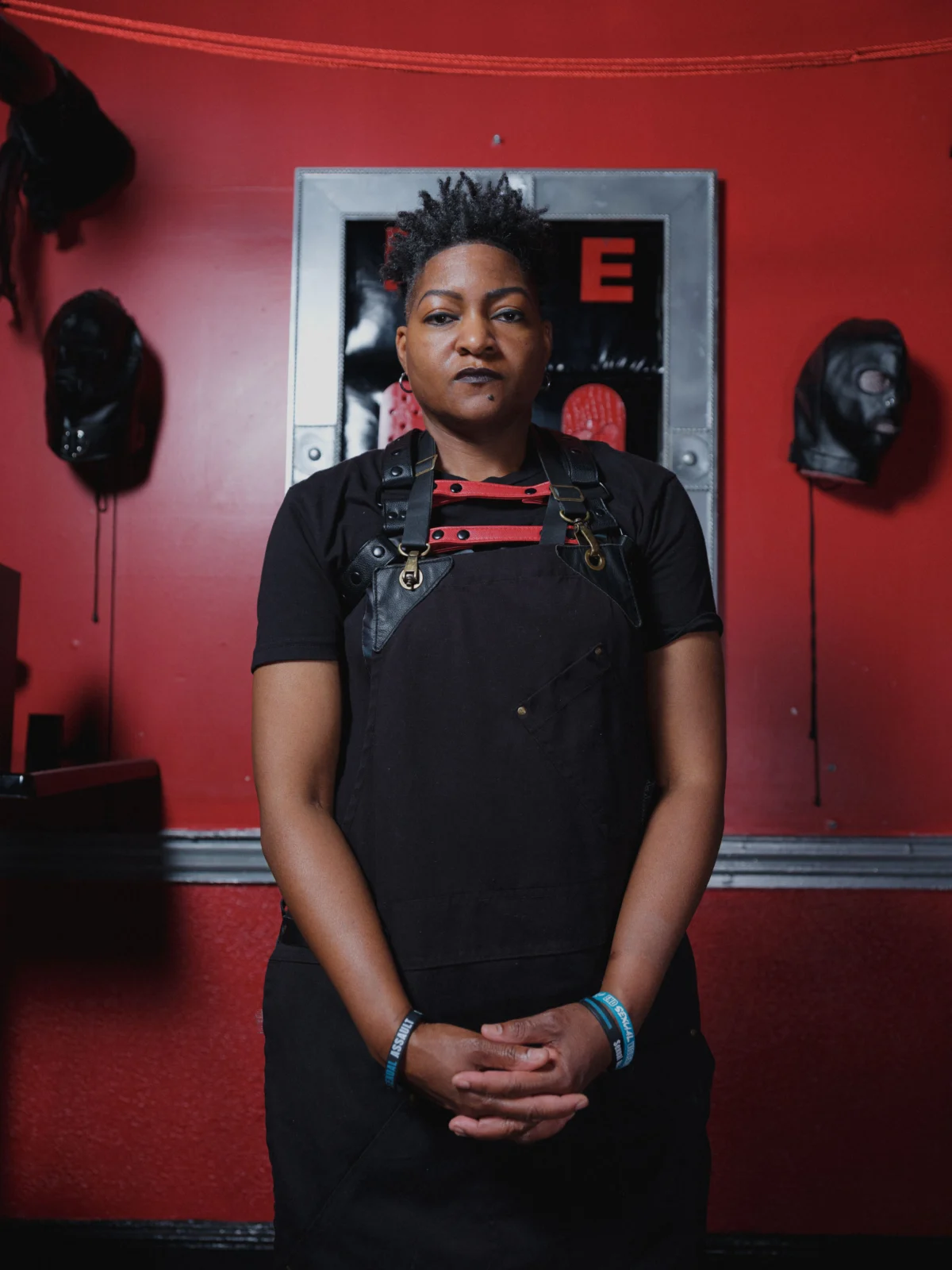
In a brick building nestled between a non-profit organization and a gas station in Baltimore, a new culinary concept is testing the boundaries of public dining and private lifestyle. Kink Cafe, which opened its doors in the fall of 2023, represents a growing movement to bring bondage, discipline, dominance, submission, and sadomasochism (BDSM) out of the shadows and into the mainstream hospitality sector. Founded and operated by Nicole “Daji” Aikens, a former law enforcement officer and professional dominatrix, the establishment seeks to merge the sensory pleasures of gourmet pescatarian cuisine with the aesthetic and educational elements of the kink community.
The emergence of Kink Cafe comes at a pivotal moment for the "lifestyle" community on the East Coast. While major metropolitan hubs like New York City have long hosted "kinky bingo" nights and private sex parties, the transition to a permanent, brick-and-mortar restaurant marks a shift toward institutionalizing these spaces. For Aikens, the restaurant is the realization of a dual passion: providing a safe, high-quality environment for the community to gather and offering a sensory-rich dining experience that caters to both the "kinky" and the "vanilla" (non-practitioner) public.
The Architectural and Aesthetic Vision of a Modern Dungeon
The interior of Kink Cafe is designed to be immediately recognizable to those familiar with the BDSM subculture, while remaining accessible to curious newcomers. The decor features a palette of ruby red walls and black accents, heavily accented with leather upholstery. Personal touches from Aikens’ career and personal life are integrated into the design, including high heels affixed to the walls—a tribute to her history as a dominatrix—and a variety of paddles.

Central to the dining room’s visual identity is a St. Andrews cross, an X-shaped restraint structure located near the kitchen. This serves as a focal point for the "performance" aspect of the restaurant. Aikens, who manages the kitchen with the meticulous precision she developed during her years in law enforcement, emphasizes that the environment is meant to engage all five senses. The rhythmic sound of knife work in the kitchen competes with a curated playlist featuring classic R&B, such as DeBarge’s "Stay With Me," creating an atmosphere that is simultaneously domestic and provocative.
Culinary Strategy: Pescatarianism and Naming Conventions
Despite the provocative theme, the core of the business remains its food. Aikens, who does not eat meat, has curated a menu that is predominantly pescatarian, blending Baltimore staples with global flavors. The dish names lean heavily into BDSM terminology, acting as a conversational icebreaker for guests.
Key menu items include:
- The "Chastity" Shrimp Lo Mein: A play on local carryout favorites, featuring shrimp, broccoli, and onions in a soy-based sauce.
- The "Shibari" Jerk Branzino: Named after the Japanese art of rope bondage, this dish features grilled fish with a jerk rub, served with yellow rice and broccoli.
- The "Bondage Salmon": A baked salmon fillet accompanied by sautéed zucchini, carrots, and green onions.
- The "Obey The Bay": Crispy fried avocado topped with crab slaw, a nod to Maryland’s regional flavors.
- "Miso Hornee" Mussels: Steamed in a miso butter broth, this dish has proven to be a top seller for both dine-in and delivery through platforms like DoorDash.
Because the restaurant currently lacks a liquor license, it has developed a sophisticated mocktail program. Beverages like "In My Guts"—a blend of pineapple juice, cream of coconut, and cinnamon—and "The Rose"—a spritz-style drink named after a popular adult toy—allow the establishment to maintain a high-margin beverage program while navigating the complexities of local licensing.

Data and Demographics: The Mainstreaming of BDSM
The viability of a business like Kink Cafe is supported by shifting societal attitudes toward non-traditional sexualities and power dynamics. A 2019 international review published in The Journal of Sex Research indicated that BDSM is far from a fringe interest. The study found that more than 40% of the surveyed population had experienced BDSM-related fantasies, and approximately 20% had actively engaged in the lifestyle.
This data suggests a significant market for "kink-adjacent" experiences. The success of mainstream media, such as the 50 Shades of Grey franchise or Netflix’s How to Build a Sex Room, has demystified the "dungeon" aesthetic, making the public more comfortable with the visual markers of the community. Aikens’ restaurant leverages this curiosity, providing a space where the "lifestyle" is visible but the environment remains structured and safe.
Chronology of Kink-Themed Hospitality and Business Sustainability
While Kink Cafe is currently enjoying a period of growth, the history of kink-themed hospitality is marked by both longevity and sudden closures. The sustainability of these niche businesses often depends on their ability to balance community needs with broader commercial appeal.
- 2009: Wicked Grounds opens in San Francisco. For over a decade, it served as a coffee shop, art gallery, and workshop space for the kink community, particularly during the annual Folsom Street Fair.
- 2023 (Mid-year): Wicked Grounds announces its closure. Owner Mir Bilodeau cited a combination of declining foot traffic following the COVID-19 pandemic and the logistical need for a larger, more modern space.
- 2023 (Fall): Kink Cafe opens in Baltimore, aiming to fill the gap for permanent community spaces on the East Coast.
- 2025 (Early): Kinky’s Dessert Bar in Manhattan’s Lower East Side closes "until further notice." The establishment had gained viral fame for its phallic-shaped treats and burlesque shows, but struggled to maintain operations despite its high visibility.
The closure of Kinky’s and Wicked Grounds highlights the challenges of the "kink-and-food" model. High overhead costs in urban centers, combined with the potential for social stigma to limit the customer base, create a narrow path to profitability. Aikens has attempted to mitigate these risks by diversifying her revenue streams to include delivery services, ticketed events, and educational workshops.

Staffing and Educational Programming
Kink Cafe operates with a lean staff that includes a host and a "house dom" known as Master S’ango. A professional dominant, Master S’ango provides the educational and performance backbone of the restaurant. On nights with scheduled programming, he conducts demonstrations involving flogging, wax play, and the use of violet wands (electro-play).
These demonstrations are often educational in nature, teaching guests the "best practices" of the lifestyle, such as the proper handling of whips to ensure safety and consent. Aikens is firm in her stance that while the space is sensual, it is not a "sex club." No sexual acts take place on the premises; instead, the focus is on the "theater" of kink and the fosterage of community dialogue.
Philanthropy and Social Impact: I Survived Inc.
A unique aspect of Kink Cafe’s business model is its direct link to social activism. A portion of the proceeds from dinner service supports Aikens’ non-profit organization, I Survived Inc. The foundation is dedicated to supporting women and girls who have experienced sexual violence.
By linking a BDSM-themed restaurant to a sexual violence survivor organization, Aikens addresses a common misconception that the kink community is synonymous with a lack of consent. In her view, the restaurant serves as a platform to discuss the importance of boundaries, communication, and the reclamation of pleasure after trauma. This mission has helped the restaurant garner support from local advocates who see it as a progressive space for empowerment.

Broader Implications for the Hospitality Industry
The rise of Kink Cafe reflects a broader trend in the hospitality industry toward "experience-based" dining. In an era where delivery apps have made high-quality food accessible at home, brick-and-mortar restaurants are increasingly required to offer something that cannot be replicated in a living room.
The "themed" dining experience—whether it be a "cat cafe," a "board game bar," or a "kink cafe"—is a response to the consumer desire for community and spectacle. However, Kink Cafe faces unique regulatory and social hurdles. The lack of a liquor license, for instance, is a common barrier for niche businesses that may face extra scrutiny from local boards. Furthermore, the 30-and-over age restriction for certain events reflects a commitment to maintaining a mature, controlled environment, even as it limits the potential customer base.
Conclusion: The Intersection of Survival and Enjoyment
Nicole Aikens’ venture into the Baltimore food scene is a gamble on the idea that pleasure and necessity are inextricably linked. By combining the "lifestyle" with a high-functioning restaurant, she is challenging the traditional boundaries of what a public space can represent.
"I never thought that Kink Cafe was as needed as it was until we did it," Aikens noted, reflecting on the restaurant’s first year. For her, the goal is to create a space where the "kinky" and the "vanilla" can coexist, where a guest can enjoy a well-prepared piece of jerk branzino while observing the disciplined art of rope bondage. Whether Kink Cafe can avoid the pitfalls that led to the closure of its predecessors remains to be seen, but for now, it stands as a unique experiment in the American culinary and social landscape. As the public continues to move toward a more open dialogue regarding sex and pleasure, establishments like Kink Cafe may become less of a shock and more of a standard in urban centers across the country.