
 Reynand Wu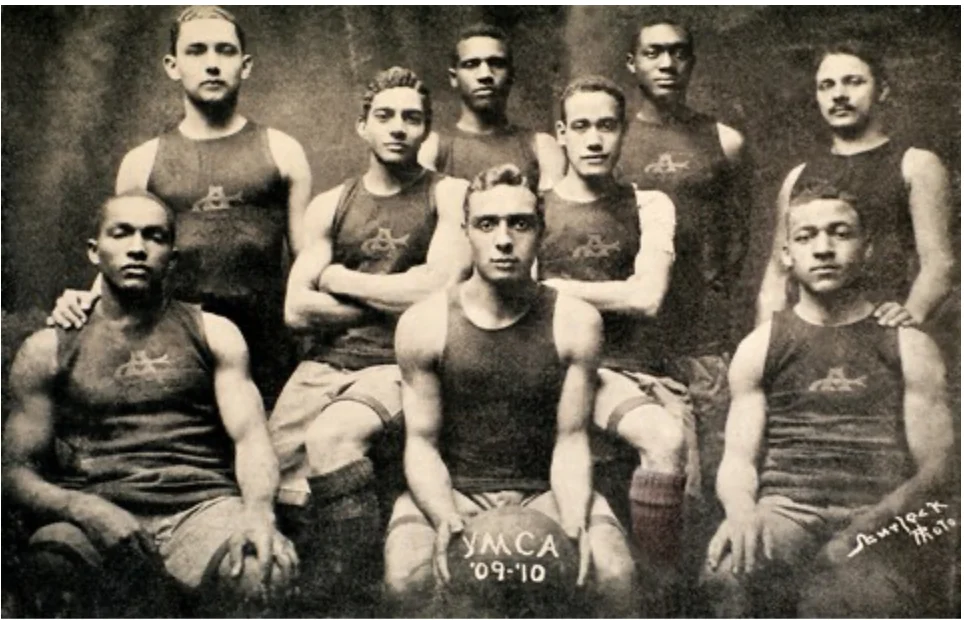
Picture a typical summer afternoon on 135th Street in Harlem. The air is thick with the rhythmic, percussive heartbeat of a rubber ball striking asphalt—a sound that has served as the unofficial soundtrack of New York City for generations. A small, well-maintained outdoor court, enclosed by a sturdy chain-link fence, hosts a game in constant motion. Players weave through tight defenses, executing precision passes and contested layups as an eager crowd of local youth gathers, pressed against the fence, waiting for their turn to claim the court. This scene is not merely a pastime; it is a manifestation of a deep-seated cultural phenomenon that transformed basketball from a niche collegiate activity into the lifeblood of the urban African American experience.
The Origins of a Disenfranchised Sport
Basketball was conceptualized in 1891 by Dr. James Naismith, a Canadian physical education instructor at Springfield College in Massachusetts. His intent was noble yet narrow: to keep students active during the harsh New England winters. By the turn of the 20th century, the sport had permeated the collegiate landscape, with institutions such as Harvard, Yale, Princeton, and Cornell establishing formal competition. However, the early years of organized basketball were defined by racial exclusion. As the sport gained traction through the National Basketball League (NBL), founded in 1937, and the subsequent merger with the Basketball Association of America (BAA) to form the NBA in 1949, the color barrier remained firmly in place.
For its first three decades, professional and collegiate basketball were largely exclusive to white participants. The integration of the sport was a slow, arduous process. George Gregory Jr. made history as one of the first Black collegiate players in 1928, but it was not until the 1949-1950 season that the NBA saw its first Black pioneers—Chuck Cooper, Nathaniel Clifton, and Earl Lloyd—officially dismantle the professional color barrier. During this era, institutional racism at community hubs like the YMCA meant that Black athletes were frequently denied access to facilities. Forced into isolation, Black communities began constructing their own courts and organizations, effectively creating a parallel athletic infrastructure that would eventually define the future of the sport.
The Geography of Exclusion: Redlining and Resource Deprivation
The prominence of basketball in minority neighborhoods cannot be divorced from the history of urban planning and economic discrimination. Beginning in 1934 with the National Housing Act, the federal government initiated a series of policies that would fundamentally alter the American landscape. The Home Owners’ Loan Corporation (HOLC) and the Federal Housing Administration (FHA) utilized "redlining"—a practice of mapping and categorizing neighborhoods based on perceived financial risk. Areas with large Black populations were systematically labeled as "hazardous," resulting in the denial of federally insured mortgages and home loans.
This economic disenfranchisement was compounded by the phenomenon of "white flight," as white families relocated to suburban developments, leaving urban centers with a drastically reduced tax base. The resulting economic stagnation directly impacted the physical environment of minority neighborhoods. Data from the Trust for Public Land reveals a stark disparity in urban planning: the average park size in lower-income neighborhoods in New York City is approximately 6.4 acres, less than half the 14-acre average found in more affluent areas. With limited access to expansive green spaces suitable for baseball diamonds or sprawling soccer fields, Black youth gravitated toward the one sport that required little more than a ball and a patch of pavement: basketball.
Chronology of Integration and Cultural Emergence
The evolution of the sport within these constraints followed a distinct timeline:
- 1891: Dr. James Naismith invents basketball at Springfield College.
- 1907: The Smart Set Athletic Club of Brooklyn forms as the first fully independent Black basketball team, challenging the prevailing segregation of the era.
- 1926: The Harlem Globetrotters are founded, providing a platform for Black athletes to earn a living through professional play when the mainstream leagues remained closed.
- 1928: George Gregory Jr. breaks the collegiate color barrier.
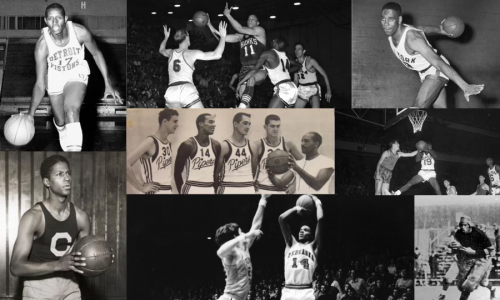
- 1949-1950: The NBA is established, and Chuck Cooper, Nathaniel Clifton, and Earl Lloyd become the first Black players to sign professional contracts.
- 1950s-1970s: Basketball becomes the dominant sport in urban centers as the "Black Fives" era transitions into the modern professional game.
Edwin Bancroft Henderson, an educator and activist in Washington, D.C., played a pivotal role in this expansion. Having learned the game during summer sessions at Harvard, Henderson brought the sport back to his community, effectively turning basketball into an educational and social tool for Black youth across the Eastern Seaboard. By the mid-20th century, the sport had become more than a game; it was an engine for upward mobility and a symbol of communal resilience.
Economic Factors and the "Cost of Entry"
Sociological research, including studies by David C. Ogden of the University of Nebraska, underscores the economic reality of sport participation. Baseball, once considered the "national pastime," required significant investment in equipment, uniforms, and travel for leagues—resources that were frequently unavailable in redlined districts. Conversely, basketball offered a low barrier to entry. This economic pragmatism is reflected in Ogden’s 2003 findings, where over two-thirds of coaches surveyed noted that Black youth preferred the basketball court over the baseball diamond, citing the accessibility of facilities and the lack of prohibitive costs.
Professional Shifts and Contemporary Impact
The professional demographics of the sport have undergone a radical transformation since the 1950s. Today, approximately 75% of the NBA is comprised of Black athletes, and the league’s global reach has cemented basketball as an international cultural force. The modern NBA is not merely a professional sports league but a significant economic driver.

In New York City, the legacy of this history is visible every summer. Tournaments such as the "NY vs. NY" series, sponsored by major athletic brands, and the Summer Classic, held at the historic Dyckman Park in Manhattan, draw thousands of spectators and high-ranking talent. These events serve as a testament to the endurance of the sport in the face of historical adversity. While redlining and segregation were intended to stifle the economic and social potential of minority communities, the infrastructure they inadvertently necessitated—the neighborhood court—became the crucible for a cultural movement that now dictates the trajectory of global basketball.
Broader Implications and Societal Reflection
The history of basketball in the United States serves as a microcosm of the broader American experience. It illustrates how systemic barriers can dictate the cultural output of marginalized groups, forcing innovation in the face of exclusion. While the professionalization of the game has seen significant progress in terms of racial representation, the foundational disparities in urban infrastructure—such as the inequitable distribution of park land and public resources—remain ongoing issues in city planning.
The story of the basketball court on 135th Street is, therefore, a story of resistance and reclamation. It highlights how a sport, initially designed for the elite, was redefined by the people whom the system sought to leave behind. As basketball continues to evolve, its roots in the segregated landscape of early 20th-century America remain essential to understanding its current status as a pillar of global culture. The legacy of those early Black pioneers and the neighborhood leagues they founded continues to influence not just the mechanics of the game, but the socioeconomic fabric of the cities in which they play. Through the lens of the basketball court, one can see the resilience of a community that, despite being marginalized by policy, built a legacy that would eventually reach the pinnacle of professional sports.







