Layla Zulfa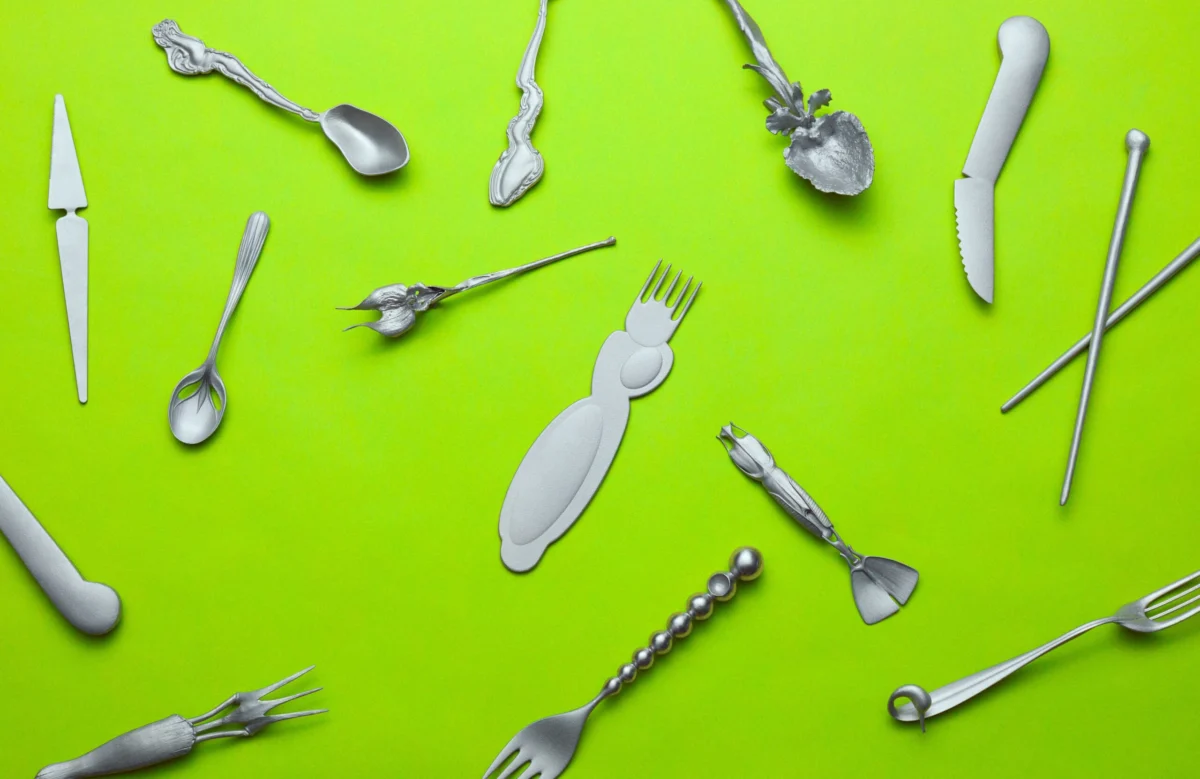
The exhibition is structured as both a retrospective and a forward-looking laboratory. While it honors the legacy of 20th-century masters, it also introduces a groundbreaking series titled KFS 3.0. This particular segment of the exhibition features 12 3D-printed stainless-steel sets, 11 of which were specifically commissioned for this show. Conceived by collector and editor Dung Ngo, whose personal collection forms the backbone of the exhibition, these contemporary pieces push the boundaries of what is considered "functional" in a domestic setting. By utilizing additive manufacturing—a process that builds objects layer by layer from digital files—the designers involved in KFS 3.0 have bypassed the traditional constraints of metal forging and casting, allowing for geometries that were previously impossible to achieve.
A Century of Design Evolution: 1900 to the Present
The historical scope of the exhibition provides a necessary framework for understanding the radical nature of the contemporary commissions. In the early 1900s, flatware design was often a reflection of social hierarchy and rigid etiquette. Sterling silver sets from this era frequently included specialized tools for every conceivable course, from asparagus tongs to marrow scoops. However, as the 20th century progressed, the influence of Modernism began to strip away ornamentation in favor of "form follows function."

Visitors to the Denver Art Museum can observe this transition through works that highlight the mid-century pivot toward stainless steel. This material innovation democratized well-designed flatware, moving it from the vaults of the wealthy to the kitchen drawers of the middle class. The exhibition features iconic works such as Greg Lynn’s 2007 "Flatware for Alessi," which serves as a bridge between the late-industrial era and the current digital age. Lynn, an architect known for his use of computer-aided design, utilized algorithmic modeling to create fluid, organic shapes that challenged the linear rigidity of traditional cutlery.
The inclusion of these historical benchmarks allows curator Darrin Alfred to demonstrate how design-thinking has responded to broader societal changes. For instance, the streamlining of flatware in the 1930s mirrored the aerodynamic trends in locomotive and automotive design, while the experimental plastics of the 1960s reflected the era’s fascination with space-age materials and disposable culture.
KFS 3.0: The Digital Frontier of Dining
The KFS 3.0 series represents the most significant contemporary addition to the museum’s design discourse. This collection, which is also available for purchase through the Marta gallery in Los Angeles, explores the concept of "extraordinary design" by prioritizing artistic expression over strict adherence to utility. Dung Ngo, who spearheaded the project, acknowledged that several pieces in the collection are intentionally impractical. The goal was not to create the perfect soup spoon, but rather to use the medium of flatware to comment on the current state of human creativity and digital fabrication.

Among the most striking contributions is Marcin Rusak’s "Ghost Orchid" set. Rusak, a designer celebrated for his work with organic matter and resin, translated the intricate, fragile beauty of botanical forms into durable stainless steel. His pieces appear as if they were harvested from a digital garden, with stems and petals forming the handles and tines of the implements. This work challenges the user to reconsider their relationship with nature in an increasingly synthetic world.
In contrast, the firm Charlap Hyman & Herrero offered "Liquid Flatware," a series that applies a surrealist lens to traditional Baroque silverware. By digitally "melting" and distorting classic silhouettes, the designers created objects that look like hallucinations of 18th-century heirlooms. This play between the historical and the digital highlights the exhibition’s theme of cultural continuity; even as technology changes, our aesthetic memories remain rooted in the past.
Cultural Rituals and Global Perspectives
One of the exhibition’s primary objectives is to broaden the definition of flatware beyond the Western "knife, fork, and spoon" triad. As Dung Ngo noted, it was essential for the commissions to reflect the diverse rituals and habits of global eating today. This is perhaps most clearly articulated in the work of Nifemi Marcus-Bello, a Lagos-based designer whose contribution, "FKS_2026," includes a bowl traditionally used for rinsing fingers.

In many cultures, particularly in West Africa and parts of South Asia, eating by hand is a communal and ritualistic act. By including a hand-washing vessel alongside 3D-printed forks and knives, Marcus-Bello elevates a non-Western dining habit to the same level of design scrutiny as the traditional European place setting. This inclusion serves as a critical reminder that "design" is not a Western monopoly but a universal human response to the act of nourishment.
Similarly, designer Minjae Kim explored the tactile origins of tools. Before utilizing 3D printing, Kim hand-sculpted his chopsticks and utensils in modeling clay. The final stainless-steel products retain the thumbprints and irregularities of the original clay models, bridging the gap between ancient handicraft and futuristic manufacturing. This process emphasizes the "hand" in flatware, reminding the viewer that these objects are, at their core, extensions of the human body.
Technological Impact and the Role of 3D Printing
The use of 3D printing in the KFS 3.0 series is not merely a gimmick but a fundamental shift in the economics and aesthetics of product design. Traditionally, producing a new line of flatware required expensive steel molds and large-scale manufacturing runs to be financially viable. This necessitated "safe" designs that appealed to a mass market.

3D printing, or additive manufacturing, removes these barriers. It allows for "on-demand" production of complex shapes that would be impossible to release from a traditional mold. For the designers at the Denver Art Museum, this technology has functioned as a liberating force. Jolie Ngo’s "Anima" and David Wiseman’s "Lattice" utilize intricate, web-like structures that would be far too delicate or complex for traditional casting.
From a materials science perspective, the exhibition highlights the durability and versatility of 3D-printed stainless steel. The objects on display possess a weight and finish that rival traditionally forged pieces, suggesting a future where bespoke, artist-designed home goods could become more accessible as the cost of 3D printing continues to decline.
Academic and Commercial Context
The exhibition is supported by a significant scholarly contribution in the form of a book published by August Editions. This publication provides deeper biographical context for the designers and features high-resolution photography of Dung Ngo’s collection. By documenting these works in print, the museum and the publisher are ensuring that the ephemeral "out-there" designs of the KFS 3.0 project are preserved for future design historians.

Furthermore, the collaboration with Marta gallery introduces a commercial dimension to the project. While the pieces are displayed in a museum setting as objects of contemplation, their availability for purchase highlights the growing market for "collectible design." This sector of the art market has seen significant growth over the last decade, as collectors increasingly look for functional objects that possess the intellectual depth of fine art.
Broader Implications and Design Legacy
"Knife Fork Spoon: Everyday Tools, Extraordinary Design" serves as a poignant reminder that the objects we interact with most frequently are often those we overlook. By elevating flatware to the status of museum art, the Denver Art Museum encourages visitors to practice a form of "material mindfulness."
The exhibition’s long run—extending through May 2028—suggests that the museum views this as a foundational study rather than a fleeting trend. As the decade progresses, the pieces in the KFS 3.0 series will likely serve as a time capsule for the early 21st-century’s obsession with digital craft.

Ultimately, the show demonstrates that as long as humans need to eat, designers will continue to reinvent the tools we use to do so. Whether it is through the botanical surrealism of Marcin Rusak or the cultural inclusivity of Nifemi Marcus-Bello, the evolution of the knife, fork, and spoon remains a vital mirror of the human condition. The exhibition successfully argues that in the hands of a visionary designer, even the most mundane tool can become an extraordinary expression of our shared identity and our technological aspirations.