
 Reynand Wu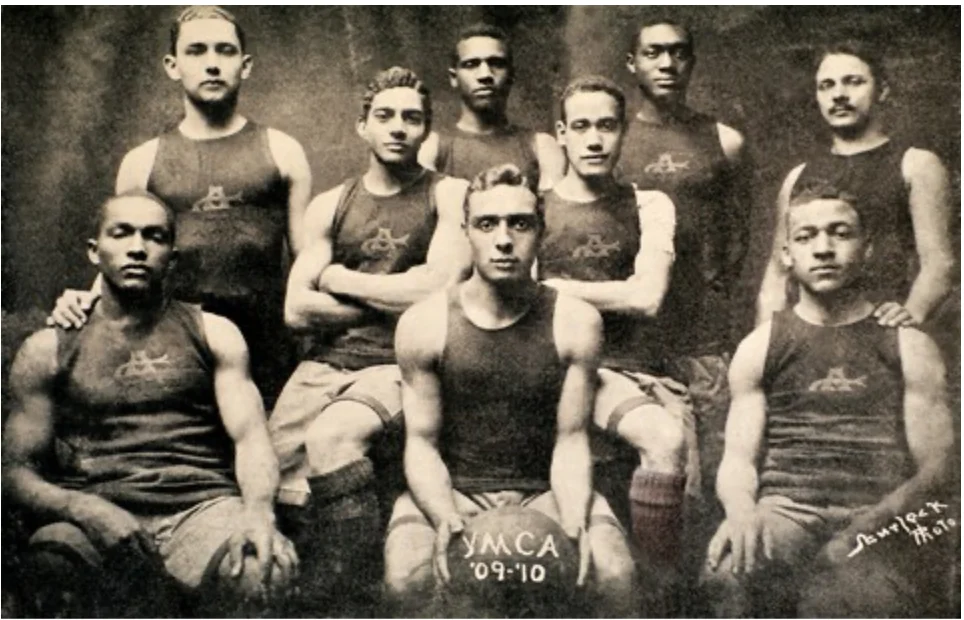
The vibrant tableau of a Harlem street unfolds, revealing a small, outdoor basketball court on 135th Street. The rhythmic thump of a basketball against asphalt, punctuated by the excited shouts of children, paints a familiar scene. This well-maintained court, with its fresh paint and sturdy chain-link fence, is a microcosm of New York City’s deep connection to the sport. The ball is in perpetual motion – passed, dribbled, and launched from all angles – as the infectious energy of the game draws more and more onlookers, cementing its place in the neighborhood’s daily rhythm. New York City, from the bustling avenues of Harlem to the diverse enclaves of Brooklyn, is synonymous with basketball. For decades, the sport has been woven into the very fabric of the city’s culture. However, the profound question remains: why has basketball become such an indelible staple of African American culture in urban centers across the United States? The answer is far from simple, rooted in a complex interplay of historical discriminatory practices, most notably redlining and segregation, which inadvertently fostered conditions for the sport’s unique ascent within marginalized communities.
From Elite Invention to Widespread Exclusion: Basketball’s Early Years
Basketball, in its nascent stages, was far from the inclusive sport it is largely recognized as today. Invented in December 1891 by Dr. James Naismith, a Canadian physical education instructor at the International YMCA Training School in Springfield, Massachusetts, the game was conceived as a less injury-prone alternative to football, suitable for indoor play during harsh New England winters. Naismith’s initial 13 rules laid the foundation for a sport that quickly gained traction within collegiate and high school athletic programs across the nation. By the early 1900s, institutions like Harvard, Yale, Cornell, and Princeton were regularly competing against each other, establishing basketball as a respected, albeit primarily amateur, collegiate pursuit. The professionalization of the sport began with the formation of the National Basketball League (NBL) in 1937, which later merged with the Basketball Association of America (BAA) in 1949 to form the ubiquitous National Basketball Association (NBA).
For the first three decades of its existence, basketball at both collegiate and professional levels was overwhelmingly dominated by white participants. The racial landscape of early 20th-century America meant that Black athletes were systematically barred from participation in mainstream leagues and institutions. George Gregory Jr. made history as the first Black collegiate player, not appearing until 1928, decades after the sport’s invention. The professional color barrier was even more entrenched, finally being broken in the 1949-1950 NBA season by pioneers Chuck Cooper, Nathaniel Clifton, and Earl Lloyd. This historical exclusion was not merely passive; it was an active enforcement of racial hierarchies. White-owned community centers, such as YMCAs, which were crucial hubs for recreational sports, routinely refused membership to Black individuals. This systemic denial left Black communities with a stark choice: either remain excluded from a burgeoning popular sport or create their own spaces and infrastructure to play. This foundational exclusion inadvertently set the stage for basketball to become a symbol of resilience and self-determination within Black communities.
The Economic and Spatial Impact of Racial Segregation
The roots of basketball’s prominence in African American communities are inextricably linked to a broader history of racial and economic discrimination, particularly in northern cities like New York. Practices such as redlining and other forms of exclusionary economic policies systematically depressed resources and opportunities in minority neighborhoods, creating conditions that favored certain sports over others.
Redlining, an institutionalized practice that gained widespread implementation following the 1934 National Housing Act (NHA), was a pivotal mechanism in shaping urban landscapes and perpetuating racial wealth disparities. The NHA created government programs like the Federal Housing Administration (FHA) and the Home Owners’ Loan Corporation (HOLC) with the stated goal of improving the housing market and promoting homeownership. However, its implementation was deeply discriminatory. The HOLC developed color-coded maps for hundreds of cities, classifying neighborhoods based on perceived investment risk. Areas with large populations of Black residents were invariably categorized as "hazardous" or "risky" (often shaded red on these maps, hence "redlining"). These classifications were not based on objective economic indicators alone but were heavily influenced by racial composition.
Consequently, the FHA utilized these HOLC maps to guide its lending policies, effectively refusing federally insured housing loans for Black individuals and families seeking homes in "redlined" areas. This denial of capital had profound consequences: it stifled homeownership for Black Americans, prevented wealth accumulation through property appreciation, and led to severe underinvestment in these neighborhoods. Property values plummeted, potential private investors were scared off, and public services often followed suit, leading to deteriorating infrastructure, underfunded schools, and a general lack of amenities.
Simultaneously, as Black families migrated from the South to northern cities in search of better opportunities and to escape Jim Crow segregation, white residents often reacted with what became known as "White flight." This phenomenon saw a mass exodus of white homeowners to newly developed suburbs outside city limits, often facilitated by FHA-backed loans that were denied to Black individuals. The remaining white homeowners in urban areas, fearing declining property values and social change, often sold their homes at significant discounts, further depressing the housing market in diversifying neighborhoods. The long-term effects of redlining are still evident today, contributing to persistent wealth gaps and socioeconomic disparities. Research by the Federal Reserve Bank of Chicago, among others, has demonstrated that areas subjected to redlining in the 1930s continue to exhibit lower homeownership rates, lower credit scores, and significantly less economic mobility for their residents compared to "greenlined" areas.
These economic inequalities had a direct bearing on the types of recreational opportunities available to children in poorer, predominantly Black neighborhoods. Redlined areas, by design and neglect, often had less green space and, on average, smaller and less well-maintained parks. A 2020 analysis by the Trust for Public Land highlighted this stark disparity in New York City, revealing that the average park size in poor neighborhoods was a mere 6.4 acres, compared to a substantially larger 14 acres in wealthy neighborhoods. Limited space meant that sports requiring extensive fields, such as baseball or football, were less accessible or viable.
Beyond space, the cost of entry for various sports presented another significant barrier. To play baseball at a competitive level, for instance, required substantial financial investment in specialized equipment (bats, gloves, uniforms), league fees, and travel teams. These costs were often prohibitive for families in economically depressed areas. Basketball, by contrast, carried a much lower prerequisite for participation. A single ball and a hoop, often improvised, were all that was fundamentally needed. This accessibility was a critical factor in its widespread adoption. David C. Ogden, a professor at the University of Nebraska who extensively studied race and sport dynamics, articulated this dynamic, noting that the scarcity of baseball facilities in Black neighborhoods and the high cost of select baseball were common reasons for the lack of racial diversity in the sport. His 2003 study quoted coaches observing that "More than two-thirds of the 27 coaches said that African-American youth prefer to spend their time on the basketball court rather than on the diamond," underscoring the practical and cultural gravitation towards basketball.
The Rise of Black YMCAs and Independent Basketball Teams
In the face of systemic exclusion from mainstream athletic facilities, African American communities demonstrated remarkable resilience and self-organization. The development of independent Black YMCAs played a pivotal role in fostering basketball’s popularity. These institutions became crucial community hubs, providing safe spaces for recreation, education, and social gathering that were denied elsewhere. Within their walls, basketball courts became vibrant centers of athletic development and community pride.
The Smart Set Athletic Club of Brooklyn, established in 1907, stands as a testament to this era, becoming one of the first fully independent Black basketball teams in America. These pioneering teams and institutions not only provided an outlet for athletic talent but also cultivated a sense of collective identity and achievement. As more Black YMCAs and community centers emerged in major cities across the East Coast, including New York, Philadelphia, and Baltimore, basketball spread with similar fervor.
A key figure in this movement was Edwin Bancroft Henderson, an educator working in Washington D.C. Henderson, often referred to as the "Father of Black Basketball," learned the game during summer sessions at Harvard University. Recognizing its potential as a tool for physical development and community building, he enthusiastically introduced basketball to young Black men in the D.C. area, catalyzing its spread throughout Black communities. His efforts laid critical groundwork for the sport’s subsequent growth.
Beyond community recreation, basketball also offered a rare pathway for economic upward mobility for Black athletes. In an era of rampant racial discrimination, professional sports opportunities were severely limited. The Harlem Globetrotters, formed in 1926 by Abe Saperstein, emerged as an iconic institution, providing the best – and often only – avenue for Black basketball players to earn a living through their sport. While initially a competitive team, the Globetrotters evolved into a globally recognized exhibition squad, showcasing unparalleled skill, athleticism, and showmanship. Their existence provided visibility and aspiration for countless young Black athletes, demonstrating that professional success, albeit in a segregated circuit, was possible. The Globetrotters’ tours across the country and eventually the world not only entertained but also served as powerful cultural ambassadors, challenging racial stereotypes through their athletic prowess and charisma.
Basketball Today: A Legacy Transformed
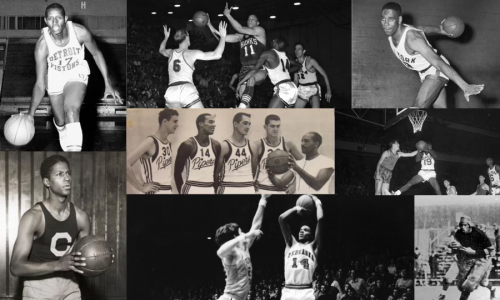
Today, basketball transcends racial lines and stands as an undeniable cornerstone of New York City’s cultural identity. The decades following the dismantling of segregation witnessed a significant surge in Black participation in basketball, with New York City emerging as a veritable "basketball mecca." The city’s playgrounds and gymnasiums are fertile grounds for talent, producing an extraordinary number of collegiate and professional players.
Every summer, minority communities across NYC gather for highly anticipated basketball tournaments held in local parks. Some of these events have grown to attract national attention, becoming celebrated showcases of streetball culture and raw talent. The Nike-sponsored "NY vs. NY" series and Slam magazine’s "Summer Classic," for instance, feature top-ranked high school players and draw thousands of passionate fans to legendary venues like Dyckman Park in Manhattan. These tournaments are not just games; they are cultural festivals, celebrating community, competition, and the enduring spirit of urban basketball.
The demographics of professional basketball have undergone a dramatic transformation, reflecting the sport’s deep roots in African American communities. In stark contrast to 1950, when the NBA had just three Black players, today approximately 75% of the league’s athletes are Black. This demographic shift is not confined to domestic leagues; Black athletes from the U.S. now play in professional leagues across the globe, exporting their talent and the culture of American basketball worldwide.
The journey of basketball, from its invention as a "white man’s game" to its current status as a global phenomenon, is a compelling narrative of adaptation, resilience, and cultural appropriation in the most positive sense. The discriminatory practices of segregation and redlining, which initially stifled Black participation in mainstream sports, inadvertently created the economic and social conditions that fostered basketball’s enduring staple within the community for generations. Denied access to traditional resources, Black communities innovated, built their own institutions, and carved out a unique space for a sport that demanded little in terms of equipment but offered boundless opportunities for expression, competition, and collective pride. The courts of Harlem and beyond stand as vibrant testaments to this complex history, where the echoes of past injustices are transformed into the rhythmic symphony of dribbling balls and the triumphant shouts of a new generation.
Sharif Nelson ’26 is a student at Hamilton College studying economics.
Additional Resources:
Aaronson, D., Faber, J., Hartley, D., Mazumder, B., & Sharkey, P. (2020). The Long-Run Effects of the 1930s HOLC "Redlining" Maps on Place-Based Measures of Economic Opportunity and Socioeconomic Success. The Effects of the 1930s HOLC "Redlining" Maps. https://doi.org/10.21033/wp-2020-33
Bowen, F. (2023, April 7). In its early years, NBA blocked black players. The Washington Post. Retrieved April 24, 2023, from https://www.washingtonpost.com/lifestyle/kidspost/in-nbas-early-years-black-players-werent-welcome/2017/02/15/664aa92e-f1fc-11e6-b9c9-e83fce42fb61_story.html

Centopani, P. (2020, February 24). The makings of basketball mecca: Why it will always be New York. FanSided. Retrieved May 1, 2023, from https://fansided.com/2020/02/24/makings-basketball-mecca-will-always-new-york/
Domke, M. (2011). Into the vertical: Basketball, urbanization, and African American … Into the Vertical: Basketball, Urbanization, and African American Culture in Early- Twentieth-Century America. Retrieved March 31, 2023, from http://www.aspeers.com/sites/default/files/pdf/domke.pdf
Gay, C. (2022, January 13). The black fives: A history of the era that led to the NBA’s racial integration. Sporting News Canada. Retrieved April 24, 2023, from https://www.sportingnews.com/ca/nba/news/the-black-fives-a-history-of-the-era-that-led-to-the-nbas-racial-integration/8fennuvt00hl1odmregcrbbtj
Gorey, J. (2022, July 25). How “White flight” segregated American cities and Suburbs. Apartment Therapy. Retrieved April 30, 2023, from https://www.apartmenttherapy.com/white-flight-2-36805862
Hunt, M. (2022, October 11). What is the National Housing Act? Bankrate. Retrieved April 25, 2023, from https://www.bankrate.com/real-estate/the-national-housing-act/#:~:text=What%20is%20the%20National%20Housing%20Act%20(NHA)%3F,Loan%20Insurance%20Corporation%20(FSLIC).
Hu, W., & Schweber, N. (2020, July 15). New York City has 2,300 parks. but poor neighborhoods lose out. The New York Times. Retrieved April 21, 2023, from https://www.nytimes.com/2020/07/15/nyregion/nyc-parks-access-governors-island.html
Ivy league regular season champions, by Year. Coaches Database. (2023, March 5). Retrieved April 24, 2023, from https://www.coachesdatabase.com/ivy-league-regular-season-champions/
McIntosh, K., Moss, E., Nunn, R., & Shambaugh, J. (2022, March 9). Examining the black-white wealth gap. Brookings. Retrieved April 25, 2023, from https://www.brookings.edu/blog/up-front/2020/02/27/examining-the-black-white-wealth-gap/
Ogden, D. C. ., & Hilt, M. L. . (2003). Collective Identity and Basketball: An Explanation for the Decreasing Number of African Americans on America’s Baseball Diamond. Retrieved March 31, 2023, from https://www.nrpa.org/globalassets/journals/jlr/2003/volume-35/jlr-volume-35-number-2-pp-213-227.pdf
Ortigas, R., Okorom-Achuonyne, B., & Jackson, S. (n.d.). What exactly is redlining? Inequality in NYC. Retrieved March 30, 2023, from https://rayortigas.github.io/cs171-inequality-in-nyc/
Pearson, S. (2022). Basketball origins, growth and history of the game. History of The Game Of Basketball Including The NBA and the NCAA. Retrieved April 24, 2023, from https://www.thepeoplehistory.com/basketballhistory.html
Robertson, N. M. (1995). [Review of Light in the Darkness: African Americans and the YMCA, 1852-1946., by N. Mjagkij]. Contemporary Sociology, 24(2), 192–193. https://doi.org/10.2307/2076853
Townsley, J., Nowlin, M., & Andres, U. M. (2022, August 18). The lasting impacts of segregation and redlining. SAVI. Retrieved March 30, 2023, from https://www.savi.org/2021/06/24/lasting-impacts-of-segregation/









