
 Reynand Wu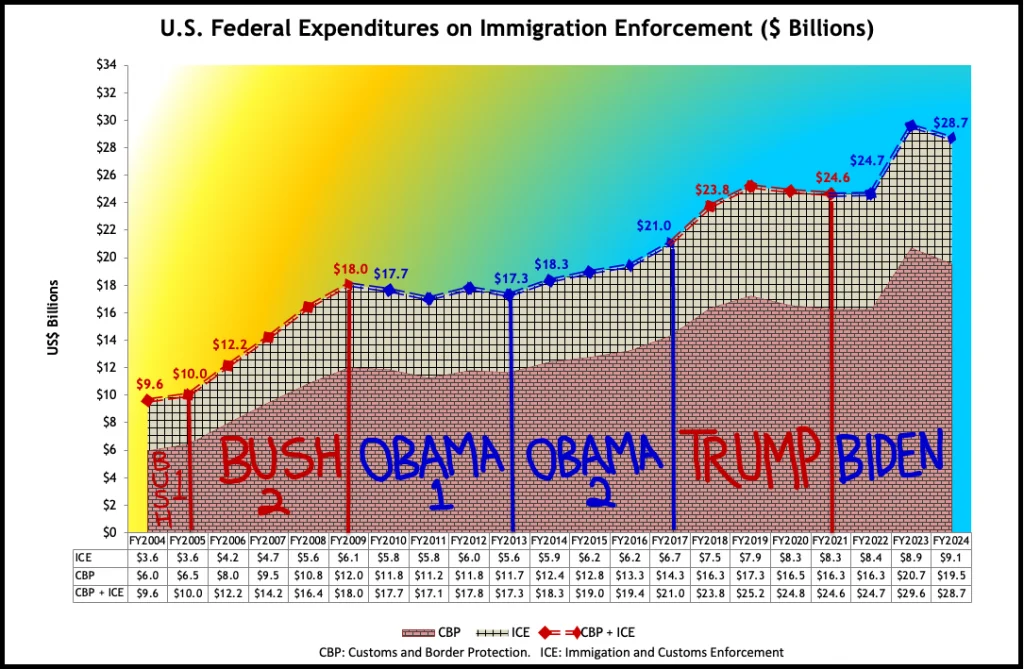
State borders, often perceived as immutable lines on a map, are far from natural phenomena; they are meticulously constructed products of political conflict, nationalist discourse, and deeply unequal economic systems, underpinned by a staggering and often overlooked public financial investment. Public policy and prevailing political narratives frequently work to naturalize these boundaries, obscuring their frequently arbitrary and violent origins. Beyond merely demarcating territory after wars or disputes, borders serve critical social functions, maintaining distinct political systems, differentiating between "insiders" and "outsiders," and constructing economic disparities through varying trade relations, national currencies, and disparate value regimes across nations and regional blocs. The United States, particularly in the post-9/11 era, stands as a stark example of this phenomenon, having channeled hundreds of billions of dollars into fortifying its boundaries, transforming immigration enforcement into a monumental fiscal undertaking that transcends partisan rhetoric.
The Genesis of Modern Borders and the Post-9/11 Shift
Historically, borders have evolved from fluid frontiers to increasingly rigid lines, a process accelerated by the rise of the nation-state and the industrial revolution. The Treaty of Westphalia in 1648 is often cited as a foundational moment for the modern concept of state sovereignty and territorial integrity, setting the stage for clearly defined national boundaries. Over centuries, these lines were solidified through treaties, conflicts, and colonial expansion, often imposed upon diverse populations with little regard for pre-existing social or ethnic divisions. This legacy means many contemporary borders are indeed arbitrary, born from historical power struggles rather than organic community divisions, yet they are presented as essential, almost biological, components of national identity.
The terrorist attacks of September 11, 2001, irrevocably altered the landscape of U.S. domestic and foreign policy, particularly concerning national security and border management. Prior to 9/11, immigration enforcement, while present, was less centralized and militarized. The attacks provided a potent catalyst for a dramatic re-framing of immigration from primarily an economic or social issue to an urgent matter of national security. This shift was encapsulated in the discourse of "anti-terrorism" being juxtaposed with "border regulation," propelling the securitization of the U.S.-Mexico border to unprecedented levels.
A pivotal legislative response was the Homeland Security Act of 2002, signed into law by President George W. Bush. This landmark legislation created the Department of Homeland Security (DHS), consolidating 22 disparate federal agencies into a massive new cabinet department. This unprecedented restructuring aimed to unify and streamline efforts to protect the nation from terrorist threats, but it also dramatically expanded the scope and power of federal immigration enforcement. Within DHS, two key agencies emerged as central to border control and immigration enforcement: Customs and Border Protection (CBP) and Immigration and Customs Enforcement (ICE).
CBP, formed from elements of the U.S. Customs Service, the Immigration and Naturalization Service (INS), and the Animal and Plant Health Inspection Service, touts itself as "one of the world’s largest law enforcement organizations." Its primary mission, as stated in 2020 and 2021, is "to detect and prevent the illegal entry of individuals into the United States" and "maintain borders that work." ICE, created from the investigative and interior enforcement functions of the former INS and the U.S. Customs Service, declares its mission "to protect America from the cross-border crime and illegal immigration that threaten national security and public safety." These mandates reflect a clear emphasis on deterrence, apprehension, detention, and deportation, fundamentally altering how the U.S. manages its borders and interacts with immigrant populations.
Further legislative actions reinforced this securitization trend. The REAL ID Act of 2005, passed in response to the 9/11 Commission’s recommendations, set stricter standards for state-issued driver’s licenses and identification cards, further linking identity to national security. The Secure Fence Act of 2006 authorized the construction of hundreds of miles of physical barriers along the U U.S.-Mexico border, alongside increased surveillance technology and personnel, explicitly aiming to curb illegal immigration and drug trafficking. These measures cemented a paradigm where border security was synonymous with national security, demanding ever-increasing financial commitments.
The Billion-Dollar Wall: Unpacking U.S. Border Spending
The financial commitment to this securitized border paradigm has been monumental. Since the creation of DHS in 2002, federal spending on immigration enforcement and border security has surged, demonstrating a consistent upward trajectory regardless of the party in power. From fiscal year 2004 to fiscal year 2024, federal expenditures on immigration enforcement have nearly tripled in unadjusted dollars, escalating from $9.6 billion to an estimated $28.7 billion. Even when adjusted for inflation to 2024 dollars, this represents a significant increase from approximately $17.5 billion to $28.7 billion, illustrating a sustained and substantial real-terms investment.
Over a 21-year period, spanning multiple presidential administrations, the U.S. government has poured an astonishing total of $409.4 billion of public funds into immigration enforcement. This vast sum is divided between the two primary agencies: approximately $275 billion allocated to Customs and Border Protection (CBP) and $134.4 billion directed to Immigration and Customs Enforcement (ICE). These figures underscore not only the scale of the investment but also the operational priorities, with CBP, responsible for frontline border security, receiving the lion’s share of the budget.
The budgets of CBP primarily fund personnel (Border Patrol agents, CBP officers), surveillance technologies (drones, ground sensors, remote video surveillance systems, facial recognition software), physical infrastructure (walls, fences, roads), and operational costs associated with detecting and preventing illegal entries. ICE’s budget, in contrast, focuses on interior enforcement, including investigations into cross-border crime, the apprehension and detention of undocumented immigrants, and their eventual deportation. A significant portion of ICE’s budget goes towards maintaining a vast network of immigrant detention centers, many of which are operated by private contractors. This privatization of detention facilities has created a powerful economic incentive for continued enforcement, forming a segment of what is often referred to as the "border industrial complex." Companies like GEO Group and CoreCivic, among others, profit substantially from contracts to house detained immigrants, contributing to a system that, critics argue, prioritizes profit over human rights.
For context, this $409.4 billion could have been allocated to numerous other public services. For instance, it could have funded significant portions of national infrastructure repair, invested heavily in renewable energy projects, expanded access to affordable healthcare, or substantially reduced student loan debt. The choice to direct such immense resources towards border enforcement reflects a clear political prioritization, driven by a complex interplay of security concerns, economic interests, and political narratives.
The Bipartisan Consensus: Rhetoric Versus Reality
One of the most striking revelations in the analysis of border spending is the stark contrast between partisan rhetoric and practical policy outcomes. While Democratic and Republican presidents frequently express rhetorical differences on immigration policy—Democrats often articulating a more pro-immigrant stance and Republicans emphasizing stricter enforcement and border security—the financial data tells a different story. In practice, both parties have demonstrated a robust, bipartisan consensus on funding the expansion of border policing.
Consider the spending trends across presidential terms since 2002:
- Republican Administrations (George W. Bush & Donald Trump): Over their collective ten years in office, Republican presidents spent approximately $178.9 billion on immigration enforcement, averaging about $17.9 billion annually. The initial post-9/11 buildup under Bush laid the groundwork for the modern securitized border.
- Democratic Administrations (Barack Obama & Joe Biden): Over their collective eleven years, Democratic presidents spent an even larger sum, approximately $230.5 billion, averaging about $21.0 billion annually. This figure challenges the perception of Democrats as consistently softer on immigration enforcement.
During the Obama administration, despite promises of comprehensive immigration reform and the introduction of programs like Deferred Action for Childhood Arrivals (DACA), the U.S. deported a record number of individuals, earning President Obama the moniker "Deporter-in-Chief" from some immigrant advocacy groups. His administration continued to invest heavily in border security technology and personnel, maintaining the trajectory set by his predecessor.
The Trump administration, characterized by its fervent "Build the Wall" rhetoric, sought to dramatically increase border spending and expedite wall construction. While much of his rhetoric was seen as aggressive and anti-immigrant, the underlying financial commitment to enforcement was not an aberration but rather an acceleration of existing trends.
Perhaps most illustrative of this bipartisan consensus is the recent action by the Biden administration. In October 2023, President Joe Biden’s administration waived no fewer than 26 federal regulations to construct new sections of a border wall between the U.S. and Mexico in Texas. This move, which bypassed environmental laws and other protections, eerily echoed the tactics employed by his Republican predecessor, Donald Trump, and was widely seen as a politically expedient maneuver in advance of the 2024 presidential election. This decision, from an administration that initially promised a more humane and progressive approach to immigration, underscores the powerful political pressures and entrenched interests that drive continued border securitization, often overriding stated ideological positions.
Broader Impact and Implications
The relentless expansion of border enforcement has far-reaching implications, extending beyond mere fiscal expenditure to profoundly impact human rights, social structures, and the very fabric of democratic governance.
Humanitarian and Social Costs: The militarization of the border has led to a significant increase in migrant deaths, particularly in treacherous desert regions, as individuals are forced into more dangerous routes to avoid detection. Detention centers, often privately run, face consistent criticism for inadequate conditions, lack of medical care, and violations of due process. Family separation policies, though officially ended, have left lasting trauma on thousands of children and parents. The pervasive surveillance and presence of armed agents in border communities also contribute to a climate of fear and distrust, impacting the civil liberties of residents, regardless of their citizenship status.
Economic Implications Beyond Direct Spending: While the government spends billions, private corporations profit handsomely. The "border industrial complex" includes not only detention facility operators but also technology companies providing drones, sensors, and surveillance systems, as well as construction firms building walls and infrastructure. This creates a powerful lobbying force that advocates for continued and increased border funding, perpetuating a cycle of securitization. Moreover, the economic contributions of immigrant labor, often in agriculture, construction, and service industries, are frequently undervalued or ignored in the political discourse surrounding border enforcement.
Political and Democratic Erosion: The observed partisan consensus on border funding, despite rhetorical differences, points to deeper issues within liberal democracies. The author’s argument that elected representatives often serve the interests of a "ruling economic, political, and racial elite" rather than the "will of the working people" resonates strongly here. The continuous funding of an expansive enforcement apparatus, often at the expense of more humane or comprehensive immigration reform, suggests that powerful vested interests—be they corporate contractors, security lobbies, or political factions appealing to nationalist sentiments—exert significant influence.
The use of executive waivers to bypass federal regulations for wall construction, as seen under both Trump and Biden, raises concerns about executive overreach and the erosion of democratic checks and balances. It suggests that immediate political expediency can trump environmental protections, community input, and even foundational legal frameworks.
The "Void of Progressive Ideology": The article posits that in the "gaping void left by the abandonment of any commitment to a progressive ideological agenda in the Democratic Party, anti-immigrant violence fills the void." This suggests a failure of political will to challenge the prevailing securitization paradigm, even among parties that ostensibly champion human rights and social justice. The pressure to appear "tough on the border" in a highly polarized political climate often leads to a convergence of policies, where the default is increased enforcement rather than innovative or compassionate solutions.
Conclusion
The creation and maintenance of state borders are profoundly political acts, demanding immense financial resources that reflect underlying power dynamics and societal priorities. The U.S. experience since 9/11, marked by a nearly tripling of immigration enforcement expenditures to over $409 billion, vividly illustrates how national security narratives can drive the militarization of borders. This investment has fostered a powerful "border industrial complex" and solidified a bipartisan consensus on enforcement that often belies rhetorical differences between political parties.
The analysis by Dr. Ghazah Abbasi underscores that borders are not natural, but rather expensive, constructed realities designed to serve specific political, economic, and social functions, often at significant human cost. The continued escalation of border spending, coupled with the political convergence on enforcement strategies, highlights the deeply entrenched nature of these systems. Without a fundamental shift in political will and a robust re-evaluation of national priorities, the U.S. border is likely to remain a multi-billion-dollar enterprise, continuing to differentiate, deter, and detain, while obscuring its arbitrary origins and profound human impacts. The challenge for policymakers and citizens alike remains to confront the true cost of this constructed reality and envision alternatives that prioritize human dignity and equitable systems over endless securitization.







