Ana Megawati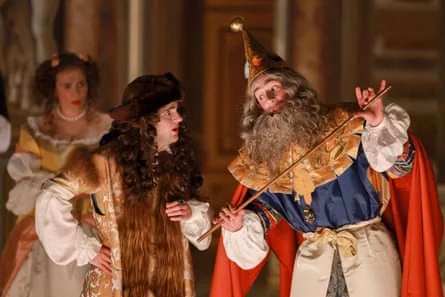
In a remarkable convergence of historical theatrical genius and cutting-edge artificial intelligence, the spirit of Molière, France’s preeminent playwright, has been rekindled over 350 years after his death. Scholars at the prestigious Sorbonne University in Paris have leveraged advanced AI to co-create an experimental play in the inimitable style of the 17th-century dramatist, marking a significant milestone in the ongoing dialogue between technology and the humanities. The resulting three-act comedy, "L’Astrologue ou les Faux Présages" (The Astrologer, or False Omens), made its highly anticipated debut last week at the opulent Royal Opera within the historic Château de Versailles, a setting that itself resonates deeply with Molière’s era.
Molière’s Enduring Legacy: The Voice of French Theatre
To understand the magnitude of this project, one must first appreciate the colossal figure of Jean-Baptiste Poquelin, known by his stage name Molière. He stands as the Shakespeare of France, a literary titan whose contributions to historical literature, drama, wit, and satire are unparalleled. Born in 1622, Molière’s career flourished under the patronage of King Louis XIV, shaping French comedy into a powerful tool for social critique and entertainment. His plays, such as "Tartuffe," "The Misanthrope," "The Imaginary Invalid," and "The Bourgeois Gentleman," masterfully lampooned the hypocrisies, pretensions, and follies of 17th-century French society, from the aristocracy to the emerging bourgeoisie. His sharp wit, intricate plots, and unforgettable characters have not only endured through centuries but have also profoundly influenced the French language itself, often referred to as "the language of Molière." His works are staples in the national curriculum, performed countless times, and continue to provoke thought and laughter, cementing his status as a cultural cornerstone. The audacity, therefore, of attempting to generate new work in his style, particularly with the aid of artificial intelligence, speaks volumes about both the reverence for his legacy and the evolving capabilities of modern technology.
The "Molière Ex Machina" Project Unveiled
The ambitious initiative, aptly named "Molière Ex Machina" (a play on the classical theatrical device "deus ex machina"), was spearheaded by a dedicated group of researchers at the Sorbonne University. This interdisciplinary team, which included classical literature scholars, linguists, historians, and artists from the three-person group Obvious, embarked on a two-and-a-half-year journey to explore the boundaries of creative collaboration between human intellect and artificial intelligence. Their objective was not merely to replicate Molière’s style but to genuinely extend his theatrical universe through a dialogue with a sophisticated French AI tool dubbed "Le Chat" (The Cat). The project was hosted under the auspices of the Théâtre Molière Sorbonne, an institution renowned for its commitment to accurately reconstructing and celebrating 17th-century theatrical productions, lending crucial academic credibility to what might otherwise have been perceived as a controversial undertaking.
Crafting a 17th-Century Comedy with AI: The "Intellectual Ping-Pong"
The core of the "Molière Ex Machina" project lay in an intricate, iterative process described by its creators as an "intellectual ping-pong." This involved an astonishing approximately 20,000 exchanges between the human team and "Le Chat." The AI assistant, having been rigorously trained on Molière’s complete oeuvre, as well as an extensive corpus of 17th-century French literature, history, and social mores, possessed an unparalleled capacity to recall and synthesize information. As Mickaël Bouffard, the head of the Théâtre Molière Sorbonne and the play’s director, elucidated to France Info, "AI has a superpower: the ability to store everything Molière wrote and everything Molière read. We human beings can’t do that."
Despite this formidable capacity, the journey was far from seamless. Bouffard candidly admitted that "the process was long and demanding." The AI’s initial drafts were often rudimentary; the first iteration of the play, for instance, ran to a mere eight pages and was deemed "not very interesting." This underscored a critical point: while AI can generate content based on patterns, it lacks the nuanced understanding of dramatic pacing, character development, and the subtle comedic timing that defines Molière’s genius. Consequently, the human researchers played an indispensable role, providing continuous feedback, explaining why certain passages or plot devices were ineffective, and guiding "Le Chat" through numerous rewrites. Every word, every scene, every piece of dialogue underwent meticulous scrutiny and refinement. This intensive collaborative loop ensured that the final script transcended mere imitation, striving instead for an authentic, Molière-esque sensibility that resonated with the period’s dramatic conventions while still possessing original flair. The collaborative effort extended beyond dialogue to encompass suggestions for music, costumes, and scenery, ensuring a holistic AI contribution to the entire production’s aesthetic.

"L’Astrologue ou les Faux Présages": A Closer Look at the AI-Inspired Plot
The plot of "L’Astrologue ou les Faux Présages" unfolds as a classic Molièrean three-act comedy. It centers on a wealthy bourgeois Parisian, a familiar target for Molière’s satirical gaze, who falls under the sway of a cunning charlatan astrologer named Pseudoramus. Under the astrologer’s deceptive counsel, the bourgeois insists that his daughter, Lucile, marry a debt-ridden and elderly wigmaker. This premise is strikingly consistent with Molière’s recurring themes: the gullibility of the social climbing elite, the dangers of false prophets and quackery, the often-absurd parental control over arranged marriages, and the clash between societal expectations and genuine affection.
Intriguingly, the central theme of astrology, along with the play’s title, was initially suggested by "Le Chat" itself. This choice proved particularly prescient and topical. As Pierre-Marie Chauvin, an associate professor at the Sorbonne involved in the project, noted, "Astrology allows us to discuss manipulation, false beliefs and disinformation, which are particularly topical subjects." This connection highlights how Molière’s enduring relevance lies not just in his historical context but in his ability to critique universal human foibles that remain pertinent in the modern era, particularly in an age grappling with the pervasive influence of technology and the spread of misinformation. The play, therefore, serves as both a historical pastiche and a contemporary commentary, mediated through an AI lens.
Debut at the Château de Versailles: A Stage of Historical Significance
The world premiere of "L’Astrologue ou les Faux Présages" at the Royal Opera of the Château de Versailles added another layer of historical resonance to the groundbreaking event. Versailles, the former principal royal residence of France, was a hub of artistic and cultural activity during Molière’s lifetime, often hosting his original productions for King Louis XIV and his court. To stage an AI-assisted Molière play in such a venerated venue symbolically bridged centuries of French theatrical tradition with the avant-garde of technological innovation. The two-hour performance played to an exclusive audience of 100 people during its debut run last week, including notable figures such as Catherine Pégard, the culture minister, underscoring the cultural significance attributed to the project by the French establishment. The choice of venue not only provided an authentic 17th-century ambiance but also served as a powerful statement about the intersection of heritage and future-forward experimentation.
Critical Reception and Audience Divide: A Spectrum of Reactions
The initial reception to "L’Astrologue ou les Faux Présages" has been a fascinating mix of praise, intrigue, and skepticism, reflecting the broader societal ambivalence towards AI in creative fields. Christophe Séfrin, the technology editor for 20 Minutes, who attended one of the performances, described the AI’s imitation as "striking, almost disconcerting," and found the dialogue "entirely believable." This sentiment suggests a level of success in capturing Molière’s linguistic and dramatic essence. Similarly, the magazine Telerama hailed the project as a "crazy venture," while also acknowledging that at times, the play "seems like a pastiche of the playwright’s work," hinting at the inherent challenges of true originality versus masterful mimicry.
Audience reactions mirrored this nuanced perspective. One attendee lauded the play, stating, "I think it’s a a success. The plot feels so real, the subject matter is so close to what we’re used to hearing in these [Molière] plays." This highlights the project’s achievement in faithfully evoking the spirit of the master. However, another theatre-goer expressed a more traditionalist viewpoint, asserting, "A decent writer can do this without artificial intelligence. I think we [humans] still have a bright future." This reaction encapsulates the fundamental question many artists and enthusiasts pose: does AI truly enhance creativity, or does it merely automate it, potentially diminishing the unique spark of human authorship? The debate underscores the deep-seated value placed on human ingenuity and the perceived threat that advanced AI might pose to it.
The Broader Debate: AI in the Arts and the Quest for Balance

The "Molière Ex Machina" project unfolds against a backdrop of intense global debate concerning the role and impact of generative AI across various creative industries. From Hollywood writers’ strikes over AI use to ongoing discussions about copyright and artistic ownership, the technology presents both immense opportunities and significant challenges. In France, a nation deeply protective of its cultural heritage and artistic professions, these discussions are particularly poignant. A report submitted to the National Assembly last year acknowledged this duality, characterizing generative AI as a "marvellous opportunity, a stimulating tool and a powerful driver of creativity." Yet, it simultaneously warned that AI "poses a threat to many professions in the cultural sector because it enables the production of content that may compete directly with human creations," concluding that "it is necessary to strike a balance between different forms of creation."
This project by the Sorbonne, given its academic rigor and focus on historical reconstruction, has largely managed to navigate this sensitive terrain without the widespread outrage that commercial AI ventures might provoke. The involvement of the Théâtre Molière Sorbonne, with its established reputation for scholarly authenticity, provided a critical shield against accusations of cultural appropriation or artistic laziness. It positioned the endeavor not as an attempt to replace human creativity but as an academic exploration of technology’s potential to illuminate and expand understanding of a historical master.
Redefining Authorship: Co-creation as a Model
The key to understanding the project’s philosophical stance lies in the concept of "co-creation." Pierre-Marie Chauvin articulated this distinction precisely: "We are demonstrating in concrete terms something that can be achieved in a novel way with AI. Not a play written by AI, but a play co-written with it." This framing is crucial. It suggests a future where AI acts as an intelligent assistant, a vast repository of knowledge and a tireless generator of ideas, rather than an autonomous artist. The human element—the critical judgment, the emotional intelligence, the nuanced understanding of comedic timing and dramatic tension—remains paramount. The 20,000 "ping-pong" exchanges exemplify this symbiosis, where AI provides raw material, and human experts shape it into art. This model could serve as a blueprint for how various creative fields might integrate AI, leveraging its computational power to augment, rather than diminish, human artistic expression.
Cultural Implications and Future Horizons
The "Molière Ex Machina" project carries significant cultural implications. It demonstrates a novel approach to cultural preservation, using modern technology to breathe new life into historical works and potentially introduce them to new audiences. For scholars, it offers an unprecedented tool for analyzing and experimenting with literary styles, providing insights into the mechanics of genius. For the general public, it presents an engaging way to experience a blend of tradition and innovation. The project’s success in generating believable Molière-esque dialogue also opens avenues for exploring other historical literary figures or even creating new forms of interactive theatre where AI might dynamically adapt performances.
Looking ahead, the Théâtre Molière Sorbonne and Obvious have ambitious plans to take "L’Astrologue ou les Faux Présages" beyond its Versailles debut. There are intentions to perform the play across France, bringing this unique blend of 17th-century wit and 21st-century technology to a broader national audience. Furthermore, the team plans to take the production abroad, showcasing French cultural innovation on an international stage and contributing to the global discourse on AI in the arts. This wider dissemination will allow for more extensive critical and public engagement, further shaping the understanding of AI’s capabilities and its appropriate role in the creative sphere.
In conclusion, "L’Astrologue ou les Faux Présages" stands as more than just a play; it is a profound experiment at the crossroads of art, history, and technology. It challenges conventional notions of authorship, sparks vital conversations about the future of creativity, and reaffirms Molière’s timeless capacity to entertain and provoke. As the project continues its journey, it will undoubtedly remain a significant touchstone in the ongoing exploration of how humanity and artificial intelligence can collaborate to push the boundaries of artistic expression.