Danny Garick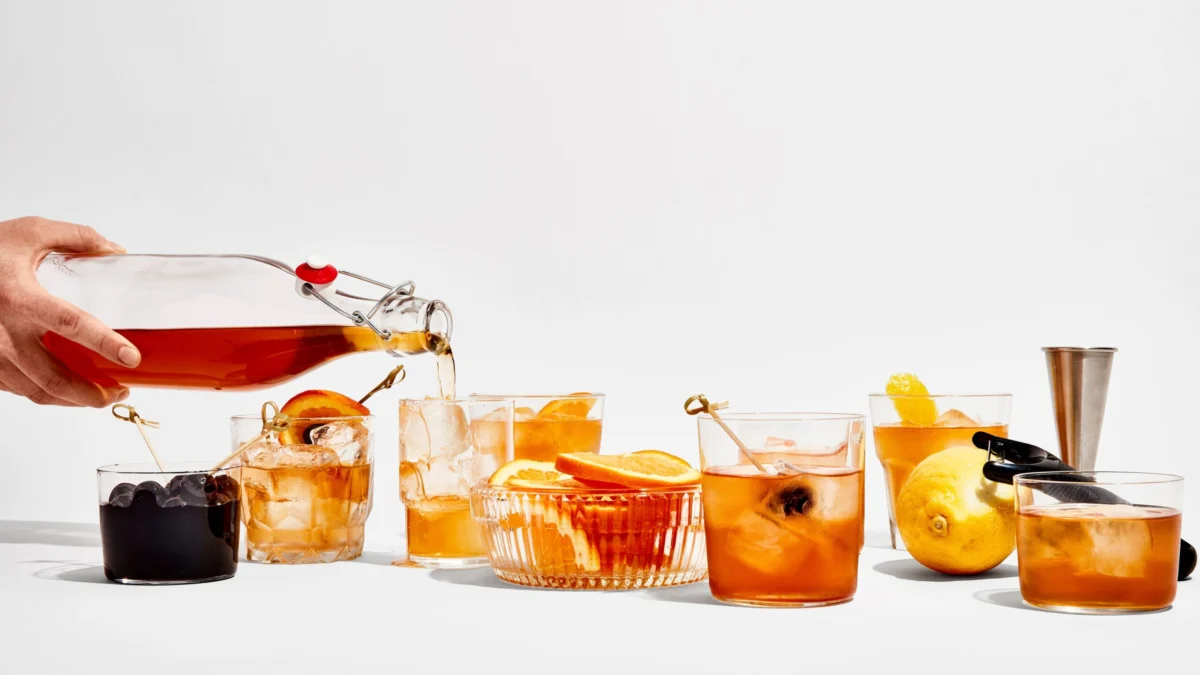
The modern landscape of home entertaining has undergone a significant shift as hosts increasingly prioritize guest engagement over the labor-intensive demands of individual drink preparation. Central to this evolution is the "batched cocktail," a method of pre-mixing large quantities of spirits-forward drinks to ensure consistency, speed of service, and professional-grade quality. While the concept of punch bowls dates back centuries, the contemporary focus has narrowed on the Old Fashioned—a cocktail that serves as the gold standard for spirit-forward balance. By combining rye whiskey or bourbon with precise measures of sugar, bitters, and water, hosts are transforming the way social gatherings are managed, effectively moving the "bar performance" into a pre-event preparation phase.
The Mechanics of the Batched Old Fashioned
A batched Old Fashioned is a scaled-up version of the classic cocktail, meticulously prepared in a single vessel such as a glass bottle or a decorative decanter. The Old Fashioned remains one of the oldest recorded cocktails in American history, adhering strictly to the 1806 definition of a cocktail: a combination of spirits, sugar, bitters, and water. In a traditional setting, these ingredients are stirred over ice to achieve two goals: chilling the liquid and diluting the high-proof alcohol to a palatable level.
In the batching process, the manual labor of stirring each drink is bypassed. Instead, the host calculates the necessary dilution and adds water directly to the mixture before refrigeration. This technique ensures that every pour is identical in flavor profile and mouthfeel, regardless of when it is served during the event. The use of "rich simple syrup"—a 2:1 ratio of sugar to water—is often preferred in batching to provide a weightier texture that holds up against the dilution of the whiskey.
The Critical Role of Controlled Dilution
The most common error in amateur cocktail preparation is the neglect of water as a functional ingredient. When a bartender stirs a drink for 30 to 45 seconds, the ice melts, contributing roughly 20% to 25% of the drink’s total volume in water. This dilution is essential; it "opens up" the aromatics of the whiskey and tempers the "burn" of the ethanol.

For a batched recipe, the industry standard suggests adding approximately one-quarter cup of filtered water for every four cocktails. Without this addition, a pre-chilled cocktail poured directly from a bottle will taste harsh and unbalanced. By integrating the water during the mixing phase, the host creates a shelf-stable solution that reaches thermal equilibrium in the refrigerator or freezer, resulting in a silkier, more integrated beverage.
Historical Context and the Evolution of the Whiskey Cocktail
To understand the significance of the Old Fashioned in the batching trend, one must look at its origins. Known simply as the "Whiskey Cocktail" in the early 19th century, it was originally consumed as a morning tonic or a "hair of the dog" remedy. As the 1800s progressed, bartenders began adding liqueurs like absinthe or curaçao to their whiskey drinks. Purists who preferred the original, simpler recipe began asking for a drink made the "old-fashioned way."
By the late 1800s, the Pendennis Club in Louisville, Kentucky, popularized the specific iteration we recognize today. The transition from a custom-made individual drink to a batched format reflects a broader historical trend in hospitality: the move from bespoke service to efficient, high-volume excellence. In the 21st century, this has been further fueled by the "cocktail renaissance" of the early 2000s, which re-educated the public on the importance of quality ingredients and precise ratios.
Market Trends and Supporting Data
The rise of batched cocktails at home mirrors significant growth in the global spirits market and the "Ready-to-Drink" (RTD) sector. According to data from the Distilled Spirits Council of the United States (DISCUS), the spirits industry has seen consistent growth for over a decade, with high-end premium bourbon and rye whiskey leading the charge.
- Consumer Preference: A 2023 market analysis indicated that the Old Fashioned remains the number one selling classic cocktail in the world’s best bars for the ninth consecutive year.
- The RTD Boom: The premixed cocktail category grew by approximately 26% in 2022, signaling a clear consumer desire for convenience without sacrificing the complexity of a spirit-forward drink.
- Home Entertaining Shifts: Post-pandemic data suggests a 15% increase in "premium home hosting," where consumers invest in high-quality bar tools and bulk ingredients to replicate the bar experience in private settings.
Chronology of Preparation: The Aging Process
One of the unique advantages of batching is the ability to "age" the cocktail. Unlike drinks containing citrus juice or egg whites, which degrade rapidly, spirit-forward batches like the Old Fashioned benefit from time.

- 1 Day Prior: The minimum recommended time for batching. This allows the flavors of the bitters and syrup to meld with the whiskey.
- 1 to 2 Weeks Prior: Professional mixologists often refer to this as "marrying" the ingredients. The sharp edges of the alcohol soften, and the spice notes of the rye or the caramel notes of the bourbon become more pronounced.
- 3 Months and Beyond: If stored in an airtight, glass container in the refrigerator, the cocktail remains stable. In the freezer, the high ABV (alcohol by volume) prevents the liquid from turning into a solid, instead creating a viscous, syrupy texture that is highly prized by connoisseurs.
Strategic Ingredient Selection
The choice of base spirit is the primary driver of the cocktail’s final character. Industry experts generally categorize the choices into two camps:
- Rye Whiskey: Favored for its spicy, black pepper, and floral notes. Brands such as Old Overholt provide a traditional, cost-effective base, while Michter’s or Rittenhouse Rye offer a higher proof and more robust flavor profile that stands up well to dilution.
- Bourbon: Preferred for those who enjoy a sweeter, rounder profile with notes of vanilla, oak, and corn. Bulleit and Knob Creek 9-Year are frequently cited as the "workhorses" of the batched cocktail world due to their consistency and accessibility.
Bitters also require careful scaling. In a single drink, two dashes are standard. However, when batching for 12 or 20 drinks, the bitterness can become exponential. Experts recommend adding bitters conservatively—starting with 75% of the calculated total—and tasting before adding more.
Industry Perspectives and Expert Analysis
Hospitality consultants argue that batching is a "force multiplier" for the host. "The goal of a host is to be present with their guests, not stuck behind a cutting board or a mixing glass," says Marcus Thorne, a veteran beverage director. "By batching, you are essentially pre-loading your labor. You are ensuring that the 20th guest receives the same high-quality experience as the first guest."
Furthermore, the environmental impact of batching is often overlooked. It reduces waste by allowing for the precise use of ingredients and minimizes the need for excessive ice usage during the "stirring" phase, which can be significant in large-scale entertaining.
Broader Implications and Versatility
The methodology used for the batched Old Fashioned is not limited to a single recipe. It serves as a blueprint for an entire category of "stirred" cocktails. The formula—multiplying base ingredients and adding approximately 20-25% water—is applicable to:

- The Manhattan: (Whiskey, Sweet Vermouth, Bitters)
- The Negroni: (Gin, Campari, Sweet Vermouth)
- The Martini: (Gin or Vodka, Dry Vermouth)
- The Boulevardier: (Bourbon, Campari, Sweet Vermouth)
This versatility has led to a "modular" approach to home bars, where a host might keep three or four different "bottled" cocktails in the freezer at all times, ready for any occasion.
Safety, Stability, and Storage
From a food safety perspective, batched cocktails are remarkably resilient. The high alcohol content acts as a preservative, preventing the growth of bacteria. However, stability is contingent on the exclusion of perishable items. While a traditional Old Fashioned is garnished with an orange peel or a brandied cherry, these should never be added to the batch itself. The oils in the citrus peel can turn bitter over time, and the fruit can degrade. Garnishing should remain a "per-serve" activity to maintain the visual and aromatic integrity of the drink.
Conclusion: The Future of the Social Pour
The transition of the Old Fashioned from a bespoke bar order to a pre-calculated batch represents a sophisticated intersection of culinary science and social strategy. As consumers continue to seek out high-quality experiences with reduced friction, the "power move" of the bottled cocktail is likely to become a permanent fixture in the modern host’s repertoire. It is a testament to the enduring appeal of the 1806 cocktail definition—a balance of strength, sweetness, and bitterness that, when scaled correctly, proves that the best things in life are often those that have been carefully prepared well in advance.