
 Reynand Wu
The United States agricultural sector relies on a workforce that is simultaneously indispensable and intentionally sequestered. While migrant labor provides the backbone for the multi-billion-dollar produce industry, the individuals performing this labor often exist in a state of profound geographic and social isolation. This invisibility is not a byproduct of happenstance or rural geography; rather, it is a deliberate spatial strategy. By situating housing behind orchards, far from public thoroughfares, and behind locked gates on private property, employers create environments that are both physically difficult to reach and functionally impossible to leave. This spatial design serves as a silent mechanism of control, ensuring that the labor force remains compliant, monitored, and effectively removed from the purview of public oversight.
The Evolution of Migrant Housing: A Historical Context
The history of migrant worker housing in the United States is rooted in the legacy of the Great Depression and the subsequent expansion of industrial agriculture. During the 1930s, the Farm Security Administration (FSA) documented the squalid conditions of migrant camps, capturing images of families living in temporary shelters that lacked basic sanitation. These archival photographs, such as those taken by Dorothea Lange, serve as a stark reminder that the current crisis is a continuation of a century-old struggle.
Following the Second World War, the Bracero Program (1942–1964) formalized the importation of Mexican guest workers to fill labor shortages. During this era, housing was often managed directly by the agricultural associations or large-scale growers. The structural model established then—temporary, dormitory-style housing on the employer’s land—has remained the standard for the modern H-2A visa program. Today, the H-2A visa allows agricultural employers to hire foreign nationals for seasonal work, provided they meet specific housing and transportation requirements. However, federal oversight of these facilities remains fragmented, often leading to a wide disparity between legal mandates and the reality experienced by workers.
The Mechanics of Spatial Discipline
From a sociological perspective, the design of migrant housing functions as an instrument of institutional discipline. As theorized by Michel Foucault in Discipline and Punish, institutions utilize architectural layouts to enforce behavior and minimize autonomy. In the context of modern agricultural camps, the architecture does not require traditional carceral features like bars or guards to be effective. Instead, it utilizes the "minimum legal standard" to dictate the parameters of daily life.
These dormitories are frequently constructed with high-density, communal living arrangements. Workers often share cramped quarters where privacy is non-existent, and communal bathrooms and bare-bones kitchens are the norm. When an employer serves as both the landlord and the supervisor, the power dynamic becomes absolute. Every complaint regarding working conditions or wage theft carries the implicit threat of eviction. Because housing is tied to employment, the loss of a job results in immediate homelessness, a prospect that effectively silences workers who might otherwise seek to improve their conditions.
Data and Regulatory Disparities
The scale of the migrant labor housing issue is significant, yet data remains difficult to aggregate due to the decentralized nature of the industry. According to the U.S. Department of Labor (DOL), the number of H-2A certified positions has surged over the past decade, growing from roughly 85,000 in 2010 to over 370,000 by 2023. As the number of migrant workers increases, the capacity of government agencies to inspect these thousands of dispersed sites has not kept pace.
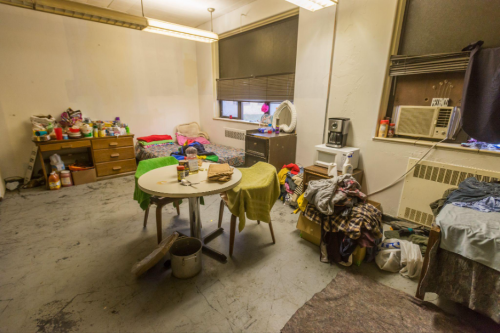
Regulatory bodies such as the Occupational Safety and Health Administration (OSHA) and the Wage and Hour Division (WHD) are responsible for enforcing the standards set by the Migrant and Seasonal Agricultural Worker Protection Act (MSPA). However, critics argue that these inspections are often reactive rather than proactive. Evidence gathered by legal advocacy groups suggests that inspections are frequently announced, allowing employers to briefly address violations before an investigator arrives. Once the inspector leaves, the conditions—ranging from overcrowding to inadequate cooling in regions experiencing record-breaking heat—often return to their prior state.
The Socio-Economic Implications of "Private" Space
The spatial production of these camps is rarely driven by the needs of the workers but rather by the economic interests of the agricultural producers. Henri Lefebvre’s theory on the "production of space" posits that the way space is organized reflects the interests of those in power. In agricultural zones, the layout of a building—the proximity of bunks, the distance between the fields and the dorms, and the placement of security gates—is a map of the power relationship between the grower and the laborer.
This structural design impacts more than just physical comfort; it has profound implications for public health and labor rights. The lack of private space and the inability to live with family members, even when they are also employed in the same sector, places an immense psychological burden on the workforce. For the individual worker, these spaces are not homes; they are extensions of the workplace. This lack of a "private sphere" prevents workers from forming the community bonds necessary to organize, seek legal counsel, or access healthcare services.
Official Responses and Industry Defense
Agricultural industry representatives often argue that the cost of providing housing in rural areas is prohibitive and that existing standards are sufficient to protect workers. Industry associations frequently cite the necessity of proximity to crops, arguing that housing must be located on-site to ensure the efficiency of harvest operations.
Conversely, labor rights advocates and clinical social workers who have worked within these communities argue that efficiency should not supersede human dignity. They point out that the isolation of these sites prevents the integration of migrant workers into local community networks, which would provide a natural safety net and support system. In recent years, several class-action lawsuits have been filed against large-scale agricultural operations, alleging that the housing provided violated both federal and state laws regarding habitability and overcrowding. While some of these cases have resulted in settlements, the underlying architectural strategy remains largely intact.
Moving Toward Transparency
The challenges surrounding migrant housing are not merely a "housing crisis" in the traditional sense; they are a deliberate labor strategy that relies on the concealment of the worker. To address this, policy analysts suggest several potential shifts in oversight:
- Increased Transparency and Reporting: Mandating that all H-2A housing locations be registered in a public database, accessible to community organizations and labor unions, would break the physical isolation of these sites.
- Independent Inspections: Shifting from government-led, often announced inspections to independent, third-party audits would ensure that living conditions are evaluated without the influence of employer bias.
- Decoupling Housing from Employment: Developing public-private partnerships to create neutral, off-farm housing options would allow workers to live in environments not controlled by their employers, significantly reducing the threat of retaliation.
The invisibility of migrant labor is a systemic feature, not a bug. By keeping the sites of production and habitation tucked away from public view, the agricultural industry has effectively insulated itself from the social and ethical pressures that govern other sectors of the economy. Bringing these designs to light is the first step in dismantling a system that has long prioritized the convenience of the harvest over the humanity of the harvester. As long as these spaces remain hidden, the power imbalance that defines the migrant labor experience will continue to flourish, hidden behind the very gates and groves that keep the workers captive.







