Reynand Wu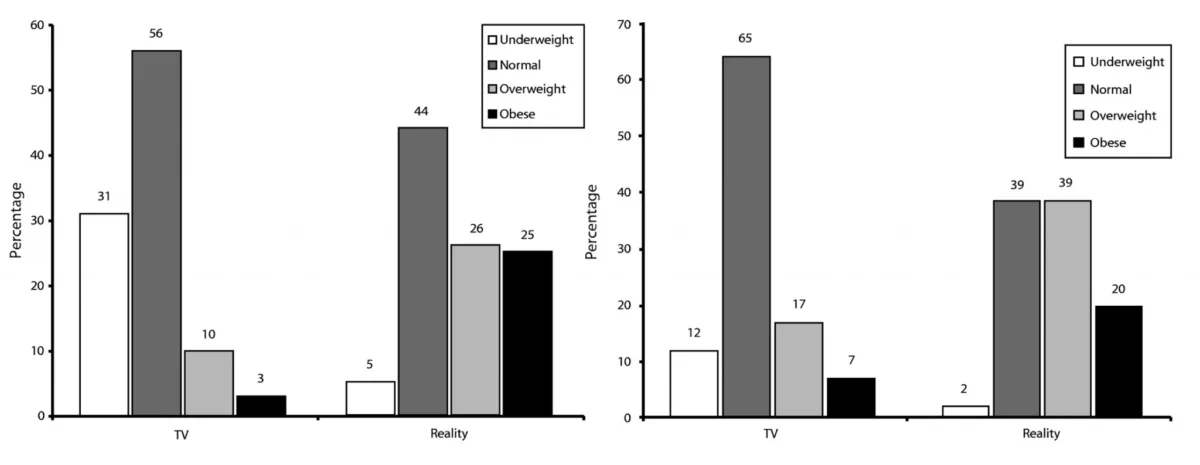
Television, a pervasive medium shaping cultural narratives and individual perceptions, frequently distorts, mocks, and marginalizes individuals with larger body types, reducing them to one-dimensional caricatures whose stories and identities are rarely developed or deemed significant. This pervasive misrepresentation contributes to a societal "thin ideal," an aspirational body standard that is not only unrealistic for a significant portion of the population but also deeply damaging to self-esteem and overall well-being. A foundational study by Tzoutzou et al. starkly illustrated this bias, revealing that across numerous televised interactions, all 36 compliments related to appearance directed at women were exclusively given to thin characters. Critically, not a single positive message regarding physical appearance was extended to a woman of an average or overweight body type. The pattern for men, though slightly less absolute, mirrored this disparity, with only one overweight male character receiving a positive message about his appearance. This data underscores a profound disparity in how attractiveness is portrayed and validated on screen, sending a clear, albeit often subliminal, message to audiences that external beauty is almost solely defined by thinness, effectively excluding anyone who deviates from this narrow definition.
The implications of such skewed portrayals extend far beyond mere entertainment. Viewers, particularly impressionable young audiences, are susceptible to internalizing this "thin ideal." This internalization can significantly impede an individual’s ability to cultivate a positive self-image and feel confident in their own skin, especially if their natural body type does not conform to the pervasive media standard. The consistent exposure to the demeaning or dismissive treatment of larger-bodied individuals on television can profoundly affect how viewers perceive their own bodies, fostering feelings of inadequacy, shame, and self-consciousness.
The Invisibility and the Insulted: A Crisis of Representation
Beyond the negative framing, there is a fundamental issue of underrepresentation. While a significant portion of the real-world population comprises individuals with diverse body types, television consistently fails to reflect this reality. A seminal study by Brownell et al. in 2003, comparing female and male body types on television to those in reality from 1999-2000, demonstrated a striking disparity. The data revealed that while average and overweight body types constitute a large percentage of the general population, their presence on screen was dramatically lower. For instance, a substantial majority of women in the real world might fall into average or overweight categories, yet television overwhelmingly featured thin women. The same imbalance was observed for male characters, albeit with slight variations. This historical data, while over two decades old, unfortunately, reflects a persistent trend in media, highlighting that larger bodies are not only negatively portrayed but are also disproportionately absent from the screen, making them largely invisible in popular narratives.
This pattern of dehumanizing larger-bodied individuals is further cemented by the limited and often demeaning roles they are assigned. Rarely are these characters afforded the opportunity for deep character development, complex emotional arcs, or meaningful contributions to the plot outside of their body size. Instead, they are frequently relegated to stereotypical archetypes, most commonly serving as comedic sidekicks or outright villains.
Archetypes of Otherness: The Jester and The Villain
The Comedic Punchline: In the realm of television comedy, the treatment of plus-size women, in particular, often veers from humor with them to humor at their expense. Research indicates that overweight women are approximately twice as likely to be the target of a joke compared to their thinner counterparts. These characters are typically given smaller roles, rarely experience significant romantic relationships, and engage in "fewer positive interactions than thin characters." Their narratives are often centered around their weight, their perceived clumsiness, or their insatiable appetite, rather than their intelligence, kindness, ambition, or any other nuanced human trait. They become props for cheap laughs, their existence on screen validated primarily by their ability to generate humor through their physical appearance or perceived social awkwardness. This reduces their humanity and reinforces the idea that larger bodies are inherently comical or less worthy of respect and complex storylines.
The Morally Corrupt: Equally disturbing is the prevalent trope of the "fat villain." This archetype is particularly insidious as it links physical size directly to moral depravity or malevolence, particularly in content aimed at children. A study by Himes and Thompson found that in 64% of the most popular children’s videos, obesity was explicitly equated with negative traits such as evil, unattractiveness, unfriendliness, and cruelty. Classic examples abound in popular children’s movies and animated series, such as the voluptuous sea witch Ursula from The Little Mermaid or the corpulent and tyrannical Queen of Hearts from Alice In Wonderland. These characters’ physical size is often visually exaggerated and used as a shorthand to convey their villainous nature, creating a subconscious association between larger bodies and negative qualities from a very young age. This trope effectively demonizes fatness, painting it not merely as an aesthetic deviation but as a signifier of inherent badness. The consistent deployment of these limited and harmful archetypes ensures that fat characters remain less humanized than other characters, who are given full stories, complex motivations, and a range of emotions. Television producers, through these portrayals, do not merely ignore fatness; they actively demonize it.
The Pervasive Impact on Viewer Psychology
The consistent and overwhelmingly negative portrayal of larger-bodied individuals in television shows has profound and measurable effects on audiences, leading to the internalization of these harmful stereotypes. This internalization can occur with startling speed; a study by Fouts and Burggraf revealed that as little as 30 minutes of television viewing can significantly alter how a young woman perceives her own body, potentially leading to a cascade of external struggles. These struggles are not trivial; they can manifest as heightened body dissatisfaction, obsessive dieting, disordered eating behaviors, and even clinical eating disorders. The research by Tzoutzou et al. further reinforced this, finding that young girls frequently acknowledged media’s influence on their desire to be thin and conform to prevailing beauty standards. This media-driven pressure to achieve an unrealistic body ideal is a significant contributor to the prevalence of body image issues and eating disorders among young people.
Beyond self-esteem issues, these misrepresentations can instill a deeper, more insidious fear in viewers: the belief that they will be subjected to the same sexist, demeaning, or discriminatory treatment they witness on screen if they do not conform to the "thin ideal." This fear can compel individuals to engage in unhealthy behaviors, from extreme dieting to excessive exercise, in a desperate attempt to avoid perceived social penalties. The psychological toll of constantly comparing oneself to unattainable media ideals, coupled with the anticipation of judgment, can be immense. It can lead to social anxiety, withdrawal, and a diminished quality of life, as individuals feel perpetually scrutinized and judged based on their appearance. All these aspects collectively contribute to a female viewer, in particular, feeling worse about themselves, their appearance, and their anticipated interactions with others, all rooted in the fictional yet powerfully influential distorted depictions on television.
Historical Context and the Evolution of Body Image in Media
The media’s fixation on a singular, slender beauty ideal is not a new phenomenon but has deep roots in cultural history, evolving with societal shifts and technological advancements. From the "flapper" era of the 1920s to the supermodel craze of the 1990s and the pervasive "wellness" culture of today, television and film have consistently reinforced narrow beauty standards. In the mid-20th century, Hollywood often presented a more varied array of body types, yet the underlying message of desirability often leaned towards conventionally attractive, idealized figures. As mass media became more powerful, particularly with the advent of television, the visual reinforcement of specific body types grew exponentially. The 1980s and 90s, for instance, saw a rise in aerobics culture and the glorification of extremely thin, athletic figures, which television readily amplified.
Over time, this relentless focus on thinness has been intertwined with capitalist interests, particularly advertising for diet products, fitness regimes, and fashion, all of which benefit from the perpetuation of body insecurity. However, the last two decades have witnessed the emergence and growth of the "body positivity" movement, a grassroots effort to challenge these narrow ideals and promote acceptance of all body shapes and sizes. This movement, amplified by social media, has begun to exert pressure on traditional media outlets, demanding more inclusive and authentic representation. While progress has been slow and often superficial, there are nascent signs of change, with some shows and campaigns attempting to feature more diverse body types, though often still falling short of truly normalizing non-thin bodies without making their size a central plot point or a comedic element.
Industry Perspectives and Calls for Change
The persistence of biased body portrayals on television raises critical questions for industry professionals. From a production standpoint, arguments often center on creative freedom, casting for "talent," or catering to perceived audience preferences. However, researchers, psychologists, and body positivity advocates strongly contend that these arguments often mask unconscious biases or a reluctance to challenge established, yet harmful, tropes.
Academics, like those behind the studies cited, consistently highlight the robust evidence linking media representation to public health outcomes, including mental health crises and the perpetuation of weight stigma, which can lead to real-world discrimination in areas like employment and healthcare. Advocacy groups, such as the National Association to Advance Fat Acceptance (NAAFA) or the Body Positive movement, continually call for media executives, writers, and casting directors to undertake a critical self-assessment of their practices. They argue for the need for more diverse voices in writers’ rooms and production teams, believing that authentic representation can only come from those with lived experiences or a genuine commitment to inclusivity.
Some progressive voices within the entertainment industry have started to acknowledge these concerns. Showrunners and producers are increasingly being challenged to move beyond tokenism and create characters where a larger body size is simply one aspect of a fully realized individual, rather than their defining characteristic or the source of all their comedic or dramatic tension. There is a growing understanding that authentic representation is not just a moral imperative but also a smart business decision, as it broadens audience appeal and fosters a deeper connection with diverse viewer demographics who have long felt unseen or misrepresented. The cultural landscape is shifting, and audiences are increasingly demanding content that reflects the true diversity of humanity.
Beyond Stereotypes: Envisioning Inclusive Storytelling
For television to truly live up to its potential as a powerful medium for entertainment, education, and social commentary, it must move beyond the reductive and harmful portrayals of larger-bodied individuals. This requires a conscious and concerted effort from all facets of the industry to foster truly inclusive storytelling. The goal should not simply be to avoid negative stereotypes, but to actively create nuanced, multi-dimensional characters whose narratives are rich and varied, irrespective of their body size.
Imagine television where a plus-size character is the brilliant scientist, the empathetic doctor, the adventurous explorer, the desirable romantic lead, or the formidable CEO, without their weight being the focus of their storyline, the butt of a joke, or an indicator of their moral standing. This means depicting larger bodies in roles that challenge traditional norms, showcasing their strength, intelligence, beauty, and emotional depth. It means portraying healthy, happy relationships involving diverse body types, normalizing the idea that love, attraction, and connection are not exclusive to a narrow physical ideal.
While still relatively rare, there are emerging examples of television programs that are making strides in this direction. Shows that feature characters with diverse body types in leading roles, exploring complex relationships and careers, without making their weight their defining characteristic, offer a glimpse into a more inclusive future. These productions demonstrate that audiences are receptive to, and indeed hungry for, authentic and respectful portrayals that reflect the rich tapestry of human experience. The potential for television to be a powerful tool for social change, fostering empathy and acceptance, is immense. By embracing diverse body representation, television can contribute significantly to dismantling weight stigma and promoting a healthier, more inclusive societal understanding of beauty and worth.
Ultimately, television is a space that is meant to be enjoyed by all. However, viewers cannot fully relax and engage with shows if they feel their body type is being constantly judged, mocked, or rendered invisible by the very content they consume. All bodies, in their myriad forms, deserve to feel seen, respected, and authentically represented within television narratives. Every individual deserves to find characters on screen with whom they can identify, whose stories resonate, and whose presence affirms their inherent worth. The journey toward truly inclusive media is ongoing, demanding continuous vigilance, advocacy, and a commitment from the industry to reflect the world as it truly is, celebrating its diversity rather than narrowing its scope.