Reynand Wu
The vibrant pulse of basketball echoes through New York City, particularly in its historically Black neighborhoods. Picture a typical summer day on 135th Street in Harlem: the rhythmic thud of a basketball against concrete, the shouts of children, the collective gasp at a perfectly executed shot. This isn’t just a game; it’s a living cultural institution. A small, meticulously maintained outdoor court, freshly painted with a sturdy chain-link fence, serves as a community hub. The ball is in constant motion—passed, dribbled, shot from all angles—its energy drawing in more onlookers, each play fueling the collective excitement. From Harlem to Brooklyn, basketball is deeply ingrained in the city’s fabric, a phenomenon often associated with African American culture. Yet, the roots of this profound connection are complex, stemming not from organic preference alone, but significantly from the systemic discriminatory practices of redlining and segregation that shaped urban landscapes and restricted opportunities for minority groups for decades.
Basketball’s Early Years: A "White Man’s Game"
Basketball, as we know it today, was born in Springfield, Massachusetts, in December 1891. Dr. James Naismith, a Canadian physical education instructor at the International YMCA Training School, sought an indoor sport less injury-prone than football and less chaotic than soccer for his students during harsh New England winters. His innovation quickly gained traction, spreading through YMCAs, colleges, and high schools across the nation. By the early 1900s, elite institutions like Harvard, Yale, Cornell, and Princeton were competing in intercollegiate games, establishing the sport’s initial collegiate footprint. The professional landscape began to formalize with the founding of the National Basketball League (NBL) in 1937, which later merged with the Basketball Association of America (BAA) in 1949 to form the ubiquitous National Basketball Association (NBA).
For its first three decades, basketball was overwhelmingly dominated by white participants. Black athletes were systematically excluded from playing in mainstream collegiate and professional leagues. The color barrier remained firmly in place, reflecting broader societal segregation. It wasn’t until 1928 that George Gregory Jr. made history as the first Black collegiate player, a landmark moment in a landscape where opportunities were scarce. The professional barrier finally crumbled in the 1949-1950 NBA season, when Chuck Cooper, Nathaniel Clifton, and Earl Lloyd became the first Black players to step onto professional basketball courts. Their entry was a hard-won victory, but it came after decades of exclusion rooted in racial prejudice. During this period, basketball was predominantly played in community centers such as YMCAs, many of which explicitly refused membership to Black individuals. If Black communities wished to play, they were often forced to create their own facilities and organizations.
The Architecture of Inequality: Redlining and Urban Segregation in NYC
The historical exclusion of Black athletes from mainstream sports facilities was part of a larger, more insidious pattern of racial and economic discrimination that profoundly shaped American cities, particularly New York. Practices like redlining, a discriminatory housing policy initiated by the federal government, depressed resources and opportunities in minority neighborhoods. Redlining emerged explicitly with the implementation of the National Housing Act (NHA) in 1934, a New Deal initiative ostensibly designed to improve the housing market and promote homeownership. The NHA created government-backed programs like the Federal Housing Administration (FHA) and the Home Owners’ Loan Corporation (HOLC). While these programs significantly boosted homeownership for white Americans, they systematically excluded Black people from accessing federally insured housing loans.
The HOLC played a pivotal role in institutionalizing redlining. It produced detailed "security maps" of metropolitan areas, classifying neighborhoods based on perceived lending risk. Areas with large populations of Black residents were invariably color-coded red, designating them as "hazardous" or "risky" for investment. These classifications were not based on objective economic factors but on explicit racial biases, labeling Black presence as a determinant of declining property values. The FHA then utilized these maps to guide its lending policies, effectively denying federally insured mortgages to individuals in redlined areas, which were overwhelmingly Black and other minority communities. This meant that Black families found it nearly impossible to secure conventional mortgages, limiting their ability to purchase homes, accumulate wealth, and invest in their communities.
The consequences for New York City were profound. Harlem, for example, a vibrant center of Black culture, was heavily redlined. This systematic disinvestment led to deteriorating housing stock, inadequate public services, and a severe lack of private investment. As Black families, many migrating from the Jim Crow South, moved into northern cities seeking opportunity, white residents often engaged in "white flight," relocating to newly developed suburbs that were explicitly designed to be racially exclusive. This exodus further depressed property values in urban centers, creating a cycle of disinvestment and concentrating poverty in minority neighborhoods. The racial wealth gap, which persists to this day, has its roots firmly planted in these discriminatory housing policies.
The Economic Barrier to Entry: How Redlining Shaped Sports Access
The economic inequality forged by redlining directly impacted the types of recreational activities and sports accessible to children in these marginalized neighborhoods. Redlined areas suffered from a critical deficit in public amenities, including green spaces and parks. According to a 2020 analysis by the Trust for Public Land, parks in New York City’s poorer neighborhoods average a mere 6.4 acres, starkly contrasting with the 14-acre average found in affluent areas. This disparity meant less space for organized sports, fewer well-maintained facilities, and a general lack of investment in recreational infrastructure.
Beyond mere space, the cost of entry for many sports created an additional barrier. Sports like baseball, traditionally popular, required significant financial investment for equipment (bats, gloves, uniforms), league fees, and increasingly, travel teams for competitive play. These costs were prohibitive for families struggling in economically depressed, redlined neighborhoods. Basketball, by contrast, offered a remarkably low barrier to entry. A hoop, a ball, and a patch of concrete were often all that was needed. This accessibility made basketball an ideal sport for urban environments where space was at a premium and financial resources were limited.
David C. Ogden, a professor who studied race and sport dynamics, highlighted this phenomenon, noting that the lack of baseball facilities in Black neighborhoods and the prohibitive cost of elite baseball were primary reasons for the sport’s lack of racial diversity. His research indicated that "more than two-thirds of the 27 coaches said that African-American youth prefer to spend their time on the basketball court rather than on the diamond." This preference was not simply cultural; it was an economic reality born from systemic inequality. Basketball became a default choice, a sport that could be played anywhere, by anyone, with minimal equipment, fostering a unique culture of streetball and community competition.
The Rise of Black Institutions: YMCAs and the "Black Fives" Era
In the face of widespread segregation, Black communities demonstrated remarkable resilience, building their own institutions to serve their needs. The Young Men’s Christian Association (YMCA) movement, while initially discriminatory, eventually saw the emergence of "colored" YMCAs that became vital social and athletic centers for Black individuals. These institutions provided safe spaces for recreation, education, and community building, and crucially, they became incubators for basketball talent.
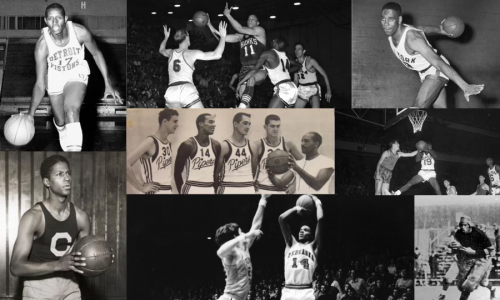
The "Black Fives" era (roughly 1904-1950) predated the NBA’s integration and saw the flourishing of all-Black basketball teams and leagues. These teams, often sponsored by YMCAs, churches, or social clubs, were the proving grounds for Black athletes. The Smart Set Athletic Club of Brooklyn, formed in 1907, stands as a pioneering example of an independent Black basketball team in America. As more Black YMCAs developed in major cities like New York, Philadelphia, and Baltimore, basketball’s popularity surged.
A pivotal figure in this movement was Edwin Bancroft Henderson, an educator in Washington D.C., often called the "Grandfather of Black Basketball." Henderson learned the game during summer sessions at Harvard University and, upon returning to D.C., passionately introduced it to young Black men. His efforts were instrumental in spreading the game across the East Coast, fostering a generation of skilled players. These early Black teams and leagues, though often overlooked in mainstream sports history, were immensely popular within their communities, drawing large crowds. A notable example is the 1911 game where the 12th Streeters defeated the Smart Set 20-17 in Brooklyn, witnessed by over 2,000 spectators, demonstrating the significant following these contests commanded.
Basketball also offered a rare pathway to economic upward mobility in a society rife with racial barriers. For many Black athletes, playing professional basketball was the only viable option to earn a living through their athletic talents. The Harlem Globetrotters, founded in 1926 by Abe Saperstein, became the most renowned Black basketball team, known for their dazzling skills and entertainment value. While they often faced grueling travel schedules and discriminatory treatment, the Globetrotters provided a consistent livelihood and a global platform for Black basketball players, showcasing their extraordinary talent to the world and inadvertently challenging racial stereotypes through their athletic prowess.
Basketball Today: A Cultural Mecca and Enduring Legacy
The landscape of basketball today is dramatically different from its segregated past. New York City, in particular, stands as a global basketball mecca, its courts buzzing with diverse talent regardless of race. Black participation in basketball has soared since the end of official segregation, and its cultural significance in NYC remains unparalleled. Every summer, community parks across the five boroughs host fiercely competitive basketball tournaments that draw national attention. Events like Nike-sponsored "NY vs NY" and Slam magazine’s "Summer Classic" feature top-ranked high school players and attract thousands of fans, often held in iconic venues like Dyckman Park in Manhattan. These tournaments are not merely sporting events; they are cultural festivals, celebrating community, talent, and the enduring spirit of streetball.
The demographic shift in professional basketball reflects this historical trajectory. In stark contrast to 1950, when Black players were a tiny minority, today approximately 75% of the NBA’s players are Black. Furthermore, Black athletes are prominent in basketball leagues worldwide, a testament to the global reach and impact of a sport that was once a segregated endeavor. This profound transformation underscores how the economic conditions fostered by redlining and segregation, while initially restrictive, inadvertently cultivated an environment where basketball could become an enduring staple of the African American community for generations. The resilience, innovation, and passion within these communities, coupled with basketball’s inherent accessibility, transformed a tool of survival into a powerful expression of cultural identity and athletic excellence.
The story of basketball’s deep roots in African American culture is a compelling narrative of adversity, adaptation, and triumph. It illustrates how systemic injustices can inadvertently forge powerful cultural legacies, demonstrating the profound impact of urban planning, economic policy, and social discrimination on the lives and leisure of generations. The vibrant courts of Harlem and beyond are not just places to play a game; they are living monuments to a complex history, where the bounce of a ball represents both the struggles of the past and the enduring spirit of a community that found its voice and its game on the hardwood.
Additional Resources:
Aaronson, D., Faber, J., Hartley, D., Mazumder, B., & Sharkey, P. (2020). The Long-Run Effects of the 1930s HOLC “Redlining” Maps on Place-Based Measures of Economic Opportunity and Socioeconomic Success. The Effects of the 1930s HOLC “Redlining” Maps. https://doi.org/10.21033/wp-2020-33
Bowen, F. (2023, April 7). In its early years, NBA blocked black players. The Washington Post. Retrieved April 24, 2023, from https://www.washingtonpost.com/lifestyle/kidspost/in-nbas-early-years-black-players-werent-welcome/2017/02/15/664aa92e-f1fc-11e6-b9c9-e83fce42fb61_story.html
Centopani, P. (2020, February 24). The makings of basketball mecca: Why it will always be New York. FanSided. Retrieved May 1, 2023, from https://fansided.com/2020/02/24/makings-basketball-mecca-will-always-new-york/

Domke, M. (2011). Into the vertical: Basketball, urbanization, and African American … Into the Vertical: Basketball, Urbanization, and African American Culture in Early- Twentieth-Century America. Retrieved March 31, 2023, from http://www.aspeers.com/sites/default/files/pdf/domke.pdf
Gay, C. (2022, January 13). The black fives: A history of the era that led to the NBA’s racial integration. Sporting News Canada. Retrieved April 24, 2023, from https://www.sportingnews.com/ca/nba/news/the-black-fives-a-history-of-the-era-that-led-to-the-nbas-racial-integration/8fennuvt00hl1odmregcrbbtj
Gorey, J. (2022, July 25). How “White flight” segregated American cities and Suburbs. Apartment Therapy. Retrieved April 30, 2023, from https://www.apartmenttherapy.com/white-flight-2-36805862
Hunt, M. (2022, October 11). What is the National Housing Act? Bankrate. Retrieved April 25, 2023, from https://www.bankrate.com/real-estate/the-national-housing-act/#:~:text=What%20is%20the%20National%20Housing%20Act%20(NHA)%3F,Loan%20Insurance%20Corporation%20(FSLIC).
Hu, W., & Schweber, N. (2020, July 15). New York City has 2,300 parks. but poor neighborhoods lose out. The New York Times. Retrieved April 21, 2023, from https://www.nytimes.com/2020/07/15/nyregion/nyc-parks-access-governors-island.html
Ivy league regular season champions, by Year. Coaches Database. (2023, March 5). Retrieved April 24, 2023, from https://www.coachesdatabase.com/ivy-league-regular-season-champions/
McIntosh, K., Moss, E., Nunn, R., & Shambaugh, J. (2022, March 9). Examining the black-white wealth gap. Brookings. Retrieved April 25, 2023, from https://www.brookings.edu/blog/up-front/2020/02/27/examining-the-black-white-wealth-gap/
Ogden, D. C. ., & Hilt, M. L. . (2003). Collective Identity and Basketball: An Explanation for the Decreasing Number of African Americans on America’s Baseball Diamond. Retrieved March 31, 2023, from https://www.nrpa.org/globalassets/journals/jlr/2003/volume-35/jlr-volume-35-number-2-pp-213-227.pdf
Ortigas, R., Okorom-Achuonyne, B., & Jackson, S. (n.d.). What exactly is redlining? Inequality in NYC. Retrieved March 30, 2023, from https://rayortigas.github.io/cs171-inequality-in-nyc/
Pearson, S. (2022). Basketball origins, growth and history of the game. History of The Game Of Basketball Including The NBA and the NCAA. Retrieved April 24, 2023, from https://www.thepeoplehistory.com/basketballhistory.html
Robertson, N. M. (1995). [Review of Light in the Darkness: African Americans and the YMCA, 1852-1946., by N. Mjagkij]. Contemporary Sociology, 24(2), 192–193. https://doi.org/10.2307/2076853
Townsley, J., Nowlin, M., & Andres, U. M. (2022, August 18). The lasting impacts of segregation and redlining. SAVI. Retrieved March 30, 2023, from https://www.savi.org/2021/06/24/lasting-impacts-of-segregation/