Ana Megawati
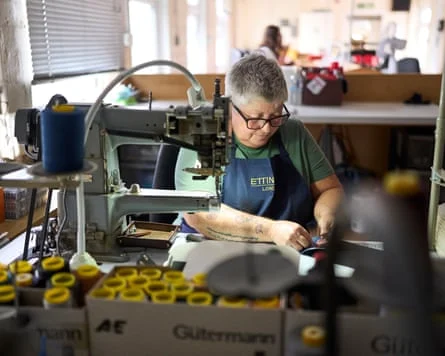
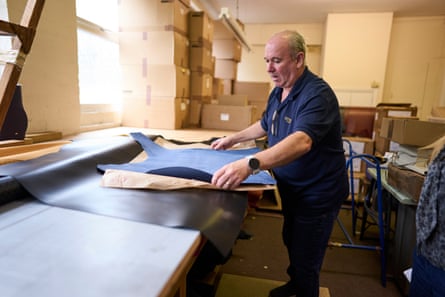
Inside a modest, nondescript red-brick workshop in Walsall, the West Midlands, factory manager Gary Billingham carefully aligns a sheet of premium calfskin beneath a heavy hydraulic press. With a rhythmic mechanical sigh, the blade descends, punching out the 28 distinct pieces required to assemble a single Ettinger leather wallet. Every component is subjected to rigorous scrutiny. Edges are expertly shaved down using a specialized machine known as a skiver, prepared meticulously so they can be folded, glued with a brush, and finally hand-stitched by a small, dedicated workforce.
This meticulous, uncompromising attention to detail is the lifeblood of Ettinger, one of the very few surviving leather goods manufacturers in a town that once served as the beating heart of Britain’s leather and saddlery trade. While industrial automation has transformed the global manufacturing landscape, the craft of luxury leather goods remains obstinately analog.
"It is all down to attention to detail and everything we do is based around that," Billingham explains, gesturing to the veteran artisans who populate the factory floor. For a brand holding royal warrants from King Charles and Queen Camilla, this steadfast refusal to compromise on heritage craftsmanship has become both its greatest asset and its most formidable operational hurdle.
A Century-Old Legacy Born from Exile

The story of Ettinger is deeply intertwined with the tumultuous history of 20th-century Europe. The luxury British brand was founded in 1934 by Gerry Ettinger, an entrepreneur who fled Nazi Germany, finding temporary refuge in Paris before navigating a brief stint in the burgeoning European film industry. Seeking stability and a fresh start, he relocated to the United Kingdom, where he began sourcing and manufacturing fine leatherware.
Initially operating through a network of specialized independent workshops, the founder established a permanent manufacturing footprint in the 1950s by acquiring a factory in Clerkenwell, right at the historic heart of London’s leather-working district near Smithfield meat market. During this era, British manufacturing was characterized by hyper-specialization. Robert Ettinger, current chief executive and son of the founder, recalls his childhood as a time when distinct neighborhoods and individual firms dedicated themselves exclusively to single components—one workshop making exclusively suitcases, another handbags, and a third focusing entirely on wallets.
However, as London underwent rapid gentrification and soaring commercial property costs throughout the 1990s, the family business was forced to adapt. The Ettingers made the strategic decision to relocate their production base to Walsall, buying out one of their long-standing suppliers, James Homer. Established in 1890, the Walsall site was transformed, integrating fresh machinery and upskilling staff to meet the exacting quality standards demanded by an increasingly international clientele, spearheaded by discerning buyers from Japan.
The Rise, Fall, and Evolution of Walsall’s Leather Industry
Walsall’s association with leather-working stretches back centuries, originating primarily as a powerhouse of saddle-making due to the town’s central geographic location and abundant resources. By the close of the 19th century, more than 100 dedicated firms operated within the municipal boundaries.
As horses gradually yielded to mechanized transport in daily life during the early 20th century, Walsall’s leather factories successfully pivoted. They expanded their repertoires into bicycle saddles, luxury car upholstery, furnishings, gloves, purses, and bags. The sector experienced a massive economic boom during the First World War, driven by unrelenting military demand for field saddles and military accoutrements.
Nevertheless, structural decline set in by the 1950s. The industry faced a pincer movement of cheaper foreign imports and the rapid proliferation of synthetic, human-made alternatives to genuine leather. Despite these headwinds, the local economy remained resilient for a time. Data from the Wolverhampton Heritage and History Society notes that as late as 1970, approximately 50 active leather goods manufacturers still operated in Walsall, collectively producing nearly half of all British-made fancy leather goods.
Today, that vibrant industrial ecosystem has contracted dramatically. The wider British leather goods manufacturing sector employs a mere 7,000 workers nationwide, a precipitous drop from the 37,000 recorded three decades ago. In Walsall, long-standing pillars of the trade—such as royal warrant holder Launer (noted for supplying the late Queen Elizabeth II), high-end bridle maker J&E Sedgwick, and small leather goods firm E Hulme—continue to operate on a boutique scale. Yet, their combined output represents only a fraction of historical volumes. Even the town’s dedicated leather museum, housed in a landmark former factory dating back to the 1880s, has faced prolonged closure amid disputed local redevelopment proposals.
Navigating Modern Economic Pressures and Offshore Temptations
For Ettinger, maintaining domestic operations has not been without commercial friction. Like many independent British manufacturers, the company was forced to weather severe macroeconomic shocks, trimming its workforce by approximately seven employees in the wake of the Covid-19 pandemic.
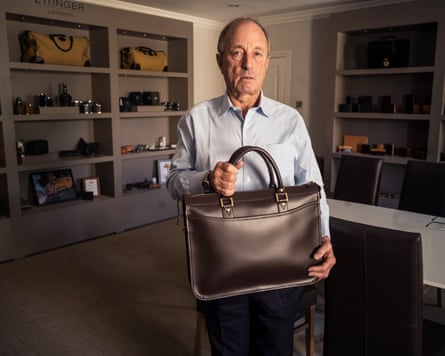
Despite the allure of outsourcing production to low-cost manufacturing hubs in Asia—a path chosen by the vast majority of consumer goods brands—Robert Ettinger steadfastly refused to shift operations overseas. The logic behind this decision, he argues, is rooted in long-term brand equity and market positioning.
"We might have made more profit, but then we would also have much more competition because when you’ve got 50 companies bringing in a purse from the Far East, then it’s all about price," Ettinger notes.
By keeping production local, the brand carved out a lucrative middle-tier niche between high-street fast fashion and multi-thousand-pound ultra-luxury conglomerates. While a major European luxury house might price a leather tote bag upwards of £2,000, Ettinger’s hand-crafted British equivalent retails for just under £800. Smaller items, such as luxury wallets and cardholders, command prices between £200 and £300—roughly comparable to the cost of contemporary designer trainers, yet offering decades of durability.
The Shift Toward Conscious Consumerism
This strategic gamble is currently yielding dividends, driven by a pronounced cultural shift among younger demographics. Recent internal metrics highlight a robust revival in consumer demand: online sales have surged by 30% compared to the previous year, while domestic UK sales have grown by a fifth, fueled heavily by shoppers in their early twenties and thirties.
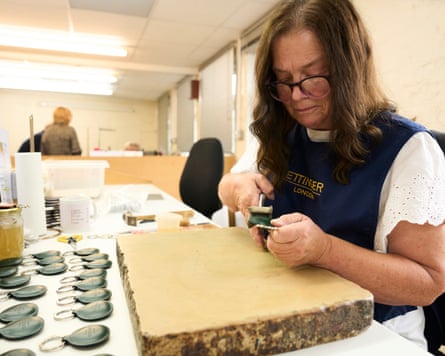
Industry analysts attribute this upward trajectory to a broader rejection of disposable consumer culture. Gen Z and millennial consumers increasingly prioritize sustainability, longevity, and provenance over transient seasonal trends.
"A lot of younger people are now thinking that they want something that will last, that won’t go out of fashion in three months’ time," Robert Ettinger observes. "Yes, it costs more, but it lasts for 15 or 20 years, and can be repaired. I’ve just repaired my wallet which is 17 years old."
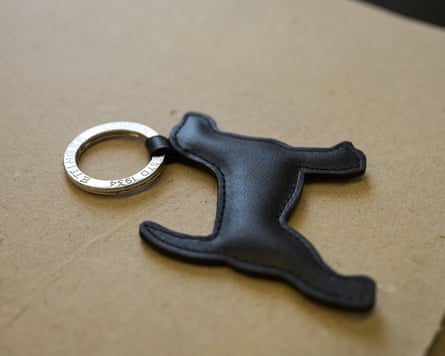
From classic billfold wallets and bespoke cigar cases to specialized accessories for dog owners—ranging from treat pouches to waste-bag holders emblazoned with personalized initials—the company’s product catalog bridges traditional utility with modern lifestyle branding.
The Looming Skills Gap and the Apprenticeship Crisis
Despite surging demand and healthy sales figures, the most significant threat to the future of British leather craftsmanship is not a lack of consumer interest, but a severe shortage of skilled human capital.
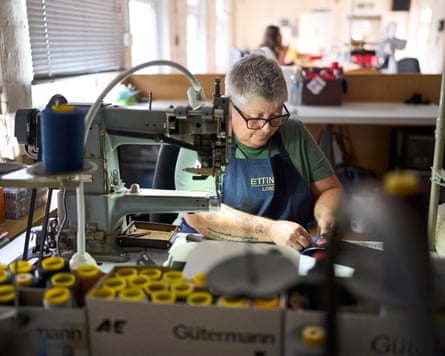
Factory manager Gary Billingham points out that workforce demographics present an acute vulnerability. The remaining artisans on the workshop floor are predominantly aged between 40 and 60. Recruitment has become an informal, highly localized poaching exercise rather than a sustainable talent pipeline.
"We are all getting old now, that’s a problem," Billingham admits candidly. "To take five to 10 people on would be great, but the reality is they are not there."
Even when trainees graduate from Walsall’s localized training facilities—such as the Leather Skills Centre—they are frequently drawn toward more heavily capitalized automotive upholstery sectors or traditional equestrian saddlery rather than fine luxury goods manufacturing.
To secure the future of the trade, Robert Ettinger suggests that the United Kingdom should look closely at continental European vocational models. In countries like Germany and France, structured multi-year apprenticeships allow young workers to master traditional trades step-by-step, culminating in formal master craftsman certifications (Meister).
"They spend a few years really learning a trade, everything from making leather goods, to being a chimney sweep, or a butcher, or baker," Ettinger notes. "When you pass all the apprenticeship exams, you then go on to do more and become a master. We don’t have that here. So, it’s harder for us to take on younger people."
Looking Ahead: The Human Element in an Automated World
As industrial robotics continue to dominate manufacturing headlines, the luxury leather sector serves as a unique reminder of the irreplaceable value of human touch. As chief executive Robert Ettinger emphasizes, the intricate curvatures, skived edges, and precise hand-stitching required for top-tier leather goods simply cannot be delegated to machines.
While rebuilding a robust domestic talent pipeline remains a formidable policy challenge for the broader UK manufacturing sector, individual workshops like Ettinger continue to thrive on the strength of community and shared purpose.
"People might go into jobs which they don’t really enjoy or get bored of doing, and then they join us," Ettinger concludes with cautious optimism. "And, you know, it’s like a family in our factory."