
 Ana Megawati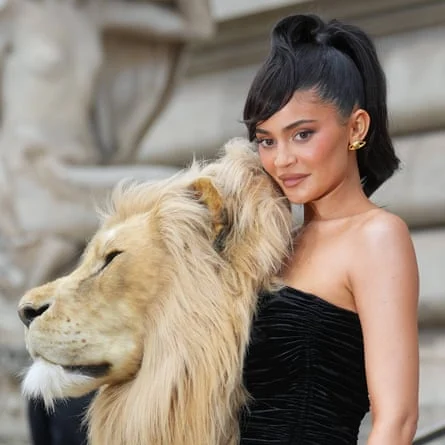
In the upper echelons of the global luxury market, where multi-billion-dollar conglomerates routinely dominate the cultural landscape through ubiquitous marketing and hundreds of international retail outposts, the House of Schiaparelli remains an exercise in calculated scarcity. Operating with a mere 10 points of sale worldwide, this storied French maison punches significantly above its weight class. While its recent commercial growth has been extraordinary—surging from a modest $6 million in annual revenue in 2020 to approximately $100 million today—Schiaparelli is still considered a boutique operation compared to the sprawling legacy brands that anchor the official Paris Fashion Week calendar. Yet, its cultural footprint is immense, proving that in contemporary luxury, a booming digital voice and uncompromising artistic vision can eclipse sheer corporate scale.
The revival of this historic name was further cemented by a critically acclaimed retrospective at London’s Victoria and Albert (V&A) Museum. The exhibition positioned the brand’s visionary founder, Elsa Schiaparelli, as a titan of the 1930s surrealism movement, highlighting her avant-garde collaborations with celebrated artists such as Salvador Dalí and Jean Cocteau. Today, under the creative direction of American designer Daniel Roseberry, that heritage of high-concept provocation is finding a lucrative, digitally native audience.
The Digital Power of High-Concept Surrealism
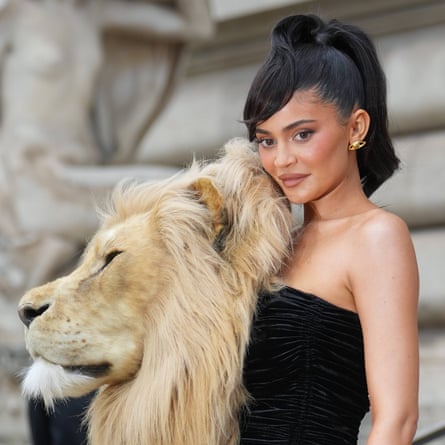
Schiaparelli’s recent resurgence is heavily anchored in viral moments that seamlessly bridge high fashion and internet culture. High-profile appearances—such as media personality Kylie Jenner stepping onto the red carpet in a meticulously crafted dress adorned with a hyper-realistic, cruelty-free fake lion’s head, or supermodel Bella Hadid capturing global attention at Cannes in an elaborate, sculptural gold necklace shaped like bronchial tubes to cover her chest—have turned the brand into a dominant force on platforms like TikTok.
These viral spectacles are not mere promotional stunts; they are direct translations of the runway experience into consumer consciousness. Following his latest presentation in the French capital, Roseberry reflected on the house’s unique positioning within the industry.
"It’s an amazing time at Schiap," Roseberry noted, utilizing the affectionate moniker that has come to define the brand. "It’s a smaller house, but I feel like the voice is so big. It’s exclusive, but it’s real, because what we show on the catwalk is exactly what we sell."

This commitment to authenticity forms the bedrock of Roseberry’s haute couture and ready-to-wear collections. He routinely leans into Elsa Schiaparelli’s historical visual vocabulary, transforming anatomical details into wearable glamour. A deceptively minimalist evening gown may feature a meticulously padded, externalized spine; gloves can be hand-embroidered with glossy red fingernails; and tailored outerwear might utilize tiny, polished gold ears or human noses as functional buttons.
Athletic Influences Meet Archival Tailoring
For his most recent collection, Roseberry drew unexpected inspiration from his personal training regimen for the New York City Marathon. This physical discipline introduced a distinct sense of sportiness and aerodynamic simplicity to the runway, marked by sleek, stretch-fabric cocktail frocks that opened the show.
"I’m in my aerodynamic era, I guess," Roseberry quipped backstage.
Despite the athletic undercurrents, the collection remained unmistakably Schiaparelli. It featured signature elements including gold-foiled anatomical appliqués, peekaboo illusion fabrics, and a dramatic finale consisting of snug, haughty dinner jackets adorned with intricate embroidery sourced directly from the house archives. This balance of physical ease and historical theatricality has allowed the brand to modernize its core codes without alienating its affluent clientele.
A Transatlantic Shift: American Designers in Paris
Roseberry’s success as an American designer helming a historic French luxury house highlights a broader structural shift within Paris Fashion Week. This transatlantic dynamic was reinforced by the arrival of Jack McCollough and Lazaro Hernandez, the American design duo behind Proenza Schouler, who were appointed to lead Loewe following the departure of Jonathan Anderson to Dior.
Anderson’s tenure at Loewe had transformed the historic Spanish leather goods house into a global fashion powerhouse, largely driven by high-concept artistic interventions, intellectual wit, and modernist sculpture-inspired silhouettes. Stepping into such a prominent role presented a formidable challenge, but McCollough and Hernandez have responded by injecting an unmistakable sense of American levity and pragmatism into the brand.
During their spring/summer presentation, the designers subtly dismantled traditional Parisian solemnity. In a moment that generated significant industry commentary, a model casually sported a backwards baseball cap down the runway—marking what many fashion historians believe to be a first for Paris Fashion Week in living memory.
Marrying American Pragmatism with Spanish Drama
The collection itself was a masterclass in cross-cultural synthesis. McCollough and Hernandez utilized the distinct silhouette of a basketball vest—characterized by its longline hem, low scooped neckline, and piped edges—as a foundational template for fluid slip dresses rendered in delicate sorbet palettes. These garments were finished with subtle fringe details composed of tiny, contrasting glass beads.
Footwear and tailoring references also bridged disparate cultural idioms; Capri pants were engineered with a sharp kick at the knee, evoking the traditional silhouette of bullfighter breeches. Summarizing their design ethos for the house, McCollough and Hernandez described the collection as an exploration of "the ease of American pragmatism, alongside nods to Spanish drama, ritual, and history."
Economic Implications and the Future of Niche Luxury
The concurrent trajectories of Schiaparelli and Loewe under American creative leadership offer valuable insight into the evolving luxury sector. While mega-brands within conglomerates like LVMH and Kering continue to pursue broad market penetration through leather goods, cosmetics, and lifestyle licensing, houses like Schiaparelli demonstrate that extreme exclusivity can yield outsized brand equity and rapid financial acceleration.
Scaling a business from $6 million to $100 million in a matter of years without compromising distribution integrity—limiting physical sales to just 10 global locations—proves that modern luxury consumers increasingly value cultural resonance, narrative depth, and artisanal craftsmanship over mass accessibility. As digital platforms continue to democratize runway visibility, niche houses can leverage viral moments to command global attention, effectively converting internet-age curiosity into high-margin revenue.
At the same time, the integration of American designers into traditional European houses signals a broader democratization of design codes. By stripping away some of the traditional stiffness associated with historic fashion capitals, designers like Roseberry, McCollough, and Hernandez are redefining luxury for a generation that prizes both rigorous historical heritage and relaxed, contemporary wearability. Whether through a surrealist gold ear on a tailored blazer or a basketball-inspired slip dress paired with a backwards cap, the modern Paris runway proves that innovation thrives at the intersection of historical reverence and disruptive modernity.









