Danny Garick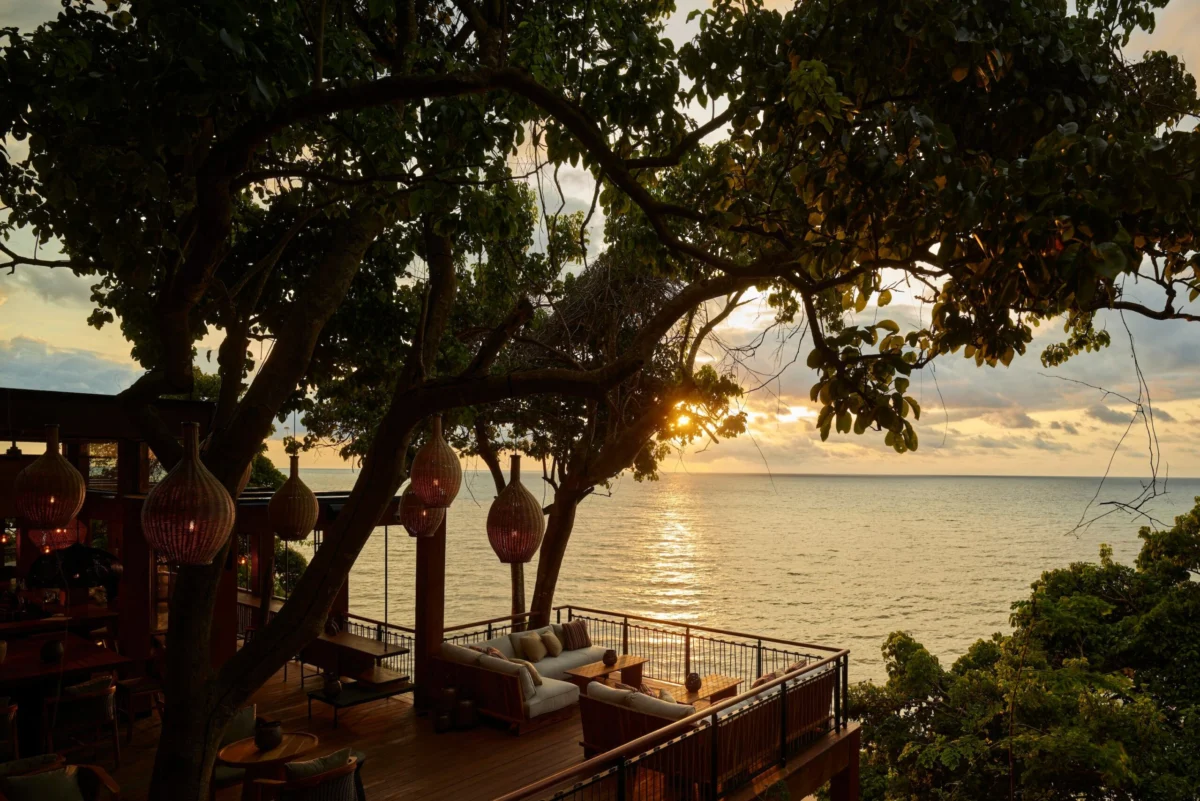
The opening of Rosewood Mandarina in May 2025 marks a significant pivot in the development of Mexico’s Pacific coastline, signaling a shift toward ultra-luxury accommodations that prioritize ecological integration and hyper-local culinary narratives. Located approximately 200 miles north of Puerto Vallarta, the resort occupies a unique geographical intersection where the Sierra Madre Occidental mountains meet the dense tropical jungle and the white sands of the Pacific. This region, known as Riviera Nayarit, has undergone a rapid transformation from a series of secluded fishing villages to one of the most sought-after luxury corridors in North America. The debut of Rosewood Mandarina represents the culmination of a multi-year development strategy designed to harmonize high-end tourism with the preservation of the region’s three distinct ecosystems: the jungle-y flatlands, the coastal estuaries, and the mountain peaks.
Regional Transformation and Economic Context
The Riviera Nayarit stretch, extending from the Bahía de Banderas to San Blas, was historically characterized by its "untouched" status. However, the narrative of the region has shifted as the Mexican government and private investors have funneled billions into infrastructure, including a modern highway system that has drastically reduced travel times between Puerto Vallarta’s international airport and the northern reaches of the state of Nayarit. According to data from the Nayarit Ministry of Tourism, the region has seen a steady increase in foreign direct investment, with luxury inventory growing by an estimated 15% annually over the last five years.
Despite this development, the mandate for Rosewood Mandarina was to avoid the high-rise, high-density model seen in other Mexican resort hubs. Instead, the property utilizes "low-impact" engineering. The resort’s suites and common areas are built into the existing topography, often perched on stilts to minimize the footprint on the forest floor. This architectural approach serves as the foundation for the property’s broader mission: to act as a steward of the land while providing an educational platform for guests to engage with Mexican heritage through food, drink, and conservation.
A Culinary Philosophy Rooted in the Landscape
At the center of the Rosewood Mandarina experience is a culinary program led by Executive Chef Jose Mascarós, who also oversees the property’s food and beverage operations. The resort’s strategy eschews the traditional "import-heavy" model of luxury dining in favor of a circular economy that supports regional producers. Chef Mascarós has established a supply chain that draws almost exclusively from within a 100-mile radius of the property.
"The seafood is sourced locally from trusted regional suppliers, vegetables and coffee come from local, sustainable agriculture, and eggs are sourced from a nearby organic farm," Mascarós stated during the property’s launch. This commitment to provenance is reflected in the resort’s four primary dining and drinking venues. While the concepts draw from global influences—such as the Japanese-Peruvian fusion found at the fine-dining establishment Toppu—the execution remains tethered to the Nayarit soil.
Toppu offers a sophisticated exploration of Nikkei cuisine, a culinary tradition born from the Japanese diaspora in South America. However, the "heart" of the resort is widely considered to be La Cocina, a dedicated Mexican restaurant that focuses on pre-Hispanic techniques and coastal flavors. Here, the menu is dictated by the daily catch from the Pacific and the seasonal output of the resort’s on-site gardens. Tortillas are made by hand using heirloom corn and cooked on a traditional clay comal, ensuring that the fundamental elements of Mexican gastronomy are presented with technical precision and cultural authenticity.
The Agave Spirit Program: Beyond Tequila and Mezcal
The beverage program at Rosewood Mandarina, directed by Head Mixologist Ivan Torres Flores, serves as a masterclass in Mexican biodiversity. While global markets have long focused on tequila and, more recently, mezcal, Flores has built a program that highlights the "forgotten" spirits of Mexico, including raicilla and sotol.
The beverage strategy is built around spirits produced in small, responsible batches that honor the traditional methods of the vinateros (spirit makers). Flores emphasizes that the program is intended to debunk common misconceptions about Mexican spirits—specifically the idea that all mezcals must be smoky. "While smokiness can be a characteristic, it does not define mezcal as a whole," Flores explained. "The category offers a wide range of flavor profiles, and we want people to understand the vast diversity of agave plants in Mexico and how this natural, cultural, and climatic richness results in an extraordinary variety of agave spirits."

Comparative Analysis of Regional Spirits
To provide guests with a comprehensive understanding of the landscape, the resort offers curated tastings of several distinct spirits:
- Sotol: Derived from the Dasylirion plant, also known as the "desert spoon," sotol is not technically an agave spirit, though it is produced via similar methods. The plant must grow for 18 to 22 years before it reaches maturity for harvest. The resort features brands like Flor del Desierto, which offer profiles reminiscent of hazelnuts and peppercorns, reflecting the arid terroir of northern Mexico.
- Raicilla: Often referred to as "Mexican moonshine" due to its historically clandestine production, raicilla is an agave spirit from the state of Jalisco and parts of Nayarit. The version served at Mandarina, produced by Las Perlas, is noted for its saline minerality and tropical fruit notes, a direct result of the coastal agave plants used in its creation.
- Bacanora: A traditional spirit from Sonora, which adds a dry, complex layer to the resort’s tasting flights.
By showcasing these spirits, Rosewood Mandarina positions itself as a cultural intermediary, translating complex botanical and historical data into a luxury tasting experience.
Environmental Stewardship and Conservation Efforts
The resort’s commitment to its "North Star"—the natural landscape—extends beyond the kitchen and bar. One of the hallmark experiences offered to guests is participation in the local sea turtle conservation program. The coastline of Nayarit is a critical nesting ground for several species of sea turtles, which face threats from poaching and habitat loss.
In collaboration with local environmental groups, Rosewood Mandarina facilitates the release of turtle hatchlings. This program is integrated into the guest experience not merely as a leisure activity but as an educational component of the stay. Guests are briefed on the biological importance of the Sierra Madre Occidental’s peaks and the role of the dense green canopy in maintaining the local climate. This "experiential luxury" model aims to foster a sense of responsibility among visitors, linking their presence in the region to the continued survival of its wildlife.
Broader Impact on the Luxury Travel Industry
The opening of Rosewood Mandarina occurs at a time when the global luxury travel industry is undergoing a period of introspection. Post-pandemic travelers are increasingly seeking "transformative" experiences that offer more than just high-end amenities; there is a documented demand for authenticity, sustainability, and cultural immersion.
Market analysts suggest that Rosewood’s approach in Mandarina could serve as a blueprint for future developments in sensitive ecological zones. By prioritizing local craftsmen for furniture and art, and by building a culinary identity around regional sustainability, the resort mitigates some of the traditional criticisms leveled at luxury developments—namely, that they create "gilded bubbles" disconnected from their surroundings.
Furthermore, the economic impact on the local community is substantial. The resort provides hundreds of jobs, ranging from hospitality roles to partnerships with local farmers and fishermen. By creating a high-value market for traditional products like raicilla and artisanal tortillas, the resort helps preserve traditional trades that might otherwise be marginalized by industrialization.
Conclusion and Future Outlook
As Rosewood Mandarina enters its first full year of operation, its success will likely be measured by its ability to maintain the delicate balance between high-end service and ecological integrity. The property stands as a testament to the fact that luxury and sustainability are not mutually exclusive, provided there is a rigorous commitment to local sourcing and cultural education.
For the Riviera Nayarit, the arrival of such a high-profile establishment cements its status as a premier destination on the global stage. While the "untouched" nature of the coast may now be a misnomer in the face of modern development, the philosophy adopted by Rosewood Mandarina suggests that the next chapter of the region’s history will be defined by a more conscious, respectful form of tourism. In the convergence of jungle, beach, and mountains, the resort has created a space where the "special sauce" is nothing more—and nothing less—than the land itself.