Kang Muslim
A groundbreaking study published in the journal Neuron suggests that providing immediate, real-time feedback on motor task performance can drastically enhance an individual’s ability to operate complex human-machine interfaces (HMIs). This research, led by Pierre Vassiliadis at University College London and conducted during his tenure at the École Polytechnique Fédérale de Lausanne (EPFL) in Switzerland, identifies a significant pathway for improving the efficacy of neuroprosthetics and stroke rehabilitation technologies. By utilizing continuous reinforcement signals—specifically tailored success and failure cues—researchers demonstrated that users could overcome the debilitating effects of sensory uncertainty, a common hurdle in both clinical and assistive robotics.
The study addresses a fundamental limitation in the current generation of assistive devices. Whether a patient is using a robotic prosthetic limb or a virtual reality system for physical therapy, the lack of natural sensory feedback often leads to clumsy or inaccurate movements. In a healthy body, the brain relies on a constant stream of visual and somatosensory information—the sense of touch and the awareness of limb position—to refine motor commands. When these channels are compromised by amputation or neurological damage, the "noise" in the system makes smooth control nearly impossible. The findings of Vassiliadis and his colleagues suggest that artificial reinforcement can fill this sensory void, offering a low-cost, high-impact solution for modern medical engineering.
The Challenge of Sensory Uncertainty in Neural Engineering
Human-machine interfaces are designed to bridge the gap between human intent and mechanical action. In a typical scenario, a user might use muscle signals or brain activity to move a cursor or a robotic arm. However, the feedback loop is often broken. Amputees using robotic hands cannot "feel" the pressure of their grip, and stroke survivors often struggle with proprioception, the body’s innate sense of self-movement and body position.
Historically, engineers have attempted to solve this by adding artificial sensors to devices, such as haptic motors that vibrate when a prosthetic hand touches an object. While helpful, these sensors are often plagued by latency issues or "noisy" data that the brain struggles to interpret. The Neuron study proposes a different approach: instead of trying to perfectly replicate natural touch, researchers used the principles of reinforcement learning to provide a simplified, continuous signal of success.
Reinforcement learning is the process by which humans and machines learn through trial and error, guided by rewards or penalties. In most previous motor learning studies, this feedback was "endpoint-based," meaning the user only learned if they succeeded after the task was finished. This delayed feedback is often insufficient for complex, multi-step movements where an error might occur early in the sequence. By shifting to real-time reinforcement, the researchers provided a "GPS-like" guidance system that informed participants of their performance at every millisecond of the movement.
Experimental Methodology and Chronology
To validate the efficacy of real-time reinforcement, the research team conducted five distinct experiments involving 106 participants. This multi-stage approach allowed the scientists to test their hypothesis across different demographics, technologies, and sensory conditions.
Phase One: Healthy Adults and Visual Manipulation
The first three experiments focused on 48 healthy young adults. Participants performed a continuous tracking task using a specialized handgrip device. The objective was to maintain a digital cursor inside a moving target on a screen by modulating their grip force. To simulate the sensory deficits faced by clinical patients, the researchers manipulated the visibility of the cursor. Under "low vision" conditions, the cursor was visible only 35 percent of the time, forcing participants to rely on internal timing and muscle memory.
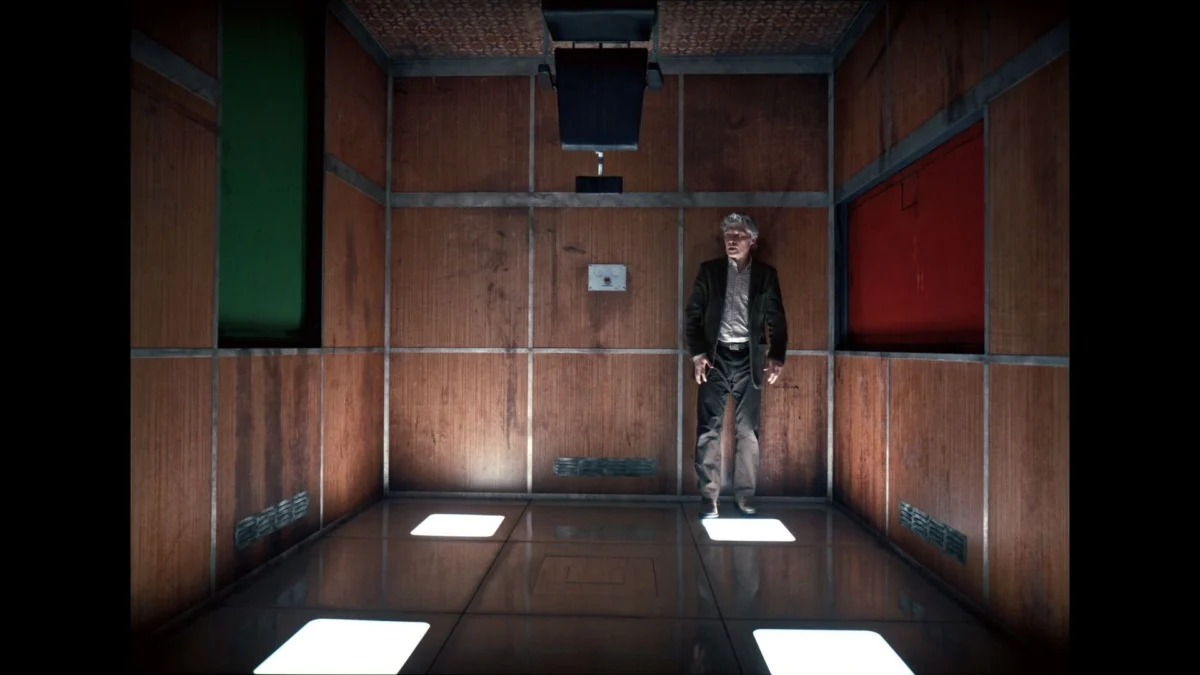
In the reinforcement condition, the target changed color in real-time: green for success and red for failure. Crucially, the difficulty was personalized. The software calculated each participant’s average error over recent trials, requiring them to constantly improve to see the green success signal. The results from the first experiment were definitive: real-time reinforcement significantly improved performance, especially when visual feedback was limited.
Phase Two: Muscle-Machine Interfaces and Artificial Touch
The fourth experiment involved 40 new participants and moved beyond simple handgrips to an electromyography (EMG) interface. Here, participants controlled a cursor by tensing their biceps without actually moving their arms. Because the limbs remained stationary, participants lacked the natural somatosensory feedback of movement.
To compensate, the researchers introduced artificial touch feedback via a motorized device on the participant’s palm that applied pressure proportional to muscle tension. Even with this haptic feedback, performance dropped when visual information was reduced. However, when real-time color reinforcement was added, the participants’ accuracy surged. This proved that the benefits of real-time reinforcement were not limited to a single type of device but could be generalized across various human-machine interfaces.
Phase Three: Clinical Application in Stroke Survivors
The final and most critical stage of the research involved 18 older adults who had suffered strokes resulting in chronic motor impairments. These patients used their affected hands to perform the grip-force task. The difficulty was meticulously calibrated to ensure the task was challenging but achievable for each individual’s level of impairment.
Consistent with the findings in healthy adults, stroke patients showed a marked improvement in motor control under low-vision conditions when receiving real-time reinforcement. However, a surprising nuance emerged: when these patients had "full vision" of the cursor, the additional flashing colors actually hindered their performance. Researchers believe this indicates a threshold of "cognitive load," where too much information becomes a distraction for a brain recovering from a lesion.
Data Analysis: Exploitation vs. Exploration
The study utilized information-theoretic analysis to understand why real-time reinforcement works. In motor learning, there is a constant tension between "exploration" (trying new movements after a failure) and "exploitation" (repeating a movement that worked).
The data revealed that real-time reinforcement primarily functions by helping users exploit their successes. When participants saw the green signal, they were able to "lock in" and stabilize their motor commands immediately. Under conditions of high sensory uncertainty, this stabilization is vital. Instead of guessing how to correct an error, the real-time signal allowed them to instantly recognize and maintain a winning strategy.
Vassiliadis noted that this success-related stabilization was a key predictor of how well a participant would learn the skill over time. By reinforcing what went right in the moment, the brain was better able to encode the correct motor patterns into long-term memory.
Clinical Implications and Future Outlook
The implications of this research for the medical field are substantial. For stroke rehabilitation, the study suggests that therapists could incorporate simple visual or auditory success cues into existing exercise regimens to accelerate recovery. In the realm of prosthetics, manufacturers could integrate real-time performance indicators into robotic limbs, making them more intuitive for amputees to operate.
One of the most attractive aspects of this strategy is its cost-effectiveness. Unlike expensive neural implants or high-fidelity haptic sensors, real-time reinforcement can be implemented through simple software updates to existing screens or wearable devices. It represents a "low-hanging fruit" in the quest to improve assistive technology.
However, the researchers also highlighted several limitations that must be addressed before widespread clinical adoption. The training sessions in the study were relatively brief, which likely explains why the stroke patients did not show long-term retention of the skills after the reinforcement was removed. Future studies will need to investigate whether extended training over weeks or months can lead to permanent neuroplastic changes and lasting functional recovery.
Furthermore, the "chaotic" nature of real-world sensory loss differs from the controlled "on-off" visual conditions used in the lab. A patient with peripheral nerve damage may experience intermittent or distorted sensations rather than a total blackout of information. Testing these reinforcement strategies in unpredictable, real-world environments will be the next frontier for Vassiliadis and his team.
Conclusion
The study, "Real-time reinforcement for human-machine interface control," provides a compelling roadmap for the future of neurorehabilitation. By acknowledging the brain’s need for immediate feedback and its tendency to stabilize successful actions, researchers have identified a powerful tool to help patients regain autonomy. As human-machine interfaces become increasingly integrated into medical care, the transition from endpoint feedback to real-time reinforcement may prove to be the key to unlocking their full potential.
The research was a collaborative effort involving Pierre Vassiliadis, Daniel Leal Pinheiro, Lisa Fleury, Silvestro Micera, Solaiman Shokur, and Friedhelm C. Hummel, representing a cross-disciplinary triumph of neuroscience, engineering, and clinical medicine.