Kang Muslim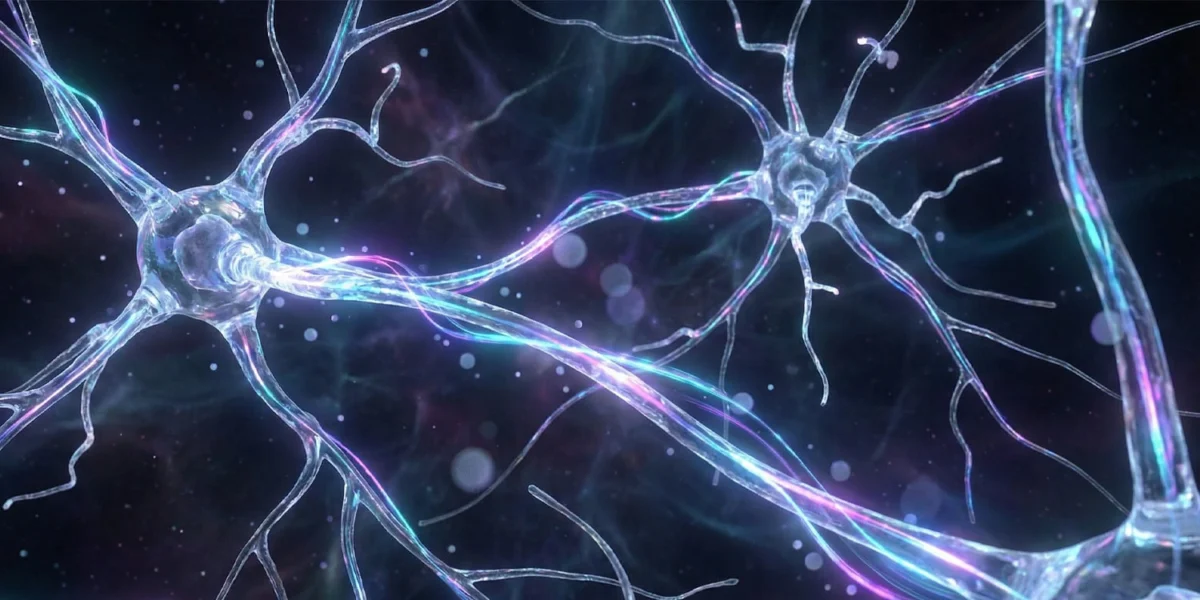
A landmark study recently published in the journal Nature has revealed that individual brain cells within the human cortex serve as specialized building blocks for the construction of spoken language. By recording electrical activity directly from the brains of individuals engaged in natural, unscripted conversation, a team of researchers has identified specific groups of neurons dedicated to processing distinct components of speech, including grammatical categories, sentence structure, and semantic meaning. These findings provide an unprecedented cellular-level map of how the human brain produces speech, offering critical insights that may pave the way for advanced neuroprosthetics and brain-computer interfaces designed to restore communication for those with severe speech impairments.
Language represents a pinnacle of human cognition, allowing for the transmission of complex, infinite thoughts through a structured system of symbols and sounds. While the broad regions of the brain responsible for language—primarily located in the frontotemporal cortex—have been identified through decades of neuroimaging, the specific microscopic mechanisms by which individual neurons encode linguistic rules have remained largely elusive. This new research, led by Jing Cai, a principal investigator at the Chinese Institute for Brain Research, bridge the gap between large-scale brain mapping and cellular-level processing.
The Evolution of Language Mapping: From Regions to Neurons
Historically, the study of language in the brain has relied on two primary sources: clinical observations of patients with brain lesions and functional Magnetic Resonance Imaging (fMRI). In the 19th century, physicians Paul Broca and Carl Wernicke identified specific areas in the left hemisphere associated with speech production and comprehension. However, while fMRI can show which neighborhoods of the brain are "lighting up" during a task, it lacks the temporal and spatial resolution to see individual neurons at work. An fMRI pixel (voxel) contains hundreds of thousands of neurons, making it impossible to distinguish between a cell that processes a noun and one that processes a verb.
To overcome these limitations, the research team utilized microelectrode arrays, which are tiny grids of sensors capable of detecting the electrical "spikes" or action potentials of individual neurons. This method provides a level of detail that traditional imaging cannot match, allowing scientists to observe the brain’s "code" in real-time as a person thinks and speaks.
The study’s lead author, Jing Cai, noted that her background in machine learning and Large Language Models (LLMs) informed the study’s design. As AI systems like GPT-4 become increasingly adept at simulating human language through mathematical patterns, researchers have sought to understand if the human biological "hardware" operates on similar principles of hierarchy and compositionality.
Methodology: Capturing Natural Conversation in a Clinical Setting
The study involved eight participants, five men and three women, with an average age of forty. These individuals were patients with drug-resistant epilepsy who were already scheduled for surgical monitoring. During this process, electrodes are temporarily implanted in the brain to locate the source of seizures. This clinical necessity provides a rare opportunity for researchers to record neural activity from the human cortex with the patients’ consent.
Unlike many previous studies that required participants to read specific words or perform repetitive linguistic tasks, this research focused on natural conversation. Over fourteen sessions, the participants engaged in unscripted dialogues, answering questions about their lives, opinions, and feelings. This approach ensured that the recorded neural activity reflected the brain’s "natural" state of language generation.
In total, the researchers tracked 579 individual neurons while the participants produced 10,460 words across 1,895 uniquely constructed sentences. To analyze this massive dataset, the team used natural language processing (NLP) models to act as automated linguists. These models performed two types of analysis on the recorded speech:
- Constituency Parsing: Breaking sentences into nested units, such as noun phrases ("the tall man") and verb phrases ("walked home").
- Dependency Parsing: Identifying the grammatical links between specific words, such as which adjective modifies which noun or which noun serves as the subject of a verb.
A Specialized Division of Labor Among Neurons
The data revealed a highly organized and specialized division of labor among the recorded neurons. The researchers found that the brain does not use a "one-size-fits-all" approach to language; instead, different cells are tuned to very specific linguistic features.
Approximately nine percent of the recorded neurons were found to respond preferentially to specific parts of speech. For example, some neurons would fire rapidly just before a participant uttered a noun, while remaining silent before a verb or a preposition. This suggests that the brain maintains a cellular "dictionary" categorized by grammatical function.
More complex linguistic structures were also represented at the cellular level. Roughly 16 percent of the neurons tracked the "hierarchical depth" of a word—how deeply a word is embedded within the grammatical branches of a sentence. Additionally, 10 percent of the cells were tuned to dependency relationships, adjusting their activity based on whether a word was intended to be a subject or a direct object.
One of the most significant findings was the separation of syntax (grammar) and semantics (meaning). The researchers discovered that neurons generally specialized in one or the other. Only two percent of the cells encoded both the structural rules of the sentence and the specific definition of the words simultaneously. This suggests that the brain processes "how" we say something and "what" we are saying through distinct but parallel neural pathways.
The Role of Context and Predictive Firing
Language is not just a sequence of isolated words; it is a continuous stream where meaning is derived from context. To investigate how neurons handle this, the researchers used LLMs to map how the meaning of a word is influenced by the words preceding it.
The study found that individual neurons are remarkably dynamic. They do not just react to the current word being spoken; they incorporate information from up to five preceding words to anticipate what comes next. This predictive activity was found to peak approximately one second before the participant actually spoke the word. This "pre-speech" firing suggests that the brain constructs the grammatical and semantic framework of a sentence well before the vocal cords begin to move.
To verify that these neurons were truly responding to linguistic structure rather than just general auditory or motor activity, the researchers conducted control tests. They used models to process scrambled sentences or "Jabberwocky" sentences (grammatically correct but meaningless). When the linguistic logic was removed, the models could no longer predict the firing patterns of the neurons, confirming that these cells are specifically tuned to the genuine flow and meaning of human communication.
Hemispheric Dominance and Local Precision
The study also provided new data on the geographical distribution of language in the brain. While language-responsive neurons were found across both the frontal and temporal lobes, there was a clear "lateralization" or side-preference. Neurons in the left hemisphere—traditionally associated with language in most right-handed individuals—showed significantly stronger and more precise reactions to linguistic features than those in the right hemisphere.
Furthermore, the researchers compared the activity of individual neurons to "local field potentials" (LFPs), which represent the average electrical activity of thousands of surrounding cells. They found that individual neurons were much more specialized than the general "background noise" of the brain. A specific area of the cortex might show a general interest in speech, but the individual neurons within that area are acting as highly specific filters, each attending to a different piece of the linguistic puzzle.
Implications for the Future of Medical Technology
The implications of this research extend far beyond basic science. By identifying the specific "code" the brain uses to build sentences, researchers are laying the groundwork for the next generation of Brain-Computer Interfaces (BCIs).
Current BCIs often focus on restoring motor function, such as moving a robotic arm or a cursor on a screen. However, for individuals with conditions like Amyotrophic Lateral Sclerosis (ALS), locked-in syndrome, or severe stroke, the most critical need is the restoration of speech. Current "speech-to-text" BCIs often rely on the user imagining the physical movement of typing or the motor movements of speaking. The discovery of neurons that encode grammar and meaning directly could allow for "thought-to-speech" devices that are much faster, more natural, and more accurate.
"This brings us closer to understanding how the brain generates language and provides a foundation for developing future brain-computer interfaces that could restore communication for people who have lost the ability to speak," Cai stated.
Limitations and Continued Research
Despite the breakthrough nature of the study, the authors cautioned that this is an initial map rather than a complete atlas. The study focused on a relatively small group of participants, all of whom had epilepsy. While the researchers selected brain regions with intact language function, the possibility that chronic neurological conditions could influence neural patterns must be considered in future replications.
Additionally, the study focused on speech production during conversation but did not delve into the "prosody" of speech—the emotional tone, pitch, and rhythm that carry significant meaning in human interaction. Future research will also need to explore how these neuronal building blocks function during language comprehension (listening) and written communication.
As the scientific community continues to integrate the power of Large Language Models with direct neural recordings, the mystery of how "meat" becomes "meaning"—how biological cells generate the abstract beauty of human language—is finally beginning to be decoded. The study stands as a testament to the synergy between artificial intelligence and neuroscience in unlocking the deepest secrets of the human mind.