Danny Garick
The convergence of geopolitical instability, corporate manufacturing shifts, and emerging food technologies has created a volatile environment for the global food supply chain. This week’s developments—ranging from civil unrest in Europe and the Middle East to a fundamental transformation in how industrial confectionery and protein are produced—underscore a period of rapid transition. Simultaneously, political figures have increasingly engaged with food policy as a primary metric of economic health and social stability.
The Geopolitical Drivers of European Food Scarcity
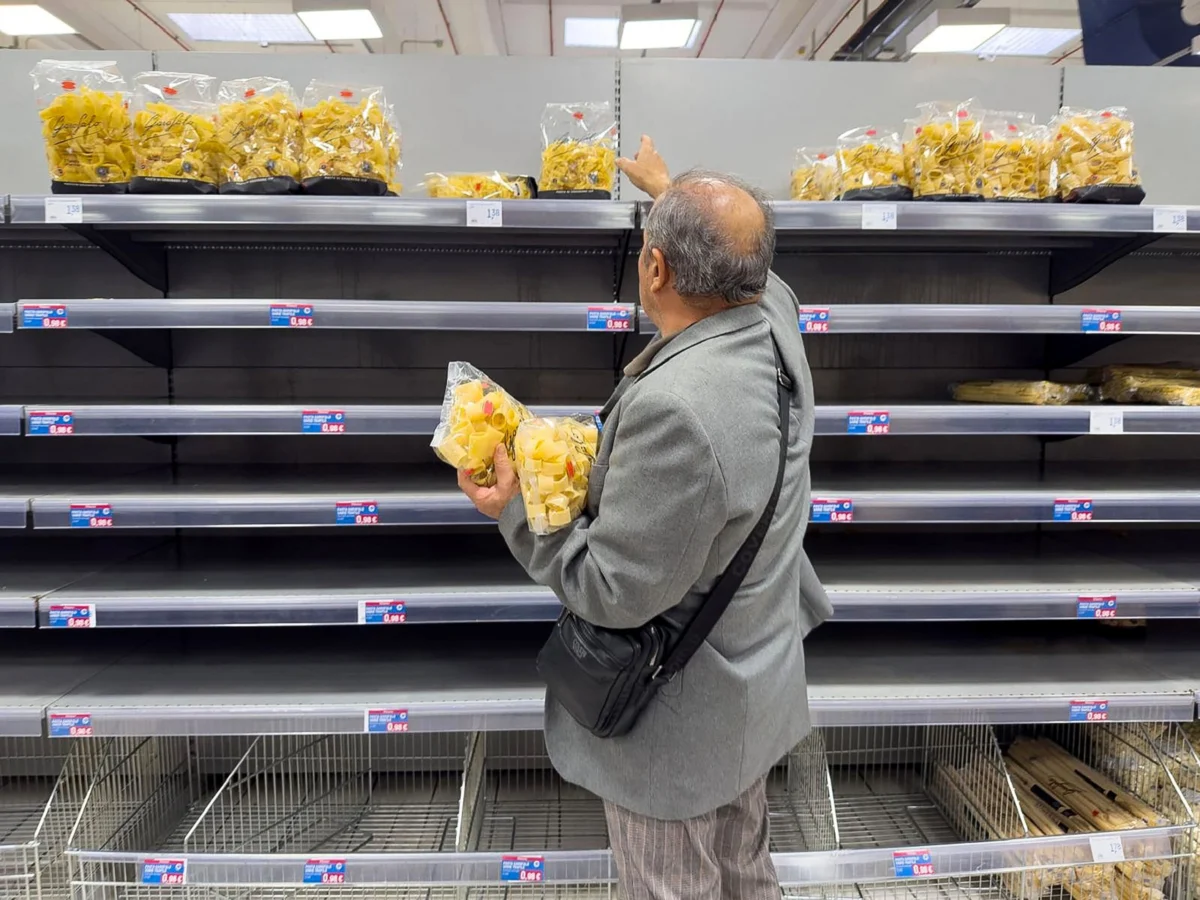
The current disruption in the Italian food supply chain is symptomatic of a broader inflationary crisis affecting the Eurozone. In Southern Italy, systematic blockades by logistics workers and agricultural producers have effectively paralyzed regional distribution networks, resulting in widespread inventory depletion at major retail outlets. These actions, largely motivated by the escalating costs of fuel and the resulting impact on agricultural margins, have been mirrored in the north by student-led demonstrations.
The protests, while decentralized, are unified by a common grievance: the diminishing purchasing power of the middle and lower classes. Data from the European Central Bank indicates that food inflation across the region has remained stubborn, exacerbated by high energy costs that have trickled down to every stage of the production cycle. In Italy, the government, led by Prime Minister Giorgia Meloni, has attempted to mitigate these pressures through significant fiscal intervention. To date, the administration has allocated approximately $3 billion in subsidies to offset energy costs, with an additional $200 million package announced this week specifically targeting fuel price stabilization.
However, the Italian experience is not an anomaly. A wave of civil unrest is currently sweeping through multiple nations, driven by the cascading economic effects of the ongoing conflict in Iran. In France, the government has moved to impose strict regulations on public demonstrations as protests against the cost of living turn increasingly confrontational. Similarly, Albania has faced significant political instability, with students protesting systemic corruption in conjunction with the rising cost of essential commodities. In Bolivia, the administration is grappling with prolonged protests centered on fuel subsidies. Economists suggest that these disparate movements are linked by a common "inflationary fatigue," where the cost of essential goods has outpaced stagnant wage growth, creating a fertile ground for political volatility.
The Confectionery Industry and the Ethics of Formulation
The public perception of quality in mass-market food products has reached a critical inflection point. A recent investigative report by New York magazine has confirmed long-standing consumer suspicions regarding the declining sensory profile of major chocolate brands. This report follows a high-profile disclosure earlier this year by Brad Reese, a member of the family associated with the iconic peanut butter cup brand, regarding the systematic alteration of long-standing recipes.
The investigation reveals that the primary driver for these changes is not innovation, but cost containment. Over the past decade, major confectionery manufacturers have incrementally replaced traditional, higher-cost ingredients with emulsifiers, stabilizers, and lower-grade cocoa butter alternatives. From an industrial perspective, this is a standard response to rising raw material costs and the pressure to maintain profit margins under the constraints of late-stage capitalism. However, the market response has been unfavorable. Shares of major candy conglomerates, including Hershey’s, have experienced a downward trajectory following the public discourse surrounding these ingredient shifts. Financial analysts note that while the practice of "shrinkflation" and ingredient dilution is common across the food industry, the brand damage incurred when a product’s signature profile is altered is often difficult to reverse.
The Rise of 3D-Printed and Cultivated Proteins
Parallel to the struggles of traditional food manufacturing is the rapid emergence of high-tech alternatives. Perfecta, a subsidiary of the Israel-based Steakholder Foods Ltd., has initiated a strategic rollout of 3D-printed plant-based protein products across the Northeastern United States. The initial retail footprint spans ten states, including New York, Pennsylvania, and Massachusetts, marking a significant step in the commercialization of lab-enhanced food technology.
The technology utilizes a sophisticated printing process to mimic the fibrous texture of traditional poultry, steak, and seafood. Furthermore, the parent company has integrated technology from its Belgian subsidiary, Peace of Meat, which focuses on the development of lab-grown, stem-cell-based animal fats. By cultivating these fats in a laboratory setting, the company aims to replicate the organoleptic properties—specifically the mouthfeel and aroma—of conventional meat, a hurdle that has historically prevented plant-based alternatives from achieving widespread consumer adoption.
The regulatory environment for these products remains complex, as they sit at the intersection of traditional agricultural policy and emerging biotech regulation. While proponents argue that 3D-printed and lab-grown proteins are essential for long-term food security and climate mitigation, critics cite concerns regarding the long-term health implications of highly processed food substrates and the potential for these technologies to further consolidate the power of large-scale food conglomerates.
Political Engagement with Food Sovereignty and Affordability
Food policy has increasingly become a centerpiece of domestic political platforms. The recent detention of New York Congressional candidate Brad Lander in the West Bank while participating in an olive harvest highlights the intersection of international politics and food security. Lander’s involvement in the harvest—an act of solidarity with Palestinian farmers—has brought national attention to the vulnerability of agricultural infrastructure in conflict zones. While Lander has been released, his continued presence in the region underscores the role of food production as a symbolic and practical front in global geopolitical conflicts.
In the United States, the focus remains on domestic food affordability and the resilience of local food systems. Michigan Senatorial candidate Abdul El-Sayed has prioritized this issue, framing food access as a fundamental right rather than a market variable. In a recent dialogue with industry experts, El-Sayed explored the unique food culture of Detroit, emphasizing that the affordability crisis is not merely a matter of supply, but of systemic inequality in distribution networks. As the November 3 election approaches, candidates across the political spectrum are being forced to reconcile the realities of a globalized food economy with the local needs of their constituencies.
Analysis and Implications
The synthesis of these events reveals a global food system in transition. The current crisis in Italy and the unrest in other nations demonstrate the fragility of supply chains that are heavily dependent on volatile energy markets. When fuel costs rise, the entire architecture of food distribution—from farm to supermarket shelf—becomes unsustainable without heavy government intervention. This creates a cycle of dependency that is inherently unstable.
Furthermore, the shift in the confectionery industry highlights a growing rift between corporate fiscal strategy and consumer expectations. As manufacturers prioritize the bottom line through ingredient substitution, they risk alienating a demographic that is increasingly educated on the provenance and quality of their food. This shift is occurring simultaneously with the arrival of advanced food technologies, which promise to address the protein gap but face significant hurdles in consumer acceptance and regulatory approval.
Ultimately, the events of this week suggest that food is no longer merely a commodity to be managed by market forces. It has re-emerged as a primary political concern, deeply intertwined with national security, environmental sustainability, and social justice. As governments and corporations navigate this period of disruption, the balance between profit, innovation, and the fundamental requirement for affordable, high-quality nutrition will continue to define the stability of the global social order. The coming months will likely see increased legislative focus on food chain transparency, the development of localized agricultural resilience, and a contentious public debate over the ethics of the next generation of food production.