
 Kang Muslim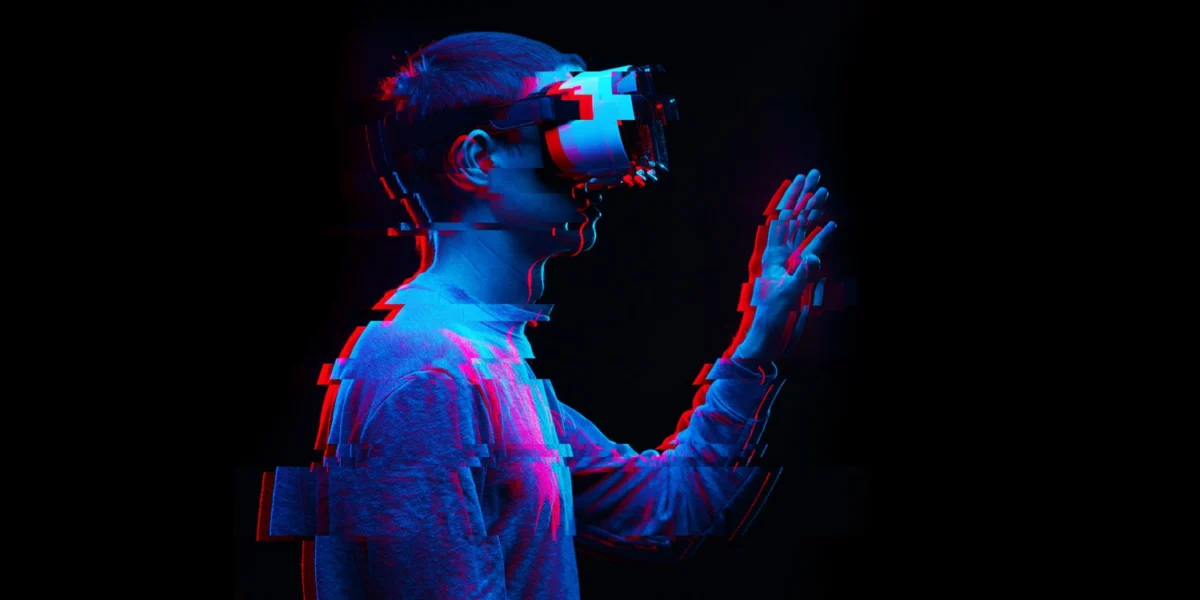
For decades, the induction of profound spiritual awakenings, moments of deep cosmic unity, and transformative self-transcendence has largely remained the exclusive domain of intensive, long-term meditation practices, sensory deprivation, or the administration of psychedelic substances. While these traditional pathways have reliably altered human consciousness across cultures and centuries, they present significant limitations for laboratory research. Spontaneous mystical states are notoriously difficult to replicate in controlled scientific environments, and pharmacological interventions introduce complex legal, regulatory, and physiological variables. However, recent advancements in immersive technology are bridging the gap between digital simulation and existential discovery. A groundbreaking study published in the journal Psychology of Consciousness: Theory, Research, and Practice reveals that virtual reality headsets can reliably induce complete mystical experiences—a feat that standard flat screens completely fail to achieve.
The research, led by a team of psychologists at Western University including Rebekka Miller, Tallulah Nyland, and Paul Frewen, addresses a fundamental question in modern cognitive science: Can non-pharmacological, digital interventions safely and consistently unlock the deepest reservoirs of human emotion and self-transcendence? By pairing subjective psychological surveys with real-time physiological tracking, the Western University team has provided some of the most robust data to date regarding how immersive technology interacts with the human brain and nervous system to produce states once reserved for monks, mystics, and psychonauts.
Defining the Mystical: From Ancient Philosophy to Modern Metrics
To understand the weight of the Western University findings, one must first examine how psychologists define a mystical experience. Far from being a vague cultural buzzword, a mystical state is classified as a profound mental event characterized by specific, measurable dimensions. Historically evaluated using psychometric tools like the Hood Mysticism Scale or the Mystical Experience Questionnaire, these episodes are defined by a distinct cluster of psychological markers.
Foremost among these is a profound sense of unity, wherein the individual feels an unshakeable connection to the universe or all of existence. This is typically accompanied by a radical alteration in the perception of time and space, where conventional boundaries dissolve entirely. Early psychological theorists, most notably William James, emphasized the ineffability of these experiences—the notion that they fundamentally defy expression in standard human language because they transcend ordinary categories of thought. Later researchers expanded on this framework to highlight nonduality, a psychological state where the ordinary ego, or the sense of oneself as an independently conscious observer, temporarily collapses. Personal boundaries blur, and the subject experiences a radical dissolution of selfhood, feeling at one with their surroundings.
Historically, triggering these states in a laboratory setting has been a formidable challenge. While ancient traditions required decades of disciplined asceticism, fasting, or meditative mastery, contemporary science has relied heavily on compounds like psilocybin and dimethyltryptamine (DMT) to evoke these states reliably. Yet, the search for safe, scalable, and non-pharmacological methods of inducing self-transcendence remains a major frontier in consciousness studies. This backdrop of methodological difficulty is what makes the new findings from Western University particularly compelling for researchers exploring alternative pathways to human flourishing and mental health.
Experimental Design and Methodology: Merging Immersion with Physiology
The Western University study was designed not only to test whether virtual reality could outperform traditional flat-screen viewing in eliciting mystical states, but also to determine whether the content of the digital environment mattered. Specifically, the researchers sought to discover whether users required highly imaginative, surreal, and fantastical narratives to achieve self-transcendence, or if standard, breath-focused mindfulness in a realistic natural setting would be equally effective.
Furthermore, the team aimed to move beyond the limitations of previous digital mysticism research, which relied almost exclusively on retrospective self-reporting questionnaires administered after simulations concluded. To validate these subjective emotional claims, Miller, Nyland, and Frewen integrated real-time psychophysiological monitoring, tracking both neurological and autonomic nervous system responses as the experiences unfolded.
The study recruited a cohort of 80 young adult participants. These individuals were introduced to a specialized software program titled Nature Treks: Together, which simulates interactive, three-dimensional natural habitats, ranging from sun-drenched tropical islands to vibrant underwater ecosystems. Within these simulated realms, users were represented as bodiless spirits equipped with tribal masks and gloves, capable of floating effortlessly through lush vegetation, interacting with fossilized rock formations, and observing marine life.
The participants were systematically divided into two distinct content groups:
- The Fantastical Imagery Group: This cohort listened to a guided narration describing a surreal encounter. The first five minutes established a baseline of normal daytime activities, such as walking along a serene forest path. In the second half, however, the narrative shifted dramatically into nighttime surrealism, introducing elements such as glowing animal spirits emerging from a campfire and a cosmic black hole manifesting in the sky.
- The Realistic Meditation Group: This cohort engaged in a standard, breath-focused guided meditation. The magical and surreal elements of the narrative were entirely absent, replaced instead by traditional mindfulness instructions directing attention toward internal physical sensations and the rhythm of breathing.
To rigorously test the delivery method, every participant completed their assigned exercise twice in a counterbalanced order. In one condition, they experienced the simulation through a fully immersive virtual reality headset, which tracked head movements and allowed a complete 360-degree field of view. In the alternative condition, they experienced the exact same audio script and visual environment presented on a standard, flat computer monitor, keeping their eyes open and fixed forward.
Throughout these sessions, the researchers captured high-resolution physiological data. Wearable sensors placed on the forehead and behind the ears recorded electroencephalography (EEG) data, measuring the electrical activity of the central nervous system across multiple frequency bands. Simultaneously, chest straps tracked participants’ heart rates and heart rate variability (HRV). Immediately following each session, participants completed extensive psychometric evaluations detailing their emotional states, their subjective sense of presence within the virtual world, and the intensity of any mystical feelings.
Empirical Results: The Power of Immersion Revealed
The empirical data yielded striking contrasts between the two viewing formats, highlighting the profound impact of technological immersion on human consciousness.
Most notably, the delivery format served as a critical dividing line for deep mystical experiences. Among the participants who utilized the virtual reality headset, 28 percent of the guided imagery group and 18 percent of the guided meditation group reported achieving a complete mystical experience. To clear this high methodological threshold, participants had to score at least 60 percent of the maximum possible score across four distinct dimensions: feelings of unity, transcendence of time and space, intense positive mood, and ineffability. By stark contrast, exactly zero participants achieved a complete mystical experience when viewing the identical visual and audio environments on a standard computer monitor.
Beyond full-scale mysticism, the virtual reality format consistently generated significantly higher ratings for specific positive emotional states. Participants wearing the headsets reported elevated feelings of awe, serenity, deep interest, and an enhanced appreciation of environmental beauty. They also registered a much stronger subjective sense of presence—feeling physically and temporally embedded inside the digital landscape. Conversely, the flat-screen monitor condition was consistently associated with higher ratings of boredom, fatigue, and cognitive detachment, confirming that two-dimensional displays struggle to maintain deep attentional capture in the same manner.
Physiological validation mirrored these subjective accounts. When participants donned the virtual reality headsets, their brain wave activity increased significantly across all measured frequency bands, including theta, alpha, beta, and gamma waves. This widespread elevation in electrical activity points directly to a heightened state of cognitive and emotional engagement. The standard flat-screen monitor viewing, meanwhile, produced noticeably lower brain wave amplitudes across the board.
Autonomic nervous system data further reinforced these findings. During the second half of the virtual reality exercises, participants exhibited higher overall heart rates and lower heart rate variability compared to the monitor condition. In psychophysiology, a decrease in heart rate variability often signals that the autonomic nervous system is highly stimulated, alert, or deeply engaged by external stimuli. Taken together, these bodily metrics confirm that the immersive digital environment provoked a robust physiological response that a flat screen simply could not replicate.
Fantasy Versus Realism: Disentangling the Narrative Content
One of the most theoretically intriguing discoveries of the Western University study involved the comparison between fantastical imagery and realistic meditation. Conventional assumptions might suggest that overt magical elements—such as black holes and phantom animal spirits—are necessary ingredients to catalyze awe and self-transcendence. However, the data revealed remarkably few differences between the two content groups while in virtual reality.
Participants reported comparable levels of mystical feelings and positive emotions regardless of whether they were imagining a cosmic encounter or simply concentrating on their breath. Furthermore, the EEG brain wave data and heart rate patterns during the virtual reality sessions were nearly identical between the fantasy and meditation cohorts. This strongly implies that the immersive technology itself—the enveloping sense of presence and spatial agency—drives these profound emotional states, rather than the explicit presence of magic or fantasy.
The researchers note an important nuance: even the participants in the realistic meditation group rated their supposedly grounded virtual environment as highly dreamlike and surreal. Floating as a bodiless spirit within a pristine, interactive digital landscape is an inherently unusual perceptual experience that inherently blurs the boundaries between ordinary reality and fantasy. This psychological overlap likely explains why the standard mindfulness script yielded results on par with the fantastical narrative. The baseline visual beauty and spatial novelty of the digital world appear powerful enough to trigger awe independently of narrative ornamentation.
Technical Caveats and Methodological Limitations
While the findings offer promising pathways for psychology and digital therapeutics, the research team is careful to acknowledge several technical and methodological limitations inherent in the study.
Foremost among these is the challenge of physiological data collection during active virtual reality use. Because the immersive format permitted participants to move their heads and bodies to explore the environment, this physical movement introduced potential electrical noise—known as motion artifacts—into the EEG sensor data. In the control condition, participants remained seated and were instructed to keep their gaze fixed squarely on the flat monitor. Future replications and expansions of this research will need to implement advanced artifact-removal algorithms and motion-tracking controls to ensure that observed brain wave and heart rate variances are entirely attributable to internal psychological shifts rather than simple skeletal-muscle activity.
Additionally, the study’s within-subjects design—whereby participants completed identical scripted exercises twice—may have muted the overall intensity of their emotional responses. The element of surprise is a powerful catalyst for ineffability and awe; once an individual knows precisely what narrative beats to expect, the sense of the miraculous tends to diminish. Subsequent research will benefit from employing between-subjects designs that capture initial, first-time exposures to these virtual environments. Testing diverse demographic cohorts with varied cultural and spiritual backgrounds will also be essential to understanding how prior beliefs shape digital self-transcendence.
Broader Implications: The Future of Digital Therapeutics and Consciousness
The implications of the Western University study extend far beyond the laboratory, offering significant potential for mental health, palliative care, and the burgeoning field of digital therapeutics. For years, clinicians have sought accessible, non-pharmacological tools to alleviate existential distress, treatment-resistant depression, and anxiety in clinical settings. Psychedelic-assisted psychotherapy has shown remarkable clinical efficacy in this regard, but logistical hurdles, specialized facility requirements, and high costs restrict widespread clinical deployment.
If immersive virtual reality can reliably catalyze states of unity, awe, and emotional breakthrough without pharmacological agents, it could democratize access to transformative mental health interventions. Scalable, safe, and easily deployable headset-based protocols could be integrated directly into hospitals, counseling centers, and wellness programs to facilitate psychological healing and perspective shifts.
As technology developers continue to refine spatial computing, high-fidelity rendering, and biofeedback integration, the boundary between physical reality and digital transcendence will continue to blur. The work conducted by Rebekka Miller, Tallulah Nyland, and Paul Frewen at Western University marks a critical step forward, providing empirical grounding for what may soon become a vital new frontier in the scientific exploration of human consciousness.









