Layla Zulfa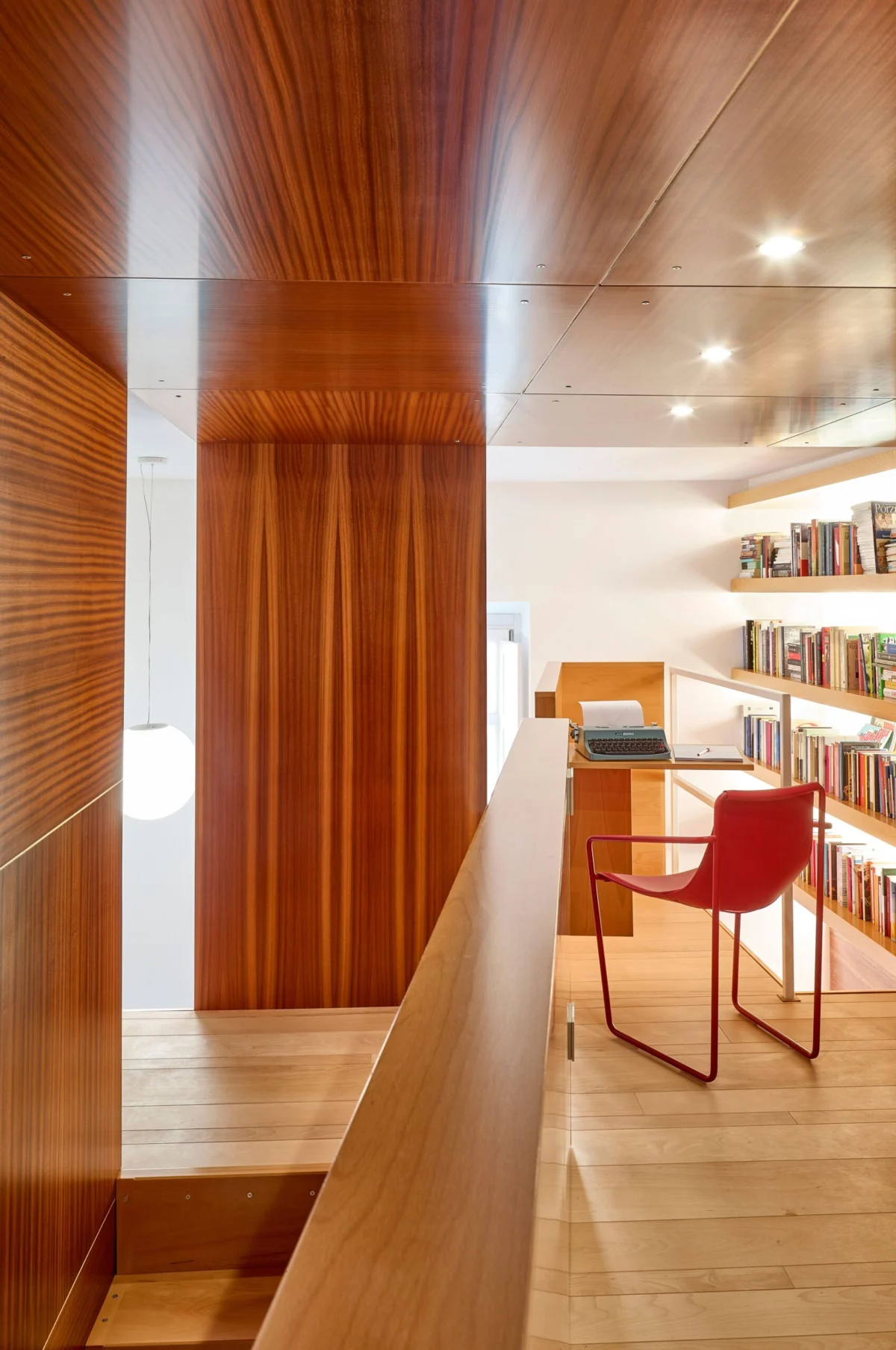
In the historic heart of Eboli, Italy, a 280-square-foot apartment has been transformed into a sophisticated study of micro-living and poetic resonance. Originally conceived as a sanctuary for the late Italian poet Angela Panaro, the residence represents a radical departure from traditional interior design, utilizing a "house within a house" concept to maximize a restrictive footprint. Located within a grand, historic edifice overlooking the Piazza San Lorenzo, the apartment serves as both a functional living space and a structural tribute to the written word. Architect Luca Bruno, who spearheaded the renovation, sought to create a space that did not merely house the poet but reflected her internal landscape—a place where the basic essentials of life were distilled into their most aesthetic and intellectual forms.

The Vision of Angela Panaro and the Genesis of the Project
Angela Panaro was a figure whose life was deeply intertwined with the literary arts. For Panaro, language was more than a medium; it was a physical space to inhabit. This philosophy guided the acquisition of the small apartment in Eboli, a town in the Campania region known for its rich history and dramatic vistas. The poet sought a refuge that offered isolation without detachment, a space where the bustle of the Piazza San Lorenzo could be observed from a distance of contemplative silence.
The collaboration between Panaro and architect Luca Bruno was not their first. They had previously worked together on the "Poetry Room," a small-scale installation in Eboli’s historic center dedicated to public engagement with literature. That project laid the conceptual groundwork for the apartment renovation. Bruno’s strategy for the residence was informed by the Russian nesting doll (matryoshka) principle—the idea that a smaller, self-contained structure can exist within a larger shell to create a sense of depth and multi-dimensionality.

A Chronology of Design and Personal Transition
The timeline of the project is marked by both architectural achievement and personal loss. The design phase began with the challenge of a trapezoidal floor plan and a limited surface area, though the space benefitted from a generous interior height of 12 feet and 8 inches.
- Conceptualization (Pre-2024): Following the success of the Poetry Room, Panaro and Bruno began identifying the requirements for a private "writer’s refuge."
- Construction and Implementation: The renovation involved complex millwork and metal installations, requiring a team of specialized craftsmen to fit the "Cube" into the existing historic fabric.
- Residency: Panaro moved into the completed space, utilizing it for her writing and reflection.
- August 4, 2025: The poet passed away, leaving the apartment as a finished testament to her vision.
- Post-2025: The residence remains in the care of her husband, Antonio Stecca, and their daughter, Mariachiara, who maintain the space as a living archive of Panaro’s work and presence.
The Cube: Radical Micro-Architecture
The central feature of the apartment is a structure known simply as "the Cube." Crafted from a combination of mahogany and beech wood, this installation functions as a habitable work of micro-architecture. It is not merely a piece of furniture but a multi-level organism that houses the primary functions of the home.

Architecturally, the Cube draws inspiration from Antonello da Messina’s Renaissance masterpiece, Saint Jerome in His Study. In the painting, the saint is depicted within a wooden, elevated desk structure that sits inside a much larger cathedral-like room. Bruno replicated this "room-within-a-room" effect to create a sense of security and intellectual focus. Furthermore, the architect cites the stark, geometric scenography of Stanley Kubrick’s A Clockwork Orange as a visual reference point, aiming for a look that is both timeless and avant-garde.
The Cube facilitates movement through a series of irregular pathways and hidden storage compartments. A beech staircase leads to an upper mezzanine, where the floor—made of beech parquet—shifts to create internal openings. This upper level houses a small writing desk and a red leather armchair, positioned to offer views of the Piazza San Lorenzo and a mimosa tree that marks the arrival of spring with its yellow blossoms. On the opposite side of this upper level lies the sleeping area, featuring a double bed and a built-in wardrobe.

Technical Specifications and Materiality
The project’s success relied on the precise application of high-quality materials and the integration of modern technology within a small footprint.
Material Selection
- Wood: Mahogany and beech were chosen for their durability and warm tones, providing a tactile contrast to the apartment’s white walls.
- Stone: Persian red travertine is used for the kitchen countertops and bathroom surfaces, offering a bold, earthy texture.
- Metal: Custom metal installations provided the structural integrity needed for the elevated mezzanine.
High-End Integration
Despite its size, the apartment features premium appliances and fixtures, proving that micro-living does not require a sacrifice in quality:

- Kitchen: A Nikola Tesla induction cooktop with an integrated extractor hood (designed by Fabrizio Crisà for Elica) and a handcrafted wooden kitchen by Vito Micciariello.
- Accessories: An Alessi Plissé kettle by Michele De Lucchi and a La Pavoni Europiccola coffee machine.
- Bathroom: Outfitted with Hatria fixtures, a "Happy Hour" sink, and Rubacuori fixtures by IB Rubinetterie. A "Revive" shower head by Bellosta Rubinetterie completes the spa-like functionality of the compact bathroom located beneath the Cube.
Supporting Data: The Rise of the Micro-Apartment in Italy
The Eboli project reflects a broader trend in European real estate and urban planning. As historic centers in Italy face pressure from rising property values and the need for sustainable urban densification, micro-apartments (defined as units under 350 square feet) have become an essential area of architectural innovation.
According to Italian real estate market data, the demand for "monolocali" (studios) in historic districts has increased by approximately 12% over the last five years. While these spaces are often criticized for being cramped, projects like Bruno’s demonstrate that verticality and bespoke millwork can provide a standard of living comparable to much larger traditional homes. The use of "smart" furniture and multi-purpose zones allows a 280-square-foot space to function effectively for sleeping, dining, working, and bathing without the rooms feeling overlapping or cluttered.

Official Responses and Collaborative Effort
The completion of the apartment was the result of a collaborative effort involving several prominent Italian craftsmen and firms. Antonio Stecca, Panaro’s husband, has noted that the house remains a place of "persistent presence," where the design continues to facilitate the same sense of peace Panaro sought.
The contractors involved, Edufer and RO.FI s.r.l.s., highlighted the difficulty of installing the metal and wooden components of the Cube within the confines of a historic building with restricted access. Vito Micciariello, responsible for the millwork, described the project as a "puzzle of precision," where every millimeter of the mahogany and beech was accounted for to ensure the structure appeared to "float" within the white void of the apartment.

Broader Impact and Architectural Implications
The Panaro apartment serves as a case study for the future of historic preservation. Rather than altering the external structure of the building, Bruno’s "Cube" allows the historic shell to remain intact while the interior is modernized for contemporary use. This approach respects the heritage of Eboli while providing a solution for modern habitation.
Furthermore, the project challenges the traditional metric of "square footage" as the primary measure of a home’s value. By focusing on "volume" and "perspective," Bruno has demonstrated that a small space can feel expansive if the eye is led through different levels and vistas. The psychological impact of the design—providing a "refuge" for a writer—suggests that architecture can be tailored to specific intellectual and emotional needs, regardless of the physical constraints.

Today, the apartment stands as more than a residence; it is a monument to a poet’s life. With her books still lining the shelves and her red Olivetti Lettera 32 typewriter sitting on the desk, the space remains poised for the next line of verse. It is a reminder that in the world of architecture, as in poetry, the most profound meanings are often found in the most condensed forms.