Danny Garick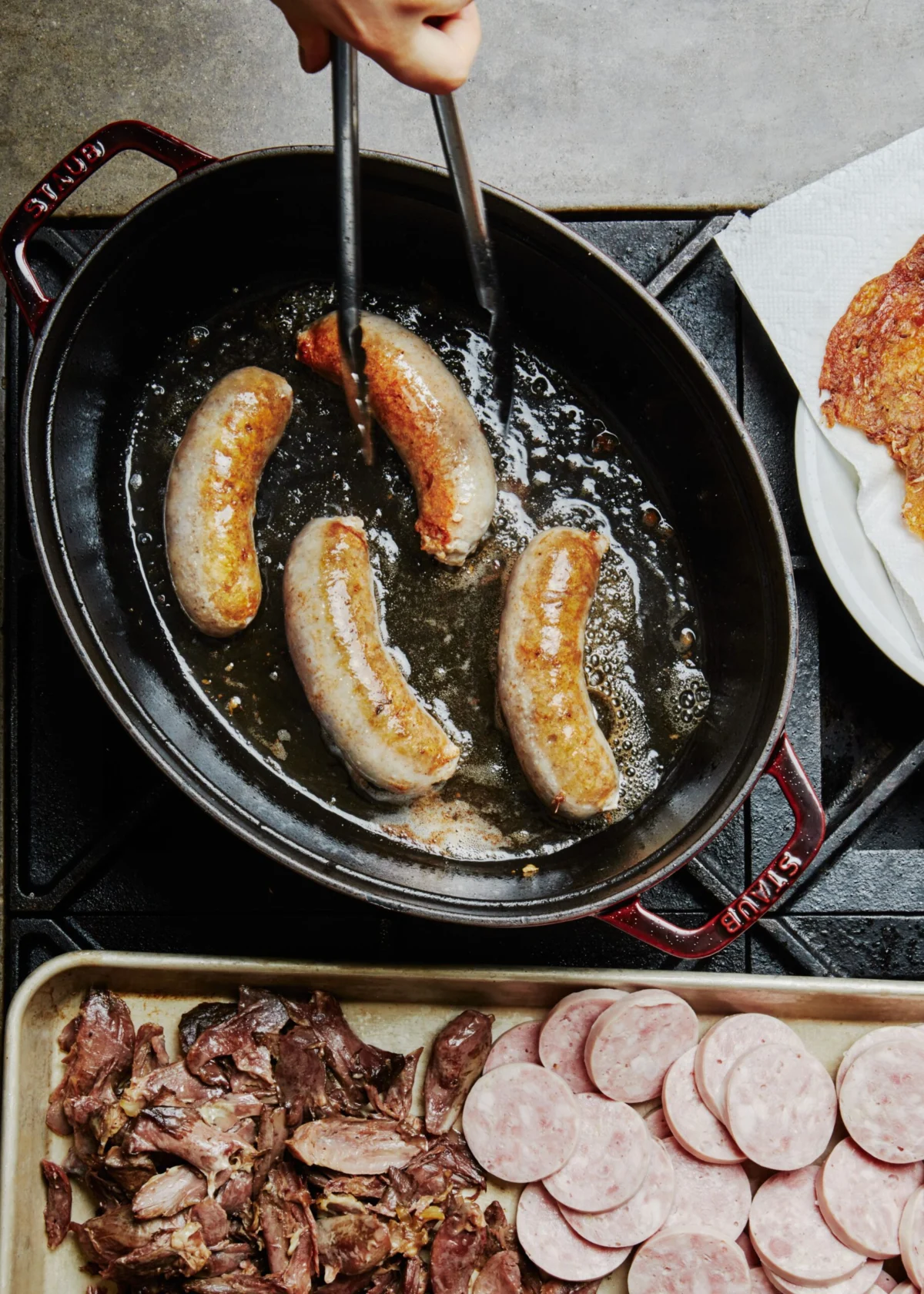
The pursuit of the perfect sausage—characterized by a deeply caramelized, crisp exterior and a succulent, evenly cooked interior—remains a fundamental challenge for both home cooks and professional chefs. Whether preparing traditional German bratwurst, Polish kielbasa, or spicy Italian links, the objective is to mitigate the risk of desiccation while ensuring the product reaches a safe internal temperature. Achieving this balance requires an understanding of thermal dynamics, the chemical properties of meat proteins, and the specific requirements of various cooking environments, including the stovetop, the grill, and the oven.
Understanding the Classification: Fresh vs. Fully Cooked Varieties
Before initiating the cooking process, it is imperative to distinguish between the two primary categories of sausages available in the commercial market: fresh and fully cooked. This distinction dictates not only the duration of the cooking process but also the necessary safety protocols to prevent foodborne illness.
Fresh sausages are composed of raw ground meat—typically pork, beef, lamb, or poultry—seasoned and encased in either natural or synthetic membranes. Because these products have undergone no prior thermal processing, they must be cooked until they reach specific internal temperatures to ensure the elimination of pathogens such as Salmonella and E. coli. According to the United States Department of Agriculture (USDA) Food Safety and Inspection Service (FSIS), fresh pork, beef, and lamb sausages must reach an internal temperature of 160°F (71°C). Poultry-based sausages, including those made from ground turkey or chicken, require a higher threshold of 165°F (74°C) to be considered safe for consumption.
Conversely, fully cooked sausages, which include hot dogs, smoked kielbasa, and many commercially packaged bratwursts, are processed using heat or curing agents during production. For these products, the cooking process is technically a reheating phase intended to enhance flavor through the Maillard reaction and to ensure the center is aesthetically pleasing and warm. These sausages are often labeled as "ready-to-eat," though culinary standards suggest that browning the exterior significantly improves the gastronomic experience.

The Science of the Skillet: The Simmer-then-Sear Methodology
For fresh sausages, the "simmer-then-sear" method is widely regarded by culinary scientists as the most reliable technique for maintaining moisture. The primary difficulty in pan-frying raw sausage is the disparity between the heat required to brown the casing and the heat required to cook the dense interior. High direct heat often causes the casing to char or split before the center reaches a safe temperature.
The process begins by placing the links in a cold skillet and adding enough cold water to submerge them halfway or fully. By bringing the water to a gentle simmer over medium-high heat—rather than a violent, rolling boil—the cook initiates a controlled transfer of thermal energy. This poaching phase typically lasts between six and eight minutes. During this window, the proteins in the meat begin to denature and coagulate evenly.
Once the sausages have reached an internal temperature of approximately 150°F to 155°F, the water is drained. The second phase involves the introduction of a neutral oil with a high smoke point, such as vegetable, canola, or safflower oil. With the pan set to high heat, the sausages are seared for several minutes. This phase facilitates the Maillard reaction, a chemical reaction between amino acids and reducing sugars that gives browned food its distinctive flavor. For those preparing sandwiches or pasta dishes, culinary experts often recommend slicing the links lengthwise—a technique known as butterflying—before the final sear to maximize the surface area available for crisping.
Thermodynamics of the Grill: Utilizing Two-Zone Heating
Grilling presents a different set of variables, primarily the presence of open flames and the risk of flare-ups caused by rendering fat. To counter these risks, professional pitmasters advocate for the "two-zone" heating strategy. This involves creating a high-heat "direct" zone and a lower-heat "indirect" zone on the grill.
On a charcoal grill, this is achieved by banking the coals to one side; on a gas grill, one or more burners are left off. The sausages are initially placed over the direct heat to achieve the desired char and smoky aroma, a process that usually takes three minutes per side. However, to prevent the "burst casing" phenomenon—where internal steam pressure exceeds the strength of the membrane—the links must be moved to the indirect zone.

In the indirect zone, the grill functions similarly to a convection oven, allowing the sausages to finish cooking through ambient heat. This phase can take anywhere from 8 to 15 minutes depending on the thickness of the link. This method is particularly effective for larger sausages, such as jumbo bratwurst, which require more time to reach the 160°F safety mark without burning the exterior.
Oven Roasting and the Efficiency of Sheet-Pan Dinners
For high-volume preparation or "hands-off" cooking, oven roasting at 425°F (218°C) provides a consistent and efficient alternative. The oven’s steady ambient heat environment is ideal for cooking sausages alongside aromatics and vegetables.
When roasted on a parchment-lined baking sheet, the sausages undergo a process of fat rendering. As the internal lipids melt, they escape the casing and coat accompanying vegetables such as fennel, bell peppers, onions, or potatoes. This not only seasons the vegetables but also aids in their caramelization. Small links typically require 15 to 20 minutes, while larger varieties may need up to 30 minutes. The indicator of doneness in this environment, beyond the use of a thermometer, is a "springy" texture; the meat should bounce back when lightly pressed, indicating that the proteins have set.
Managing Frozen Inventory: Protocols for Thawing and Cooking
In a commercial or busy domestic kitchen, the need to cook sausage directly from a frozen state is common. However, applying high heat to frozen meat often results in a "frozen-core" effect, where the exterior is overcooked while the interior remains dangerously raw.
To mitigate this, the USDA recommends two primary paths. The first is a low-temperature oven roast starting at 375°F. The lower temperature allows the frost to sublimate and the heat to penetrate the core before the exterior browns. Once the sausages are thawed and partially cooked (approximately 20 to 25 minutes), the oven temperature can be increased to 425°F to finish the casing.

The second method involves poaching from frozen. By placing frozen links in cold water and bringing it to a simmer, the cook ensures a gradual and safe rise in temperature. This poaching phase usually requires 10 to 15 minutes, after which the sausages can be dried and finished on a grill or in a skillet. It is vital to note that sausages should never be grilled directly from a frozen state, as the inconsistent heat of a grill is poorly suited for thawing dense ground meat.
Analysis of Common Culinary Errors: To Pierce or Not to Pierce
One of the most persistent debates in sausage preparation concerns whether the casing should be pierced with a fork or knife before cooking. Culinary analysis and food science overwhelmingly suggest that piercing is detrimental to the final product.
The casing serves as a pressure vessel that traps juices and rendered fats. When the casing is punctured, these fluids escape, leading to three negative outcomes:
- Loss of Moisture: The resulting sausage becomes dry and granular in texture.
- Flare-ups: On a grill, escaping fat drips onto the heat source, causing flames that can impart a bitter, carbonized taste to the meat.
- Safety Risks: In a skillet, escaping moisture can cause hot oil to splatter violently, posing a burn risk to the cook.
Unless a specific recipe requires the removal of the casing for "crumbled" sausage applications, the membrane should remain intact throughout the entire thermal process.
Food Safety and the Fallacy of Visual Cues
A significant implication for public health is the unreliability of visual indicators in determining the doneness of meat. Many consumers believe that a sausage is safe to eat once the interior is no longer pink. However, food science research has demonstrated that some sausages can remain pink even when they have reached the required 160°F, due to the presence of nitrates or the pH levels of the meat. Conversely, some poultry sausages may turn brown or grey before they have reached the 165°F threshold necessary to kill bacteria.

The only scientifically validated method for ensuring safety is the use of a calibrated instant-read thermometer. By inserting the probe into the thickest part of the link, cooks can ensure they have met USDA standards without overcooking the product.
Historical and Market Context of Sausage Consumption
The methods described above have evolved over centuries of culinary tradition. Sausage making originated as a method of meat preservation, utilizing salt and smoking to extend the shelf life of protein sources. In the modern era, the global sausage market has seen a resurgence in artisanal and "clean-label" products, with consumers increasingly seeking high-quality fresh links over heavily processed alternatives.
As the market shifts toward premium poultry and plant-based sausages, the demand for precise cooking techniques has grown. Plant-based sausages, in particular, often lack the natural fats found in pork, making the "simmer-then-sear" or "two-zone" methods even more critical to prevent the product from becoming unpalatably dry.
Conclusion and Final Implications
The successful preparation of sausage is an exercise in temperature control and moisture management. By categorizing the product correctly, utilizing the appropriate heat zones, and relying on thermometric data rather than visual cues, cooks can produce a superior product that is both safe and delicious. Whether through the controlled environment of a skillet simmer or the robust heat of a two-zone grill, the goal remains the same: a celebration of texture and flavor that honors the culinary heritage of this versatile food.