
 Ana Megawati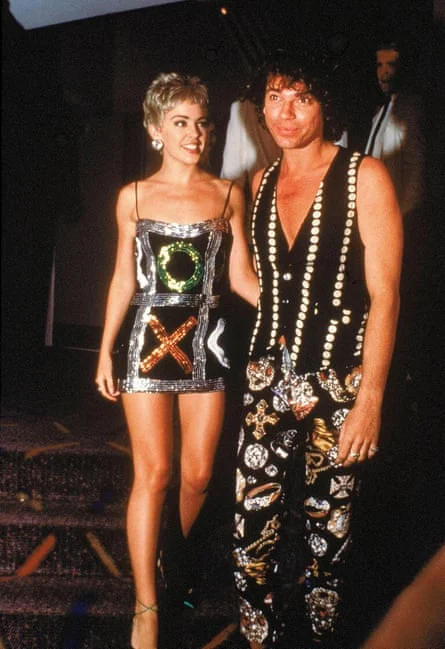
The intersection of popular music and high fashion has long defined the longevity of global entertainers, yet few artists have navigated this dynamic with the calculated precision of Australian singer Kylie Minogue. Spanning a career of nearly four decades, Minogue’s visual identity has evolved from the manufactured wholesome innocence of her soap opera beginnings to the cutting-edge, avant-garde autonomy of an established global style icon. Her journey offers a compelling case study in how deliberate wardrobe choices can anchor musical transitions, signal personal reinvention, and establish enduring cultural influence.
From Scripted Costumes to Autonomous Expression
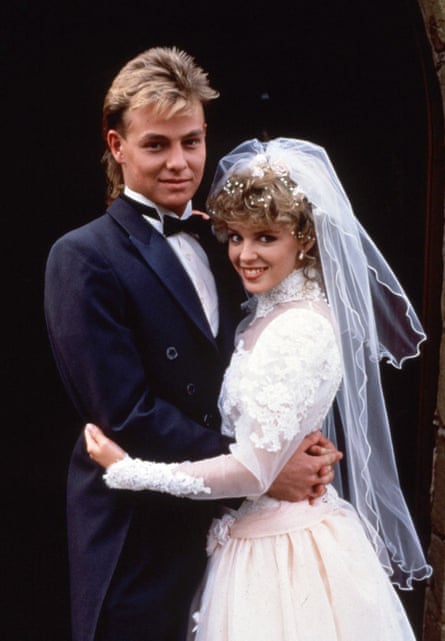
Minogue’s early exposure to the public eye was defined by external styling rather than personal direction. As Charlene Mitchell in the Australian television serial Neighbours, her image was characteristic of late-1980s suburban aesthetics, marked by silk taffeta, lace, and conservative silhouettes. This dynamic persisted into her initial foray into pop music; the cover of her self-titled 1988 debut album featured her in cascading curls and a topless hat—an image curated by production teams at Stock Aitken Waterman’s hit factory. At this stage in her career, Minogue possessed minimal agency over her public persona, functioning primarily as a commercial product within the rigid confines of bubblegum pop.
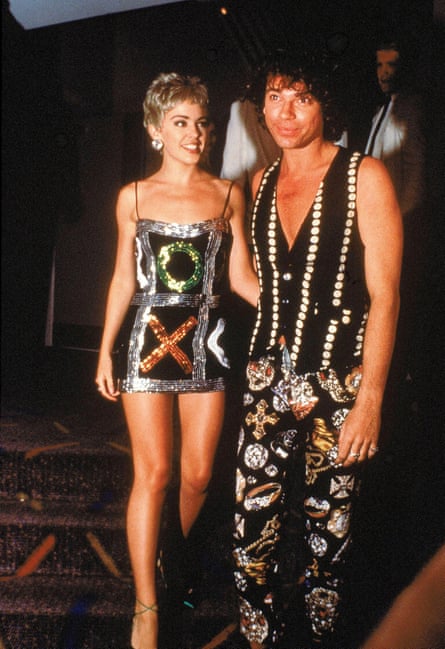
The turning point in her relationship with fashion occurred on December 20, 1989, at the Australian premiere of her feature film debut, The Delinquents. Attending the event alongside INXS frontman Michael Hutchence, Minogue appeared in a custom sequined noughts-and-crosses minidress designed by the Australian label Morrissey Edmiston, paired with a cropped blond wig. This appearance marked her inaugural deliberate use of fashion to communicate personal autonomy. By stepping out with a prominent rock musician and defying her wholesome television archetype, Minogue signaled an intentional departure from her past, laying the groundwork for a career defined by visual shapeshifting.

The Taboo-Breaking Transition of the Early 1990s
As Minogue sought to distance herself permanently from her "Smiley Kylie" persona, her style choices grew increasingly provocative. This shift culminated during her 1991 Let’s Get to It tour, for which she enlisted the services of an emerging British designer, John Galliano. Seeking a stark contrast to her previous image, Minogue wore corsets, stockings, suspenders, and revealing undergarments designed to challenge traditional boundaries of pop stardom.
The collaboration provoked immediate controversy. Mainstream publications, including the music magazine NME, criticized the performances for sending a "dangerous message" to her younger demographic. However, Minogue defended the stylistic direction, noting in contemporary interviews that she had not hired Galliano to produce conservative attire. This calculated provocation served a vital strategic purpose: it dismantled her past identity with finality, establishing fashion as a primary vehicle for artistic evolution.
Entering the 1990s style ecosystem, Minogue solidified her status within British fashion culture by appearing on the covers of influential style publications such as The Face and i-D. Collaborations with pioneering stylists such as Judy Blame and Katie Grand further repositioned her credibility. Notably, Grand styled Minogue for the cover of her 1994 self-titled album released under the dance label Deconstruction. The resulting imagery—a black-and-white portrait of a barefoot, bespectacled Minogue wearing a Paul Smith suit—offered a subdued, androgynous alternative to the vibrant, high-gloss aesthetics of her past, successfully introducing the "Cool Kylie" era.
Minimalism and the Indie Aesthetic
This intuitive approach to sartorial experimentation extended into her mid-1990s phase, frequently characterized as "Indie Kylie." Guided by stylist William Baker, Minogue embraced emerging, avant-garde designers such as Owen Gaster, Antonio Berardi, and Véronique Leroy. The resulting aesthetic was stripped-back and grunge-adjacent, balancing a refined editorial sensibility with the understated allure of a pop veteran. This period demonstrated her ability to traverse subcultures without alienating her commercial audience, establishing a pattern of stylistic reinvention that would define subsequent decades.
The Millennial Resurgence and Iconic Memorabilia
The turn of the millennium marked Minogue’s triumphant return to mainstream dance-pop, anchored by one of the most recognizable garments in contemporary music history: a pair of gold hot pants purchased for fifty pence in a London charity shop. Initially worn by Minogue in 1996 for a private themed party, the shorts became the central visual motif of the 2000 music video for Spinning Around.
The video, which featured a tanned and carefree Minogue against a sun-drenched backdrop, captured the commercial optimism of the early 2000s and effectively cemented her comeback. Recognizing the cultural and artistic value of her wardrobe, Minogue later donated the gold hot pants, alongside the majority of her iconic performance costumes, to the Arts Centre Melbourne, where they are periodically exhibited as historical artifacts of pop culture.
A year later, Minogue introduced another defining visual statement with the release of the single Can’t Get You Out of My Head. Designed by Fee Doran (known professionally as Mrs Jones) and drawing subtle inspiration from Grace Jones, the white hooded jumpsuit featuring a plunging neckline became synonymous with her tenth studio album, Fever. The garment reflected an increasingly futuristic and ambitious design philosophy that resonated globally, propelling the single to international chart dominance.
Resilience, Showmanship, and Contemporary Legacy
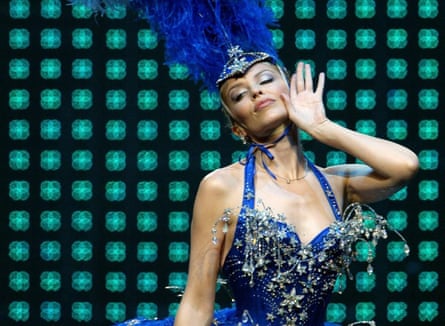
Minogue’s capacity to articulate personal and professional milestones through clothing is further evidenced by her response to her 2005 breast cancer diagnosis. Following her recovery and triumphant return to the stage during the 2007 Showgirl Homecoming tour, she collaborated with English designer Gareth Pugh. Pugh’s sculptural, armor-like creations served as a powerful visual metaphor for resilience and strength, translating her personal battle into high-fashion performance art.
Throughout her near-four-decade career, Minogue has seamlessly transitioned between diverse aesthetic poles. Her wardrobe spans the understated sensuality of the blue Balenciaga dress featured in the 2003 video for Slow, the gothic romanticism of The Vampire’s Wife, and the high-octane glamour of custom Dolce & Gabbana miniskirts. Her ongoing influence within the luxury fashion sector was recently underscored by a cameo appearance in a Chanel handbag campaign, which paid direct homage to her critically acclaimed 2002 video for Come Into My World, directed by Michel Gondry.
Analysis of Implications
Minogue’s enduring success within the intersection of music and fashion underscores a vital lesson in brand longevity: the necessity of non-fixation. By resisting the temptation to align permanently with a single designer or signature style, Minogue avoided the stagnation that frequently affects pop acts of her generation. Instead, she has utilized fashion as a collaborative tool, engaging visionary designers to color in the various iterations of her artistic identity.
As popular culture continues to reevaluate the icons of the late 20th century, Minogue’s sartorial archive stands as a testament to the power of calculated reinvention. Through a disciplined approach to image management and an astute eye for design talent, she has secured her position not merely as a pop vocalist, but as a defining architect of contemporary pop aesthetics.









