Layla Zulfa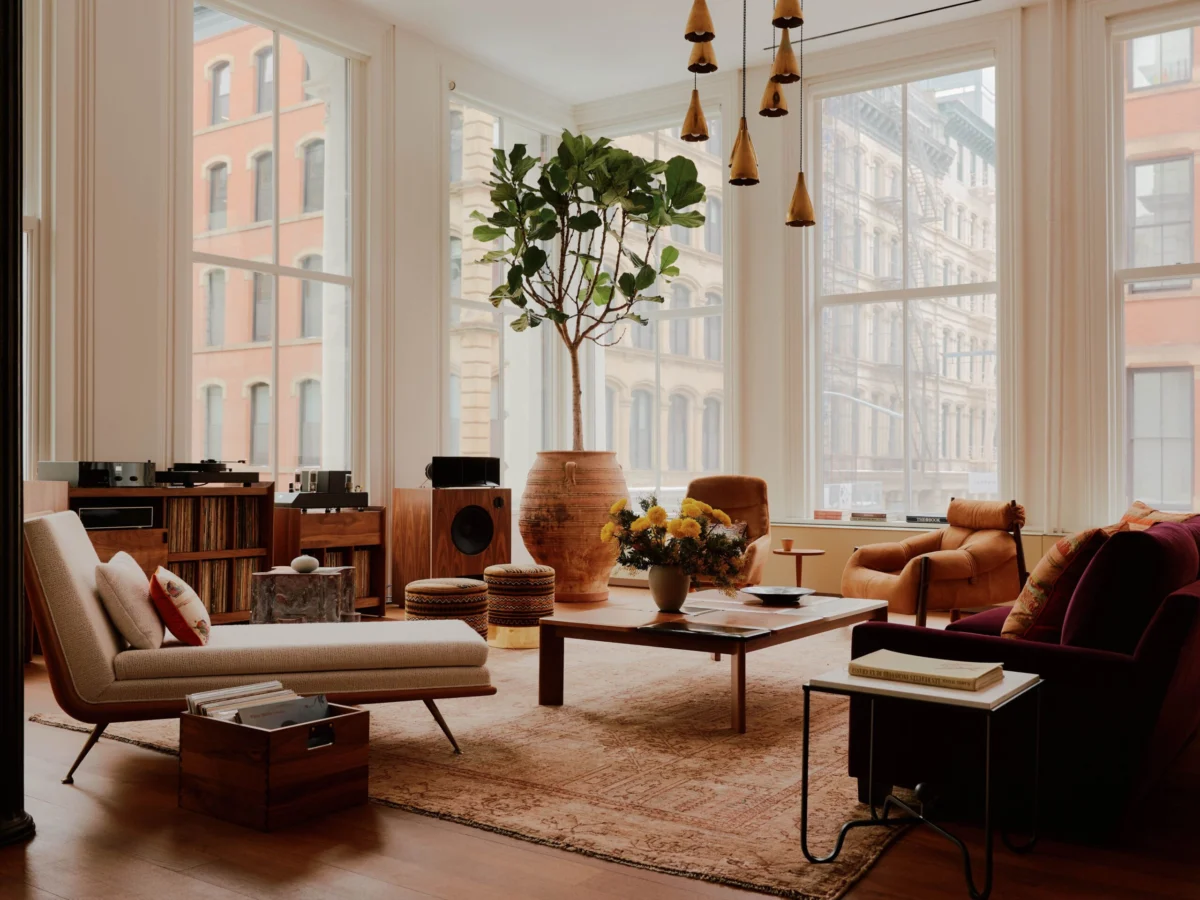
The transformation of a historic silk warehouse into a multifaceted family residence represents a significant milestone in the architectural evolution of Manhattan’s SoHo district. Originally constructed in 1872 and designed by the esteemed architect William H. Hume, the building served as a cornerstone of the city’s textile industry during the late 19th century. Today, this 3,700-square-foot loft, characterized by its voluminous proportions and soaring ceilings, has been reimagined by interior designer Fawn Galli and Douglas C. Wright Architects. The project serves as a case study in balancing the preservation of industrial heritage with the functional requirements of a modern family of six.

The Architectural Heritage of William H. Hume
To understand the complexity of the renovation, one must first consider the building’s provenance. William H. Hume was a prominent figure in New York’s Gilded Age architecture, known for his work on cast-iron structures and massive commercial warehouses. The 1872 silk warehouse on Greene Street features the classic hallmarks of the era: oversized fenestration designed to provide maximum natural light for textile inspection and expansive floor plates supported by heavy timber or cast-iron columns.
For decades, such spaces were the primary domain of the New York art scene, utilized as massive studios or "party pads" where the lack of internal walls was considered an asset. However, the transition of SoHo from an industrial and artistic enclave to a premier residential neighborhood has necessitated a new approach to loft living. When the current owners—an ambitious couple with four children—acquired the space, the primary challenge was to introduce "coziness" and "intimacy" without compromising the architectural integrity of the open-plan layout.

Strategic Segmentation: The Five-Zone Great Room
Fawn Galli, an AD PRO Directory designer known for her ability to blend whimsy with structured elegance, approached the 3,700-square-foot footprint by treating the "great room" as a series of interconnected yet distinct environments. Rather than erecting permanent dividing walls—which would have bisected the natural light and diminished the sense of scale—Galli utilized rugs, statement ceiling fixtures, and strategic furniture placement to parcel the space into five functional sections.
1. The Texture-Rich Living Area
The living zone is anchored by a Doris Leslie Blau hemp rug, providing a neutral, tactile foundation for a custom forest-and-ochre velvet sectional. The centerpiece of this area is an India Mahdavi rattan marquetry "Fish" coffee table, paired with a Wegner Flag Halyard chair constructed of steel, sheepskin, and rope.

The most striking feature, however, is the multicolored feather ceiling sculpture by artist Tim Prentice. Suspended from the high ceilings, the kinetic work reacts to the building’s internal air currents. "It moves around with the wind and it’s just enchanting," Galli noted regarding the piece’s ability to keep the inhabitants engaged with their environment. Supporting the aesthetic is Ellen Harvey’s 2013 artwork, The Internal Revenue Office Reforested, which adds a layer of contemporary social commentary to the historic walls.
2. The Culinary and Social Kitchen
The kitchen serves as a bridge between the industrial past and the domestic present. Galli retained the high-end Boffi cabinetry but customized the unit fronts with a deep green hue to echo the botanical themes found elsewhere in the loft. Vintage stools, recovered in Amazonie Lie De Vin Velvet by Métaphores, provide seating at the counter, while pale sage millwork—designed by Douglas C. Wright Architects—runs the perimeter of the space to provide necessary storage for a family of six.

3. The Dining Zone and Formal Gatherings
For the dining area, Galli sought to create a sense of "gravitas." An oversized 19th-century Oushak rug defines the boundary of this zone. A walnut Silver table from the House of Finn Juhl is surrounded by eight Rozy armchairs by Pierre Yovanovitch, draped in woven textiles sourced from French flea markets. The lighting in this section is provided by a floral Chinese silk Dimoremilano pendant, which lowers the visual ceiling to create a more intimate atmosphere during meals.
4. The Music Corner
Dedicated to both the performance and appreciation of music, this corner features a 1923 Steinway & Sons Model O piano in a high-gloss finish. The audio experience is augmented by a Soundlux Audio and Ojas system, housed within a walnut Symbol console. Seating in this area is intentionally diverse to accommodate different listening styles, including a purple corduroy sofa and a midcentury T.H. Robsjohn-Gibbings chaise. A 1950s Paavo Tynell chandelier illuminates the space, while a 20th-century Oushak rug provides acoustic dampening.

5. The Den Nook
The final segment of the great room is the den, designed specifically for media consumption and reading. This area features a custom sectional upholstered in Pierre Frey’s Le Jardin du Palais Velours—a vibrant, "jungly" night-scene fabric that Galli describes as a mix of pattern and color that remains grounded and not overwhelming.
Chronology of the Transformation
The renovation of the Greene Street loft followed a rigorous timeline aimed at modernizing the infrastructure while layering the interior design:

- Phase I: Acquisition and Planning (Months 1–4): The owners purchased the warehouse space and engaged Douglas C. Wright Architects to handle the structural modifications and perimeter millwork.
- Phase II: Structural and Systems Integration (Months 5–10): Installation of updated HVAC, electrical, and plumbing systems to support a modern family’s needs. This phase included the careful restoration of the original windows to improve energy efficiency while maintaining the 1872 aesthetic.
- Phase III: Interior Curation (Months 11–16): Fawn Galli began the process of sourcing vintage pieces from Turkey and France. This period involved the customization of furniture, such as the Pierre Frey sectionals and the Holland & Sherry mohair headboards.
- Phase IV: Final Installation (Months 17–18): The mounting of the Tim Prentice sculpture and the final placement of the Oushak rugs and Ellen Harvey artwork.
Private Sanctuaries and the "Old World" Aesthetic
While the great room emphasizes openness, the primary bedroom was designed to be a total departure from the "loft" archetype. Galli introduced a new wall, upholstered in a moody botanical Dedar tapestry, to create a sense of enclosure. The bed features a custom brown-burgundy Holland & Sherry mohair velvet headboard, flanked by oak Scott nightstands by India Mahdavi.
A notable addition to the primary suite is the dedicated work-from-home setup. It features a vintage Jean Prouvé Compas Direction desk and a custom Zoom background screen. The screen is double-sided, featuring fern-colored wool on one side and sea-blue silk on the other, allowing the user to change the "vibe" of their digital presence depending on the nature of their business.

In the entryway and powder rooms, Galli utilized color to create a dramatic transition. The entryway features a midnight-blue gradient Calico wallpaper and a Benjamin Moore "Downpour Blue" ceiling. According to Galli, this "tricks the eye" into perceiving the great room as even brighter and more expansive once a person moves from the dark entry into the light-filled main space.
Market Context and Design Implications
The Greene Street project reflects broader trends in the New York luxury real estate market. According to recent data from the SoHo residential market, "authentic" lofts—those that retain original architectural details like Hume’s 1872 windows and high ceilings—command a significant premium, often trading at 15–20% higher than contemporary new builds in the same area.

Furthermore, the project highlights a shift in high-end interior design toward "Tactile Maximalism." Industry analysts observe that post-pandemic homeowners are increasingly moving away from sterile, minimalist environments in favor of spaces that prioritize "soul" and "history." Galli’s use of vintage Turkish rugs and French flea market finds serves this demand for authenticity. "The vintage Turkish rugs are personal to the client," Galli explained. "They have soul, they’re worn. There’s something to them that gives them depth."
Broader Impact on Urban Preservation
The successful conversion of the 1872 silk warehouse also underscores the importance of adaptive reuse in urban planning. By maintaining the external facade and the internal volume of William H. Hume’s design, the project preserves a piece of New York’s industrial history while providing a sustainable solution for modern high-density living.

Experts in historic preservation suggest that such projects are vital for the continued vitality of Landmarked districts. When historic buildings are adapted to meet the needs of families rather than just serving as transient commercial spaces, it fosters a more stable, long-term community.
Fawn Galli’s transformation of the SoHo loft demonstrates that the "antithesis of a loft"—coziness, intimacy, and defined family spaces—can be achieved within the grandest of industrial shells. Through strategic segmentation, a deep respect for materiality, and the inclusion of kinetic art like the Prentice feather sculpture, the residence stands as a model for the next generation of Manhattan loft living.