Layla Zulfa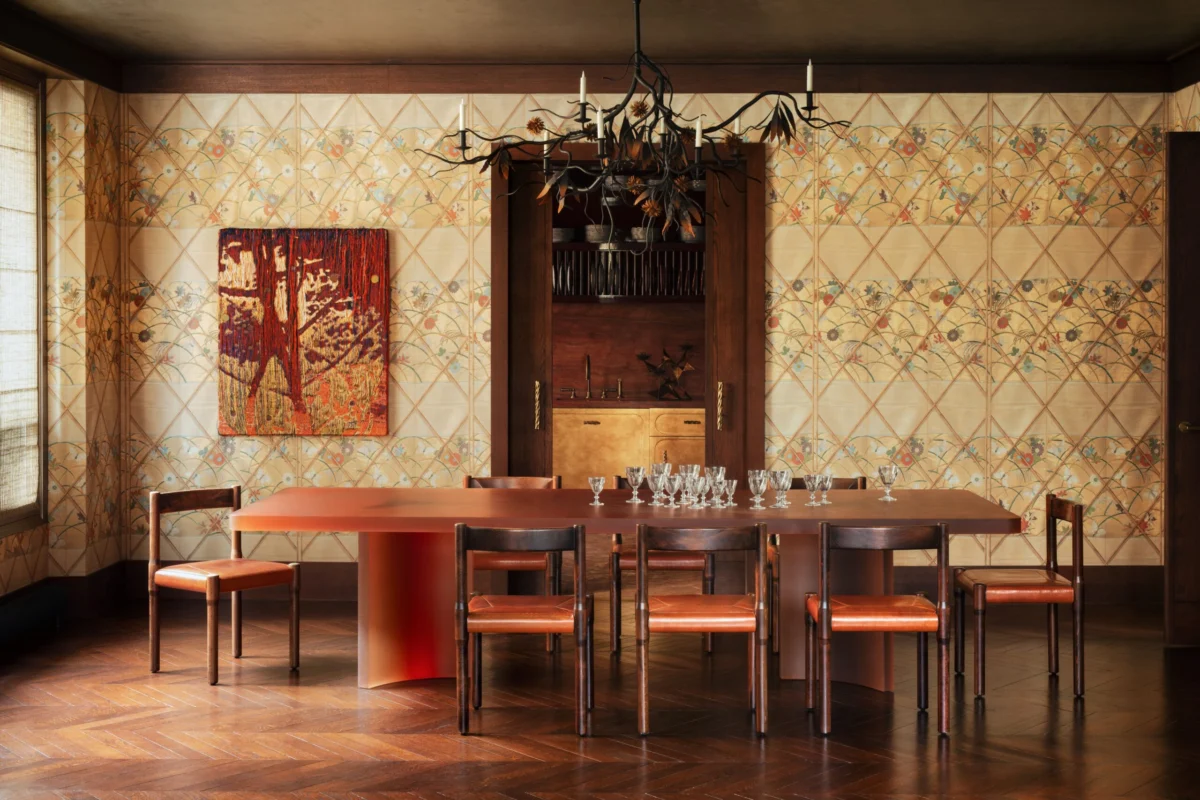
Marthe Simon and Paul Peller, the collaborative and life partners behind the acclaimed firm Marthe Architecture, have completed an ambitious residential overhaul on Paris’s storied Left Bank, utilizing a design language defined by warm maximalism and artisanal craftsmanship. The project, which spanned twenty-four months, represents a meticulous fusion of historical preservation and contemporary luxury, leaning heavily into high-contrast materials such as gold leaf, patinated brass, and trompe l’oeil wall treatments. By merging two distinct residential units into a singular, fluid estate, the duo has redefined the "jewel box" aesthetic for the modern era, creating a home that functions as both a private sanctuary and a showcase for world-class collectible design.

Historical Context and Architectural Pedigree
The property is situated within a building dating back to the Napoleonic Second Empire (1852–1870), a period of French history characterized by significant urban renewal and the rise of the Haussmann style. Architecture of this era typically emphasizes symmetry, imposing stone facades, and grand internal proportions. When Marthe Architecture first surveyed the site, the space was divided into two separate apartments, each measuring approximately 1,100 square feet. The challenge was not merely to connect the two units but to harmonize their disparate layouts while honoring the structural integrity of the 19th-century framework.
The Left Bank, or Rive Gauche, has long been the intellectual and artistic heart of Paris, home to the Sorbonne, the Latin Quarter, and the historic Saint-Germain-des-Prés district. This cultural backdrop informed the architects’ decision to pursue a "timeless Parisian aesthetic." Rather than stripping the interior of its history, they sought to enhance it through expansive openings and the installation of imposing double doors—some functioning on traditional hinges and others as modern sliding partitions—which echo the grand salons of the Second Empire.

Chronology of a Two-Year Transformation
The renovation was notable for its extended timeline, a duration that Marthe Simon describes as an essential "luxury." In an industry often driven by rapid turnarounds, the two-year period allowed the architects to observe the apartment’s natural light and spatial dynamics across all four seasons.
- Phase I: Structural Consolidation (Months 1–6): The initial phase involved the removal of unnecessary internal partitions and the merging of the two footprints. This stage was critical for creating a fluid floor plan that replaced cramped corridors with hallways designed to be as wide as functional rooms.
- Phase II: Infrastructure and Framework (Months 7–12): Following the demolition, the team installed new mechanical systems and the minimalist architectural framework. This included the fabrication of the custom double doors and the alignment of the new, expansive openings that allow light to penetrate deep into the floor plate.
- Phase III: Artisanal Finishes and Surface Treatments (Months 13–18): This period saw the arrival of specialized craftsmen. Milanese decorative artists, Italian art students, and Lebanese metalworkers were commissioned to apply the layers of gold leaf, hand-painted murals, and patinated bronze that define the home’s interior envelope.
- Phase IV: Curation and Final Styling (Months 19–24): The final six months were dedicated to the selection and placement of furniture and art. This involved sourcing pieces from prestigious galleries such as Thomas Fritsch Artrium and Avant-Scène, ensuring that every object complemented the home’s specific atmospheric qualities.
The Material Palette: A Study in Gilded Maximalism
The interior design is a departure from the stark minimalism often found in contemporary renovations. Instead, Simon and Peller opted for "warm maximalism," a style that prioritizes rich textures, historical references, and a saturated color palette. The consistent use of shiny, reflective surfaces serves a dual purpose: it creates a sense of opulence and maximizes the available light within the historic structure.

In the entryway, a Milanese studio applied metallic floral wallpaper, setting an immediate tone of refined extravagance. This theme continues into the living room, where the walls are covered in a combination of patinated bronze and gold leaf. The centerpiece of this space is a custom-designed brass fireplace featuring a delicate wicker pattern, executed by an expert metalworker.
The dining room features a custom "quilt-like" wallpaper inspired by the work of the late Italian designer Gabriella Crespi. The pattern includes three bands of friezes and a trompe l’oeil bamboo trellis, paying homage to Crespi’s famous rattan-forward aesthetic. This intricate wall covering transforms the room into a highly textured environment that blurs the line between traditional decor and fine art.

Artistic Curation and Collectible Design
The furniture and art selections reflect a sophisticated understanding of 20th-century design history and contemporary craftsmanship. In the living room, a pair of 1960s armchairs by the Brazilian modernist Joaquim Tenreiro provides a sculptural counterpoint to the patinated-brass fireplace. Tenreiro, a pioneer of modern furniture in Brazil, is known for using indigenous woods and light, graceful lines—a choice that adds an international dimension to the Parisian setting.
Other notable pieces include:

- Metal Coffee Tables: Designed by Karim Chaya and Kamal Aoun of Spockdesign.
- Sculptural Ceramics: A Spiralé vase by Jacques and Dani Ruelland and bronze walnuts by Clotilde Ancarani.
- Lighting: A floor lamp by Jacques Adnet, a key figure in French Modernism, and Platon bronze lamps by Garouste & Bonetti.
- Primary Bedroom: A solid walnut Sepia bench by Maërl and a pair of Platon bronze lamps from the Avant-Scène Gallery.
- Artistic Accents: A brass mask titled Returning the Gaze (2024) by Ali Cherri, situated in the hallway, adds a contemporary, thought-provoking element to the transition spaces.
Technical Analysis of Lighting and Atmosphere
A defining characteristic of Marthe Architecture’s approach is the deliberate rejection of standard overhead lighting. Paul Peller notes that the team was "strict" about avoiding high-level light sources to maintain an intimate, moody atmosphere. Instead, light is predominantly sourced from low-level lamps and sculptural fixtures that double as art pieces.
The few overhead lights that were permitted are highly stylized. In one instance, a black wrought-iron pendant light, crafted in a London workshop, resembles a tree branch. This organic form echoes the floral motifs found in the wallpaper and hand-painted mirrors. In the kitchen, the lighting strategy shifts to complement a palette of gold leaf, red Iranian travertine, and antique-finished terra-cotta tiles. The interplay of these materials under warm, directed light creates a "gilded sheen" that brings the wood grain, lacquer, and tortoiseshell textures to life.

The Kitchen and Bath: Functional Art
The utilitarian spaces of the apartment were not exempt from the architects’ maximalist vision. The primary bathroom serves as a standout example of international collaboration. Italian art students were brought in to hand-paint the mirrors with metallic hues, while the brass basins were hand-hammered by a Lebanese artist. A freestanding bronze "Mars" mirror by Franck Evennou and a "Fleurs" ashtray by Garouste & Bonetti further elevate the room’s status from a functional space to a private gallery.
The kitchen utilizes red Iranian travertine for the countertops, a stone known for its dramatic veining and deep color. This is paired with antique-finished terra-cotta tiles, creating a rustic yet luxurious foundation. A bronze candlestick by Hubert Le Gall and a wooden bowl by Kasia Kmita sit atop the counters, reinforcing the theme of curated, handcrafted objects.

Market Implications and Design Trends
The completion of this project comes at a time when the "warm maximalism" trend is gaining significant traction in the luxury residential market. After years of dominant "Scandi-minimalism" and industrial aesthetics, high-net-worth homeowners are increasingly seeking interiors that offer a sense of history, personality, and tactile richness.
The use of highly specialized artisans—ranging from London ironmongers to Milanese wallpaper studios—highlights a growing valuation of "human-scale" craftsmanship in interior design. This project suggests that for elite properties on the Left Bank, the value lies not just in square footage, but in the "luxury of time" and the depth of the narrative woven into the walls. By combining two smaller units into a 2,200-square-foot masterpiece, Marthe Architecture has created a property that is likely to see significant appreciation in a market that prizes unique, "turn-key" historic renovations.

Conclusion: A Legacy of Time and Texture
The Saint-Sulpice apartment stands as a testament to the power of a slow, considered design process. By taking two years to understand the "seasons" of the space, Marthe Simon and Paul Peller have created a home that feels both ancient and entirely new. The project successfully balances the heavy ornamentation of gold leaf and bronze with a fluid, modern floor plan, proving that maximalism, when executed with architectural precision, can result in a space of profound harmony. As the textures of lacquer, wood, and metal catch the low-hanging light of a Parisian evening, the apartment fulfills its role as a "formidable jewel box," preserving the spirit of the Second Empire for a new generation of inhabitants.