Ana Megawati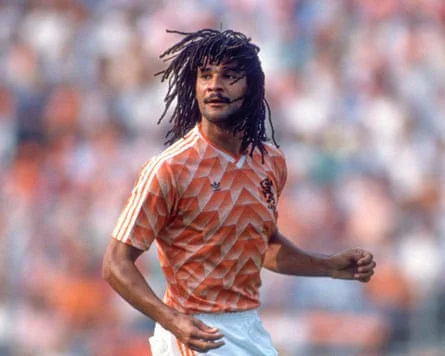
The recent World Cup tournaments have marked a significant turning point in the landscape of professional football, not just for tactical innovations or breathtaking goals, but also for the striking visual evolution of player hairstyles. Locs, often colloquially and historically referred to as "dreadlocks," have transitioned from a relatively niche or even stigmatised choice to an omnipresent and celebrated style, as ubiquitous on the pitch as a well-placed free kick. This summer, defenders meticulously pinned their locs back for optimal sightlines, while forwards artfully shaped and loosened theirs, knowing the camera’s gaze would capture every detail. This transformation reflects a deeper cultural shift, challenging long-held perceptions and embracing authentic self-expression within the high-stakes world of international sport.
A Kaleidoscope of Self-Expression on the Pitch
The sheer diversity of loc styles on display at the World Cup underscores this cultural blossoming. Players are no longer adhering to a singular, utilitarian approach; instead, their hair has become a canvas for individual identity and creativity. Ghana’s Antoine Semenyo showcased a distinctive pairing of locs with a sharp undercut, offering a modern, clean aesthetic. Spain’s Nico Williams opted for bleached tips, adding a touch of vibrant contrast to his natural locs. Belgium’s Jeremy Doku presented a sophisticated blend of blond-tinted tips intricately cornrowed, demonstrating a fusion of styles.
England’s Eberechi Eze sported a variant styled into intricate cornrows, highlighting the versatility of locs when manipulated. His former Crystal Palace teammate, France’s Michael Olise, exemplified a slickly styled taper fade, a technique that masterfully emphasizes the volume and texture of the locs atop his head, creating a refined and contemporary silhouette. Manu Koné, another talent from Les Bleus, has been seen with braided locs, offering a different textural dimension. Further afield, Switzerland’s attacking midfielder Johan Manzambi chose jumbo locs, often combined with rope-like, protective Senegalese twists, a style known for its durability and cultural resonance. These varied expressions collectively paint a picture of locs not merely as a hairstyle, but as a dynamic fashion statement deeply interwoven with personal and cultural identity.
The Evolution of Locs in Football: A Historical Perspective
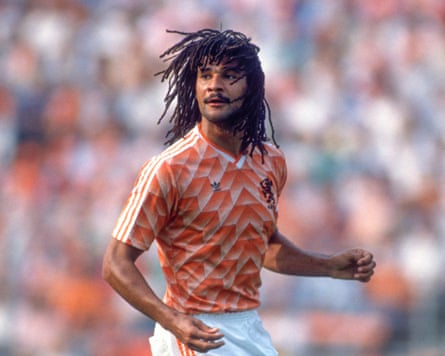
While the current prevalence and diversity of locs may feel like a modern phenomenon, their presence in football is not entirely new. Legendary figures like the Dutch maestro Ruud Gullit, who graced pitches for AC Milan and Chelsea in the 1990s, and Swedish striker Henrik Larsson, were early pioneers. However, their approach to locs differed significantly from today’s players. For Gullit and Larsson, their locs were largely maintained in a consistent style throughout their careers, prioritizing convenience and low maintenance in an era where hair was less of a fashion statement in sports. It was a personal choice, but not yet a widespread trend or a platform for diverse styling.
The shift observed at recent tournaments is the sheer range and adaptability of loc styles. In the past, locs might have been seen as a permanent fixture, often a singular, unchanging look. The modern player, however, treats locs as an integral part of their evolving personal brand, capable of shifting from tournament to tournament, and sometimes even from match to match. This dynamic approach reflects broader societal trends in fashion and personal grooming, where individuality and frequent stylistic updates are increasingly valued. The World Cup, as the pinnacle of international football, serves as a global runway, amplifying these trends and showcasing them to billions.
The Indispensable Role of Specialist Barbers

Behind every impeccably styled set of locs on the pitch is a dedicated team of hair professionals, whose expertise has become crucial to players’ performance and public image. Fidelis Okafor, a barber with a decade of experience and three years running his Nottingham-based shop, FidelFadez, exemplifies this evolving demand. For a long time, locs maintenance was a specialist service rather than a core offering. This changed dramatically when Leicester City winger Abdul Fatawu Issahaku recommended Okafor to his Ghanaian national teammates. Soon, Okafor found himself flown to Ghana’s official World Cup training camp in Boston, entrusted with the significant task of grooming players like Antoine Semenyo, Jerome Opoku, and Brandon Thomas-Asante.
Amidst the relentless schedule of a major tournament, most appointments revolved around "retwists." This routine maintenance method involves carefully twisting new hair growth at the roots into the existing, mature locs. This technique is not merely cosmetic; it creates a neat, uniform appearance and, crucially, helps the locs withstand the rigours of intense physical activity, heat, and constant movement during sprinting and heading. The demand for such specialized care highlights how players view their hair not just as an aesthetic choice, but as an element requiring professional attention to maintain peak condition and presentation.
Sheldon Edwards, who operates HD Cutz in south London on a significantly larger scale, further illustrates this professionalisation of player grooming. His team of 13 includes stylists who traveled with the United States squad, and also catered to Swiss, Dutch, and Algerian players. The importance of these services is so great that some national teams even bring their own dedicated hair specialists. Cape Verde, for instance, in their inaugural World Cup appearance, brought braider Loretta Rocha to their training base in Connecticut, demonstrating the integral role these professionals play in supporting player well-being and confidence on the global stage. These barbers and stylists are not just cutting hair; they are cultural custodians, understanding the nuances of different hair types and styles, and providing a vital service that contributes to a player’s overall readiness and self-assurance.
Cultural Resonance and Shifting Perceptions
The resurgence of locs in football is deeply intertwined with its rich cultural heritage. Sheldon Edwards traces this back to its ethos-based roots in Jamaica, his country of birth, before he relocated to the UK. "Locs are deeply rooted in Jamaican Rastafarian culture, where they have long represented faith, identity, and resilience," Edwards explains. This connection to a powerful cultural narrative is central to understanding their significance. For decades, locs were often "misunderstood and judged," as Fidelis Okafor points out. They were frequently associated with negative stereotypes, leading to prejudice and discrimination in various sectors, including professional sports.
The visibility of locs on the biggest stage of the World Cup signifies a profound shift in these perceptions. "Seeing all the World Cup footballers wearing locs on the biggest stage shows how far perceptions have shifted," Okafor states, emphasizing that this trend is "about culture and confidence and authenticity." He adds, "I don’t call it rebellion. They’re just saying, ‘yeah, I want this hairstyle’." This sentiment reflects a growing societal acceptance and celebration of diverse cultural expressions, moving away from a narrow, Eurocentric ideal of professional appearance. The confidence with which these athletes wear their locs serves as a powerful testament to this evolving landscape, inspiring millions globally.
Overcoming Historical Discrimination and Challenging Stereotypes
The journey of locs from a symbol of potential professional hindrance to a celebrated style has been fraught with historical challenges. Football legend Ian Wright has openly shared anecdotes from his peers, revealing the harsh realities of past discrimination. "They would tell me, ‘they didn’t let me go through the trial because I had locs’," Wright recounted on Gary Neville’s ‘Stick to Football’ podcast. Such experiences highlight a systemic bias where appearance, particularly hairstyles associated with Black culture, was used as a arbitrary barrier to entry and progression in the sport.
Psychologist Johanna Lukate, author of Dis(entangled) – a book that delves into the deeply personal relationship between Black individuals and their hair – confirms this pattern in her research. She observed how players with locs were often "read as unprofessional" by employers or executives. This perception extended to parents, who, out of fear of potential negative assumptions from coaches, actively steered their children away from adopting locs. This fear was not unfounded, but rather a rational response to prevailing biases within the industry.
The very term "dreadlocks" itself carries a colonial legacy, as explored by writers Ayana Byrd and Lori L. Tharps in their 2014 book Hair Story: Untangling the Roots of Black Hair in America. They trace the term to a "colonial framing," implying fear or distaste from those unfamiliar with or prejudiced against the style. The conscious shift by many to simply "locs" or removing the "a" from "dread" is part of a broader effort to "unwind that" colonial narrative and reclaim the term.
Supporting data from a UK workplace study underscores the lingering disparities in hair acceptance. While a "fade" hairstyle might be deemed "appropriate" 80% of the time in a professional setting, the acceptance rate for locs, cornrows, and Afros drops significantly to around 65%. This data, even in a UK context, illustrates that despite progress, implicit biases related to natural Black hairstyles persist in professional environments. The World Cup’s visibility serves as a powerful counter-narrative, normalising and celebrating these styles on a global scale, pushing back against outdated and discriminatory standards of professionalism.
The Modern Footballer: Branding, Visibility, and Impact
Celebrity hairstylist Jayëma, who worked with England players like Marcus Rashford, believes the new ubiquity of locs has been instrumental in dismantling false stereotypes. "Footballers have a platform that’s impossible to ignore," she asserts. This platform, amplified by social media and global broadcasting, allows players to redefine perceptions. Today’s football stars can reach the elite level and become branded juggernauts while sporting locs, a stark contrast to previous generations where such a hairstyle might have hindered endorsement opportunities.
Players like Portugal’s Rafael Leão, who sports distinctive needle-worked locs, are prime examples. Leão has secured lucrative deals with major brands such as New Era, Adidas, and Dolce & Gabbana. This demonstrates that personal style, including locs, is no longer a barrier but can be an asset in building a marketable brand.
The modern football ecosystem thrives on visibility. Tunnel walks, pre-match looks, post-match interviews, and choreographed papped pictures are all integral parts of a player’s public persona. These moments provide ample opportunities for exposure, allowing players to express their personal style, including their locs, in highly visible, off-the-pitch settings. This consistent exposure helps to normalize and celebrate diverse aesthetics.
"When high-profile players wear locs confidently on the biggest stages, it normalises the hairstyle for millions of young fans," Jayëma states. She underlines the critical role of visibility: "Visibility matters, and the more people see successful athletes wearing locs, the less they’re viewed as unconventional or unprofessional." This normalisation has a profound impact, particularly on younger generations. It provides role models who embody success, talent, and authentic self-expression, fostering a sense of pride and challenging the internalised biases that once led parents to discourage such hairstyles. The World Cup, in this context, transcends a mere sporting event; it becomes a powerful cultural phenomenon, driving forward conversations about identity, acceptance, and diversity on a global scale.