Ferry Irwandi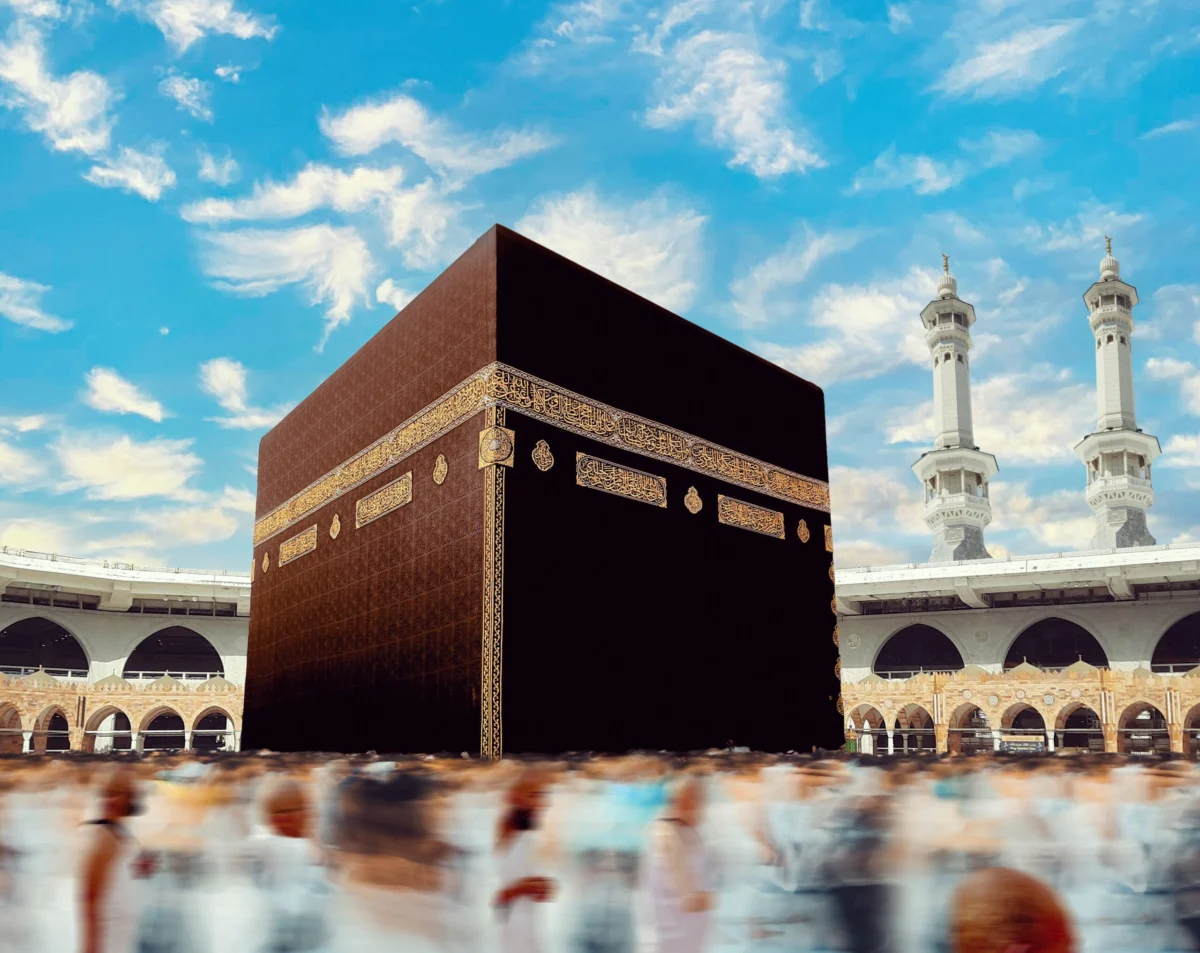
The main street leading to Masjid An-Nabawi in Madinah is traditionally a scene of spiritual fervor, but in recent years, it has also become a site of increasing physical endurance as rising global temperatures transform the experience of the sacred Jummah prayer. During the holy month of Ramadan, which fell in March this year, worshippers were advised to arrive at the mosque up to three hours early to secure a place within the interior. Even for those who arrived well before the midday call to prayer, the capacity of the mosque grounds was frequently exceeded, forcing thousands to congregate in the surrounding streets. Under a sun that pushed temperatures past 86 degrees Fahrenheit—a figure considered mild by Saudi Arabian standards—pilgrims were forced to balance their spiritual devotion with the biological limits of fasting and heat exposure.
While the 2024 Ramadan season avoided the most lethal peaks of the desert summer, the broader trajectory of the region’s climate is causing profound alarm among scientists, religious leaders, and the millions of faithful who consider pilgrimage a central pillar of their existence. The intersection of record-breaking heatwaves and ancient religious obligations is creating a humanitarian challenge that transcends borders and denominations. As the planet warms, the very act of pilgrimage—a rite of passage for billions—is being pushed toward a threshold of unsustainability.
The 2024 Hajj Crisis and the Reality of Heat Stress
The gravity of the situation was laid bare during the 2024 Hajj pilgrimage, which occurred in mid-June. According to official reports from the Saudi Arabian government and various international news agencies, more than 1,300 pilgrims died from heat-related causes during the five-day event. Temperatures at the Grand Mosque in Mecca reached a staggering 125.2 degrees Fahrenheit (51.8 degrees Celsius). The majority of those who perished were unregistered pilgrims who lacked access to the air-conditioned tents and cooling infrastructure provided by the official Hajj missions.

The tragedy served as a grim validation of scientific warnings issued years prior. A study published in the journal Environmental Research Letters has previously suggested that the risk of heatstroke in the region could increase tenfold by the end of the century. More alarmingly, recent research presented at the European Geosciences Union (EGU) General Assembly warns that by 2050, heat stress levels in Mecca will frequently surpass the "wet-bulb" temperature threshold—a point where the human body can no longer cool itself through perspiration, leading to organ failure and death even in healthy individuals.
Shahin Ashraf MBE, the head of global advocacy for Islamic Relief Worldwide, notes that the long-term outlook is increasingly severe. "We are probably going to see it start to become unsustainable in about two generations’ time," Ashraf stated. "For the first time in the history of our faith, we will have to carefully consider who goes to Hajj." This shift suggests a future where pilgrimage may no longer be a universal right for the able-bodied, but a restricted activity dictated by climate resilience and advanced age or health status.
A Global Phenomenon: Beyond the Arabian Peninsula
The threat to pilgrimage is not confined to the Islamic faith or the geography of Saudi Arabia. Across the globe, sacred journeys are being disrupted by extreme weather events, wildfires, and shifting ecological patterns. In Spain, the Camino de Santiago, a network of ancient pilgrim routes leading to the shrine of the apostle Saint James the Great, has faced unprecedented challenges. In May 2023, a heatwave forced many older walkers to abandon their journeys early. By August 2025, authorities were forced to close over 30 miles of the sacred route during a 16-day heatwave that saw temperatures soar to 113 degrees Fahrenheit, compounded by the threat of nearby wildfires.
Benjamin Dilworth, a pilgrim from Northern Ireland who walked the Camino following a diagnosis of a rare chronic liver disease, emphasizes that these routes provide a vital psychological and cultural service. "It would be tragic if we lost the Camino," Dilworth said. "Not only would we be losing something that gives meaning to so many people’s lives, but it would also be losing a piece of culture that humans have developed cumulatively over thousands of years."

Similar concerns are rising in India and Iraq. The Kumbh Mela in India, one of the largest peaceful gatherings in the world, attracts hundreds of millions of Hindu worshippers to bathe in sacred rivers. However, declining water levels in the Ganges and Yamuna rivers, coupled with extreme heat, are making the logistics of the festival increasingly hazardous. In Iraq, the Arbaeen pilgrimage to Karbala—which draws over 20 million visitors annually—is becoming a test of survival as summer temperatures in the Mesopotamian plains regularly exceed 120 degrees Fahrenheit. Hkar Jawher, a projects coordinator for Islamic Relief Iraq, argues that providing safe passage for these visitors is a matter of basic human rights and cultural preservation.
The Socio-Psychological and Spiritual Role of Pilgrimage
The loss of pilgrimage access would represent more than just a logistical or religious hurdle; it would constitute a psychological crisis. For many, these journeys are the primary means of finding belonging and connection in an increasingly fragmented world. Shahin Ashraf compares the draw of the Hajj to secular gatherings like Glastonbury, noting that the human need for collective spiritual experience is universal.
"Religion is a part of being human," says Hkar Jawher. "Even those who are atheists need something to believe in. These activities help us not only spiritually, but psychologically and socially. Faith lets you access your goals. It can help you recover from pain and suffering."
For individuals like Mariam Amini, who recently completed the Umrah pilgrimage with her family, faith serves as a grounding force amid the uncertainties of modern life. The experience of standing before the Kaaba or praying in the Prophet’s Mosque provides a sense of continuity that dates back over a millennium. If climate change renders these sites inaccessible, the resulting "spiritual displacement" could have profound effects on global mental health and cultural identity.

Institutional Responses and the Concept of Stewardship
The Saudi government has invested billions of dollars in cooling infrastructure, including the installation of massive retractable umbrellas, misting fans, and heat-reflective road surfaces. However, experts argue that technological interventions have a limit. When ambient temperatures reach certain extremes, even misting fans can contribute to humidity levels that inhibit the body’s natural cooling mechanisms.
From a theological perspective, the crisis is prompting a re-examination of humanity’s relationship with the environment. The Quran establishes the role of humans as Khalifahs (stewards) of the Earth. This concept of Amanah (trust) implies a divinely mandated responsibility to protect the natural world. Many Islamic scholars are now framing climate action not merely as a political or scientific necessity, but as a religious obligation. To protect the Hajj is to protect the planet; the two are increasingly seen as inseparable.
The economic implications are also significant. For nations like Saudi Arabia, religious tourism is a cornerstone of economic diversification strategies, such as Vision 2030. A decline in the viability of pilgrimage due to heat would necessitate a radical restructuring of host-nation economies and the global travel industry.
Analysis of Long-Term Implications
The convergence of climate change and pilgrimage traditions suggests several likely shifts in the coming decades:

- Chronological Shifts: Religious authorities may eventually need to debate the permissibility of moving pilgrimage dates if they are tied to the lunar calendar, which rotates through the seasons. For events like Hajj, which must occur during the month of Dhu al-Hijjah, this poses a complex theological challenge.
- Increased Stratification: As the environment becomes harsher, the cost of "safe" pilgrimage—involving air-conditioned transport and indoor rituals—will likely rise. This could create a divide where only the wealthy can fulfill their religious obligations safely.
- Digital and Proxy Pilgrimage: We may see a rise in "virtual" pilgrimages or a greater emphasis on "Hajj by proxy," where individuals pay others to perform the rites on their behalf if they are physically unable to withstand the heat.
- Infrastructural Transformation: Holy cities may need to become entirely "domed" or subterranean to facilitate worship, fundamentally altering the historical and aesthetic character of these ancient sites.
Conclusion
Climate change does not discriminate by faith, and its impact on pilgrimage traditions serves as a canary in the coal mine for global cultural heritage. The preservation of these practices requires more than just local cooling solutions; it demands a global commitment to carbon reduction and environmental stewardship. If the international community fails to address the warming of the planet, the loss will not only be measured in degrees and dollars but in the disappearance of the sacred rituals that have defined human civilization for millennia. Protecting the act of pilgrimage is, ultimately, an act of protecting the healing and connective practices that benefit all of humanity.