Ana Megawati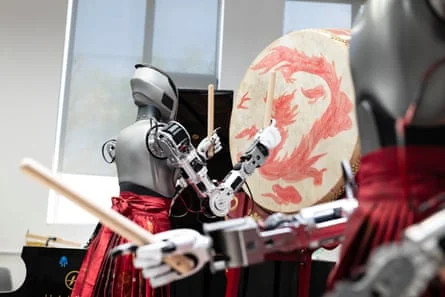
Human hands, those marvels of biological engineering – nimble, densely packed with nerves, and the most flexible components of the human skeleton – represent an apex of complexity. Many seemingly effortless daily tasks, from the intricate knot of tying shoelaces to the delicate precision of buttoning a shirt, demand an extraordinary symphony of neurological instructions and exquisitely choreographed movements. For millennia, across the vast sweep of human history, no machine has truly managed to replicate the full functional genius of humanity’s greatest natural tool. Yet, in an era defined by the accelerating pace of artificial intelligence, a new frontier in robotics is being aggressively pursued, with several companies now believing they are on the cusp of conquering this most formidable challenge. The epicenter of this ambitious endeavor is overwhelmingly in China.
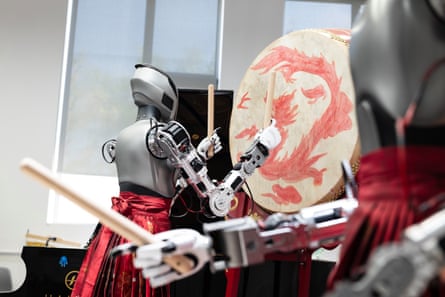
A burgeoning ecosystem of Chinese start-ups is strategically leveraging the nation’s unparalleled advantages in manufacturing and an fervent government-backed enthusiasm for what Beijing terms "embodied AI." Their mission: to engineer the fully dexterous robotic hands essential for transitioning humanoid robots from mere dancing novelties into genuinely useful, productive tools capable of transforming industries and daily life. The national fascination with robotics gained significant traction after Unitree’s troupe of humanoid robots graced the stage of the 2025 Spring Gala, China’s annual televised Lunar New Year variety show, captivating a vast audience and igniting public imagination.
Beijing’s Strategic Imperative: The Rise of Embodied AI
The drive to master dexterous robotics is not merely a technological whim; it is deeply embedded within China’s overarching economic and strategic objectives. Technologists and policymakers alike view advanced robotics as a critical linchpin for unlocking China’s future economic potential, particularly as the nation confronts the pressing demographic challenges of an aging and shrinking workforce. The official narrative, prominently featured in marketing materials from leading robotics companies, paints a future where robots liberate humans from mundane chores, depicting them expertly folding laundry, preparing meals, or even performing intricate tasks like cutting hair.
Beijing has consistently underscored the profound importance of "embodied AI" in its national development blueprints. In a clear signal of its strategic weight, the Chinese Communist Party’s theoretical journal, Qiushi, published a pivotal report in May, identifying "embodied-intelligence robots" as one of the key sectors poised to "open up new trillion-yuan markets." This designation highlights the government’s commitment to fostering and investing in this domain, viewing it as a cornerstone for future economic growth and global technological leadership. The ambitious "Made in China 2025" industrial policy, launched years prior, laid the groundwork for this focused investment, aiming to transform China into a high-tech manufacturing powerhouse, with robotics being a central pillar. The policy seeks to enhance indigenous innovation and reduce reliance on foreign technology, particularly in critical areas like advanced automation.

Despite China’s rapid advancements in deploying automatons – with more than half of all new factory robots installed globally each year finding their home in Chinese facilities – the practical applications for fully fledged humanoids remain comparatively limited. "True multipurpose humanoids are far off yet," concluded the International Federation of Robotics (IFR) in a report published last September. This assessment underscores a fundamental hurdle: while robots can move and perform repetitive tasks with efficiency, their inability to manipulate objects with human-like dexterity severely restricts their utility in dynamic, unstructured environments. Elon Musk, whose company Tesla is developing the Optimus humanoid robot, candidly admitted last year that robotic hands represent "the majority of the engineering difficulty of the entire robot," succinctly capturing the immense challenge.
The Unrivaled Human Hand: A Design Marvel and Robotics Frontier
The human hand is an intricate marvel of biomechanics, comprising 27 bones, over 30 muscles, more than 100 ligaments, and a dense network of nerves and blood vessels. Its unique opposable thumb, coupled with the dexterity of its fingers, allows for an unparalleled range of motion, force, and precision. From gripping a heavy tool to delicately threading a needle, the hand executes a staggering array of fine and gross motor skills, often integrating haptic feedback – the sense of touch and pressure – to adapt its actions in real-time. Replicating this biological masterpiece in a compact, robust, and cost-effective robotic form has long been the holy grail of robotics.
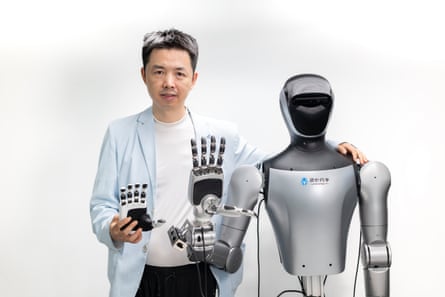
In a Beijing office bustling with an assortment of writhing, floating robotic hands of varying weights and sizes, Zhou Yong, the visionary founder of LinkerBot, one of China’s preeminent companies in dexterous robotic hands, articulates the magnitude of this challenge. "Making a robotic hand is one hundred times more difficult than making a humanoid," Zhou asserts. He elaborates on the paradox: "Its dexterity is 10 times that of other body parts. But its volume is only one tenth of other body parts." This challenge lies in cramming complex mechanical and electronic systems into a small form factor while achieving a high degree of freedom and precise control. Each finger, each joint, requires sophisticated actuators, sensors, and miniature motors, all working in concert.
Pioneers in Dexterity: LinkerBot and Wuji Technology
Zhou Yong, like many ambitious Chinese entrepreneurs, draws inspiration from American tech legends. A graduate of Huazhong University of Science and Technology, one of China’s top institutions, Zhou initially explored both app development and robotics. Guided by Steve Jobs’s famous dictum on focus – "Innovation is saying no to 1,000 things" – he ultimately committed LinkerBot solely to the development of robotic hands, launching the company in 2023. Today, LinkerBot boasts a production capacity of approximately 5,000 hands per month, with ambitious plans to double this output as it pursues a valuation of $6 billion. "Human hands are the most important ability of human beings," Zhou explains. "If we focus on this one point, it is easier to realise many human skills."
Among Zhou’s most profound ambitions is to democratize prosthetic hands, making mass-market versions available to amputees at a mere fraction of current prices, which can often run into tens of thousands of dollars. Zhou firmly believes his company can drive the cost down to as little as $1,000 per hand, a potential breakthrough that could revolutionize access to advanced prosthetics globally.
Another significant player in this space is Pan Yunzhe, the founder of Wuji Technology, a Shenzhen-based robotic hands company. Pan’s journey highlights China’s unique advantages. After graduating in the US in 2018, he initially considered founding his company there but was stymied by the logistical complexities of hardware development. "It was really impossible to do hardware in the United States because the supply chain problem is just so constraining," he recounts, noting he had to rely on his father to mail him parts. This experience prompted his return to China, where he found the manufacturing ecosystem far more conducive to rapid prototyping and mass production.
Pan echoes Zhou’s strategic focus, explaining his decision to concentrate on hands because "the problem of manipulation is much more important than the problem of locomotion." While humanoids can navigate spaces, their true utility in practical settings remains severely limited until they can effectively interact with and manipulate tools and objects.
The Chinese Ecosystem Advantage: Hardware Prowess
The rapid progress of Chinese companies in the hardware dimension of robotic hands is largely attributable to the nation’s sophisticated, cost-effective, and agile manufacturing supply chain. This ecosystem, significantly bolstered by the explosive growth of China’s electric vehicle (EV) industry, has fostered a multitude of companies capable of producing high-quality, miniaturized components at scale. From advanced lithium-ion batteries to precise miniaturized motors and sensors, the EV sector has inadvertently created a fertile ground for robotics innovation, providing readily available and affordable components crucial for building complex robotic mechanisms. This integrated supply chain allows for faster iteration, lower production costs, and greater flexibility compared to many Western counterparts.
Zhou and Pan are among the thousands of entrepreneurs who are enthusiastically investing in China’s robotics boom. The country has now registered over 1 million robotics companies, with new registrations in 2025 soaring by 40% compared to the previous year. While companies exclusively focused on dexterous hands represent a niche within this vast market, their segment is experiencing explosive growth. Last year, the dexterous hand industry in China surpassed 50 billion yuan ($7.4 billion), a dramatic increase from 13 billion yuan in 2024, demonstrating the immense investment and market expansion in this specialized field.
The Software Conundrum: Teaching Hands to ‘Think’
While China’s hardware advantage is clear, the more formidable challenge lies in software – specifically, how to imbue these intricate robotic hands with the intelligence to perform complex tasks autonomously. "The challenge of making these hands is getting solved now," acknowledges Nathan Lepora, a professor of robotics and AI at the University of Bristol. "Controlling them, now that’s a whole different game… nobody knows how to do that."
This "control problem" is akin to the difficulties inherent in operating a claw machine at a funfair, where precise remote manipulation, known as teleoperation, proves incredibly difficult for humans. Yet, this exact process is what many start-ups are attempting to scale to harvest the vast quantities of data required to train sophisticated spatial intelligence models. Unlike large language models (LLMs), which can draw upon the virtually infinite textual data available on the internet, data sources for three-dimensional manipulation and interaction are remarkably scarce.
The process of teleoperating robotic hands to gather training data can be incredibly time-consuming, sometimes requiring hundreds of hours to teach a robot a task as seemingly simple as packing a bag of groceries. To overcome this bottleneck, researchers are increasingly exploring more seamless data collection methods. One promising avenue involves equipping humans with sensors that can continuously collect movement, pressure, and touch data as they go about their daily lives.
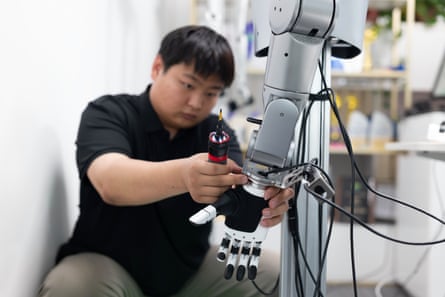
Wuji Technology’s flagship product, the Wuji glove, exemplifies this approach. This sensor-laden wearable device captures not only gross movement data but also subtle yet vital information about pressure and tactile feedback. Such sensory information is intuitive to humans – it allows a person to gently crack an egg on the edge of a frying pan without crushing it, a nuanced skill that remains largely alien territory for robots. "The two most fundamental problems in dexterous manipulation in terms of data collection are capturing how a human moves and what humans are touching or feeling," Pan explains. He concedes that these are "super complicated and not solved yet," highlighting the vast research frontier that still needs to be crossed.
Global Race and Remaining Hurdles
The pursuit of dexterous robotic hands is a global race, with significant research and development efforts underway in North America, Europe, and Japan. Companies like Boston Dynamics, Agility Robotics, and even tech giants such as Google and Amazon are investing heavily in humanoid robotics and manipulation. However, China’s unique combination of government backing, a robust manufacturing base, and a rapidly expanding entrepreneurial ecosystem positions it as a formidable contender, if not a frontrunner, in the commercialization and deployment of these advanced technologies.
Despite the optimism, significant hurdles remain. The integration of advanced sensors with sophisticated AI algorithms for real-time decision-making, adaptation to unforeseen circumstances, and truly intuitive human-robot interaction is still in its nascent stages. The transition from controlled laboratory demonstrations to robust, reliable performance in complex, real-world environments requires immense computational power, refined control algorithms, and vast datasets.
Transformative Implications: From Factories to Homes
China’s entrepreneurs are undeterred, firmly betting on their ability to solve these intricate problems. LinkerBot’s Zhou envisions a future where factories of robotic hands autonomously construct even more robotic hands – a self-perpetuating, highly efficient loop requiring minimal human intervention. Further down the line, equipped with truly dexterous hands, robots could evolve into indispensable household helpers, seamlessly integrating into daily domestic life.
The implications of such advancements are profound and multifaceted. Economically, widespread adoption of dexterous robots could usher in an era of unprecedented productivity gains, particularly in industries facing labor shortages or requiring high-precision manufacturing. It could also lead to significant shifts in labor markets, raising questions about job displacement and the need for new educational and vocational training programs. Societally, these robots could enhance the quality of life for an aging population, providing assistance with daily tasks, and, as Zhou passionately argues, offer life-changing prosthetics at accessible prices.
"We are not creating robots to replace labour," Zhou asserts, articulating a vision that seeks to alleviate concerns about automation’s darker side. "We are creating robots so that humans can live a better and more prosperous life." This aspirational goal underscores the broader ambition driving China’s concentrated effort to master the art of robotic dexterity – not just to build machines, but to reshape the future of human work and existence. The coming years will undoubtedly reveal whether China’s strategic focus and manufacturing might can indeed bridge the gap between human ingenuity and artificial imitation, finally replicating the extraordinary capabilities of the human hand.