Ana Megawati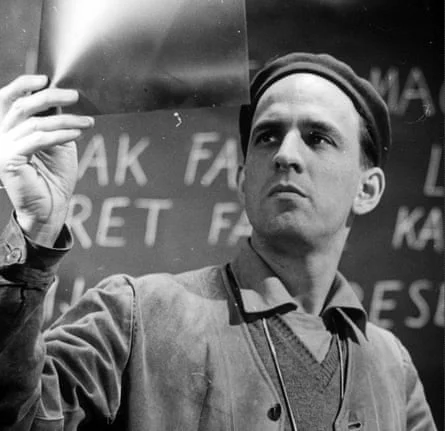
The 2026 Cannes Film Festival, a perennial crucible of cinematic artistry and sartorial statements, once again delivered an unexpected viral moment, this time not from the usual fashion mavens but from Hollywood veteran John Travolta. While attendees like Demi Moore commanded attention with oversized accessories and Jane Fonda sparkled in dazzling Gucci ensembles, it was Travolta’s distinctive new look, centered around a collection of berets, that ignited widespread online discussion and inadvertently highlighted the psychological phenomenon of "enclothed cognition." His appearance marked the debut of his new film, "Propellor One Way Night Coach," a family fantasy, and with it, a carefully curated public persona that resonated far beyond mere fashion.
The Cannes Catalyst: Travolta’s Transformation Takes Center Stage
The Cannes Film Festival, held annually on the French Riviera, is more than just a platform for film premieres; it is a global spectacle where cinema, culture, and high fashion converge. For decades, its red carpet has served as an unparalleled stage for celebrities to make indelible impressions, both artistic and stylistic. In May 2026, amid the usual glamour and cinematic buzz, John Travolta, at 72, presented a striking departure from his established image. He arrived on the seafront boulevard La Croisette sporting a rotation of berets in black, brown, and cream, complemented by wire-frame spectacles and a beard that some observers humorously noted appeared almost drawn-on. This ensemble quickly became the talk of the festival and subsequently, the internet.
The immediate online reaction was a cascade of memes and comparisons, ranging from lighthearted observations likening him to a "barista" or a character from the classic board game "Guess Who?" to more dramatic interpretations suggesting a "Bond villain." The virality underscored the power of visual presentation in the digital age, where a celebrity’s attire can transcend its original context and become a cultural touchstone within hours. This widespread engagement, however, also prompted a deeper inquiry into the motivations behind such a pronounced stylistic shift.
Unveiling the Inspiration: Method Dressing for the Auteur
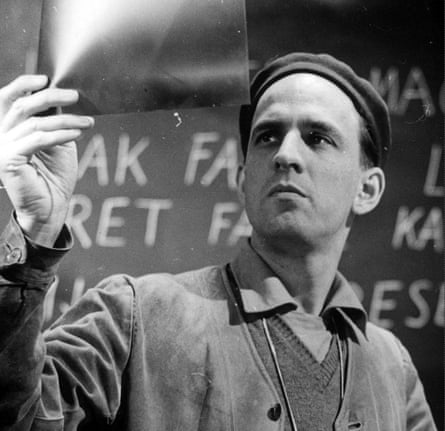
The intrigue surrounding Travolta’s new aesthetic was swiftly addressed by the actor himself. In a charming interview with CNN, he happily revealed the deliberate intent behind his transformation. As he was marking his first foray into directing with "Propellor One Way Night Coach," Travolta had consciously decided to adopt the sartorial conventions of legendary film directors from the past. He recounted scrolling through images of iconic European auteurs such as Ingmar Bergman and Roberto Rossellini, noting their distinctive berets, spectacles, and contemplative air. His internal monologue was clear: "You’re an actor," he told himself, "Play the part of a director." This declaration positioned his new look not as a whimsical fashion choice but as a form of "method dressing," a manifestation of the role he wished to embody and project.
This revelation profoundly shifted public perception. What initially appeared to be an eccentric or perhaps even awkward attempt at reinvention was suddenly recontextualized as a thoughtful, performative act. Travolta was not merely trying on new clothes; he was "enclothed cognizing"—utilizing apparel to influence his own psychological state and, crucially, how he was perceived by others in his new capacity as a director. The acceptance of his explanation was a testament to the power of narrative in shaping public understanding.
Enclothed Cognition: The Psychology of Dress

Travolta’s experience at Cannes serves as a compelling real-world illustration of "enclothed cognition," a psychological concept that posits that the clothes we wear can systematically influence our psychological processes. Coined by Hajo Adam and Adam Galinsky in a 2012 study published in the Journal of Experimental Social Psychology, the term describes the symbiotic relationship between symbolic meaning of clothing and the physical experience of wearing it. Their research, for instance, showed that participants who wore a lab coat, particularly one they believed belonged to a doctor, performed better on attention-related tasks than those wearing a painter’s coat or their regular clothes. The meaning associated with the "doctor’s coat"—attentiveness, precision—was absorbed by the wearer, affecting their cognitive performance.
In Travolta’s case, by consciously emulating the attire of respected directors like Bergman (known for his stark, philosophical films) and Rossellini (a pioneer of Italian neorealism), he was not only projecting an image of artistic gravitas to the world but also internalizing those qualities himself. The beret, in particular, has a long and storied history as a symbol of intellectualism, artistry, and bohemian chic, particularly within European cultural circles. For a Hollywood actor transitioning into the director’s chair, adopting such an emblem could be seen as a deliberate attempt to signal a shift in artistic ambition and seriousness, both to external audiences and to his own creative psyche. This is not mere cosplay; it is a strategic psychological tool, leveraging the symbolic power of clothing to foster a desired identity and mindset.
The Red Carpet as a Microcosm of Self-Presentation
The unique environment of a red carpet event, especially one as prestigious as Cannes, amplifies the dynamics of enclothed cognition. These are spaces where attention is paramount, and the absence of it can be detrimental to a celebrity’s career. While the primary focus at Cannes remains on the films, the accompanying fashion statements are integral to the festival’s allure. This dual focus often allows stars greater freedom to experiment with their attire, pushing boundaries that might be considered too risky at more overtly fashion-centric events. For directors, however, the challenge is distinct: balancing the necessity of publicity with the desire to be taken seriously as an auteur. Travolta’s choice directly addressed this conundrum, using fashion to bridge the gap between his established acting career and his nascent directorial aspirations.
The phenomenon of "method dressing" extends beyond Travolta’s specific context, permeating various facets of public life. Celebrities frequently employ sartorial choices to craft narratives, pay homage, or even provoke.
-
Taylor Swift’s Symbolic Jewellery: This week, Taylor Swift was observed wearing Elizabeth Taylor’s jewelry. This act transcends mere accessorizing; it’s a deliberate invocation of a legendary Hollywood icon known for her glamour, enduring star power, and complex personal life. For Swift, a pop culture titan in her own right, this could be seen as an aspiration to inherit or align with Taylor’s cinematic legacy and cultural permanence. It’s a subtle yet powerful statement about her own ambitions for an enduring career and an iconic status.
-
Kim Kardashian’s Historic Gown: At the 2022 Met Gala, Kim Kardashian famously wore Marilyn Monroe’s "naked dress" from 1962, a garment imbued with immense cultural and historical significance. This choice sparked considerable debate, with some viewing it as a tribute and others as a controversial act of cultural appropriation. Regardless of interpretation, Kardashian’s decision was undeniably an exercise in inviting comparison and inserting herself into a lineage of iconic American womanhood, demonstrating a masterful understanding of how to leverage sartorial history for contemporary relevance.
-
Pep Guardiola’s "Quiet Quitting" Attire: In the high-stakes world of professional football management, Pep Guardiola, known for his tactical brilliance, has often been observed in casual plaid shirts. This seemingly simple choice, particularly when contrasted with the typically sharp suits of his peers, has been interpreted as a form of "quiet quitting" from the relentless pressures of his public role, or perhaps a deliberate attempt to project a more grounded, less overtly corporate image. It suggests a focus on the craft rather than the spectacle, a subtle rebellion against the demanding sartorial expectations placed upon public figures.
These examples underscore that clothing choices, particularly for those in the public eye, are rarely arbitrary. They are often carefully calibrated tools for communication, identity formation, and perception management.
The Political Stage: Wardrobes as Manifestos
Nowhere is the deliberate use of "enclothed cognition" more pronounced and strategically deployed than in the realm of politics. Here, clothing transcends personal style to become an integral part of political theatre, a visual manifesto signaling leadership aspirations, ideological alignments, and connection to the electorate.
-
Andy Burnham’s Populist Play: Andy Burnham, the Mayor of Greater Manchester, has demonstrably adopted a wardrobe strategy aimed at positioning him for higher national office, often speculated to be Keir Starmer’s role as Labour leader. His appearances frequently feature retro Everton football shirts, symbolizing working-class roots and regional identity. He is also often photographed in running shorts – a visual metaphor for stamina, energy, and an active, hands-on approach, subtly conveying a readiness for the rigours of national leadership. Bomber jackets and casual tees further reinforce an anti-Whitehall, "man of the people" aesthetic, deliberately contrasting with the perceived formality and detachment of Westminster politicians. This calculated sartorial rebellion aims to cultivate an image of authenticity and relatability, crucial for winning over a diverse electorate.
-
Wes Streeting’s Centrist Uniform: In contrast, Wes Streeting, a prominent Labour MP, has consistently favored the centrist blue suit. This choice is far from accidental; the blue suit in British politics often signifies gravitas, reliability, and mainstream appeal, aligning with a moderate, electable image. Streeting’s occasional decision to ditch his tie, particularly in more informal settings, echoes the "easy-breezy leadership" playbook famously employed by figures like Barack Obama. Obama often shed his tie to project approachability and a modern sensibility, demonstrating that formality could be tempered without sacrificing seriousness. Streeting’s adoption of this subtle shift indicates a desire to be seen as both competent and contemporary, capable of commanding respect while also connecting with a broader audience.
-
Angela Rayner’s Strategic Hue: Angela Rayner, Deputy Leader of the Labour Party, has also subtly adjusted her sartorial choices to reinforce her political identity. Her recent sit-down interview with ITV, for instance, saw her wearing more red – the signature color of the Labour Party. While seemingly simple, the strategic use of color in politics can be incredibly powerful, reinforcing party allegiance, projecting confidence, and creating a strong visual brand. For Rayner, this increased embrace of red could be interpreted as a deliberate effort to strengthen her image as a staunch party loyalist and a formidable political force.
The Limitations of Sartorial Strategy
While the power of enclothed cognition and method dressing is undeniable in shaping perception, it is not without its limitations. Dressing for the job one wants can only take a politician or celebrity so far. The risk of veering into parody or appearing inauthentic is ever-present. If the outward presentation is not supported by genuine substance, policy, or performance, the carefully constructed image can quickly unravel, leading to accusations of superficiality or even deception.
John Travolta, for instance, earned the right to his director’s persona by actually directing a film, even if "Propellor One Way Night Coach" received a "middling" critical reception. His attire served as an augmentation of his new role, not a substitute for it. For politicians, while a retro football shirt might garner initial approval for its relatability, it cannot, in isolation, manipulate public perception indefinitely or compensate for a lack of concrete policy or leadership skills. A pair of running shorts, however symbolic of stamina, ultimately cannot carry an entire political campaign.
In conclusion, John Travolta’s beret at Cannes was more than a fleeting fashion moment; it was a potent demonstration of how clothing, imbued with symbolic meaning, can profoundly influence both self-perception and external judgment. From the glamorous red carpets of the French Riviera to the high-stakes arenas of political power, individuals continue to harness the power of "enclothed cognition" to craft their narratives, project desired identities, and navigate the complex landscape of public life. Yet, as Travolta’s film reception and the broader political landscape remind us, while attire can open doors and shape initial impressions, it is ultimately the substance of one’s actions and work that secures lasting relevance and impact.