
 Prabowo Widodo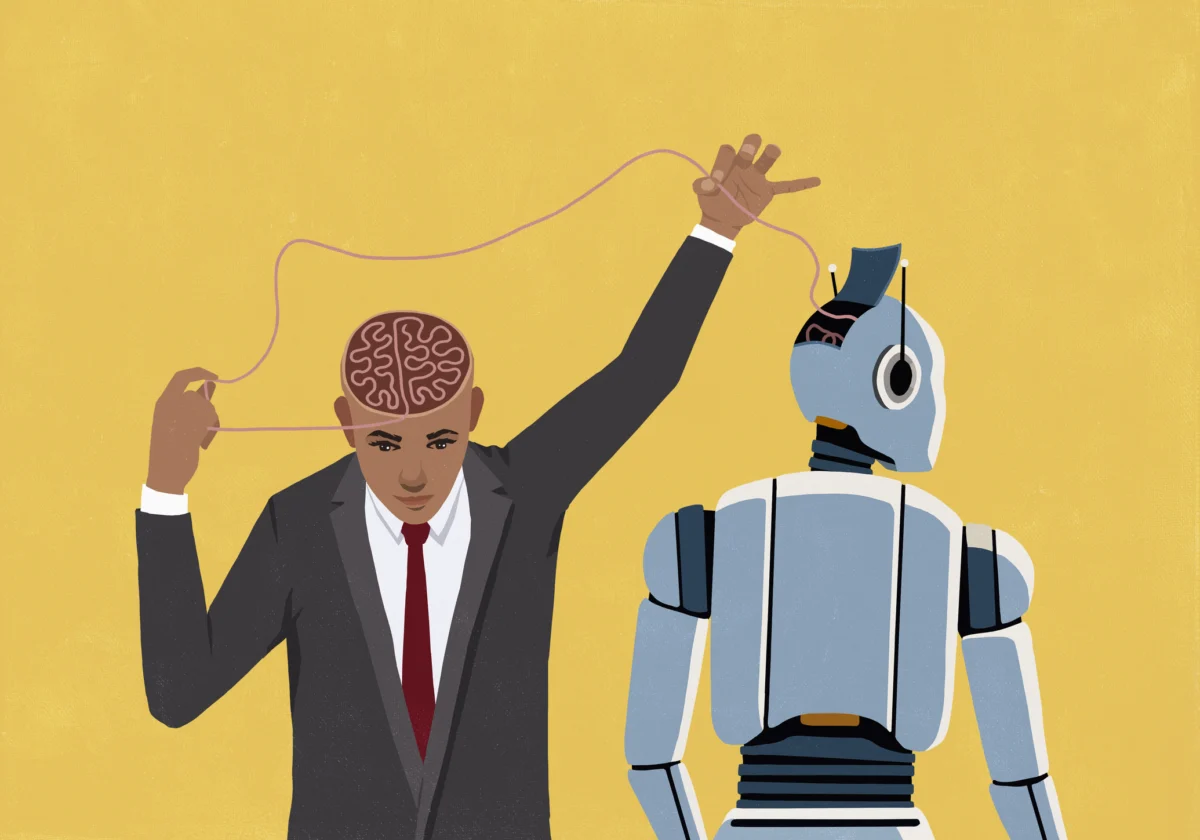
A Legacy of Human-Powered Micro-Tasks: The Origins of Mechanical Turk
Launched in November 2005, Amazon Mechanical Turk (often abbreviated as MTurk) was conceived as a "marketplace for human intelligence." Its name was inspired by the 18th-century automaton, "The Turk," a chess-playing machine that famously toured Europe, astounding audiences before being revealed as an elaborate hoax with a human chess master hidden inside. Amazon’s digital iteration echoed this concept: tasks that appeared to be automated were, in fact, performed by a hidden human workforce.
The platform emerged during a period when the internet was rapidly expanding, and businesses encountered a new class of problems that were too complex for computers but too trivial or repetitive for traditional, full-time employees. These "Human Intelligence Tasks" (HITs) were micro-tasks that required human perception, judgment, or common sense – abilities that even the most sophisticated algorithms of the mid-2000s lacked. Examples included transcribing audio, identifying objects in images, categorizing data, moderating content, or performing sentiment analysis on text. For instance, early applications often involved completing CAPTCHA challenges to train optical character recognition systems or identifying the basic emotional tone in a sentence to refine natural language processing models.
MTurk quickly grew into a global network, attracting a diverse workforce from around the world, particularly from developing nations, seeking supplementary income. Requesters, ranging from academic researchers to startups and large corporations, posted HITs, specifying the task, the reward, and any qualification requirements. Workers, often referred to as "Turkers," would then browse available HITs, select those they wished to complete, and submit their work for approval and payment. Payments for individual tasks were often extremely low, sometimes just a few cents, leading to the platform being characterized as a digital "sweatshop" by critics, a point that would fuel significant ethical debates throughout its existence.
The Golden Age and Growing Pains: Ethical Debates and Worker Exploitation
In its heyday, particularly from the late 2000s to the mid-2010s, Mechanical Turk became a focal point for discussions around the ethics of crowdsourced labor and the burgeoning gig economy. Researchers, sociologists, and labor advocates scrutinized the platform’s model, highlighting the precarious nature of the work, the lack of benefits, and the minimal pay. Workers often toiled for hours to earn a few dollars, sometimes less than minimum wage, leading to the term "ghost work" to describe the invisible, often underpaid, human labor powering digital systems.
The anonymity of the platform, while offering flexibility to workers, also meant a lack of direct communication or recourse in disputes with Requesters. Workers often faced the risk of having their work rejected without clear explanation, leading to unpaid labor. Academic studies from this period frequently documented the challenges faced by Turkers, including isolation, low pay, and the psychological toll of repetitive micro-tasks. For example, a 2010 study published in Human Computation estimated that the median wage for MTurk workers was often below $2 per hour, with many earning significantly less. Despite these criticisms, the platform remained popular due to its accessibility and the sheer volume of tasks available, providing a vital income stream for many.
Beyond its ethical complexities, MTurk also played a subtle yet significant role in various high-profile events. It reportedly contributed to the early stages of data collection for companies involved in the Facebook-Cambridge Analytica scandal, where user data was harvested and analyzed. The platform’s ability to quickly process and categorize vast amounts of information made it an attractive tool for such operations, underscoring its dual nature as both a powerful utility and a potential instrument for controversial ends.
The AI Revolution and Mechanical Turk’s Evolving Role
As the field of artificial intelligence began its rapid ascent in the mid-2010s, particularly with the advent of deep learning, the demand for high-quality, human-annotated data skyrocketed. Training neural networks requires immense datasets, meticulously labeled to teach algorithms to recognize patterns, understand language, and make decisions. Mechanical Turk, with its established infrastructure for micro-tasking, was perfectly positioned to fill this niche.
Around 2018, Amazon formally began billing MTurk as a crucial component for companies seeking to annotate data to train their neural networks, integrating it more closely with its SageMaker AI service. This shift solidified MTurk’s role as a foundational layer in the AI development pipeline, providing the "human-in-the-loop" intelligence necessary to refine machine learning models. Companies used Turkers to draw bounding boxes around objects in images for computer vision, transcribe audio for speech recognition, or evaluate the relevance of search results, effectively becoming the unsung heroes behind many of the AI breakthroughs of the era.
However, a more nuanced and often less overt application of Mechanical Turk also emerged: the concept of "Potemkin AI." This term refers to companies marketing products as being powered by sophisticated artificial intelligence, when in reality, a significant portion of the "AI" functionality was being performed by human workers on platforms like MTurk. This "fake-it-till-you-make-it" approach allowed startups to demonstrate capabilities that were not yet fully automated, giving the illusion of advanced AI while relying on the unseen labor of Turkers. The irony, as noted by commentators, harkened back to the original Mechanical Turk hoax, where human ingenuity was disguised as mechanical automation. This practice raised questions about transparency in the AI industry and the true capabilities of emerging technologies.
The Irony Unfolds: AI vs. AI on the Platform
The relationship between Mechanical Turk and AI models grew increasingly intricate, eventually leading to a peculiar, almost cyclical irony. In 2023, a groundbreaking analysis revealed that a significant percentage of workers on the MTurk platform were themselves utilizing large language models (LLMs) and other AI tools to complete their tasks. Studies estimated that between 33% and 46% of Turkers were leveraging AI to generate responses, summarize text, or even perform classification tasks that were ostensibly meant for human intelligence.
This development created a "snake eating its own tail" scenario: the very technology that MTurk was helping to train was now being used by its workforce to complete tasks, blurring the lines between human and artificial intelligence. This raised critical questions about the reliability and integrity of the data annotated on the platform. If the data used to train AI models was itself generated or heavily influenced by AI, it could introduce biases, inaccuracies, or simply fail to represent genuine human judgment, thereby undermining the purpose of human annotation. Moreover, it prompted a deeper philosophical inquiry: if AI could perform these tasks effectively, did humans need to be in the loop at all, or was this merely a transitional phase?
The emergence of AI-powered workers exacerbated existing concerns about bot activity and fraud on the platform, which had long been a challenge for Requesters seeking high-quality data. The perceived decline in data reliability due to AI-generated responses and the proliferation of bots led many researchers and companies to question the value proposition of MTurk, causing some to abandon the platform in favor of alternatives or more controlled annotation environments.
Amazon’s Strategic Shift: "Careful Consideration" and Future Investments
Amazon’s decision to cease accepting new customers for Mechanical Turk by July 2026, while allowing existing users to continue, is a clear indication of a strategic pivot rather than a complete abandonment. The official statement from AWS emphasizes "careful consideration" and ongoing investment in "security and availability improvements," but notably states, "we do not plan to introduce new features." This signifies a shift from active development and expansion to maintenance mode, a common precursor to the eventual deprecation of a service.
The lack of new features suggests that Amazon sees MTurk as a legacy platform, no longer aligned with its broader strategic vision for AI and cloud services. While AWS continues to heavily invest in AI, evidenced by its SageMaker offerings and partnerships, it appears to be moving towards more integrated, potentially more automated, or higher-quality data annotation solutions that may not rely on the generalized micro-tasking model of MTurk. The challenges of managing a vast, anonymous workforce, coupled with the increasing prevalence of AI-driven fraud and the inherent limitations of micro-tasking for complex AI training, likely contributed to this decision.
The market for data annotation has also matured significantly, with specialized companies like Appen, Scale AI, and Figure Eight (acquired by Appen) offering more robust, managed, and quality-controlled solutions. These platforms often employ dedicated workforces, offer more advanced tools, and implement stricter quality control measures, making them more attractive for enterprises with critical AI development needs.
Reactions from the Ecosystem: Workers, Requesters, and Researchers
The announcement has elicited a range of reactions across the diverse ecosystem that relied on Mechanical Turk. For the "Turkers" – the global workforce that depended on the platform for income – the news brings uncertainty. While existing workers can continue for now, the cessation of new Requesters will inevitably lead to a dwindling supply of tasks over time, effectively drying up their income stream. Many workers have already voiced concerns on forums like Reddit about the platform’s declining viability due to bots and fraud, echoing the sentiment of one Reddit user who suggested the platform "died years ago." The user’s prediction that "Someone at Amazon is going to decide keeping the Mturk servers running is a waste of time and resources and pull the plug entirely" reflects a widespread apprehension among the worker community.
For Requesters, particularly academic researchers and smaller startups who valued MTurk’s cost-effectiveness and accessibility, the news necessitates a search for alternative platforms. While larger enterprises might transition to more specialized data annotation services, smaller entities might struggle to find comparable options that offer the same blend of affordability and ease of use. The transition will involve evaluating new platforms, retraining workforces (if using internal teams), and potentially facing increased costs or longer turnaround times.
Academic researchers, in particular, have heavily relied on MTurk for behavioral experiments and data collection due to its large, diverse, and relatively inexpensive participant pool. The platform’s closure for new customers will force a re-evaluation of research methodologies and a pivot to other crowdsourcing platforms or more traditional participant recruitment methods, which can be more costly and time-consuming. The scientific community will need to address how to maintain research integrity and participant diversity in the absence of such a widely used tool.
Looking Ahead: Implications for the Gig Economy and AI Development
The gradual phasing out of Amazon Mechanical Turk carries significant implications for the future of the gig economy and the trajectory of AI development.
For the gig economy, MTurk’s decline signifies an evolving landscape for micro-tasking. While the demand for human intelligence in various digital processes remains, the model is shifting. The rise of AI itself means that many of the simpler, repetitive tasks once exclusively performed by humans can now be automated or augmented by machines. This pushes human labor towards more complex, nuanced, or creative tasks that still require genuine cognitive abilities beyond current AI capabilities. It also highlights the persistent challenges of ensuring fair wages, worker protections, and quality control in a decentralized, platform-based labor market. The closure may accelerate the movement of workers to other, perhaps more specialized, gig platforms that focus on higher-value tasks or offer better worker conditions.
For AI development, the departure of a foundational data annotation service like MTurk will likely accelerate the adoption of more sophisticated, ethical, and potentially automated data labeling solutions. Companies will increasingly invest in internal annotation teams, leverage specialized data labeling firms with robust quality assurance, or develop advanced active learning and synthetic data generation techniques to reduce reliance on purely manual annotation. The issues of data integrity and AI-generated content within human-labeled datasets, brought to light by MTurk’s recent history, will undoubtedly drive a greater emphasis on verifiable and high-quality data sourcing. This could lead to a more professionalized and regulated data annotation industry, moving away from the "wild west" era of micro-tasking.
Conclusion: A Paradigm Shift in Human-AI Collaboration
Amazon Mechanical Turk’s impending closure for new customers marks the end of an era – an era that revolutionized how digital work was done, catalyzed the early growth of AI, and ignited crucial debates about labor ethics in the digital age. From its inception as a clever homage to an 18th-century hoax, MTurk served as a vital, if often invisible, bridge between human intelligence and machine ambition. Its journey from a novel crowdsourcing experiment to a cornerstone of AI training, and finally to a platform grappling with the very AI it helped create, encapsulates the rapid evolution of technology and its complex relationship with human labor.
As Amazon prepares to dim the lights on this pioneering platform, the world watches to see how the landscape of human-AI collaboration will further transform. The lessons learned from MTurk’s two decades of operation – both its immense utility and its ethical quandaries – will undoubtedly continue to inform the development of future human-in-the-loop systems and the ever-evolving nature of work in an increasingly automated world. The "Turk" may be retiring, but its legacy as a crucible for the modern gig economy and a silent architect of early AI will endure.








