Ferry Irwandi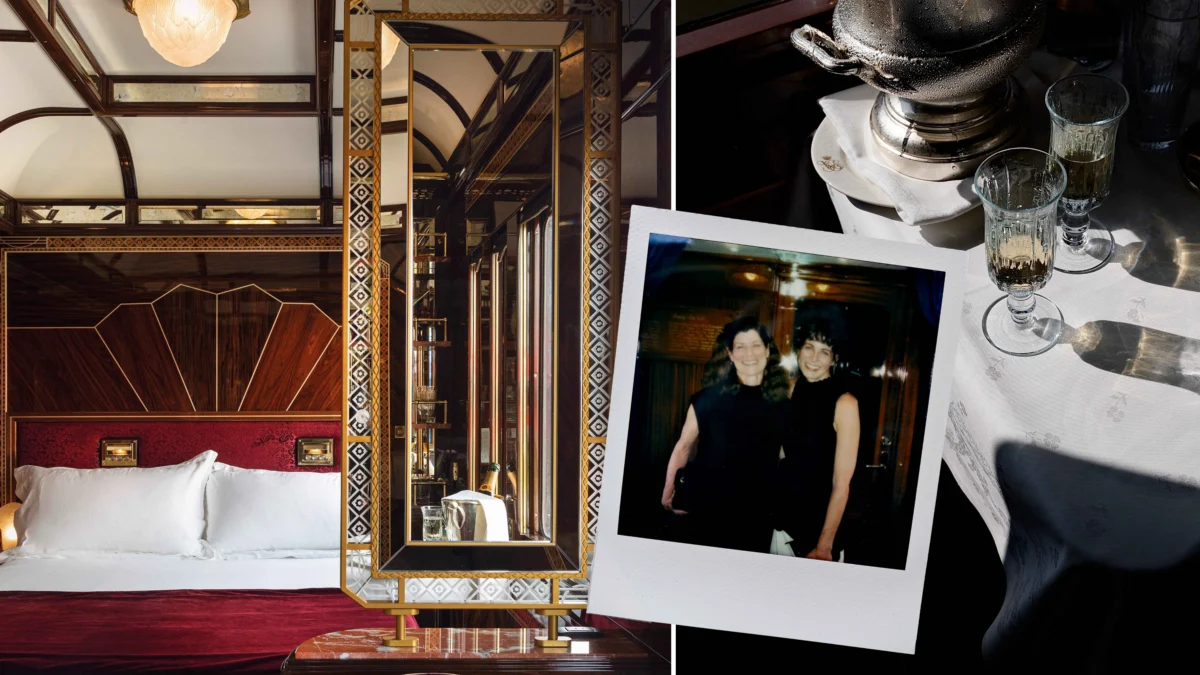
The Historical Significance of Sleeping Car 3309
Central to the allure of the Istanbul-to-Paris route is Sleeping Car 3309, the oldest sleeper carriage currently in operation on the Venice Simplon-Orient-Express. The carriage holds a unique position in both railway and literary history. In 1929, the train was famously trapped in a massive snowdrift approximately 60 miles outside of Istanbul. The passengers and crew were marooned for ten days in sub-zero temperatures. While no lives were lost, the drama of the isolation and the stark contrast between the opulent interior and the perilous exterior environment provided the primary inspiration for Agatha Christie’s 1934 masterpiece, Murder on the Orient Express.

Today, Sleeping Car 3309 has been repurposed to house three of the train’s six "Grand Suites." These suites—named after iconic European cities such as Prague, Vienna, and Budapest—represent the highest tier of accommodation on the rails. The restoration of these carriages involves traditional techniques in marquetry, glasswork, and upholstery. The Grand Suite Prague, for instance, features a palette of garnet reds and deep maroons, accented with glossy wood finishes and intricate inlays that mirror the architectural aesthetic of the Czech capital. This commitment to historical fidelity allows passengers to experience a setting nearly identical to that which hosted diplomats, royalty, and socialites in the early 20th century.
Chronology of the Five-Night Continental Transit
The journey from Istanbul to Paris is not a direct commute but a curated expedition that balances time on the tracks with terrestrial excursions. The itinerary is structured to provide a comprehensive cultural overview of Eastern and Central Europe.
_PEPPLER24.jpg)
Departure and the Balkan Crossing
The journey begins at Istanbul’s Bakırköy Station. Upon departure, the train moves northwest toward the Bulgarian border. The initial 24 hours are characterized by the transition from the minarets of Istanbul to the rolling, verdant countryside of the Balkans. During this phase, the onboard service emphasizes the "en route" experience, featuring formal multi-course dinners in the 1920s-era dining cars, such as the Étoile du Nord.
Romania and the Carpathian Mountains
By the second day, the train enters Romania, arriving at Bucharest Nord station. Following the tradition of the original Orient Express, passengers disembark for an overnight stay at a luxury hotel in the capital, typically the Athenee Palace. This break in the rail journey allows for guided tours of Bucharest’s historic center and landmarks like the Carturesti Carusel bookstore. The itinerary also includes a stop in the mountain town of Sinaia to visit Peles Castle, a Neo-Renaissance masterpiece commissioned by King Carol I, which has historically been a staple stop for the Orient Express since the late 19th century.

Hungary and the Austro-Hungarian Heritage
The third and fourth days see the train crossing into Hungary. A significant highlight is the arrival at Budapest’s Nyugati Station. Built by the Eiffel Company, the station houses the Royal Waiting Hall, an ornate series of rooms originally designed for Emperor Franz Joseph and Empress Sisi. Passengers are often granted exclusive access to these restricted areas, followed by excursions to the city’s historic coffee houses, such as the New York Café and Café Gerbeaud, which preserve the intellectual and social atmosphere of the Austro-Hungarian Empire.
Final Approach to Paris
The final leg of the journey traverses Austria and Germany before entering France. This period is designed for reflection and social interaction in the "Bar Car 3674," where live music and artisan cocktails facilitate a communal atmosphere among international travelers. The journey concludes at the Gare de l’Est in Paris, the historic terminus for the Orient Express line.

Technical Restoration and Modern Innovations
The Venice Simplon-Orient-Express is comprised of 16 original carriages from the 1920s and 1930s, each with a distinct provenance. The maintenance of these cars requires a dedicated workshop in Clermont-Ferrand, France, where master craftsmen ensure the mechanical integrity of the vintage rolling stock while updating essential safety systems.
In 2025, Belmond introduced "L’Observatoire," an exclusive carriage-long suite designed by the acclaimed French artist and photographer JR. This addition represents a strategic move to blend contemporary art with heritage luxury. The interior of L’Observatoire features immersive details, hidden compartments, and curated viewpoints, signaling a new chapter in the train’s evolution where the carriage itself becomes a piece of contemporary sculpture.

The culinary program, currently overseen by Michelin-starred chef Jean Imbert, further modernizes the experience. The kitchen cars, which are remarkably compact, produce high-complexity dishes such as pan-fried scallops and turbot filets, sourced from local purveyors along the route. This logistical feat requires precise timing to restock fresh ingredients at various border crossings and station stops.
Market Analysis: The Rise of Ultra-Luxury Rail
The commercial success of the VSOE’s Istanbul-to-Paris route—with prices starting at approximately $53,310 USD per passenger for 2026 departures—reflects broader trends in the global travel industry. Market analysts point to several factors driving demand for high-priced rail expeditions:

- The "Slow Travel" Movement: As air travel becomes increasingly commodified and stressful, affluent travelers are seeking "slow travel" alternatives that prioritize the journey over the destination. The train offers a meditative environment where the passage of time and landscape is a primary feature of the luxury.
- Sustainability Concerns: While the VSOE is a heritage operation, rail travel generally carries a lower carbon footprint per passenger mile compared to short-haul private aviation, making it an attractive option for environmentally conscious high-net-worth individuals.
- Multi-Generational Appeal: The train’s connection to history and literature makes it a popular choice for family milestones. The "bucket list" nature of the Agatha Christie connection attracts a diverse demographic, from retirees to younger enthusiasts of the "dark academia" and vintage aesthetics.
- Exclusivity and Scarcity: The Istanbul-to-Paris route runs only a limited number of times per year. This scarcity, combined with the limited number of suites, creates a high-demand, low-supply dynamic that sustains premium pricing.
Broader Implications for European Tourism
The continued operation of the Venice Simplon-Orient-Express has significant secondary benefits for the cities along its route. By including overnight stays in Bucharest and Budapest, the VSOE directs high-spending tourists toward Eastern European luxury markets that might otherwise be overlooked in favor of Western European hubs. Local guides, boutique vendors, and historic sites benefit from the prestige associated with the train’s arrival.
Furthermore, Belmond’s expansion of the "Villeggiatura by Train" series—which links Paris to destinations like the Amalfi Coast, Portofino, and Cannes—suggests a long-term strategy to revitalize historic rail corridors across the continent. These itineraries capitalize on the existing infrastructure of Europe’s national railways while providing a "private jet on tracks" level of service.
%25202_PEPPLER.JPG)
In conclusion, the Venice Simplon-Orient-Express is more than a transport service; it is a custodial effort to preserve a specific mode of 20th-century elegance. Through the restoration of carriages like Sleeping Car 3309 and the curation of cross-continental itineraries, the VSOE ensures that the romance of the rails remains a viable and thriving segment of the modern travel landscape. As it moves toward the 2026 season, the train stands as a testament to the enduring power of narrative and craftsmanship in the digital age.