Danny Garick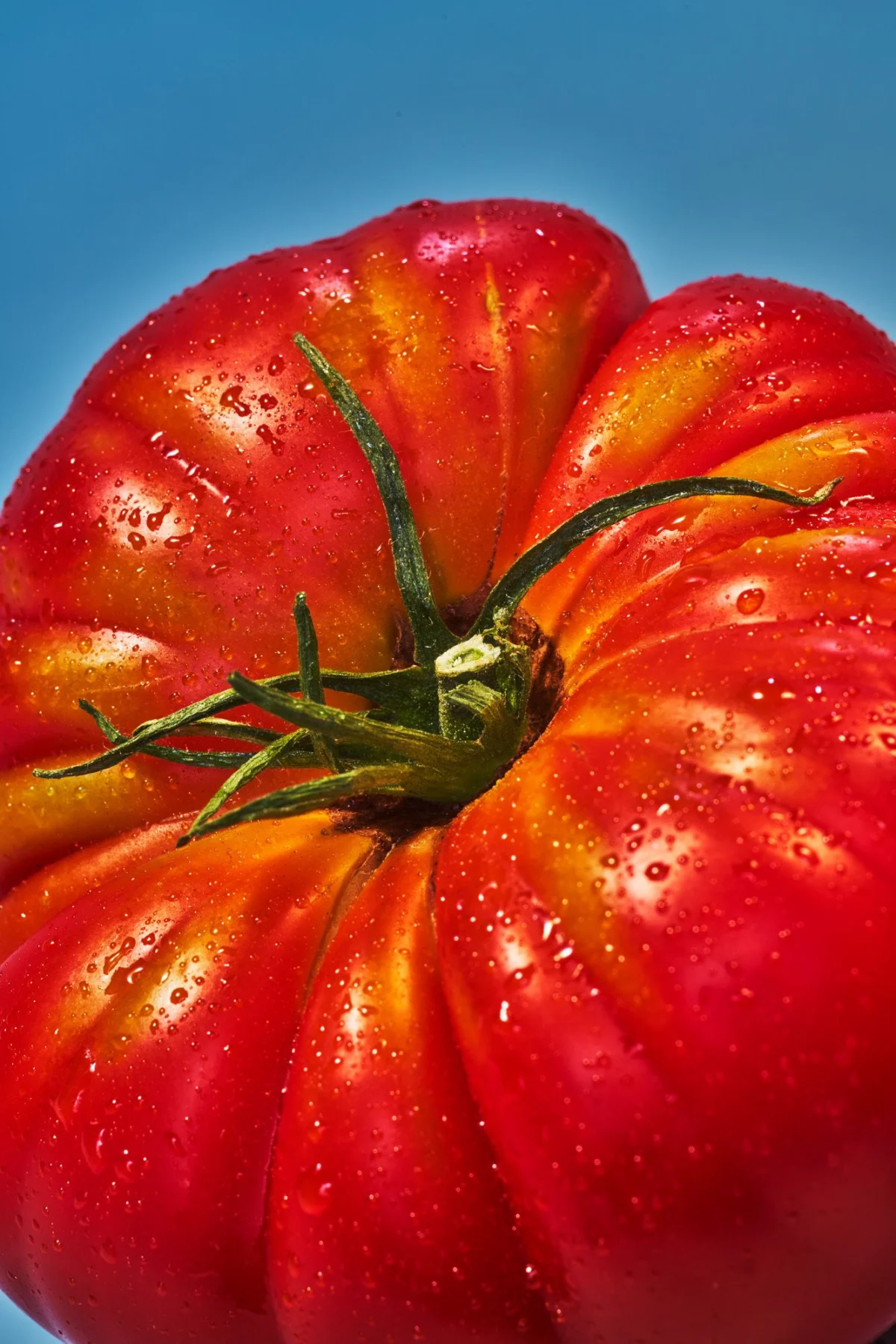
In a quiet parking lot in Berkeley, California, a seasonal ritual unfolds each spring that captures the intersection of botanical history and culinary obsession. Spencer Huey, a cook at the legendary Chez Panisse and the mind behind the "Tomato Club" Substack, arrives with a cargo of thousands of homegrown heirloom tomato plants. For Huey, the scale of the operation—growing 50 distinct varieties across 2,500 individual plants—is a labor of love that he admits is "a little crazy." Yet, this one-day community sale is more than a local market; it is a microcosm of a broader national movement. As temperatures rise across the United States, heirloom tomatoes have moved from the periphery of gardening enthusiasts to the center of a multibillion-dollar agricultural conversation, headlining backyard plots, local farmstands, and Michelin-starred menus alike.
The resurgence of these fruits represents a direct rebellion against the homogenized, industrial produce that dominated the 20th-century American diet. While supermarket tomatoes are often criticized for being "blandly red armies," heirlooms offer a sensory explosion of irregular shapes, rainbow colors, and complex flavor profiles. However, understanding the heirloom tomato requires looking beyond its aesthetic appeal and into the rigorous definitions, historical shifts, and genetic science that separate these "living antiques" from their commercial counterparts.
Defining the Heirloom: A Century of Heritage
To the casual observer, the term "heirloom" might seem like a clever marketing buzzword, but in the world of horticulture, it carries specific weight. Heirloom tomatoes are varieties grown from seeds that have been saved and handed down through generations of farmers and gardeners, typically for at least 50 years. Some experts push this timeline further, suggesting that a true heirloom must have a documented history dating back to before World War II.
According to Huey, these plants are essentially cultural artifacts. "They’re created by a specific community or culture because they like the traits, the color, or the way the tomato tastes," he explains. Unlike modern hybrids, heirlooms are open-pollinated. This means they are fertilized by natural mechanisms—insects, wind, or birds—rather than through human-engineered cross-breeding in a laboratory. Because they are open-pollinated, if you save the seeds from an heirloom tomato and plant them the following year, the resulting fruit will be "true to type," possessing the same characteristics as the parent plant.
The absence of federal regulation regarding the label "heirloom" does create a "buyer beware" environment. While a savvy marketer might label any colorful tomato as an heirloom, the true value of the fruit lies in its lineage. Varieties such as the ‘Brandywine’ (dating back to 1885) or the ‘Cherokee Purple’ (believed to have been passed down by members of the Cherokee Nation) are prized not just for their sugar-to-acid ratios, but for the history they preserve in their DNA.
The Industrial Pivot: How Flavor Was Lost
The divergence between the heirloom and the "regular" supermarket tomato is a relatively recent phenomenon in human history. For centuries, tomatoes were grown for local consumption, where flavor and ripeness were the primary metrics of success. However, the mid-20th century brought a seismic shift in global food systems. As the American population urbanized and the demand for year-round produce grew, the agricultural industry prioritized logistics over gastronomy.

In the decades following 1945, many farmers transitioned to industrial hybridization. The goal was to create a "super tomato" that was uniform in size and color, resistant to common diseases, and, most importantly, possessed a skin thick enough to withstand long-haul shipping in refrigerated trucks. To achieve this, breeders often sacrificed the genetic markers responsible for high sugar content and complex aromatic volatiles.
This industrial march reached its peak with the development of the "Flavr Savr" tomato in the 1990s. The Flavr Savr was the first genetically modified (GMO) food approved for sale in the United States, engineered to ripen slowly so it could stay on the vine longer without softening. Despite the scientific breakthrough, the product was a commercial failure. Researchers noted in a 2000 academic paper that the Flavr Savr failed because it simply did not taste better than existing varieties and was significantly more expensive to produce. The failure of the Flavr Savr serves as a historical bookend to the era of purely functional breeding, paving the way for the heirloom revival.
Genetic Diversity and the Spectrum of Flavor
One of the most striking differences between heirlooms and hybrids is the sheer breadth of their diversity. While a standard grocery store tomato is almost always a uniform scarlet, heirlooms exist in a dizzying array of hues: deep purple, neon yellow, vibrant green, and even "blue" varieties rich in anthocyanins. Some are no larger than a marble, while others, like the ‘Mortgage Lifter,’ can weigh up to three pounds and feature "shoulders"—the ribbing or ruffles found at the top of the fruit.
The flavor profiles of heirlooms are equally varied. Depending on the variety, an heirloom can be intensely sweet (like the ‘Sun Gold’), smoky and savory (like the ‘Black Krim’), or tart and citrusy (like the ‘Green Zebra’). This complexity is the result of thousands of years of natural selection and localized breeding. Because heirlooms are not genetically modified to prioritize shelf life, they retain the thin skins and high water content that characterize a truly juicy tomato. However, this thin skin is also their greatest commercial weakness; heirlooms are fragile, prone to bruising, and have a shelf life that is measured in days rather than weeks.
The Organic Question: Understanding Certification
A common misconception among consumers is that "heirloom" and "organic" are synonymous. In reality, they refer to two entirely different aspects of the plant. "Heirloom" refers to the genetics and history of the seed, while "organic" refers to the methods used to grow the plant.
For a crop to be certified organic by the USDA, farmers must adhere to strict guidelines for at least three years, including restrictions on synthetic fertilizers, pesticides, and herbicides. While many heirloom growers—including Spencer Huey—embrace sustainable and natural practices, not all undergo the rigorous and expensive process of official certification. Conversely, many large-scale organic operations grow hybrid tomatoes because they are easier to manage and more profitable at scale. For the consumer, this means that while an heirloom tomato is likely to be grown with more care than a standard commodity tomato, it is not automatically organic unless labeled as such.
Storage Science: Preserving the Peak
For those who invest in heirloom tomatoes, proper storage is critical to maintaining their delicate flavor compounds. Layla Schlack, a cookbook editor and culinary expert, emphasizes that the refrigerator is often the enemy of the heirloom. "I find they’re more likely to get mealy if they are refrigerated," she notes.

This observation is backed by scientific data. Tomatoes contain an enzyme that produces flavor-enhancing volatiles. When a tomato is cooled below 55°F (12°C), these enzymes stop functioning, and the cold temperatures begin to break down the cell membranes, resulting in a mealy texture. To preserve the integrity of an underripe heirloom, it should be kept at room temperature, away from direct sunlight.
However, there is a caveat: once an heirloom reaches its peak ripeness, it becomes highly susceptible to rot. In cases of a surplus, experts suggest that a brief stint in the refrigerator can extend the life of a fully ripe tomato by a day or two. The key is to bring the fruit back to room temperature before consumption to allow the volatile compounds to "wake up" and provide the full flavor experience.
The Broader Impact: Biodiversity and the Future of Food
The popularity of Spencer Huey’s tomato sale in Berkeley is indicative of a larger shift toward food sovereignty and biodiversity. In an era of climate change and evolving agricultural pests, the genetic diversity found in heirloom seeds is a vital resource. Monocultures—the practice of growing only one variety of a crop—are inherently vulnerable; a single disease could theoretically wipe out a global supply. By preserving 50 different varieties of tomatoes, small-scale growers and "seed savers" are maintaining a genetic library that could hold the keys to future crop resilience.
Furthermore, the heirloom movement has reshaped the culinary economy. Chefs at high-end establishments like Chez Panisse have proven that consumers are willing to pay a premium for flavor and story. This, in turn, supports small-scale farmers who would otherwise be unable to compete with industrial agricultural giants.
As Huey’s annual sale demonstrates, the heirloom tomato is more than just a vegetable; it is a community-building tool. It encourages gardeners to share seeds, stories, and techniques, fostering a connection to the land that is often lost in the modern world. Whether eaten like an apple with a sprinkle of salt or featured as the centerpiece of a summer salad, the heirloom tomato remains a testament to the idea that some things are worth preserving exactly as they were a century ago.
In the end, the "crazy" devotion of growers like Spencer Huey ensures that the next generation will still know what a real tomato tastes like—a legacy that is, by definition, an heirloom.