
 Reynand Wu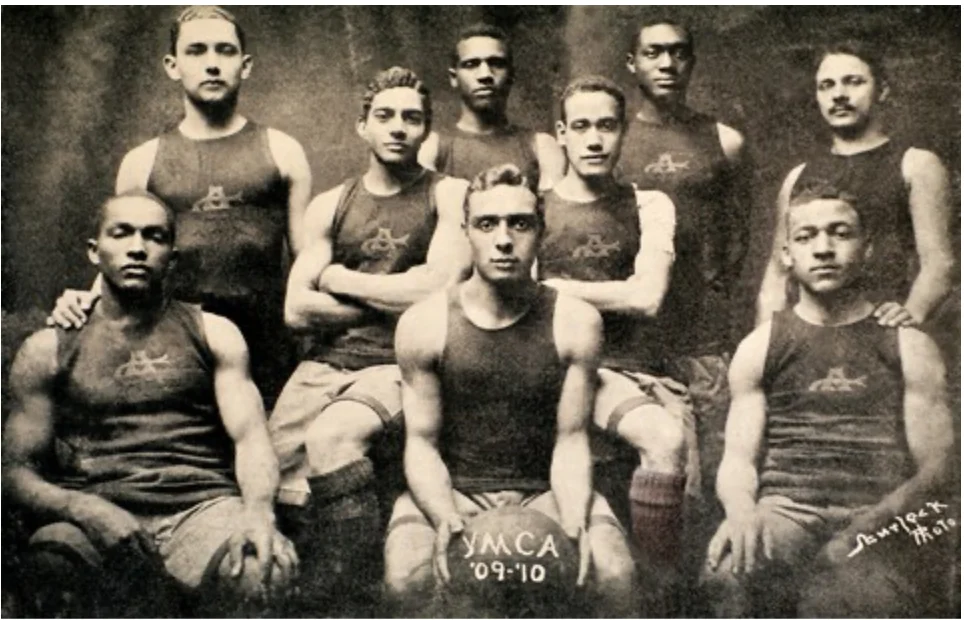
A vibrant tableau unfolds daily on 135th Street in Harlem, where the rhythmic thud of a basketball against asphalt punctuates the urban hum. Approaching the park, one is drawn by the energetic chorus of children’s shouts and the unmistakable cadence of a game in full swing. This isn’t just any court; it’s a meticulously maintained outdoor space, featuring freshly painted lines and sturdy chain-link fencing, a testament to its constant use. The ball is a blur of motion, passed with precision, dribbled with flair, and shot with hopeful arcs from every angle. As the game intensifies, the raw excitement becomes infectious, drawing a growing circle of spectators and aspiring players, reflecting a deep-seated cultural phenomenon that extends far beyond a simple sport.
New York City, from the bustling boroughs of Harlem to the historic streets of Brooklyn, holds basketball as an indelible part of its cultural fabric. For decades, the sport has resonated profoundly within African American communities, evolving from a recreational pastime into a symbol of resilience, aspiration, and collective identity. The origins of this profound connection are complex, tracing back not merely to athletic prowess but to the stark realities of discriminatory practices like redlining and segregation, which inadvertently shaped the landscape of urban recreation and fostered the sport’s unique rise among minority groups.
Basketball’s Early Years: A Sport for the Privileged
When Dr. James Naismith, a Canadian physical education instructor, invented basketball in Springfield, Massachusetts, in 1891, his primary goal was to create an indoor sport to keep his students active during the harsh New England winters. Initially, the game spread through YMCAs and academic institutions, quickly becoming popular in colleges and high schools across the nation. Elite institutions such as Harvard, Yale, Cornell, and Princeton were among the first to establish intercollegiate games as early as 1901. The formal professional structure began to take shape with the founding of the National Basketball League (NBL) in 1937, which later merged with the Basketball Association of America (BAA) in 1949 to form what we now know as the National Basketball Association (NBA).
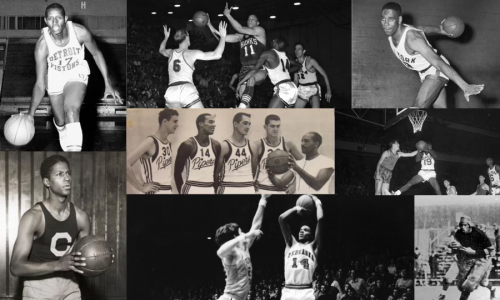
For its first three decades, basketball was largely a segregated sport, dominated by white participants at both collegiate and professional levels. The prevailing sentiment, as articulated by Micheal Novack in "The Joy of Sports" (1946), was that "Basketball was originally invented as a white man’s game." This perception was reinforced by systemic barriers that explicitly barred Black athletes from mainstream participation. It wasn’t until 1928 that George Gregory Jr. broke the collegiate color barrier. The professional leagues remained exclusively white for even longer, with Chuck Cooper, Nathaniel Clifton, and Earl Lloyd finally integrating the NBA during the 1949-1950 season. Their entry marked a pivotal moment, challenging decades of exclusion and paving the way for future generations of Black athletes.
During this era, access to facilities was a critical determinant of participation. Basketball was primarily played in community centers, particularly YMCAs, which often refused membership to Black individuals. This systemic exclusion forced Black communities to develop their own infrastructure, fostering a grassroots movement that would ultimately redefine the sport’s demographics and cultural significance.
The Urban Landscape of Inequality: Redlining and Its Sporting Consequences
The deep roots of basketball’s popularity in African American communities are inextricably linked to historical policies of racial and economic discrimination, most notably redlining. This exclusionary practice, formalized with the National Housing Act (NHA) of 1934, created government programs like the Federal Housing Administration (FHA) and the Home Owners’ Loan Corporation (HOLC) with the stated aim of improving the housing market. While the NHA successfully promoted homeownership for many white Americans, its benefits were systematically denied to Black citizens.
The HOLC generated detailed maps categorizing neighborhoods by perceived investment risk. Areas with significant Black populations were color-coded red, deemed "hazardous" or "risky" for investment, leading to a drastic depreciation of property values and deterring potential investors. The FHA subsequently used these very maps to guide its lending policies, effectively refusing federally insured housing loans for minorities. This institutionalized discrimination meant that Black families were largely excluded from accruing wealth through homeownership, a primary driver of economic mobility in America.
The effects of redlining extended beyond housing. As Black families migrated to northern cities to escape Jim Crow segregation, "white flight" saw many white homeowners abandon urban cores for newly developed, often segregated, suburbs. This exodus further depressed property values in predominantly Black neighborhoods, leading to a cycle of disinvestment. Communities categorized as "redlined" suffered from a profound lack of public and private resources, including inadequate schools, limited commercial development, and crucially, fewer and smaller recreational spaces.
This economic inequality profoundly influenced the types of sports accessible to children in these neighborhoods. Studies have shown a direct correlation between redlining and the availability of green spaces. An analysis by the Trust for Public Land revealed that in New York City, the average park size in poorer neighborhoods was 6.4 acres, starkly contrasting with 14 acres in wealthier areas. This disparity meant fewer sprawling fields for sports like baseball or football, which demand extensive space and specialized, often expensive, equipment.
Basketball, by contrast, presented a significantly lower barrier to entry. A hoop, a ball, and a relatively small paved area were all that was required. This accessibility made it a natural fit for urban environments where space was at a premium and financial resources were constrained. David C. Ogden, a professor at the University of Nebraska who studied race and sport dynamics, highlighted that "the most common reasons for the lack of racial diversity [in baseball] were the paucity of baseball facilities in Black neighborhoods, and the cost of playing select baseball." His research further noted, "More than two-thirds of the 27 coaches said that African-American youth prefer to spend their time on the basketball court rather than on the diamond." These findings underscore how economic and spatial inequalities pushed Black youth towards basketball, fostering its growth within their communities.
The Rise of Black YMCAs and the "Black Fives" Era
In response to widespread segregation, Black communities actively created their own institutions, and Black YMCAs played a pivotal role in nurturing basketball’s popularity. These community centers became vital hubs, offering safe spaces for recreation, education, and social interaction when mainstream facilities were closed off. The development of independent Black basketball teams flourished within these networks. The Smart Set Athletic Club of Brooklyn, formed in 1907, is widely recognized as the first fully independent Black basketball team in America, demonstrating early organizational prowess and competitive spirit.
A key figure in this movement was Edwin Bancroft Henderson, an educator working in Washington D.C. Henderson, who learned basketball during summer sessions at Harvard University, became a pioneer in introducing the game to the Black community. He passionately taught the sport to young Black men in the D.C. area, and through his tireless efforts, basketball rapidly spread across the East Coast, establishing strongholds in cities like New York, Philadelphia, and Baltimore. Henderson is often referred to as the "Father of Black Basketball" for his instrumental role in its early dissemination and organization.
This period, known as the "Black Fives Era" (roughly 1904 to 1950), saw the rise of hundreds of independent Black basketball teams. These teams, often affiliated with YMCAs, churches, or social clubs, formed their own leagues and tournaments, drawing enthusiastic crowds. Matches, such as the famous contest where the 12th Streeters defeated the Smart Set 20:17 in front of over 2,000 spectators, showcased high-level athletic talent and cultivated a vibrant basketball culture long before the NBA’s integration. These games were not just sporting events; they were community gatherings, expressions of pride, and platforms for showcasing Black excellence in the face of systemic adversity.
Basketball as a Pathway: The Harlem Globetrotters and Economic Mobility

Beyond community recreation, basketball also became a significant avenue for economic upward mobility for Black athletes during an era of limited professional opportunities. The Harlem Globetrotters, formed in 1926 by Abe Saperstein, epitomized this. What began as a serious, competitive team soon evolved into a globally recognized phenomenon, blending extraordinary athletic skill with captivating entertainment. For Black basketball players, the Globetrotters often represented the best, and frequently the only, way to earn a living playing the sport professionally.
The Globetrotters navigated a complex racial landscape, using humor and dazzling skill to disarm prejudiced audiences while simultaneously showcasing the immense talent of Black athletes. They traveled extensively, facing racial discrimination on the road but ultimately winning over millions with their unique brand of basketball. Their success demonstrated that Black athletes could not only compete but could dominate and entertain on a world stage, creating a powerful counter-narrative to prevailing racist stereotypes. The team provided a crucial professional outlet and a platform for many talented Black players who were otherwise barred from mainstream leagues, making them cultural ambassadors and symbols of Black achievement.
NYC’s Enduring Hoop Legacy: A Global Basketball Mecca
Today, basketball transcends racial lines to become an integral part of New York City’s diverse cultural tapestry. However, its deep roots within African American communities remain profoundly visible. Decades after the formal dismantling of segregation, Black participation in basketball has not only soared but has solidified NYC’s reputation as a veritable "basketball mecca." The city’s playgrounds are legendary, nurturing countless talents who have gone on to collegiate and professional stardom.
Every summer, minority communities across NYC gather for grassroots basketball tournaments held in iconic parks, some of which now command national and even international attention. Events like Nike’s "NY vs NY" and Slam magazine’s Summer Classic, which have been hosted at legendary venues such as Dyckman Park in Manhattan for the past five years, feature top-ranked high school players and draw thousands of passionate fans. These tournaments are more than just games; they are cultural institutions, celebrating community, competition, and the enduring spirit of streetball. They offer young athletes visibility, mentorship, and a sense of belonging, continuing the tradition of basketball as a community unifier and a potential pathway to success.
The professional landscape has undergone a dramatic transformation as well. In stark contrast to 1950, when Black players were largely excluded, approximately 75% of the NBA’s current roster is comprised of Black athletes. Furthermore, the global reach of basketball has expanded exponentially, with Black athletes from the U.S. and other nations playing in leagues across the world. This demographic shift is a powerful testament to the resilience and talent fostered within communities that, despite facing systemic barriers, embraced basketball as their own.
The journey of basketball’s rise among African American communities in New York City and beyond is a compelling narrative of adaptation, resilience, and cultural triumph. While discriminatory policies like redlining and segregation stifled economic opportunity and limited access to resources, they inadvertently channeled talent and passion towards a sport that required minimal infrastructure but offered maximum engagement. The economic conditions fostered by these injustices inadvertently helped basketball become an enduring staple of the community, evolving from a segregated pastime into a global phenomenon and a profound symbol of cultural identity for generations. The vibrant courts of Harlem today are not just places to play a game; they are living testaments to a complex history where hardship forged an unbreakable bond between a community and its beloved sport.
Sharif Nelson ’26 is a student at Hamilton College studying economics.








