Layla Zulfa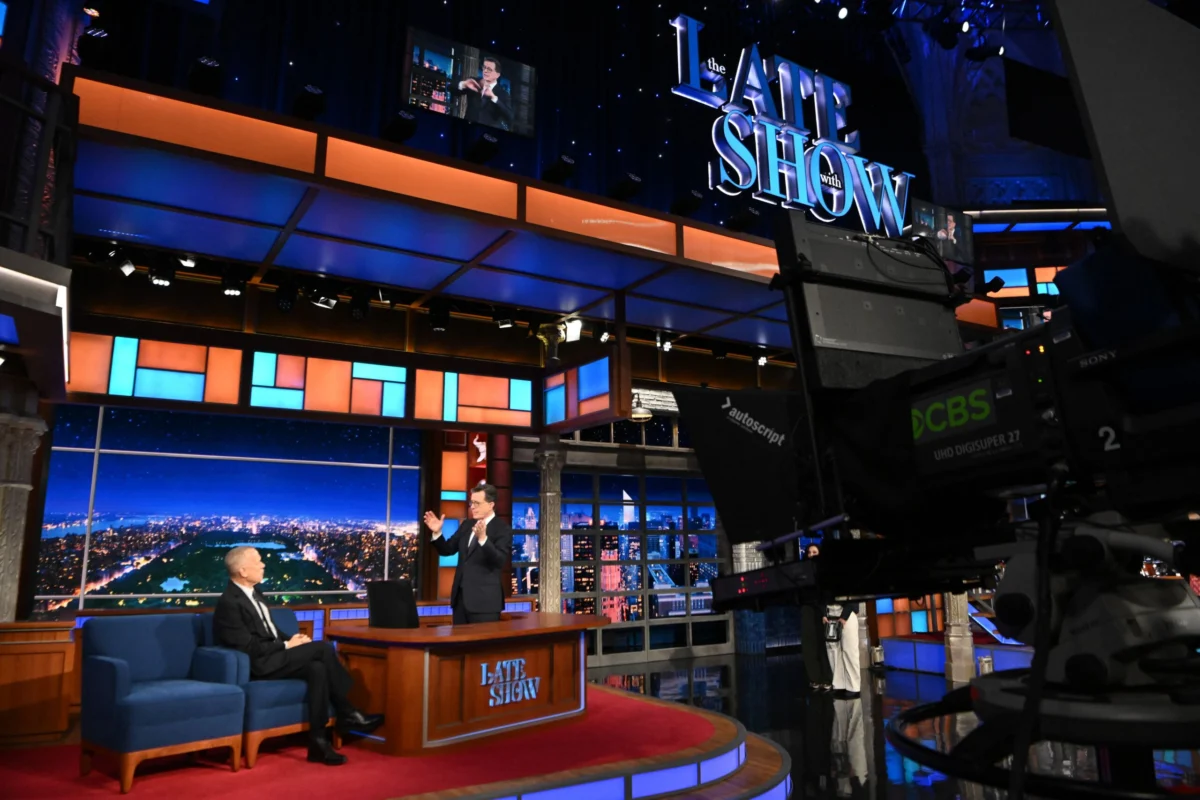
The announcement by CBS in July 2025 that The Late Show with Stephen Colbert will conclude its historic run on May 21, 2026, marks the end of an era for both late-night television and the iconic Manhattan landmark that has housed the franchise for over three decades. As the production nears its final episodes, the entertainment industry and architectural historians alike are turning their attention to the Ed Sullivan Theater, a space that has served as a cornerstone of American broadcast history since the mid-20th century. While CBS has yet to disclose its long-term plans for the venue, the impending departure of Colbert offers a moment to reflect on the building’s century-long evolution from a Broadway house to a cutting-edge television studio that blends Gothic architecture with modern digital production.
A Century of Architectural and Cultural Evolution
Located at 1697 Broadway in Manhattan’s Theater District, the Ed Sullivan Theater was completed in 1927. Designed by the prolific theater architect Herbert J. Krapp, the building was originally commissioned by Arthur Hammerstein as a memorial to his father, the famed opera impresario Oscar Hammerstein I. Initially known as Hammerstein’s Theater, the venue was a masterpiece of Gothic Revival design, featuring a vaulted ceiling, intricate plasterwork, and stained-glass elements that set it apart from the more traditional Beaux-Arts styles of its contemporaries.

The building’s early years reflected the volatility of the Great Depression era. By 1931, Arthur Hammerstein had lost the building to foreclosure. Over the next decade, it underwent several identity shifts, operating as a casino and later as a music hall. Its destiny as a broadcast hub was forged in 1936 when CBS leased the space for use as a radio playhouse. As the medium of television began to eclipse radio in the post-war years, CBS converted the theater into a television studio in 1949, designating it CBS Studio 50.
The studio gained international fame as the home of The Ed Sullivan Show, originally titled Toast of the Town. For 23 years, the venue served as the primary stage for the most significant cultural milestones in American variety television, including the breakthrough performances of Elvis Presley in 1956 and the Beatles in 1964. The latter broadcast remains one of the most-watched television events in history, drawing an estimated 73 million viewers and cementing the theater’s status as a "cathedral" of popular culture. In 1967, in honor of the host’s long-standing success, the building was officially renamed the Ed Sullivan Theater.
The Late Show Era: From Letterman to Colbert
Following a period in the 1970s and 1980s where the theater was used for a variety of sitcom tapings and game shows, CBS made the strategic decision to purchase the building outright in 1993. This acquisition was prompted by the hiring of David Letterman, who moved from NBC to CBS to launch The Late Show. The move required a significant overhaul of the interior to meet the technical demands of a nightly talk show, a process that saw the installation of a massive broadcast infrastructure while largely obscuring the building’s original architectural flourishes.

When Stephen Colbert was named as Letterman’s successor in 2015, the production team, led by production designer Jim Fenhagen, embarked on an ambitious renovation project. The goal was to restore the theater’s original grandeur while creating a set that reflected Colbert’s unique sensibilities. This renovation led to the rediscovery of long-hidden architectural gems. During the 2015 overhaul, workers removed soundproofing materials and false ceilings to reveal the theater’s central dome, which had been concealed since the 1950s.
Colbert’s insistence on exploring the building’s "bones" resulted in the restoration of a plasterwork-and-stained-glass chandelier and several stained-glass windows that were previously thought to have been destroyed. The restoration process was meticulous; artisans reportedly used small tools, including toothbrushes, to clean decades of grime from the intricate plaster. During this process, workers discovered artifacts from the mid-century, including discarded tools, vintage cigars, and traffic tickets from the 1940s, offering a tangible link to the theater’s past inhabitants.
Technical Innovation and Symbolic Set Design
The current set of The Late Show is a study in the intersection of traditional theater and modern television technology. Lighting designer Michael Scricca implemented a sophisticated system of "Mondrian panels"—square-shaped light fixtures that line the stage and can be instantly reconfigured to different color palettes. This system allows the production to shift the mood of the show based on the guest or the segment. For example, act-one interviews typically utilize an orange-and-blue scheme, while political segments trigger a red, white, and blue motif.

One of the more subtle elements of the lighting design is an "Easter egg" hidden within the set’s library. At Colbert’s request, the lighting in this area was designed to evoke a sense of clandestine patriotism. The arrangement of lights subtly depicts an American flag, a nod to the overtly patriotic aesthetic of Colbert’s previous program, The Colbert Report, but executed with a level of subtlety that fits the more "authentic" tone of his Late Show persona.
The library itself serves as a repository of Colbert’s personal history and interests. It features an extensive collection of science fiction and fantasy literature, reflecting the host’s well-documented passion for the works of J.R.R. Tolkien. Key items on display include a sword prop from The Lord of the Rings films, gifted by Viggo Mortensen, and Captain America’s shield, a gift from Marvel Studios. Additionally, the space holds deep personal significance, containing a photo of Colbert’s father and a Freedom March pennant from 1963, which his mother carried while attending Martin Luther King Jr.’s "I Have a Dream" speech.
Structural Peculiarities: The Elephant Columns
The theater’s history is also written into its physical foundation. One of the most unusual features of the building is the presence of "elephant columns" located beneath the stage. In the 1950s, Ed Sullivan frequently featured circus acts, including those from the Ringling Brothers and Barnum & Bailey Circus. To accommodate the immense weight of live elephants on the stage, CBS engineers had to install additional structural support columns in the basement.

During the 2015 renovation, Colbert’s team chose to highlight these columns rather than hide them. They are now commemorated with a plaque and an elephant mural, serving as a reminder of the era when variety television required literal heavy lifting. This attention to detail extends to the stage floor itself. Colbert’s "mark"—the spot where he stands to deliver his nightly monologue—is shaped like the state of South Carolina, his home state. This custom marker serves as a grounding mechanism for the performer, reminding him to remain "himself" rather than the satirical character he portrayed for years on Comedy Central.
The Future of Late Night and the Ed Sullivan Theater
The conclusion of Colbert’s tenure in May 2026 comes at a transformative time for the television industry. Late-night talk shows, once the primary drivers of cultural conversation and network revenue, are facing increased competition from streaming platforms and social media. The high costs associated with maintaining a large-scale studio in the heart of Manhattan have led some networks to reconsider their late-night strategies.
However, the Ed Sullivan Theater remains a premier asset. As a New York City Landmark (designated in 1987), the building’s exterior and certain interior elements are protected, ensuring that its architectural heritage will remain intact regardless of its future occupant. Industry analysts suggest several possibilities for the theater post-2026:

- A New Late-Night Successor: CBS may choose to install a new host to continue the Late Show brand, maintaining the tradition of the 11:35 PM timeslot.
- Special Event Programming: The theater could be utilized for limited-run series, comedy specials, or musical residencies, capitalizing on its superior acoustics and historic prestige.
- A Return to Broadway: Given its origins as a playhouse, there is a possibility that the venue could be converted back into a traditional Broadway theater, though the extensive television infrastructure currently in place would make this a costly transition.
Broader Impact and Industry Implications
The departure of Stephen Colbert marks the end of a specific chapter in broadcast history—one characterized by the "restoration" of the Ed Sullivan Theater to its former glory. Colbert’s tenure will be remembered not only for its political commentary and humor but for its stewardship of a physical space that represents the lineage of American entertainment.
As the production team prepares for the final year of broadcasts, the focus remains on celebrating the legacy of the space. The 33-year history of The Late Show at the Ed Sullivan Theater (spanning the Letterman and Colbert eras) represents one of the longest continuous tenures for a single franchise in a specific New York City studio. While the future of the building remains unannounced, its role as a landmark of innovation, culture, and architectural resilience is firmly established. The final broadcast on May 21, 2026, will likely serve as both a farewell to a beloved host and a tribute to the "cathedral" on Broadway that made his residency possible.