
 Reynand Wu
Migrant labor forms the bedrock of U.S. agriculture, a ceaseless and indispensable workforce that ensures the nation’s food supply. Despite their critical role, the individuals who perform this arduous work often remain deliberately obscured, their lives and struggles relegated to the margins of public consciousness. This invisibility is not merely a social phenomenon; it is profoundly spatial, engineered through housing arrangements that are strategically placed behind dense groves, far from public roads, or sequestered on private land behind locked gates. These locations are not only difficult for workers to access on their own terms but are also designed to be challenging to leave, effectively creating a system of controlled isolation.
The Hidden Landscape of Migrant Housing
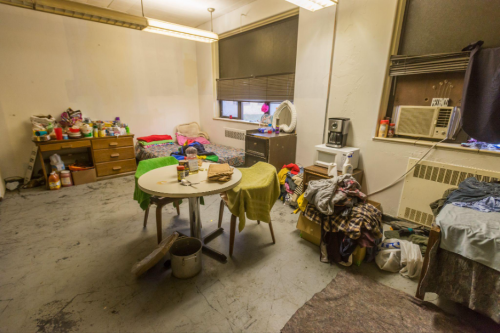
The physical structures and their placement underscore a broader systemic issue. Accounts from paralegals working with immigration law firms, particularly in regions like Metro Detroit, frequently detail the conditions faced by these essential workers. After long days, often six or seven days a week, toiling in fields and orchards under extreme weather conditions, workers return to dormitories or cabins situated far from urban centers. These shared spaces frequently lack basic amenities that most would consider essential for privacy, comfort, or dignity. Descriptions commonly include shared beds in tight quarters, communal bathrooms, and often barren kitchen facilities, highlighting a stark contrast between the labor’s value and the laborer’s living conditions.
Visual documentation from various agricultural hubs, from the Carolinas to California, provides irrefutable evidence of these conditions. Photographs often depict rows of identical, austere cabins, their interiors featuring narrow beds, minimal personal space, and small windows that offer little connection to the outside world. These images transcend mere documentation; they serve as critical evidence, illustrating a system meticulously designed to erase the very people whose toil keeps it operational. A stark image from 2014 shows a bedroom for migrant farmworkers at the Nightingale facility in Rantoul, Illinois, revealing the cramped, institutional nature of these living arrangements. Another, a historical photograph by Dorothea Lange from 1936, captures a migrant agricultural worker’s family in Nipomo, California, huddled outside a temporary shelter during the Great Depression, reminding us that these struggles have deep historical roots. While the specific structures may have evolved, the underlying issues of precarious housing and systemic vulnerability persist across generations.
Historical Context and the Evolution of Agricultural Labor
The reliance on migrant labor in U.S. agriculture is not a recent phenomenon but rather a deeply ingrained historical practice. From the forced labor of enslaved people to the waves of Irish, Chinese, and later Mexican immigrants, agricultural work has consistently relied on marginalized populations. The mid-20th century saw the formalization of foreign labor programs, such as the Bracero Program (1942-1964), which brought millions of Mexican guest workers to the U.S. under contracts that often included employer-provided housing. While the program officially ended, its legacy of employer-controlled housing and the associated power dynamics continued, shaping the landscape of migrant labor for decades.
Today, the U.S. Department of Labor estimates that there are approximately 2.5 to 3 million farmworkers in the United States, a significant portion of whom are migrant or seasonal. The vast majority are foreign-born, predominantly from Mexico and Central America, and many are undocumented, making them particularly vulnerable to exploitation. This demographic reality, combined with the often-transient nature of their work, creates an environment where employer-provided housing becomes a practical necessity for many, inadvertently granting employers significant control over their workers’ lives beyond the workplace.
The Legal Framework and Its Gaps
The primary federal statute governing the living conditions of migrant farmworkers is the Migrant and Seasonal Agricultural Worker Protection Act (MSPA) of 1983. MSPA mandates that farm labor contractors and agricultural employers who provide housing must ensure it meets federal and state safety and health standards. The Occupational Safety and Health Administration (OSHA) also sets specific standards for temporary labor camps, covering aspects like structural soundness, ventilation, sanitation, and fire safety.
However, the implementation and enforcement of these regulations face significant challenges. Resources for inspections are often limited, and the remote, isolated nature of many housing sites makes proactive oversight difficult. Furthermore, the minimum legal standards for shelter, while existing, are often criticized for being barely above what might be allowed for a prison cell, contributing to the dehumanizing aspects of the architecture. The subtle nuances of spatial control—such as rules about visitors, meal times, noise levels, or even the inability for married couples to live together—often fall outside the direct purview of structural safety regulations, yet profoundly impact workers’ autonomy and well-being. This gap between legal compliance and actual human dignity is where the system’s inherent flaws become most apparent.
Economic Pressures and Industry Perspectives
The agricultural industry operates on tight margins, with producers often facing intense pressure to keep costs down to remain competitive in a globalized market. Providing housing, while an added expense, is often seen as a necessary component to attract and retain a labor force willing to undertake physically demanding work for wages that are often below the national average. According to the USDA, farmworkers earn significantly less than workers in other sectors, with median annual incomes often falling below the poverty line.
From the perspective of some agricultural employers, providing housing is a logistical solution to ensure workers are close to fields, reducing transportation costs and ensuring punctuality. They might argue that the housing provided meets or exceeds minimum legal standards and that they invest considerable resources in maintaining these facilities. However, critics contend that the economic model often prioritizes cost-efficiency over worker welfare, leading to the systemic underinvestment in dignified living conditions. The transient nature of the workforce also disincentivizes long-term investment in housing infrastructure, as workers may only be on site for a season.
The Human Cost: Health, Dignity, and Autonomy
The impact of these housing conditions on migrant workers is profound and multifaceted. Living in cramped, shared quarters with limited privacy can lead to significant psychological stress, exacerbating the already demanding nature of their work. The lack of control over their living environment, coupled with the constant threat of job loss and potential deportation for undocumented workers, creates a pervasive climate of fear. Workers often feel monitored, afraid to speak up about legitimate grievances concerning wages, working conditions, or housing quality, because doing so could mean losing not only their job but also their bed, leaving them homeless and vulnerable.
This spatial control has direct implications for health. Overcrowded conditions facilitate the rapid spread of infectious diseases, a concern that was starkly highlighted during the COVID-19 pandemic. Limited access to adequate kitchen facilities can compromise nutrition, while communal bathrooms can pose hygiene challenges. Beyond physical health, the constant erosion of privacy and dignity takes a toll on mental well-being, contributing to higher rates of depression and anxiety among farmworkers. The inability for families to live together, as recounted by one worker whose wife could not share his bunk, fragments social support networks, deepening feelings of isolation.
A Sociological Lens: Power, Space, and Discipline
Sociology offers a critical framework for understanding that these housing conditions are not merely isolated instances of "bad housing structure" but rather symptoms of a deep-seated structural problem. At its core, this situation can be analyzed through conflict theory, which posits that society develops and changes based on struggles over power and resources. In the context of migrant labor, the power imbalance between employers and workers is vividly manifested in the organization and control of living spaces. Employers, holding the dual power of employment and housing provision, maintain significant leverage, ensuring a compliant and readily available workforce.
Drawing on the insights of Henri Lefebvre, who argued that space is socially produced, we can see how migrant housing is not naturally occurring but is intentionally shaped by those with the authority to determine how people live. This production of space is rarely driven by considerations of comfort, fairness, or optimal function for the inhabitants. Instead, the arrangement and social production of space reflect the interests of those in control—in this case, agricultural employers seeking to maximize efficiency and minimize costs while managing their labor force. The shape of a room, the distance between houses, and the overall layout of a labor camp are not random; they are deliberate choices that reflect and reinforce power relationships.
Similarly, Michel Foucault’s work on how institutions use architecture to enforce discipline provides a powerful lens. In migrant housing, space itself signals control. These dormitories and cabins often do not require overt bars or guards; their very design, meeting only the minimum legal standard for shelter, serves to dehumanize and, in doing so, to control. The lack of privacy, the shared facilities, and the remote locations all contribute to an environment where individual autonomy is severely limited. The fewer choices a person has over their living conditions and daily routines, the easier it becomes to manage and control their behavior, both on and off the job. As one worker revealed, hearing "every breath of the man above him" in a crowded bunk illustrates the profound lack of personal space and the constant awareness of others, a subtle form of surveillance.
Advocacy and Calls for Systemic Change
Recognizing these issues, numerous labor advocacy groups, non-governmental organizations (NGOs), and legal aid services are actively working to highlight the plight of migrant farmworkers and push for systemic reforms. Organizations like the Farmworker Justice, United Farm Workers (UFW), and various state-level legal aid foundations provide legal assistance, advocate for stronger protections, and push for more rigorous enforcement of existing laws. They often document abuses, provide educational resources to workers about their rights, and lobby policymakers for legislative changes that would improve housing standards, increase wages, and strengthen protections against retaliation.
Proposed solutions often include:
- Increased Funding for Enforcement: Empowering agencies like OSHA and the Department of Labor with more resources for proactive inspections and swift enforcement of violations.
- Stronger Housing Standards: Advocating for updated regulations that go beyond basic safety to ensure genuinely dignified and humane living conditions.
- Worker Empowerment: Supporting initiatives that educate workers about their rights, provide access to legal representation, and protect them from retaliation when they report abuses.
- Alternative Housing Models: Exploring and promoting models of independent, affordable housing that are not tied to employment, thereby reducing employer control.
- Consumer Awareness: Encouraging consumers to understand the human cost of their food and support ethical sourcing practices.
Broader Implications for Society
The conditions faced by migrant farmworkers have profound implications that extend beyond the agricultural sector. They challenge fundamental principles of human rights, dignity, and social justice within a nation that prides itself on these values. The systemic exploitation inherent in these housing arrangements underscores a critical vulnerability in the U.S. food system, revealing that the abundant and affordable produce on our tables often comes at a hidden human cost.
As scholars and citizens, it is imperative to bring these deliberately obscured designs to light. Naming this reality not as a mere "housing crisis" but as a deliberate "labor strategy" allows for a more accurate and effective approach to finding solutions. These labor camps are not temporary accidents; they are often long-term solutions to a problem that many in power have little incentive to fix. We cannot change what we refuse to see or acknowledge. By shedding light on the invisible architecture of control, society can begin to demand and enact meaningful reforms that ensure dignity and justice for those who feed the nation. The health of our food system is inextricably linked to the well-being and rights of the workers who sustain it.









