Ana Megawati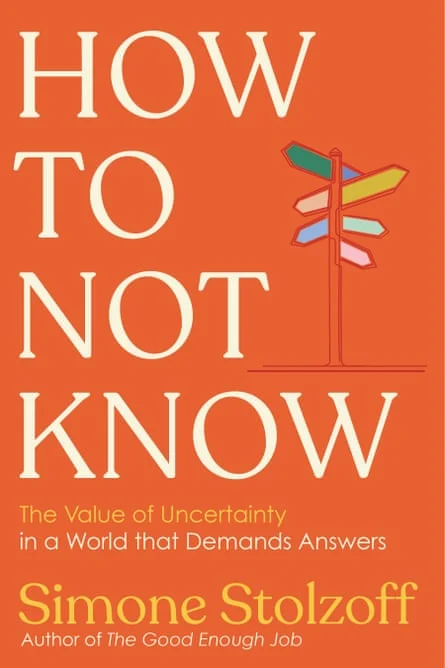
Simone Stolzoff, a journalist who candidly describes himself as "naturally an uncertain person" prone to rumination and self-doubt, has channeled this introspective tendency into a compelling new book, "How to Not Know: The Value of Uncertainty in a World That Demands Answers." His work posits that while an inclination towards self-questioning can be a professional asset, it can also become a debilitating personal struggle, a double-edged sword that he himself has keenly felt.
The Genesis of a Book: From Personal Predicament to Public Insight
The catalyst for Stolzoff’s deep dive into the psychology of uncertainty was a deeply personal career crossroads. While working for a prominent magazine in New York, he was presented with an enticing offer from a design firm in San Francisco. This seemingly enviable dilemma, choosing between two attractive career paths, became an "existential loop" for Stolzoff. He recalls the intense internal conflict: "I could see these two diverging paths – Simone the journalist, Simone the designer – and, for the life of me, I could not make up my mind." His quest for resolution was so pervasive that, as he now grimaces to admit, he became "insufferable," consulting everyone from his yoga teacher to his Uber driver.
Ultimately, Stolzoff made the leap, choosing the San Francisco design role – a new city, a new industry, and a profound journey into the unknown. This transformative experience, rather than resolving his innate uncertainty, illuminated its true nature. Looking back from his Bay Area home, he identifies his fundamental error: "It was my intolerance of uncertainty that was causing so much of the angst." This realization became the bedrock of his new book, arguing that the desire for absolute certainty is often the root of our distress in an unpredictable world.
Stolzoff’s literary exploration of uncertainty also emerged directly from his previous work. His first book, "The Good Enough Job," examined the increasingly central role of work in our identities. Following its publication, a recurring question from readers underscored the collective anxiety about the future: "How should I think about the future of my career, given AI and all these other changing forces?" Confronted with the honest answer that he, a former poetry student, was "not sure," Stolzoff felt compelled to investigate. He embarked on a multi-year journey, immersing himself in the science and psychology of uncertainty, driven by the personal imperative to "get better at dealing with it myself."
Navigating the Modern Labyrinth: Why Uncertainty Bites Harder Now
While uncertainty has always been an inherent part of the human condition, Stolzoff argues that the modern world presents a uniquely turbulent landscape. This isn’t just anecdotal; economic data supports this claim. Stanford economist Nicholas Bloom, who has been rigorously tracking global uncertainty since the early 1980s, has observed a significant escalation. His research indicates that the five highest measurements of global uncertainty have all occurred within the last five years, pointing to an unprecedented level of global volatility. This includes geopolitical tensions, rapid technological advancements, economic shifts, and environmental crises, all contributing to a pervasive sense of instability.
Beyond the sheer volume of uncertainty, Stolzoff highlights a critical shift in our collective capacity to tolerate it. Research suggests a direct correlation between this declining tolerance and the rise of the internet, particularly smartphones. These "pocket computers" have fostered an expectation of immediate answers and readily available information. A decade ago, one might have accepted not knowing an actor’s name; today, the impulse to instantly Google it is almost involuntary. While providing unparalleled access to information, this constant connectivity also serves to bring "all of the world’s uncertainties to the fore" in real-time. Paradoxically, this deluge of information, often presented as real-time updates, can amplify anxiety rather than alleviate it. It robs individuals of the crucial practice of "sitting with what we don’t know," as the internet makes it significantly easier to bypass discomfort by seeking instant, albeit often superficial, answers.
The human brain, Stolzoff explains, is fundamentally "wired to get out of uncertainty as quickly as possible." This evolutionary mechanism, developed to ensure survival by anticipating threats and planning with confidence, can now lead us astray in an environment saturated with "triggers." In a world where immediate threats are less common but abstract, long-term uncertainties are rampant, this primal wiring often defaults to anxiety rather than effective problem-solving.
The Psychological Landscape of Not Knowing
The struggle with uncertainty, Stolzoff emphasizes, is not merely a mental exercise but has profound physiological underpinnings. Uncertainty can register as a direct threat, activating the body’s ancient fight-or-flight response. This means that "uncertainty intolerance" is as much a physiological issue as it is a psychological one. In such states, the nervous system becomes dysregulated, narrowing perception and limiting the ability to assess possibilities rationally. Many psychologists interviewed for the book underscored the importance of "slowing down" when confronted with uncertainty. This deliberate pause allows the individual to shift from the reactive, primal brain to the more analytical, grounded parts of the mind, enabling a more measured assessment of options rather than an immediate, often impulsive, avoidance of the perceived threat.
Our inherent cognitive biases further complicate our relationship with the unknown. Stolzoff references psychologist Daniel Gilbert’s concept of the "end-of-history illusion," where individuals tend to assume their current identity, preferences, and circumstances are fixed, failing to anticipate how much they will change in the future. This illusion can lead to rigid decision-making and an inability to adapt. Furthermore, psychologist Philip Tetlock’s analysis of two decades of public predictions revealed a sobering truth: the average expert was "roughly as accurate as a dart-throwing chimpanzee." This data powerfully underscores the inherent unknowability of the future, challenging the widespread belief that certainty can be found through exhaustive analysis or expert foresight.

A significant portion of our anxiety, Stolzoff notes, is driven by "worrying about things that haven’t happened yet." This catastrophizing, the tendency to anticipate worst-case scenarios, is a direct byproduct of uncertainty intolerance. If individuals could cultivate a greater comfort with "what we don’t know," the collective mental health benefits would be substantial, leading to a reduction in anticipatory anxiety and greater present-moment peace.
Embracing the Unknown: The Unexpected Upsides
Despite its inherent discomfort, Stolzoff passionately argues for the profound benefits of embracing uncertainty. Many individuals, clinging to the "devil they know," remain in unfulfilling jobs or relationships simply to avoid the unknown. By cultivating a willingness to tolerate uncertainty, however, one can "discover something that was greater than what you could have anticipated." The book aims to reframe uncertainty not as a threat to be eradicated, but as "the birthplace of possibility." It is within this space of not knowing that new opportunities for self-discovery, growth, and genuine connection emerge.
When the nervous system is regulated, individuals are "literally able to see more possibilities." This heightened perception allows for creative problem-solving and a more expansive view of the future. The ability to sit with discomfort, rather than immediately seeking an "easy answer," is a crucial skill for navigating complex challenges and fostering personal resilience. Through exposure and resisting the urge for instant gratification, individuals can gradually increase their tolerance for the unknown, transforming a source of angst into a wellspring of potential.
Societal Echoes: Uncertainty’s Ripple Effect
Stolzoff extends his analysis beyond individual psychology, positing that intolerance for uncertainty profoundly shapes broader societal dynamics.
- Political Polarization: In an age where "reality itself feels uncertain," and a common basis of shared truth is eroding, intolerance for ambiguity fuels political polarization. When individuals jump to conclusions about others based on superficial markers, such as their voting preferences, it creates rigid "bubbles" and prevents genuine understanding. A greater capacity for uncertainty tolerance could foster more nuanced dialogue and bridge divides, as it encourages withholding judgment and seeking common ground rather than immediate condemnation.
- The Loneliness Epidemic: The reluctance to enter into social interactions without knowing the outcome contributes to the pervasive loneliness epidemic. Building meaningful connections requires vulnerability and a willingness to "put ourselves out there," accepting the inherent uncertainty of how an interaction will unfold. Each such experience, even if imperfect, provides "data and evidence that uncertainty is not necessarily something to fear."
- Climate Crisis and Tuvalu: Stolzoff’s reporting from the tiny Pacific nation of Tuvalu offers a powerful and poignant illustration of living with profound, existential uncertainty. Facing the imminent threat of rising sea levels, Tuvaluans exemplify varied, yet equally valid, approaches to the unknown. Stolzoff met a homesteader focused on self-sufficiency and an international diplomat advocating for collective reliance. This "both-and" approach, rather than an "either-or" mentality, is crucial. It acknowledges that individuals can simultaneously prepare themselves while also working towards collective solutions, demonstrating a dynamic adaptability in the face of an overwhelming threat.
- Technological Disruption (AI): The Tuvalu analogue extends to other contemporary crises, such as the impact of Artificial Intelligence on jobs and society. Rather than rigid camps of "Team AI" optimists or "Team Anti-AI" alarmists, Stolzoff suggests a more integrated approach. Individuals can seek to "insulate yourself from the coming technological disruption" by mastering new tools and adapting workflows, while simultaneously building "collective solidarity and resilience through your network and relationships." The truth, he argues, likely lies in the intelligent integration of both strategies.
Strategies for Navigating the Fog: Practical Wisdom from "How to Not Know"
Stolzoff’s book is not merely an analysis but a guide, advocating for actionable responses to uncertainty rather than paralysis. The metaphor he frequently returns to is "rowing through the fog": one might not see far ahead or know the exact destination, but the crucial act is to "keep rowing."
The key is not to wait for an "unequivocally correct course," which rarely materializes. Instead, Stolzoff advises making decisions that "reinforce the type of person that you want to be." By acting in alignment with one’s core values, individuals can stand by their choices, even if the ultimate outcome deviates from their desires. This approach shifts the focus from external validation to internal integrity.
While advocating for embracing the unknown, Stolzoff is pragmatic. He acknowledges that "some certainty makes it easier to hold uncertainty in our lives." Therefore, one of the most practical pieces of advice in the book is to "identify your anchors – the things that will remain constant through the changing winds." For Stolzoff, these anchors include his family, his values, and his commitment to his home. These fixed points provide a psychological bedrock, allowing individuals to navigate turbulent waters with greater stability. Furthermore, he cautions against applying a "highly analytical framework" to every decision, particularly reversible ones like choosing a Netflix show. Such over-analysis leads to decision fatigue and unnecessary angst.
The Ultimate Uncertainty: Life, Death, and Meaning
Perhaps the most profound connection Stolzoff makes is between intolerance for uncertainty and the fear of death. He suggests that reckoning with mortality, the ultimate unknown, helps clarify how we truly wish to live. Shielding ourselves from the finitude of life prevents us from appreciating its preciousness. He challenges the modern obsession with longevity protocols and eternal life, arguing that "part of what makes life meaningful is the fact that it’s not going to be forever." The absence of certainty regarding death, he posits, is ultimately a positive force, enhancing the vibrancy and significance of our finite existence.
Ultimately, "How to Not Know" is an empowering call to action. It argues that a fixed idea of the future, while seemingly comforting, is inherently disempowering, as it removes one’s agency to shape that future. Instead, Stolzoff concludes that "in the uncertainty, that’s where magic, surprise and delight lives." By learning to tolerate and even embrace the unknown, individuals can unlock new possibilities, cultivate deeper resilience, and live more meaningful lives in an undeniably uncertain world.