
 Ronny Sianturi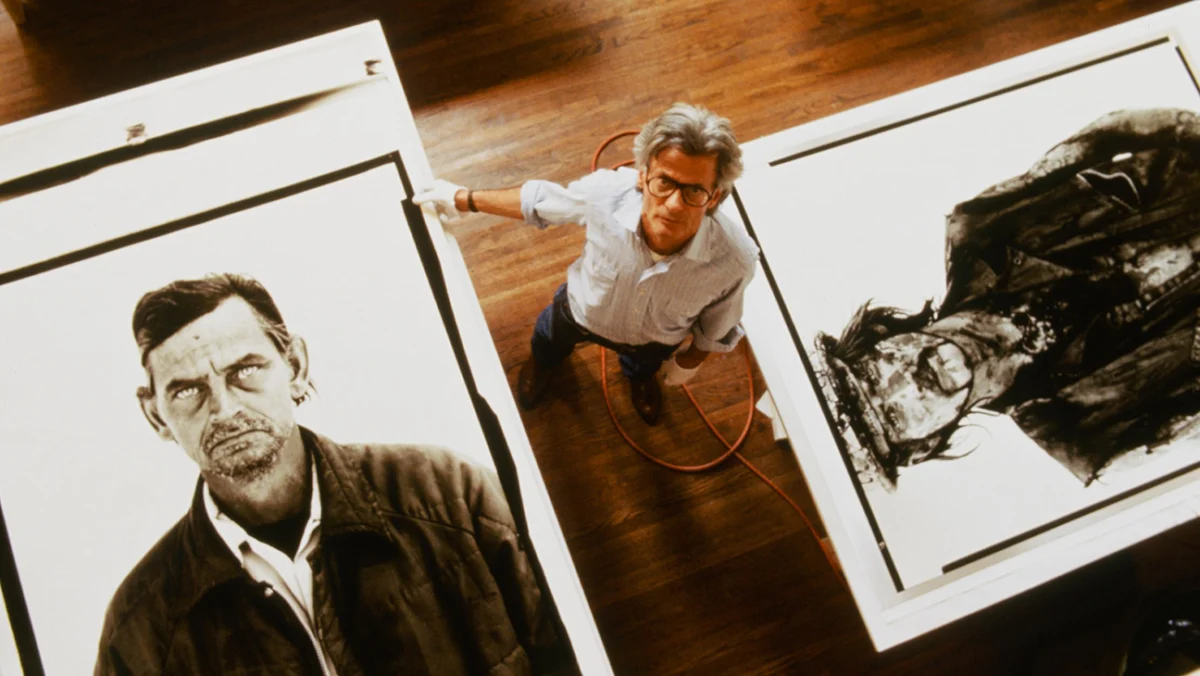
Ron Howard’s latest documentary, "Avedon," offers an intimate and admiring portrait of the legendary photographer Richard Avedon, a figure whose life and work were inextricably intertwined. The film, which premiered at the Cannes Film Festival in the Special Screenings section, delves into the multifaceted career of the New York native, who died in 2004 at the age of 81 while actively working. His dedication to his craft, even in his final moments, is a recurring theme, underscored by the recollections of those who knew him best, including model Lauren Hutton, who aptly described his passing as "with his boots on." Over a career spanning six decades, Avedon not only redefined fashion photography but also left an indelible mark on fine-art portraiture, earning the deep affection of a wide array of individuals who found themselves immortalized through his lens.
The documentary meticulously constructs the image of a driven and exceptionally talented artist, a relentless seeker who was also a wonderfully unapologetic contrarian. Avedon’s unique perspective is illuminated through his own provocative statements, such as his dismissal of "beautiful lighting" as "offensive" and his candid admission that he found children "intensely boring." His true fascination lay with the adult human face, with the intricate tapestry of what it concealed and revealed. This lifelong pursuit took him through diverse landscapes: the rarefied circles of global fame, the rugged expanses of the American West, and, in a particularly poignant late-life exploration, the complex dynamics of his relationship with his father. This exploration of the human psyche, rendered through his distinctive visual language, forms the core of Howard’s compelling film.
The Genesis of an Artistic Vision
Richard Avedon’s journey into the world of photography began in earnest during a transformative era for visual media. Born in 1923, his formative years coincided with the burgeoning influence of mass-market magazines, which served as a primary conduit for artistic expression and cultural dissemination. His professional ascent was remarkably swift. At just 21 years old, he joined the prestigious Harper’s Bazaar in 1944, a tenure that would last for two decades. During this period, he honed his distinctive style, injecting a dynamism and psychological depth into fashion imagery that was previously unseen. His work at Harper’s Bazaar was groundbreaking, challenging the static conventions of the time and ushering in an era of more expressive and narrative fashion photography.
A pivotal moment in Avedon’s career, and indeed in the history of fashion photography, occurred in 1947. Sent to Paris by Harper’s Bazaar with the directive to recapture the pre-war glamour of a city still bearing the scars of conflict, Avedon found inspiration in cinema. He conjured visions of romantic fantasy against the backdrop of a recovering Paris. His iconic images from this assignment, particularly those captured at a Dior show, are highlighted in the documentary. The film emphasizes how his photographs of voluminous skirts mid-twirl conveyed an ecstatic release from years of wartime rationing. Avedon himself, vividly present through archival footage and voiceovers, recalls the emotional impact of these images, stating, "People were weeping." This assignment not only solidified his reputation but also marked a significant turning point, demonstrating the power of photography to evoke emotion and capture the zeitgeist.
Following his departure from Harper’s Bazaar, Avedon transitioned to Vogue, drawn by the legendary fashion editor Diana Vreeland. His time at Vogue was even longer than his previous tenure, allowing him to further refine his artistic vision and expand his influence. The documentary touches upon his collaborations during this period, including his groundbreaking work with models like China Machado. Avedon’s commitment to inclusivity was evident when he threatened to sever his contract with Harper’s Bazaar if they refused to publish his photographs of Machado. His persistence paid off, and in 1959, she became the first model of color to grace the editorial pages of a major American fashion magazine, a testament to Avedon’s progressive stance and his belief in a broader representation of beauty.
The kinetic energy that characterized his early work remained a hallmark of his style. Avedon infused fashion photography with movement and a theatrical flair, liberating it from the stiff poses of mannequins. He was known to leap and dance alongside his models to inspire their performances, a testament to his immersive and energetic approach. This unique methodology even found its way into popular culture, inspiring the character played by Fred Astaire in the 1957 musical film Funny Face, which was loosely based on Avedon’s career and first marriage.
Beyond the Catwalk: Portraiture and Social Commentary
While fashion and advertising were central to his career, Avedon also achieved considerable recognition as a portraitist. His approach to portraiture was starkly direct, often positioning his subjects against a plain white background. This deliberate choice stripped away embellishment and flattery, forcing an unvarnished confrontation between the subject and the viewer. Avedon maintained a position of power in these interactions, a fact that was not lost on his subjects or observers. Tina Brown, the former editor of The New Yorker, offers a particularly insightful anecdote in the documentary, underscoring this dynamic.
Despite his reputation for unflinching honesty, even notoriously captured in his iconic photograph of the Daughters of the American Revolution, Avedon’s portraits held immense prestige. Esteemed figures from the political and cultural spheres, including Ronald and Nancy Reagan, Henry Kissinger, and George H.W. Bush, willingly submitted themselves to his unsparing gaze, a testament to the enduring cachet of an Avedon portrait.
Howard’s film skillfully navigates the spectrum of Avedon’s work, extending beyond the glamorous confines of fashion and celebrity. The documentary highlights Avedon’s profound engagement with social and political issues, presenting his work as driven by a moral imperative as much as by an unconventional aesthetic. This is exemplified by his poignant photographs of wartime Saigon, his portraits of Civil Rights leaders, and his unflinching documentation of patients at Bellevue Hospital. Many of these powerful images were collected in the book Nothing Personal, a collaboration with his high school friend, the writer James Baldwin. A compelling excerpt from a D.A. Pennebaker short film, capturing the launch of this book, vividly illustrates the stark disconnect between Avedon’s artistic vision and the often-uncomprehending corporate media landscape.
The film also addresses the critical reception of some of Avedon’s later projects. The book In the American West, a monumental undertaking that captured the spirit of individuals from the American West, also faced harsh criticism, with some labeling Avedon a "condescending elitist." The documentary acknowledges these criticisms, presenting a nuanced portrait of a complex artist who was not immune to doubt or public scrutiny.
A Life in Focus: The Documentary’s Approach
Ron Howard, known for his diverse directorial catalog encompassing biographical documentaries on figures like Jim Henson and Luciano Pavarotti, as well as narrative features designed for broader audience engagement, appears particularly inspired by Avedon’s auteur approach to still photography. Howard recognizes that Avedon’s vision was not merely documentary but deeply narrative, driven by a desire to meticulously craft moments and mise-en-scènes for the camera. This creative impulse, the drive to invent rather than simply record, is a central thread woven throughout the film.
The documentary utilizes a rich tapestry of archival material, including Avedon’s own photographs, film clips, and interviews. A notable shift in Avedon’s technical approach is also explored: his transition to a large-format 8×10 camera. This change allowed for more direct interaction with his subjects, moving beyond the mediation of a viewfinder and fostering a deeper, more immediate connection. His later work in television commercials for brands like Calvin Klein jeans and Obsession, often in collaboration with writer Doon Arbus, showcased a more scripted and choreographed aesthetic. These campaigns, which took considerable creative risks, are also remembered for their memorable parodies on Saturday Night Live, further embedding Avedon’s influence into popular culture.
The Personal and the Professional: A Complex Interplay
"Avedon" delves into the personal experiences that profoundly shaped the artist’s worldview and photographic output. The film suggests that formative encounters with extreme mental illness, specifically the struggles of his sister and his second wife, cast a long shadow over his life. Furthermore, his childhood in Depression-era New York, a period characterized by a perceived but often superficial veneer of happiness in his family life, instilled in him a keen eye for artifice. Avedon’s exasperated recollection of staged domestic harmony, particularly the inclusion of "borrowed dogs" in family photographs, speaks to his early awareness of the constructed nature of reality and his lifelong quest to capture something more authentic.
The documentary’s association with the Richard Avedon Foundation ensures a degree of official endorsement, steering clear of the controversies surrounding a 2017 biography by Avedon’s former business partner. However, the film does not shy away from acknowledging Avedon’s challenges, doubts, and the criticisms he faced. The interviews with models such as Lauren Hutton, Isabella Rossellini, Twiggy Lawson, Penelope Tree, and Beverly Johnson, alongside writers like Adam Gopnik, John Lahr, and Hilton Als, and Avedon’s son, John, offer a chorus of perceptive, though at times effusive, commentary.
The film argues that Avedon’s quest for connection with his subjects was not about celebrity worship but about capturing those fleeting moments when an ego momentarily lowers its guard. Simultaneously, he was deeply invested in what he termed "the marriage of the imagination and the reality," a concept that bridged the gap between his invented scenarios and documentary truth. This seemingly contradictory impulse, the drive to both create and reveal, is presented as a core element of his artistic genius.
Enduring Impact and Legacy
While "Avedon" does not aim to be as unsettling as the photographer himself often was, it also avoids providing overly simplistic conclusions. The emotional throughlines the documentary traces are complex and nuanced, reflecting the multifaceted nature of the man. The film embraces the paradoxes of an artist who could transform artifice into a form of superpower, whether he was orchestrating elaborate fashion spreads or confronting the realities of an America far removed from the glossy world of haute couture.
The enduring impact of Richard Avedon’s work continues to resonate within the art world and beyond. His willingness to push boundaries, challenge conventions, and delve into the complexities of the human psyche through his lens cemented his status as one of the 20th century’s most significant visual artists. Ron Howard’s documentary serves as a comprehensive and insightful tribute, offering a valuable opportunity for audiences to engage with the life, work, and lasting legacy of this extraordinary photographic iconoclast. The film’s meticulous curation of archival materials and insightful commentary from those who knew him best solidify its position as a significant contribution to the understanding of Avedon’s profound influence on art, fashion, and the very way we perceive ourselves and the world around us.








