Ferry Irwandi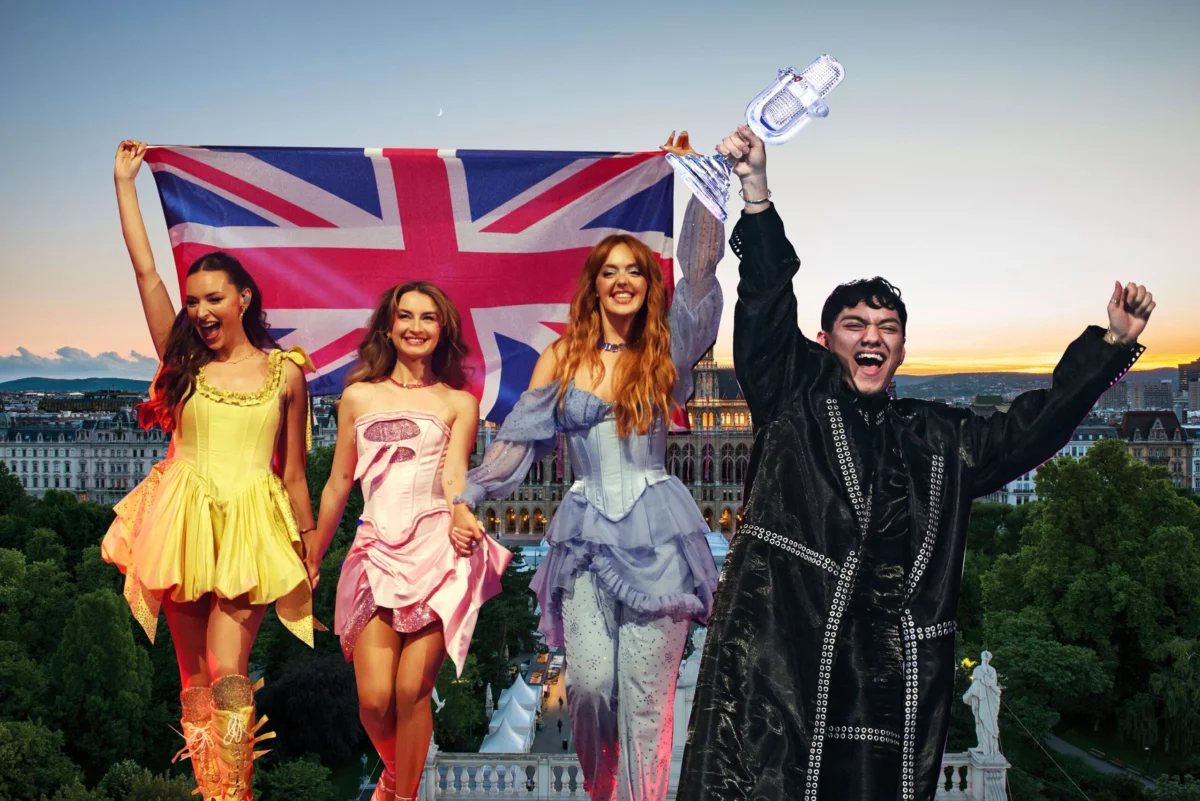
Vienna, a city traditionally defined by the imperial grandeur of the Habsburgs and the classical compositions of Mozart and Haydn, is currently undergoing a radical transformation into the epicenter of global pop culture. This shift follows the decisive victory of Austrian singer-songwriter JJ at the Eurovision Song Contest (ESC) 2025, held at the St. Jakobshalle Arena in Basel, Switzerland. JJ’s winning performance of "Wasted Love," characterized by ethereal falsettos and a high-concept production inspired by a storm-tossed vessel, secured the glass microphone and brought the hosting rights back to Austria for the first time in over a decade. As the European Broadcasting Union (EBU) and the Austrian public broadcaster ORF begin the monumental task of organizing the 2026 edition, the city of Vienna is navigating the delicate balance between its high-brow cultural institutions and the camp, high-energy spectacle that defines modern Eurovision.

The Road to Vienna: JJ’s Triumph in Basel
The path to Eurovision 2026 was paved on a kaleidoscopic May evening in Basel, where JJ captivated a global television audience of 166 million viewers. The performance of "Wasted Love" was a masterclass in modern stagecraft, utilizing a stroboscopic crescendo and melismatic operatic lines that resonated with both the professional juries and the public. The moment of victory was sealed when the final televote announcement confirmed that Austria had received 178 points from the audience, catapulting JJ to the top of the leaderboard.
This victory marks the third time Austria has won the contest, following Udo Jürgens in 1966 with "Merci, Chérie" and Conchita Wurst in 2014 with "Rise Like a Phoenix." For the Austrian public, the win triggered an immediate wave of national pride and logistical mobilization. While the country is globally synonymous with the Vienna Philharmonic and the State Opera, the 2025 win proved that Austria’s contemporary music scene is capable of competing at the highest levels of commercial pop and hyperpop.

A Legacy of Hosting: From the Hofburg to the Stadthalle
Vienna is no stranger to the logistical demands of the world’s largest live music event. The city first hosted the contest in 1967 at the Großer Festsaal der Wiener Hofburg, a venue more accustomed to aristocratic balls than pop singers. In 2015, following Conchita Wurst’s success, the event moved to the Wiener Stadthalle, a multipurpose indoor arena that provided the technical infrastructure necessary for a modern broadcast.
For 2026, the city is once again preparing the Wiener Stadthalle to serve as the primary venue. However, the scale of the production has grown exponentially since 2015. The 2026 contest is expected to feature a production budget in the tens of millions of euros, funded through a combination of EBU contributions, broadcaster fees, and municipal investment. City officials view the event not merely as a concert, but as a strategic branding opportunity to showcase Vienna as a modern, inclusive, and technologically advanced capital.

The Urban Transformation: High Culture Meets "Schmeiss Like a Phoenix"
In the lead-up to the contest, the streets of Vienna have begun to reflect a unique blend of "high-low" culture. The city’s famous cleanliness and orderly atmosphere are being repurposed to suit the Eurovision spirit. One notable example of this is the rebranding of municipal infrastructure. Bright orange dustbins near the Eurovision Village at Rathausplatz now bear the slogan "Schmeiss Like a Phoenix," a playful nod to Conchita Wurst’s winning anthem and a reminder to tourists to keep the city pristine.
The cultural juxtaposition is evident throughout the First District. While the Kunsthistorisches Museum continues to draw crowds to see masterpieces by Titian and Bruegel, the surrounding Babenbergerstraße is adorned with rainbow walkways and Eurovision banners. This integration of the "camp" aesthetic into a city of marble and gold leaf is part of a deliberate effort by Vienna’s tourism board to appeal to a younger, more diverse demographic.

Local businesses are also leaning into the theme. On Mariahilfer Straße, one of Europe’s busiest shopping streets, window displays are currently dedicated to 70 years of Eurovision history, featuring vintage CDs and memorabilia. Even the city’s classical music heritage is being pulled into the orbit of the contest; street performers have been noted playing classical renditions of past Eurovision hits, such as Francesco Sartori’s "Con te partirò," bridging the gap between the opera house and the arena.
Logistical and Technical Excellence: The 42-Second Turnaround
The technical requirements for hosting Eurovision 2026 are staggering. Backstage at the Wiener Stadthalle, production teams are training for the "42-second turnaround"—the precise window of time allotted to remove one act’s stage set and install the next. This requires a synchronized effort between hundreds of stagehands, riggers, and technicians.

The broadcast will utilize 28 high-definition cameras, including spider-cams and rail-cams, to capture every angle of the performances. The lighting rig is expected to consume enough power to support a small town, featuring thousands of individual light sources and pyrotechnic elements. Hosts Victoria Swarovski and Michael Ostrowski will lead the broadcast, which must be timed to the millisecond to accommodate the live voting windows and satellite uplinks to over 40 participating countries.
Economic Impact and Tourism Data
The economic implications for Vienna are substantial. Data from previous host cities suggest that the "Eurovision effect" can result in a significant boost to local GDP. In 2023, the city of Liverpool reported an economic boost of approximately £54 million (roughly €63 million) after hosting on behalf of Ukraine. Vienna is anticipating similar, if not higher, returns.

Hotel occupancy rates for the week of the grand final are already nearing 95%, with many establishments in the Neubau and Mariahilf districts reporting full bookings a year in advance. Dirk-Jan Doek, a general manager of a local hotel collective, noted that Viennese hospitality is defined by "discretion, authenticity, and a refined balance of warmth." This "Gemütlichkeit"—a uniquely Austrian sense of coziness and social belonging—is being marketed as a key differentiator for the 2026 event.
Beyond the immediate revenue from ticket sales and tourism, the event serves as a global advertisement for Vienna. With over 160 million viewers expected to tune in, the city receives the equivalent of a multi-million-euro marketing campaign, highlighting its landmarks such as the Hofburg Palace, the Burggarten, and the Rathaus.

Social Inclusion and Political Context
While Eurovision is officially a non-political event, it frequently operates within a complex geopolitical landscape. The 2025 contest in Basel saw protests and calls for boycotts related to international conflicts, and the 2026 organizers are preparing for similar challenges. The EBU maintains a strict policy of neutrality, but the contest remains a platform for celebrating diversity and LGBTQ+ rights—values that align with Vienna’s own public image as a progressive European capital.
The "Eurovision Village" at Rathausplatz serves as the social heart of the event, offering a space where fans from across the globe can congregate. For many attendees, the draw of Eurovision is its sense of inclusivity. International fans describe the event as a "celebration of music and beautiful people," often traveling thousands of miles to participate in what has been described as a "global family reunion."

Analysis: Vienna as the Master of the High-Low
The success of Eurovision 2026 will likely depend on Vienna’s ability to remain "authentic" while embracing the artifice of the contest. The city is attempting something difficult: maintaining its status as a "City of Music" in the classical sense while proving it can lead the world in contemporary entertainment technology.
By integrating Eurovision branding into its everyday life—from the dustbins to the museum district—Vienna is demonstrating a sophisticated understanding of modern tourism. It is no longer enough to rely on the ghosts of Beethoven and Mozart; a modern world-class city must also be a playground for the digital age.

As the countdown to the grand final begins, the international community looks to Vienna to deliver a spectacle that is both technically flawless and culturally resonant. Whether the trophy goes to Norway’s Jonas Lovv, Sweden’s Felicia, or another dark horse, the real winner is likely to be the city of Vienna itself, which has once again proven its versatility as a global host. The transition from the waltz to the strobe light is nearly complete, and the "City of Dreams" is ready to wake up to the sound of 160 million cheering fans.