
 Reynand Wu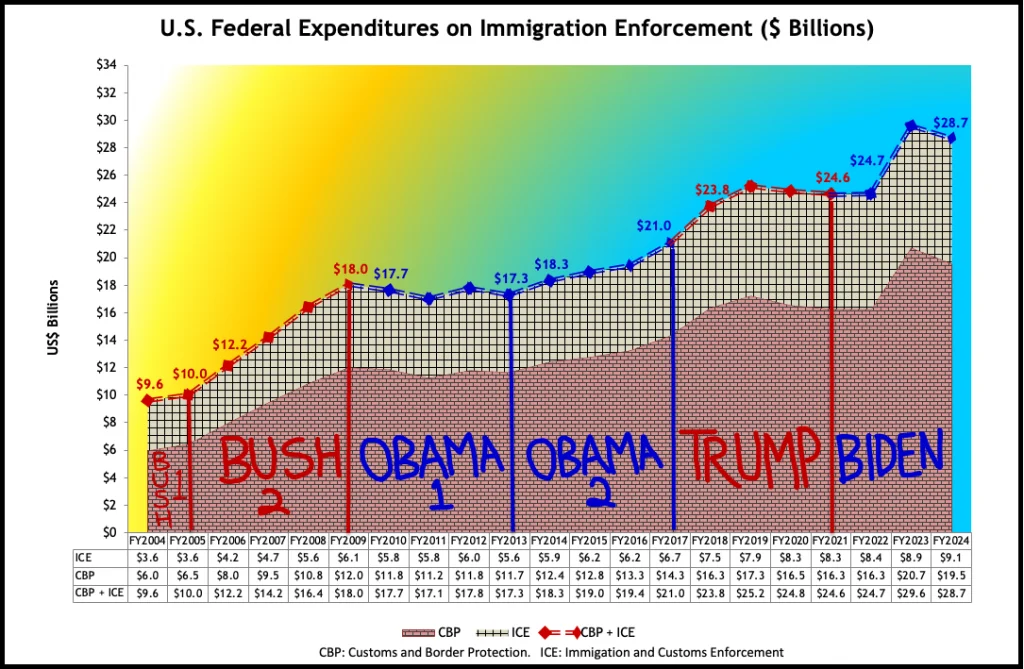
State borders, often perceived as immutable geographical features, are in reality dynamic constructs born from a complex interplay of political conflict, nationalist aspirations, and unequal economic systems. Critically, as recent analysis reveals, their creation and maintenance demand significant and sustained public financial investment. Public policy and political narratives frequently serve to naturalize these boundaries, obscuring their often arbitrary and violent origins. Beyond simply marking territory following wars or disputes, state borders fulfill crucial social functions, including the demarcation of distinct political systems and the differentiation between "insiders" and "outsiders." Economically, borders are instruments of difference, facilitating unequal trade relations, maintaining national currencies, and upholding disparate value regimes across sovereign states and regional blocs.
The Post-9/11 Paradigm Shift: Securitizing the US-Mexico Border
The events of September 11, 2001, irrevocably altered the landscape of border policy in the United States, ushering in an era of heightened securitization, particularly along the US-Mexico border. In the immediate aftermath, state officials skillfully conflated the discourse of anti-terrorism with that of border regulation, thereby justifying a massive expansion of enforcement capabilities. A pivotal moment in this transformation was the establishment of the Department of Homeland Security (DHS) through the Homeland Security Act of 2002. This sweeping legislation consolidated numerous federal agencies under a single umbrella, fundamentally reshaping the nation’s approach to domestic security and immigration enforcement.
Two of the most prominent agencies operating under DHS are Customs and Border Protection (CBP) and Immigration and Customs Enforcement (ICE). These entities are tasked with critical roles in apprehending, detaining, and deporting individuals deemed to be in violation of immigration laws. CBP, which proudly identifies itself as "one of the world’s largest law enforcement organizations," explicitly states its primary mission as detecting and preventing the illegal entry of individuals into the United States and maintaining "borders that work." Similarly, ICE articulates its mission as protecting America from "cross-border crime and illegal immigration that threaten national security and public safety." These mission statements underscore a clear federal mandate for robust, well-funded border enforcement, framing it as an essential component of national security.
A Deep Dive into Federal Spending: Billions Poured into Border Control
The financial commitment to this securitized border paradigm has been staggering. Over a 21-year period, from fiscal year 2004 to fiscal year 2024, both Democratic and Republican administrations have collectively allocated an astounding $409.4 billion in public funds towards immigration enforcement. This monumental sum represents an unprecedented investment in border policing, dwarfing previous expenditures and signaling a sustained, bipartisan commitment to a strategy centered on deterrence and apprehension.
An examination of the budgetary trends reveals a consistent upward trajectory. Federal expenditures on immigration enforcement have nearly tripled in unadjusted dollars, soaring from $9.6 billion in fiscal year 2004 to an estimated $28.7 billion in fiscal year 2024. Even when adjusted for inflation to 2024 dollars, the increase remains significant, climbing from approximately $17.5 billion to $28.7 billion. This growth is not merely incremental; it signifies a fundamental reorientation of federal resources towards border control.
Breaking down these figures further, approximately $275 billion has been channeled into CBP, the agency primarily responsible for border patrol, port of entry inspections, and physical barrier construction. The remaining $134.4 billion has been allocated to ICE, which focuses on interior enforcement, investigations, and detention and deportation operations. This allocation reflects a dual strategy: securing the physical border and enforcing immigration laws within the country’s interior.
The Bipartisan Consensus: Rhetoric Versus Reality
Perhaps one of the most striking revelations from this financial analysis is the stark contrast between partisan rhetoric on immigration policy and the consistent bipartisan consensus on funding for enforcement. While Democratic presidents have often adopted a more pro-immigrant stance in their public discourse, advocating for comprehensive immigration reform and pathways to citizenship, their budgetary decisions tell a different story. In practice, Democratic administrations have demonstrated no less enthusiasm than their Republican counterparts in funding the intricate machinery of border policing.
During Republican presidential terms within this 21-year window, an average of $17.9 billion was spent annually on immigration enforcement, totaling $178.9 billion. In contrast, Democratic presidential terms saw an average annual expenditure of $21.0 billion, accumulating to $230.5 billion. These figures effectively "give the lie" to the political performativity of partisan differences, exposing a deep-seated, shared commitment to border securitization that transcends ideological divides.
This apparent contradiction between stated policy goals and actual financial investment underscores a fundamental tension within bourgeois liberal democracies. While elected officials are ostensibly meant to represent the will of the populace, the reality often points to the representation of entrenched economic, political, and racial elite interests. The consistent funding of border enforcement, irrespective of the party in power, suggests that the perceived need for a heavily policed border outweighs other policy considerations, even those articulated by the parties themselves.
Chronology of Escalation: From Bush to Biden
The post-9/11 expansion of border enforcement can be traced through successive presidential administrations:
- George W. Bush Administration (2001-2009): Following the 9/11 attacks, the Bush administration initiated the most significant overhaul of border security in decades. The creation of DHS in 2002 consolidated 22 federal agencies, including the Immigration and Naturalization Service (INS), which was split into CBP and ICE. The Secure Fence Act of 2006 mandated the construction of 700 miles of fencing along the US-Mexico border, symbolizing a shift towards physical barriers. Funding for border security surged during this period, laying the groundwork for future expansions. The discourse of national security and counter-terrorism became inextricably linked with immigration control.
- Barack Obama Administration (2009-2017): Despite initial hopes for comprehensive immigration reform, the Obama administration oversaw a period of record deportations and continued high levels of border enforcement funding. While focusing on "smart borders" and technology, the budget for CBP and ICE remained robust. The administration significantly increased the number of border patrol agents and expanded detention capacities. Rhetoric often highlighted the need for a "balanced" approach, combining enforcement with calls for reform, but the budgetary reality emphasized enforcement.
- Donald Trump Administration (2017-2021): The Trump presidency brought an explicit and aggressive focus on border security, most notably with the promise of a "big, beautiful wall." While not all construction targets were met, significant mileage of new and replacement barriers were erected. Policies such as "zero tolerance" at the border led to increased family separations, drawing widespread condemnation. Funding for CBP and ICE remained at elevated levels, reflecting the administration’s "America First" agenda and its prioritization of border control.
- Joe Biden Administration (2021-Present): The Biden administration inherited a complex border situation and initially promised a more humane approach to immigration. However, facing ongoing migration challenges and political pressure, the administration has continued to invest heavily in border enforcement. In a move that underscored the enduring bipartisan consensus, President Biden’s administration in October 2023 waived no fewer than 26 federal regulations to expedite the construction of a border wall segment between the US and Mexico in Texas. This decision, seemingly mirroring the actions of his Republican predecessor, Donald Trump, ahead of the 2024 presidential election, highlighted the political imperatives driving border policy despite rhetorical differences. The administration’s budget requests for CBP and ICE have remained substantial, reflecting a continuity in the securitization strategy.
Economic and Social Implications
The massive financial outlay for border enforcement carries profound economic and social implications. Economically, these billions represent taxpayer dollars diverted from other potential public investments, such as education, healthcare, infrastructure, or social programs. The enforcement industry itself has become a significant economic actor, creating jobs in security, technology, and construction, but also raising questions about the opportunity cost of such focused spending. Furthermore, strict border controls can impact cross-border trade, labor markets, and the informal economies that often thrive in border regions.
Socially, the securitization of the border has contributed to a climate of fear and uncertainty within immigrant communities. Increased surveillance, detention, and deportation have profound human costs, separating families and disrupting lives. The constant differentiation between "insiders" and "outsiders" through border narratives can fuel xenophobia and impact social cohesion. Critics often point to the human rights implications of aggressive enforcement, arguing that the focus on deterrence often overrides humanitarian concerns. Advocacy groups frequently highlight the psychological toll on asylum seekers and migrants facing heavily militarized borders.
The Enduring Challenge: Towards a Different Paradigm?
The consistent and escalating investment in border enforcement by both Democratic and Republican administrations underscores a deeply entrenched policy approach. This trajectory suggests that substantive progress towards de-carcerating the United States and de-securitizing the US-Mexico border remains an uphill battle. Such a shift would likely require a significant re-evaluation of national security priorities, a re-imagining of economic relationships, and a powerful progressive movement capable of exercising greater influence over budgetary decisions and immigration enforcement policies.
In the current political climate, however, where the "gaping void left by the abandonment of any commitment to a progressive ideological agenda in the Democratic Party" is often filled by anti-immigrant sentiment, a fundamental change appears unlikely. The continued bipartisan embrace of a heavily funded, enforcement-first border strategy signals an enduring commitment to a model that prioritizes physical barriers, technological surveillance, and punitive measures over alternative approaches that might focus on addressing root causes of migration, fostering international cooperation, or developing more comprehensive and humane immigration systems. The financial ledger of border spending tells a story not just of security, but of a nation grappling with its identity, its global responsibilities, and the very definition of its boundaries.








