
 Ronny Sianturi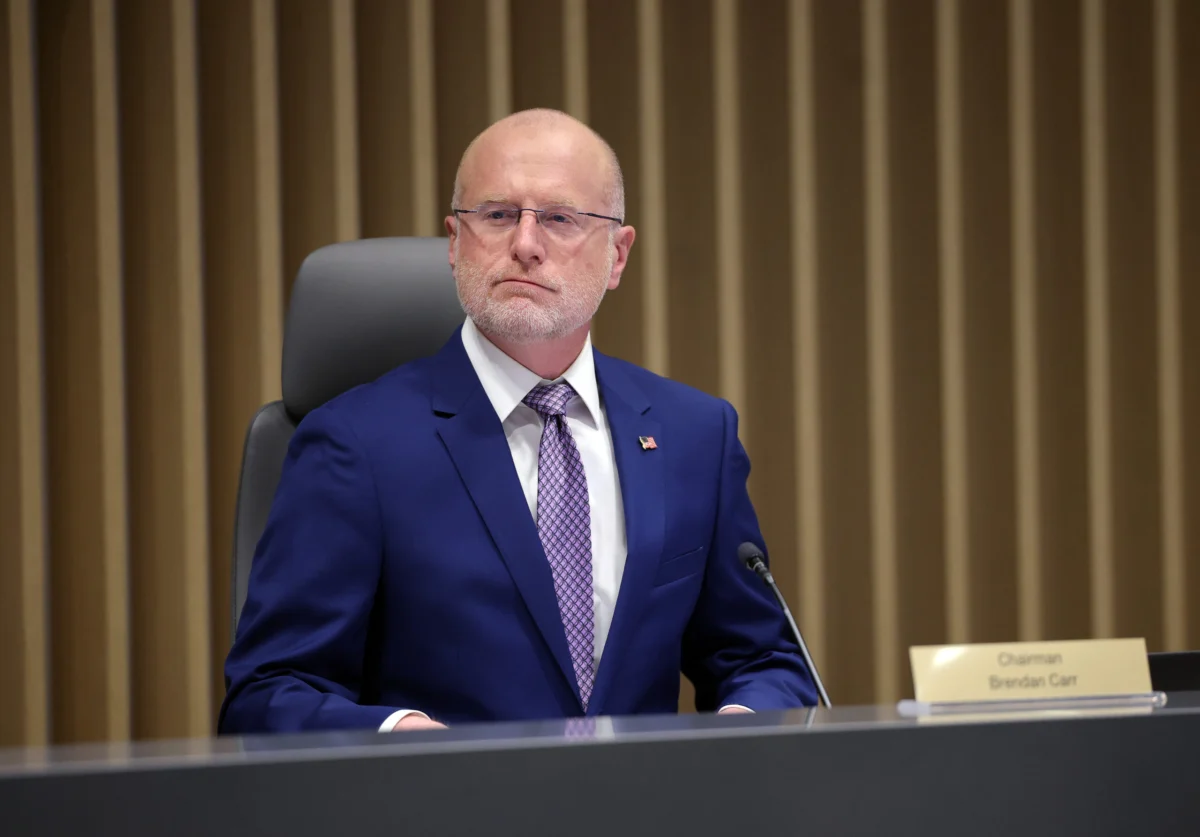
Federal Communications Commission Chairman Brendan Carr stated on Thursday that the commission’s decision to expedite the license renewal review for Disney’s broadcast licenses was not influenced by President Trump’s public call for the termination of ABC late-night host Jimmy Kimmel. Carr asserted that the action was a direct result of an ongoing investigation into Disney’s diversity, equity, and inclusion (DEI) practices, initiated over a year ago, and was further prompted by what the FCC perceived as a lack of sufficient document production from the company.
The FCC’s Stance on the Disney License Review
During a livestreamed open meeting of the FCC on Thursday, Chairman Carr addressed reporters, explaining the rationale behind the commission’s scrutiny of Disney’s broadcast licenses. "It felt to us like they were playing rope a dope, and weren’t being entirely forthcoming with the production," Carr stated. He elaborated that had Disney provided the necessary documentation by the original deadline, the current situation regarding the license renewal would likely not have materialized.
Carr emphasized that the FCC operates under established rules, including prohibitions against discrimination based on race and gender. He indicated that evidence had been submitted suggesting Disney’s practices may have contravened these regulations. "The FCC has rules on the books: You can’t discriminate based on race and gender, and there was evidence that had been submitted that that’s what Disney was doing," Carr explained.
Acknowledging the public perception and media framing of the FCC’s actions in light of recent political events, Carr reiterated the commission’s commitment to its investigative processes. "I understand that anything that we do is is now framed as ‘in the wake of’ in the headlines, and I understand that’s how it is, but we’ve got to make these decisions based on where we are in the investigations and what is best for next steps in that enforcement proceeding," he said. He stressed that the headlines, while understandable, did not dictate the basis of the FCC’s decision-making process.
Denials of External Pressure
When pressed by reporters about the potential influence of President Trump and First Lady Melania Trump’s public statements regarding Jimmy Kimmel’s firing, Chairman Carr firmly denied any external pressure or suggestion guiding the FCC’s actions. "There was no pressure from the outside. There was no suggestion from the outside. There was no call for agency action from the outside," Carr asserted. He acknowledged the First Lady’s and the President’s expressed views, noting that "over time here, you’ve heard me speak to these issues a lot. There’s a lot of people that agree with the President on this one." However, he maintained that these external opinions did not factor into the commission’s internal decision-making regarding Disney’s licenses.
Counterarguments from Democratic Commissioners
The FCC’s decision and Chairman Carr’s explanation faced immediate pushback from Democratic FCC Commissioner Anna Gomez. She characterized the FCC’s actions as a "pretext," stating, "This is clearly a pretext. I mean, give me a break." Commissioner Gomez further alleged that the move was part of a broader pattern of "harassment and retaliation in order to bend Disney to this administration’s will." This suggests a fundamental disagreement within the commission regarding the motivations and legitimacy of the expedited license review.
The FCC and Freedom of Speech
The discussion also touched upon concerns raised by Senator Ted Cruz regarding the FCC’s role in policing speech. Chairman Carr aligned himself with Senator Cruz’s sentiment, stating, "I agree with Senator Cruz that the FCC shouldn’t be in the business of being the speech police." However, he clarified the commission’s mandate: "What we have to do as an agency is to enforce our rules and regulations, and there are rules about nondiscrimination that are unrelated to speech that we have pushing across the board. And that’s the basis for the early renewal in the Disney case." This distinction highlights the FCC’s focus on enforcing non-discrimination statutes, which it argues are separate from content-based speech regulations.
Potential for Further Action: Comcast Investigation
Beyond the Disney case, Chairman Carr hinted at potential future actions concerning other media companies that have faced criticism from the Trump administration. He specifically mentioned NBC owner Comcast, which is also reportedly under investigation for its DEI policies. Carr stated, "I don’t have an update right now on where we are in that Comcast one, but we’ve been very consistent across the board about what we view as invidious forms of DEI discrimination." He further elaborated on the FCC’s approach, noting that "As deals have come before the FCC, we have required people to look at their policies and make sure they don’t have what we think is invidious forms of DEI." This suggests a pattern of regulatory scrutiny applied to companies that have been targets of political pressure, focusing on their internal DEI practices.
Background and Timeline of the DEI Investigation
The FCC’s investigation into Disney’s DEI practices is understood to have been initiated in response to complaints and evidence submitted to the commission regarding the company’s hiring, promotion, and content creation policies. While the exact date of the initial complaint is not publicly specified, Chairman Carr indicated that the investigation has been ongoing for "over a year." This timeline suggests that the decision to call for an early license renewal review was a culmination of an extended period of inquiry and, from the FCC’s perspective, insufficient cooperation from Disney.
The FCC’s authority to review broadcast licenses stems from the Communications Act of 1934, which grants the commission the power to issue and renew licenses for entities broadcasting over the public airwaves. These licenses are typically granted for a term of eight years. The FCC is mandated to ensure that licensees operate in the public interest, convenience, and necessity. Part of this mandate involves adherence to federal laws prohibiting discrimination.
The specific nature of the "evidence" that led to the investigation remains somewhat opaque, with Carr only broadly referring to "invidious forms of DEI discrimination." However, the context of the FCC’s actions, particularly under the current administration’s appointees, suggests a heightened focus on corporate diversity initiatives. The "rope a dope" analogy used by Carr implies a belief that Disney was deliberately delaying or obfuscating the provision of requested information, thereby impeding the progress of the investigation.
Analysis of Implications
The FCC’s action against Disney’s broadcast licenses, regardless of the stated motivations, carries significant implications for the media industry. It signals a potentially more aggressive regulatory stance on corporate diversity policies, particularly for companies seeking FCC approvals for mergers, acquisitions, or license renewals. The involvement of political figures, even if officially denied as a direct cause, inevitably casts a shadow over such regulatory decisions, raising questions about potential politicization of regulatory oversight.
The contrasting viewpoints between Chairman Carr and Commissioner Gomez underscore a potential partisan divide within the FCC regarding the interpretation of its mandate and the appropriate scope of its investigations. This internal division could lead to further legal challenges and public debate over the FCC’s role in overseeing corporate practices that are increasingly intertwined with political discourse.
Furthermore, the mention of Comcast suggests that this scrutiny may extend beyond Disney, potentially impacting a wider range of media conglomerates. Companies that are prominent in public discourse and have faced political criticism may find their regulatory processes subject to increased scrutiny, particularly concerning their internal policies on DEI. This could create a climate of uncertainty and pressure for media organizations to navigate complex and evolving expectations from regulatory bodies.
The FCC’s assertion that its actions are based on non-discrimination rules, separate from speech content, aims to preemptively address concerns about free speech violations. However, the broader context of political pressure and the highly public nature of these investigations make such distinctions difficult for observers to maintain. The outcome of the Disney license review and any subsequent actions against other companies will likely be closely watched as indicators of the future direction of media regulation and its intersection with corporate social policies and political influence. The precedent set by this case could influence how media companies approach DEI initiatives and their interactions with federal regulatory agencies in the years to come.








