Jono Maryono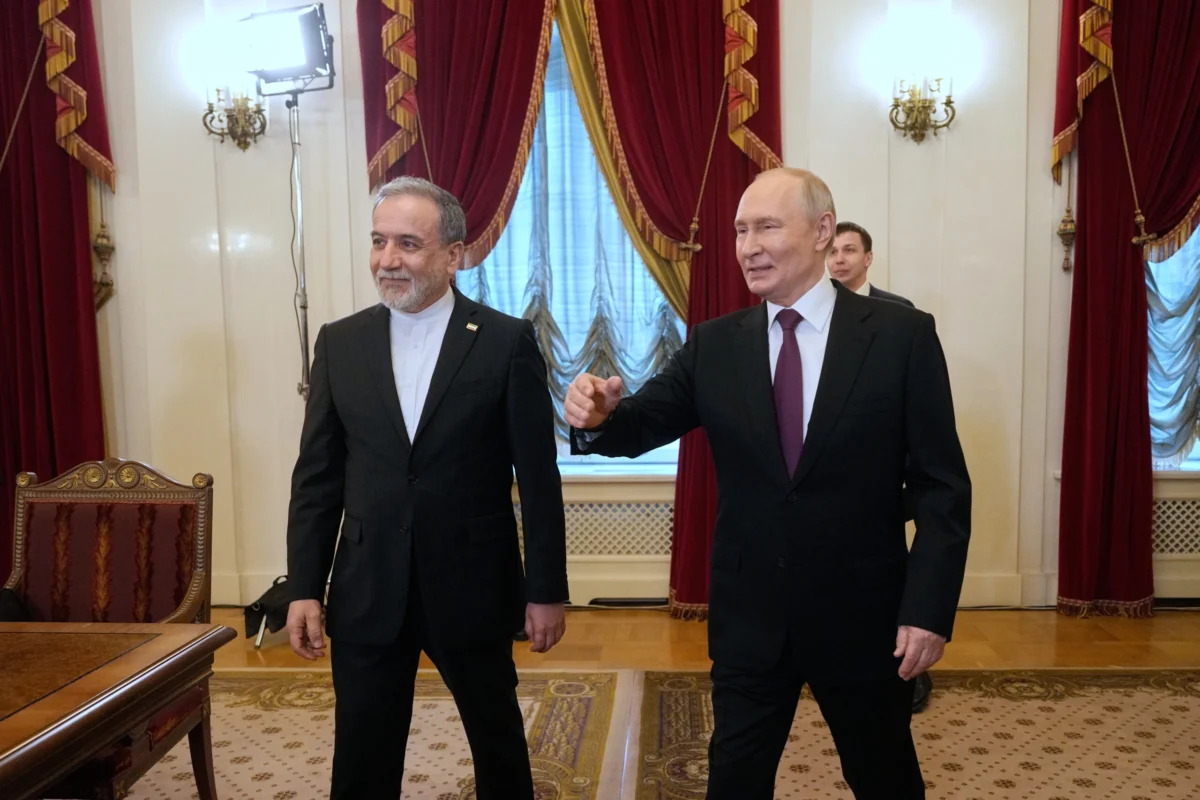
As Iran grapples with the escalating economic repercussions of a prolonged blockade of the vital Strait of Hormuz, strategic attention is increasingly pivoting northward. With global shipping lanes in the Persian Gulf significantly disrupted and the nation’s crucial oil exports facing severe constraints, Tehran is exploring alternatives to its traditional maritime trade. This recalibration involves a multifaceted approach, leaning on a developing network of railways, burgeoning Caspian Sea ports, and established sanctions-era trade conduits that link the Islamic Republic to Russia. This strategic shift underscores a growing interdependence between Tehran and Moscow, two nations facing considerable international pressure and seeking to circumvent Western financial and trade restrictions.
The deepening of this bilateral relationship was prominently highlighted this week during a high-level diplomatic engagement. Iranian Foreign Minister Abbas Araghchi undertook a significant journey to St. Petersburg for crucial talks with Russian President Vladimir Putin. During their discussions, which reportedly encompassed the ongoing conflict, the impact of sanctions, and the volatile future of the Strait of Hormuz, Araghchi lauded Moscow’s "firm and unshaken" support. This public endorsement signals a desire from Tehran for a robust partnership that can potentially mitigate the severe economic fallout from the maritime blockade. However, the critical question remains: can Russia, itself grappling with its own economic challenges stemming from the war in Ukraine and subsequent sanctions, truly offer a substantial lifeline to Iran’s war-torn economy? And, more importantly, does Moscow possess the inclination and capacity to do so? Experts are divided on the extent of Russia’s potential to alleviate Iran’s economic woes.
Deepening Bilateral Trade Amidst Sanctions Pressure
The economic ties between Iran and Russia have seen a noticeable intensification in the aftermath of the United States’ withdrawal from the 2015 Joint Comprehensive Plan of Action (JCPOA) in 2018, which led to the reimposition of sweeping sanctions on Tehran. This trend accelerated significantly following Russia’s full-scale invasion of Ukraine in February 2022. Both nations found themselves increasingly isolated from the Western financial system, compelling them to forge new avenues for trade and financial transactions. This has led to the development of sophisticated sanctions-evasion networks, the exploration of alternative payment mechanisms, and the establishment of non-Western trade corridors to ensure the continued flow of essential goods, energy, and capital.
Current bilateral trade between Iran and Russia is predominantly characterized by an exchange of agricultural products. Iran imports significant quantities of wheat, barley, and corn from Russia, which are vital for its food security. In return, Iran has supplied Russia with a range of goods, notably including low-cost Shahed drones. These drones have been reportedly modified and utilized by Russian forces in their ongoing conflict in Ukraine. Beyond agricultural goods and military hardware, the trade also encompasses machinery, metals, timber, fertilizers, and various industrial inputs, illustrating a growing complementarity in their respective economies.
Russian Energy Minister Sergey Tsivilyov noted in a meeting of the intergovernmental commission on trade and economic cooperation between Moscow and Tehran in 2025 that "Trade turnover reached $4.8 billion last year [2024], but we believe that the potential for our mutual trade is much greater." This figure represents a notable increase, with reports indicating a 16 percent rise in bilateral trade during the preceding period. This growth has been largely propelled by Russian exports of grain, metals, machinery, and industrial goods.
However, despite this upward trend, experts caution that the overall trade relationship remains relatively modest when juxtaposed with Iran’s economic engagement with China or the Gulf countries. Mahdi Ghodsi, an economist at the Vienna Institute for International Economic Studies, explained to Al Jazeera that the trade between Iran and Russia is "not substantial, because both countries are producing almost similar products and the industries are similar." This inherent similarity in production capabilities can limit the scope for extensive trade diversification and growth.
The International North-South Transport Corridor: A New Artery for Trade
A critical component of the burgeoning Russia-Iran economic relationship is the International North-South Transport Corridor (INSTC). This ambitious project is designed to create a vast network of shipping lanes, railways, and roads that will connect Russia to Iran, and subsequently to markets across Asia. Crucially, the INSTC aims to bypass traditional Western-controlled maritime routes, offering an alternative that is less susceptible to geopolitical disruptions and sanctions.
Under the INSTC framework, goods typically move from southern Russian ports, such as Astrakhan and Makhachkala on the Caspian Sea, across the Caspian Sea to northern Iranian ports like Bandar Anzali. From these Iranian ports, the cargo continues its journey overland via rail or truck networks, ultimately reaching its final destinations. This route has become increasingly vital for the transport of Russian grain, machinery, and industrial exports destined for Iran.

Naeem Aslam, chief market analyst at London-based Think Markets, described the INSTC as a "viable but partial lifeline" for Iran. He added that Russian ports in Astrakhan and Makhachkala are "already primed for a surge in grain, metals, timber and refined products." The development of this corridor is seen as a strategic imperative for both nations, offering a degree of economic resilience against external pressures.
A western branch of the INSTC also extends through Azerbaijan, further enhancing connectivity. However, a significant bottleneck remains the unfinished rail link between Rasht and Astara in northern Iran. This critical missing segment is essential for seamless transit. In recognition of its importance, Moscow agreed in 2023 to finance the completion of this line. Russian President Vladimir Putin hailed this agreement as a "great event" that "will help to significantly diversify global traffic flows." The successful completion of this rail link is expected to unlock the full potential of the INSTC, facilitating a more efficient and robust trade flow between the two nations and beyond.
Challenges and Limitations: The Limits of Land-Based Alternatives
While the INSTC and other overland routes present a compelling alternative to disrupted maritime trade, analysts emphasize that these solutions, while potentially offering temporary relief, cannot fully replicate the scale, efficiency, and cost-effectiveness of the Strait of Hormuz for global commerce. Adam Grimshaw, an economic historian at the University of Helsinki, noted that "from a historical perspective, it is simply the quickest and the most cost-effective way of transporting anything."
The Strait of Hormuz, a critical chokepoint for global oil shipments, handles a substantial volume of international trade. Nader Hashemi, an associate professor at Georgetown University, pointed out that "roughly 90 percent of Iran’s international trade is maritime trade that goes through the Gulf, which can’t be quickly or immediately replaced through land access to Iran or through air transport to circumvent the American blockade." This highlights the immense challenge of substituting such a vital maritime artery with overland infrastructure.
Ghodsi concurred, suggesting that while Russia might offer a "lifeline" in the short term, citing past instances of Russian grain exports during Iranian droughts, it "simply cannot substitute" the vast quantities of goods typically moved by sea in the long run. The transition to land-based routes is inherently more time-consuming. This delay can lead to increased costs for consumers, particularly for perishable goods that risk spoilage during transit. The logistical complexities and increased transit times associated with overland transportation pose significant challenges to maintaining the flow of essential commodities and can exacerbate inflationary pressures.
Moscow’s Calculus: The Strategic Considerations of Aiding Iran
The extent to which Moscow is willing or able to provide substantial economic aid to Iran is a complex strategic question with significant implications for regional and global stability. Most analysts suggest that a full-fledged economic bailout for Iran is not necessarily in Russia’s immediate strategic interest, especially given its own mounting economic pressures.
John Lough, head of foreign policy at the New Eurasian Strategies Centre, articulated this view, stating, "They’ve got their own economic problems." He pointed to signs of economic stagnation within Russia, the strain on its financial reserves, and growing public and political frustration over the protracted war in Ukraine. While Moscow may offer symbolic gestures of support or limited humanitarian assistance, Lough argued that "now is not a good time" for significant investment in Iran, particularly in the context of the ongoing conflict involving Iran and its allies.
The inherent difficulties in replacing Iran’s extensive maritime trade with overland routes, despite years of discussions about alternative corridors, further complicate the prospect of substantial Russian assistance. Moreover, experts suggest that even if such a transition were feasible, it might not significantly bolster Iran’s economy in the long term. Iran’s economy is heavily reliant on oil revenue, and with its primary export channels obstructed by the blockade, Russia’s capacity to compensate for this loss is limited. "Much of Iran’s economy revolves around the sale of oil, and with that blocked or prevented by the American blockade, Russia really can’t help in that regard," Hashemi observed.
However, a counterargument suggests that a degree of support for Iran could align with Russia’s broader geopolitical objectives in a fragmented global landscape. Aslam posits that "Propping [up] Iran locks in higher global oil prices that buoy Russia’s war economy, cements INSTC dominance for Asian trade, and keeps a key anti-Western ally alive – no downside for Moscow in a fragmented Gulf." From this perspective, assisting Iran, even in a limited capacity, could serve to further destabilize Western influence in the region, bolster commodity prices beneficial to Russia’s war effort, and solidify the strategic importance of alternative trade routes like the INSTC, thereby enhancing Moscow’s leverage in global trade dynamics. This perspective suggests a pragmatic approach where even a strained partnership can yield strategic dividends for Russia in its ongoing confrontation with the West. The intricate dance between Iran’s economic survival and Russia’s geopolitical ambitions will undoubtedly continue to shape the dynamics of this crucial northern pivot.